Chiles-Whitted UAP Encounter
On July 24, 1948, Eastern Airlines pilots Clarence Chiles and John Whitted encountered a torpedo-shaped UAP with two rows of windows and blue flame exhaust over Alabama. The object passed within 700 feet of their DC-3. This encounter led to Project Sign's famous 'Estimate of the Situation' that UFOs were extraterrestrial.
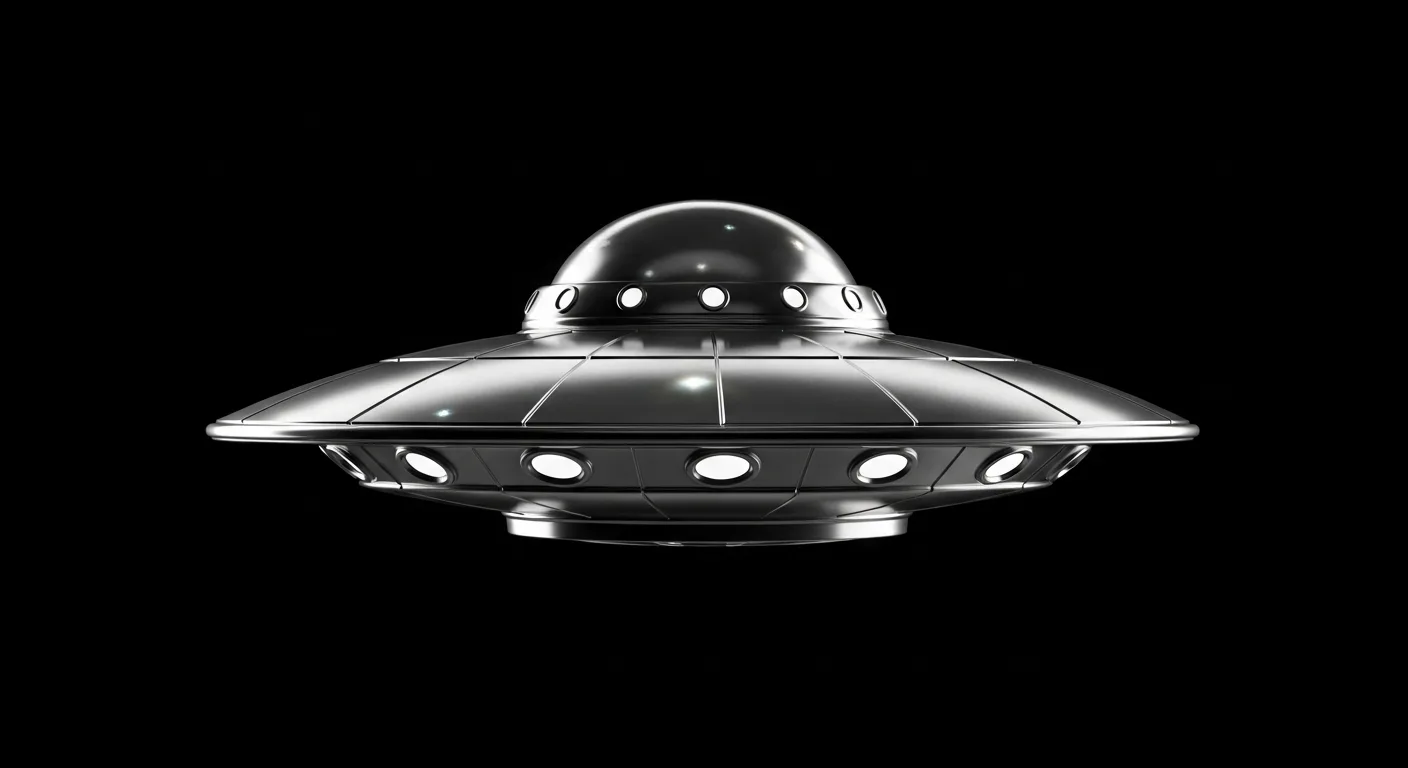
In the early morning hours of July 24, 1948, two experienced airline pilots flying an Eastern Airlines DC-3 over Alabama encountered an object so extraordinary that it nearly convinced the United States Air Force that humanity was being visited by extraterrestrial beings. Captain Clarence Chiles and First Officer John Whitted, both combat veterans and seasoned commercial aviators with thousands of hours of flight time, watched as a massive, torpedo-shaped craft with two rows of glowing windows and a trail of blue-orange flame passed within seven hundred feet of their aircraft at tremendous speed. Their sighting, corroborated by a passenger and supported by reports from a ground observer, triggered one of the most significant investigations in the history of UFO research and produced a classified document whose conclusions were so explosive that the Air Force Chief of Staff ordered it destroyed. The Chiles-Whitted encounter is the case that nearly forced the United States government to publicly acknowledge the reality of unidentified flying objects—and the case that, when its implications proved too dangerous, marked the beginning of the cover-up.
The Pilots
To appreciate the significance of the Chiles-Whitted encounter, one must first understand the caliber of the men who reported it. In the early days of UFO investigation, the credibility of witnesses was paramount, and by any reasonable standard, Clarence Chiles and John Whitted were among the most credible observers imaginable.
Clarence Chiles was an experienced commercial airline captain who had been flying since the mid-1930s. During World War II, he had served as a pilot in the Air Transport Command, flying dangerous missions across the globe, including the treacherous “Hump” route over the Himalayas between India and China—one of the most hazardous flying assignments of the war. After the conflict, he joined Eastern Airlines and built a reputation as a skilled, steady, and thoroughly reliable pilot. He was not a man given to fantasy or exaggeration, and his colleagues regarded him as one of the most level-headed captains in the company.
John Whitted brought similar credentials to the cockpit. He too was a wartime veteran with extensive flying experience, and he had accumulated thousands of hours in the air by the time of the encounter. Like Chiles, he was known among his peers as a careful and accurate observer—exactly the kind of witness whose testimony would be difficult to dismiss.
Both men had excellent night vision, a professional requirement for pilots flying the late-night schedules that were common on Eastern Airlines’ southeastern routes. They were thoroughly familiar with the appearance of every type of aircraft in service at the time, as well as with astronomical phenomena, weather effects, and the various optical illusions that can occur during night flying. When they said they saw something they could not identify, it carried a weight that testimony from less experienced observers could not match.
The Flight
Eastern Airlines Flight 576 departed Houston, Texas, on the evening of July 23, 1948, bound for Atlanta, Georgia, with intermediate stops along the way. It was a routine milk-run flight on a route that both pilots had flown many times before, carrying a handful of passengers through the warm summer night across the Deep South.
By 2:45 AM on July 24, the DC-3 was cruising at approximately five thousand feet above the Alabama countryside, roughly twenty miles southwest of Montgomery. The weather was clear, with scattered clouds at higher altitude and excellent visibility—the kind of conditions that pilots call “severe clear,” when the world below and the sky above are rendered with unusual sharpness. A bright moon illuminated the landscape, adding to the exceptional visibility.
Chiles was in the left seat, Whitted in the right. Both men were alert despite the late hour, scanning the sky ahead as professional habit demanded. The aircraft was flying northeast, the engines droning steadily, the instruments all reading normal. There was nothing to suggest that within seconds, their lives and the course of American military intelligence would be changed forever.
The Encounter
At approximately 2:45 AM, Chiles noticed a bright light ahead and slightly above the aircraft, approaching rapidly from the northeast. His first thought was that it was another aircraft, perhaps a military jet on a night training exercise, though its brightness was unusual. He alerted Whitted, who also saw the light and immediately recognized that it was closing on their position at extraordinary speed.
Within seconds, the light resolved itself into a shape, and both pilots realized they were looking at something utterly unlike any aircraft they had ever seen. The object was enormous—Chiles estimated it at approximately one hundred feet in length, roughly the size of a B-29 Superfortress, the largest bomber in common service. It was torpedo-shaped or cigar-shaped, with a rounded nose and a tapered rear section. The overall form was smooth and streamlined, suggesting a purpose-built vehicle rather than any natural phenomenon.
Most striking were two rows of windows—or what appeared to be windows—running along the fuselage of the object. These openings glowed with an intense, white light, as if the interior of the craft were brilliantly illuminated. The glow from these windows was bright enough to cast light on the exterior surface of the object, revealing what both pilots described as a metallic surface with a deep blue glow. Chiles later compared the light from the windows to that of burning magnesium—intensely bright, almost too bright to look at directly.
From the rear of the object trailed a stream of flame, orange and blue in color, extending perhaps fifty feet behind the craft. This exhaust—if that is what it was—was similar in appearance to the afterburner flame of a jet engine, though far larger and more intense than anything the pilots had seen on any military aircraft. The flame seemed to pulse slightly as the object moved, suggesting some form of propulsion system operating at tremendous power.
The object passed the DC-3 on the right side at an estimated distance of seven hundred feet—close enough to see clearly, close enough to make out details, close enough to feel certain about what they were observing. The entire encounter lasted between ten and fifteen seconds, though both pilots reported that the experience seemed to stretch time, that each second contained more perceptual information than normal experience would allow.
As the object passed, it appeared to pull up sharply, climbing at a steep angle before disappearing into a layer of broken clouds at approximately ten thousand feet. At the moment of its climb, the trail of flame intensified dramatically, lengthening and brightening as if the craft’s propulsion system had been suddenly boosted to a higher output. The light from the flame momentarily illuminated the cloud layer from below, creating a brief, eerie glow before the object vanished from sight.
The Passenger
The pilots were not the only witnesses aboard Flight 576. Clarence McKelvie, a passenger who happened to be awake and looking out a window on the right side of the aircraft, reported seeing an intensely bright light pass the plane at high speed. McKelvie’s description was less detailed than those of the pilots—he had not been watching the sky as attentively, and his window provided a more restricted view—but his account confirmed the basic elements of the sighting: a bright, fast-moving object passing close to the aircraft on the right side.
McKelvie’s testimony was significant because it provided independent corroboration from inside the aircraft. The pilots’ accounts, while compelling, could theoretically have been the product of shared misperception—two tired men in a darkened cockpit misidentifying a mundane phenomenon. McKelvie’s separate observation from the passenger cabin made this explanation considerably less plausible.
The Ground Witness
Additional corroboration came from an unexpected source. Walter Massey, a crew chief at Robins Air Force Base in Warner Robins, Georgia, approximately 150 miles southeast of the aircraft’s position, reported seeing a bright, fast-moving object at roughly the same time as the Chiles-Whitted sighting. Massey described the object as extremely bright, moving at tremendous speed, and trailing a stream of flame. While his observation was from a much greater distance and therefore less detailed, the timing and direction of the object were consistent with the pilots’ report, suggesting that the same object was seen from both locations.
Project Sign Investigates
The Chiles-Whitted encounter arrived at the Air Force’s doorstep at a particularly sensitive moment. Less than a year earlier, Kenneth Arnold’s famous sighting of nine objects near Mount Rainier had ignited public interest in “flying saucers,” and the Air Force had responded by establishing Project Sign, the first official military investigation into UFO reports. Based at Wright-Patterson Air Force Base in Dayton, Ohio, Project Sign was staffed by experienced intelligence officers and technical analysts tasked with determining whether the growing number of UFO reports represented a genuine threat to national security.
When Chiles and Whitted’s report reached Project Sign, it was immediately recognized as exceptional. Here were two witnesses of the highest caliber—professional pilots, combat veterans, men whose jobs required them to accurately identify aerial objects under all conditions—reporting a close encounter with an object that appeared to be a manufactured vehicle of unprecedented capability. This was not a distant light in the sky that could be explained away as a misidentified star or planet. This was a structured craft, seen at close range, with identifiable features including windows, a metallic surface, and a propulsion system.
Project Sign investigators interviewed both pilots extensively, producing detailed written reports of the encounter. They also interviewed McKelvie and gathered Massey’s ground observation report. Technical analysts examined the pilots’ descriptions in detail, comparing the reported performance characteristics of the object with the capabilities of every known aircraft type. The conclusion was inescapable: no aircraft in service anywhere in the world—American, Soviet, or otherwise—could account for what Chiles and Whitted had described.
The object’s performance characteristics were simply beyond anything that existed. Its speed was estimated at between 500 and 700 miles per hour, which was within the range of contemporary jet aircraft, but its ability to accelerate rapidly and climb steeply from this speed was not. More significantly, its apparent size, its window-like features, and its overall design bore no resemblance to any known aircraft or missile. Project Sign’s technical staff were forced to confront a disturbing possibility: either two of America’s most experienced pilots had simultaneously hallucinated an elaborate and consistent fantasy, or they had encountered a vehicle that represented technology far beyond human capability.
The Estimate of the Situation
The Chiles-Whitted case, combined with several other compelling reports that had accumulated since Kenneth Arnold’s sighting, pushed Project Sign’s analysts toward a conclusion that they knew would be explosive. In the late summer and early fall of 1948, the project’s staff compiled their findings into a formal intelligence document known as the “Estimate of the Situation.” This document, classified Top Secret, represented the considered judgment of the Air Force’s own UFO investigators.
The Estimate of the Situation concluded that unidentified flying objects were real, that they represented manufactured vehicles of extraordinary capability, and that the most likely explanation for their origin was extraterrestrial. The document laid out the evidence methodically, citing case after case—the Chiles-Whitted encounter prominent among them—in which credible witnesses had observed objects whose performance characteristics exceeded any known technology. Having eliminated terrestrial explanations, the analysts arrived at the only remaining hypothesis: the objects came from somewhere else.
The document was forwarded up the chain of command, passing through increasingly senior levels of Air Force leadership. It eventually reached the desk of General Hoyt S. Vandenberg, the Air Force Chief of Staff. Vandenberg was a formidable figure—a World War II hero, a former director of the Central Intelligence Group (predecessor to the CIA), and one of the most powerful military officers in the country. He read the Estimate, considered its implications, and rejected it.
Vandenberg’s reasons for rejecting the Estimate have been the subject of considerable debate among historians and UFO researchers. The official rationale was that the evidence, while suggestive, was insufficient to support such an extraordinary conclusion—a reasonable position, given the magnitude of what was being claimed. However, some researchers have suggested that Vandenberg’s rejection was motivated less by evidentiary standards than by the political and military implications of the Estimate’s conclusion. An admission that extraterrestrial vehicles were operating in American airspace would have raised questions about national defense capabilities, triggered public panic, and created diplomatic complications that the new Air Force—it had been an independent service for barely a year—was ill-equipped to handle.
Whatever his reasons, Vandenberg ordered all copies of the Estimate destroyed. This order was largely carried out, though the document’s existence was later confirmed by several Project Sign members, most notably Captain Edward Ruppelt, who subsequently headed the successor project, Project Blue Book, and who described the Estimate in his 1956 book, The Report on Unidentified Flying Objects. No surviving copy of the Estimate has ever been publicly produced, making it one of the most famous lost documents in military history.
The Aftermath
The rejection of the Estimate of the Situation had consequences that extended far beyond the Chiles-Whitted case. It marked a turning point in the Air Force’s approach to UFO investigation, shifting the institutional posture from genuine inquiry to systematic debunking. Project Sign was reorganized and renamed Project Grudge, with a clear mandate to find conventional explanations for UFO reports rather than to investigate them objectively. The scientists and intelligence officers who had prepared the Estimate were reassigned, and the project was staffed with personnel who understood that their job was to explain UFOs away, not to explain them.
The Chiles-Whitted encounter itself was retroactively explained as a misidentification of a particularly bright meteor or bolide. This explanation was unconvincing to the pilots, who pointed out that meteors do not have windows, do not maintain level flight before climbing, and do not appear as structured, torpedo-shaped vehicles at close range. The meteor explanation was also inconsistent with the duration of the sighting—meteors traverse the visible sky in seconds, while the Chiles-Whitted object was observed for ten to fifteen seconds at relatively close range. Nevertheless, the meteor explanation became the official position and has remained so in Air Force records.
Both Chiles and Whitted maintained their accounts for the rest of their lives. Neither ever retracted or modified his description of the object, and both expressed frustration with the Air Force’s refusal to take their report seriously after the initial investigation. Chiles, in particular, was vocal about the inadequacy of the meteor explanation, noting repeatedly that he had seen plenty of meteors during his years of night flying and that the object he observed on July 24, 1948, bore no resemblance to any meteor he had ever seen.
A Case Study in Suppression
The Chiles-Whitted encounter occupies a unique position in UFO history because it represents the moment when the United States government came closest to publicly acknowledging the reality of unidentified flying objects—and then pulled back from the brink. The Estimate of the Situation, had it been accepted and made public, would have changed the course of history. Instead, its rejection established a pattern of official denial and institutional resistance that persisted for over seventy years.
The case also illustrates the fundamental tension at the heart of the UFO phenomenon: the conflict between evidence and acceptability. The evidence in the Chiles-Whitted case was strong—two impeccable witnesses, independent corroboration, and an object whose characteristics were inconsistent with any known technology. But the conclusion that the evidence pointed to was unacceptable to the military and political establishment, and so the evidence was dismissed rather than the conclusion being accepted.
This pattern—strong evidence followed by institutional rejection—has repeated itself countless times in the decades since 1948. From the Washington, D.C. sightings of 1952 to the Rendlesham Forest incident of 1980 to the USS Nimitz encounter of 2004, case after case has presented evidence that demands serious consideration, only to be met with official indifference, inadequate investigation, or active suppression. The Chiles-Whitted encounter was the template for all of these responses, the case in which the government first learned that it was easier to deny the phenomenon than to deal with its implications.
The Legacy
More than seventy-five years after Clarence Chiles and John Whitted watched a torpedo-shaped craft with glowing windows pass their DC-3 over Alabama, their encounter remains one of the most compelling cases in the UFO canon. It was investigated by the Air Force’s own experts and found to be unexplainable by conventional means. It contributed to the only known official military conclusion that UFOs were extraterrestrial in origin. And it was the proximate cause of the shift from investigation to cover-up that has characterized the government’s approach to the subject ever since.
The case endures because its elements are so simple and so powerful. Two experienced pilots saw something impossible, described it clearly and consistently, and were corroborated by independent witnesses. The Air Force investigated, found no conventional explanation, and reached a conclusion so threatening that it had to be suppressed. In that sequence of events—observation, investigation, conclusion, suppression—lies the entire history of the UFO phenomenon in microcosm.
The Estimate of the Situation may be lost, but its ghost haunts every subsequent UFO investigation, every Congressional hearing, every official statement on the subject. Each time a government official dismisses a UFO report with a vague reference to weather phenomena or misidentification, they are following a script that was written in the aftermath of the Chiles-Whitted encounter. And each time a credible witness steps forward to describe something that cannot be explained, they are joining a tradition that stretches back to that summer night in 1948, when two pilots over Alabama saw something that changed everything—and nothing—at the same time.
Sources
- Project Blue Book — National Archives — USAF UFO investigation files, 1947–1969
- CIA UFO/UAP Reading Room — Declassified CIA documents on UAP
- Chronicling America — Historic US newspapers (1690–1963)