Chiles-Whitted UFO Encounter
On July 24, 1948, Eastern Airlines pilots Clarence Chiles and John Whitted observed a cigar-shaped craft with two rows of windows pass their DC-3 at close range near Montgomery, Alabama. They reported the object was about 100 feet long with a flame trail. The Air Force investigation couldn't explain the sighting.
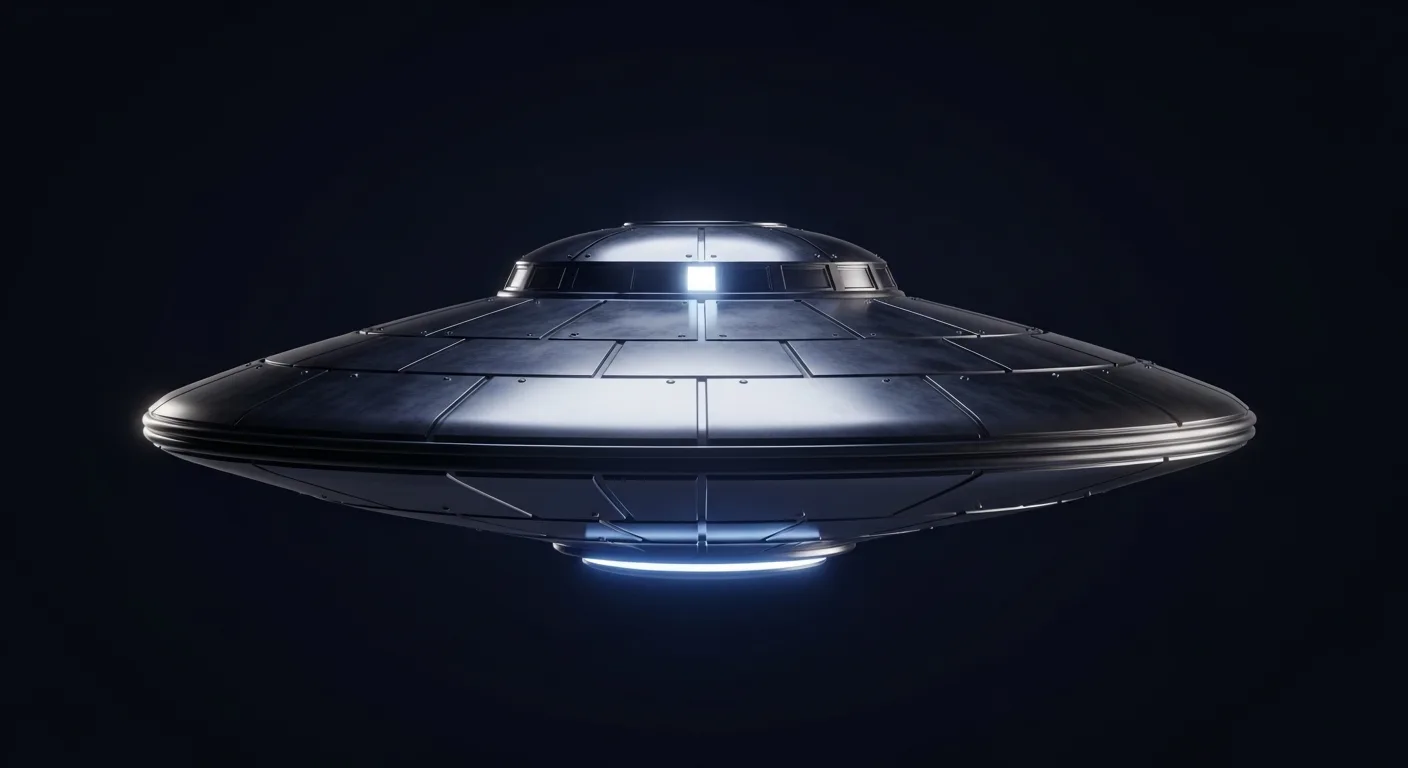
The Chiles-Whitted encounter was a landmark early UFO case. Two experienced airline pilots observed a structured, cigar-shaped craft with apparent windows pass their aircraft at close range. Their detailed, consistent testimony – and the failure of investigators to explain what they saw – contributed to the early credibility of the UFO phenomenon.
July 24, 1948
Eastern Airlines Flight 576 was a DC-3 passenger flight from Houston to Atlanta, piloted by Captain Clarence S. Chiles and First Officer John B. Whitted. Both were experienced pilots – Chiles with over 8,500 flight hours.
Time: Approximately 2:45 AM. Location: Near Montgomery, Alabama, at about 5,000 feet altitude. Conditions: Clear, moonlit night with excellent visibility.
The Encounter
The pilots’ account was detailed and consistent: the object approached at tremendous speed, estimated at 500-700 mph, and passed approximately 700 feet to the right of the DC-3. The entire observation lasted about 10-15 seconds.
The Object Described
Both pilots provided remarkably consistent descriptions: the shape was cigar-shaped or torpedo-like, with a pointed nose; it was approximately 100 feet long and 25-30 feet in diameter, and possessed two rows of bright, square windows along the side, glowing with light. There were no visible wings or control surfaces, and a bright orange-red flame or exhaust trailed from the rear, 30-50 feet long. The body seemed to glow along its underside.
The Pass
As the object approached and passed, both pilots initially thought collision was possible. Chiles pulled the DC-3 sharply to the left, and the aircraft was buffeted by turbulence in the object’s wake. After passing, the object pulled up sharply and climbed out of sight.
Passenger Witness
One passenger, Clarence McKelvie, corroborated the sighting: he was awake and saw a bright light flash past the aircraft. His observation supported the pilots’ account, though from his seat, he couldn’t see the object’s details.
The Investigation
Project Sign conducted an extensive investigation: pilot interviews were conducted separately and together, confirming the consistency of their accounts. Investigators found both men highly credible, and technical experts attempted to identify the object.
The Air Force Assessment
Project Sign’s analysis was significant; the “Estimate of the Situation” reportedly concluded the object was extraterrestrial. Air Force Chief of Staff General Hoyt Vandenberg rejected this conclusion, and the report was allegedly ordered destroyed. The Air Force’s public position became that the pilots saw a meteor.
The Meteor Explanation
The meteor explanation was widely criticized: experienced pilots know what meteors look like, and they don’t have windows or pull up and climb away. The duration of the observation was longer than a typical meteor flash, and meteors don’t have visible windows or show structural detail. Furthermore, the object’s behavior – climbing – did not match that of a meteor, nor did it create turbulence. Dr. J. Allen Hynek later called the meteor explanation “particularly strained.”
Pilot Credibility
Chiles and Whitted were ideal witnesses: they combined thousands of hours of flight time, were professional observers trained to identify aircraft, and had excellent professional reputations. They never changed their accounts, and reporting the sighting risked ridicule.
The Windows
The detail of the windows was particularly significant: both pilots independently described two rows of square windows, and the windows appeared to glow from within. This detail suggested a manufactured craft, and there was no known aircraft of 1948 that matched this description.
Other Sightings That Night
The Chiles-Whitted encounter wasn’t isolated; a ground observer in Georgia reported a similar bright object around the same time, suggesting a craft traveling on a consistent path.
Legacy
The Chiles-Whitted case became a foundation of UFO research. Two highly credible professional pilots provided detailed, consistent descriptions of a structured craft with apparent “windows,” an observation that was seemingly rejected by official explanations, and contributed to the seriousness with which UFOs were regarded.
The Larger Picture
The encounter occurred during a pivotal period: Captain Mantell died chasing a UFO in January 1948, and Kenneth Arnold’s sighting of a “flying saucer” in June 1947. The summer of 1948 established UFOs as a serious matter, if not a publicly acknowledged one. Whatever Chiles and Whitted saw that night – a craft with windows, a strange meteor, or something else – their testimony helped establish that something unexplained was in American skies.
Sources
- Chiles-Whitted UFO encounter — Wikipedia
- Project Blue Book — National Archives — USAF UFO investigation files, 1947–1969
- CIA UFO/UAP Reading Room — Declassified CIA documents on UAP
- Chronicling America — Historic US newspapers (1690–1963)