Kenneth Arnold's Flying Saucers
Private pilot Kenneth Arnold's sighting of nine crescent-shaped objects near Mount Rainier gave birth to the term 'flying saucer' and launched the modern UFO era.
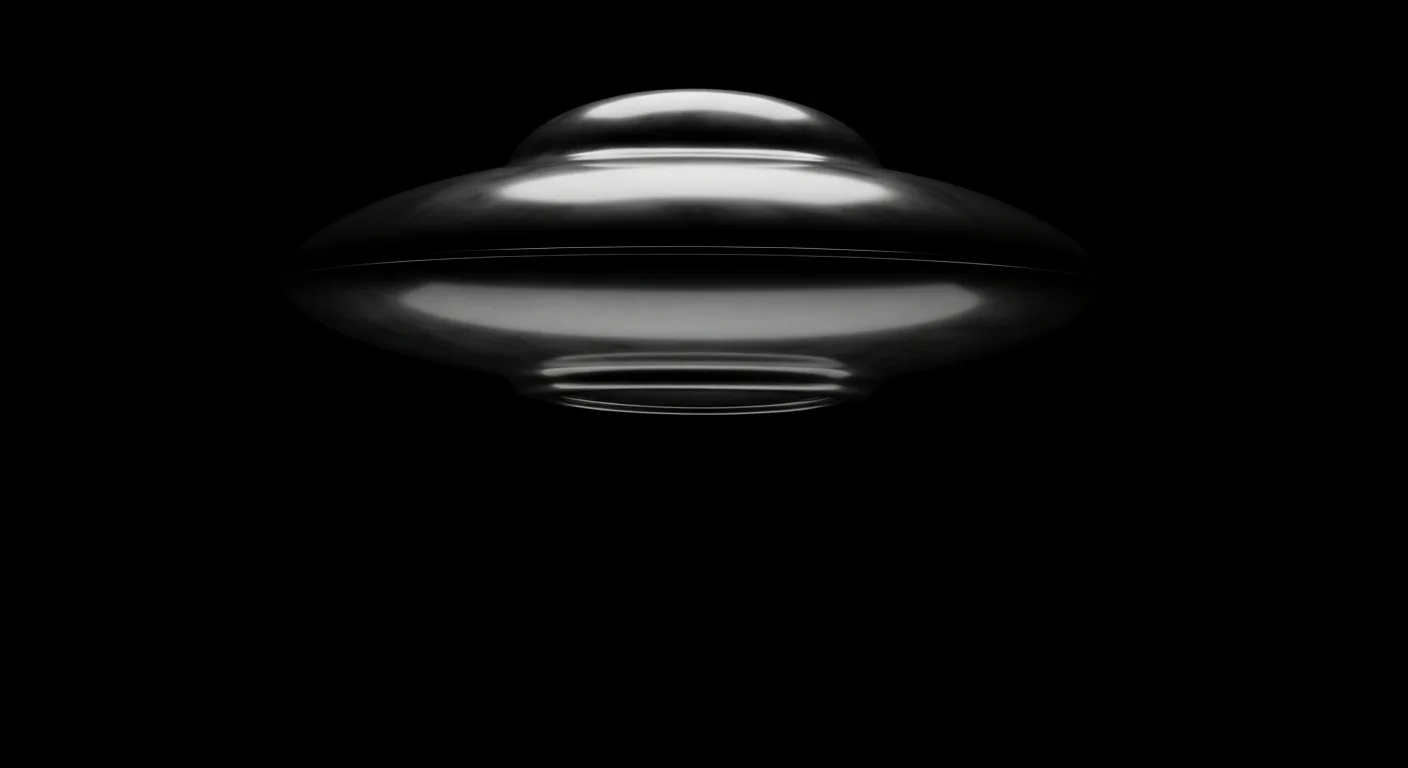
On June 24, 1947, businessman and pilot Kenneth Arnold observed nine unusual objects flying near Mount Rainier, Washington. His report to newspapers, and the resulting term “flying saucers,” launched the modern UFO phenomenon.
The Witness
Kenneth Arnold was a 32-year-old businessman and a private pilot. He also worked as a fire equipment salesman and was considered a respected member of his community.
The Flight
On June 24, 1947, around 3:00 PM, Arnold was flying his CallAir A-2 near Mount Rainier, searching for a crashed plane. The visibility during the flight was clear.
The Sighting
He observed nine objects flying in formation near the mountain, moving with remarkable speed and a distinctive motion unlike any aircraft he had ever seen.
The Objects
Arnold described the objects as having a flat shape, resembling a crescent or a pie-plate. He noted that they exhibited a highly reflective surface, with the sun glinting off them, and that they were travelling in a chain formation.
The Movement
The objects dipped and weaved in a peculiar manner, as Arnold described, “like saucers skipping on water.” He told a reporter that this distinctive motion was far from normal flight.
His Calculations
Arnold estimated the speed of the objects to be approximately 1,200 miles per hour, calculating the time it took them to travel between peaks from Mount Rainier to Mount Adams, covering 47 miles in just 102 seconds – a distance far beyond the capabilities of 1947 aircraft.
The Landing
Upon landing, Arnold informed airport staff and subsequently reported the incident to the FBI. He then spoke with reporter Bill Bequette, and the story quickly spread throughout the public.
The Term “Flying Saucer”
The phrase “flying saucer” emerged from a misunderstanding of Arnold’s description of the objects’ motion. Headlines misinterpreted his words, focusing on the shape of the objects rather than the motion, and the term “flying saucer” stuck, becoming synonymous with the phenomenon.
The Actual Shape
Later, Arnold clarified that the objects were more crescent-shaped and not disc-like, but the term “flying saucer” had already become firmly established and had a significant cultural impact, shaping expectations surrounding unidentified aerial phenomena.
Media Explosion
The story quickly gained national and international attention, with headlines appearing across the globe. The public developed a fascination with the unexplained events, marking the beginning of the UFO era.
Government Interest
Military officials noticed the reports and investigated Arnold’s account, finding it credible. This led to the establishment of Project Sign and subsequently Blue Book, initiating a formal government investigation into UFO sightings.
The Wave Begins
Following Arnold’s report, hundreds of sightings were reported across the country during the summer of 1947, creating a mass phenomenon known as the “flying saucer flap.”
Roswell Connection
Two weeks later, the Roswell incident occurred in July 1947, raising questions about a possible connection or coincidence. This event further fueled the UFO summer and helped establish a pattern of reported sightings.
Arnold’s Credibility
Investigations into Arnold’s background revealed that he had an excellent reputation, had no prior interest in seeking fame, and was troubled by the attention he received. Despite this, he was recognized as an honest and reliable reporter.
Later Sightings
Throughout his life, Arnold continued to have additional sightings of unexplained objects, remaining convinced that he had witnessed something real. He maintained a lifelong interest in the phenomenon.
Skeptical Explanations
Some suggested that the sightings were caused by pelicans, mirages, meteors, or military aircraft, but none of these explanations provided a completely satisfying answer.
His Position
Arnold consistently maintained that he had seen something real, something that was not an aircraft, nor a natural phenomenon, but rather an example of advanced technology. He held this belief until his death in 1984.
Cultural Impact
The sighting created the modern UFO phenomenon, popularized the term “flying saucer,” raised public awareness, and garnered significant interest from government agencies. The story continues to be referenced today.
Significance
The Kenneth Arnold case is significant for several reasons, including its role in starting the modern UFO era, the establishment of the “flying saucer” term, the credibility of Arnold as a witness, the attention it garnered from government agencies, and its impact as a cultural watershed moment.
Legacy
Kenneth Arnold’s June 1947 sighting marks the birth of the modern UFO era. Whether he saw secret military craft, unknown phenomena, or something else entirely, his report changed how we look at the skies.
Sources
- Kenneth Arnold — Wikipedia
- Project Blue Book — National Archives — USAF UFO investigation files, 1947–1969
- CIA UFO/UAP Reading Room — Declassified CIA documents on UAP
- Chronicling America — Historic US newspapers (1690–1963)