William Rhodes UFO Photographs
Days after the Roswell incident, a Phoenix man photographed a disc-shaped craft from his backyard. His photos, confiscated by military intelligence, showed a heel-shaped object that matched other reports.
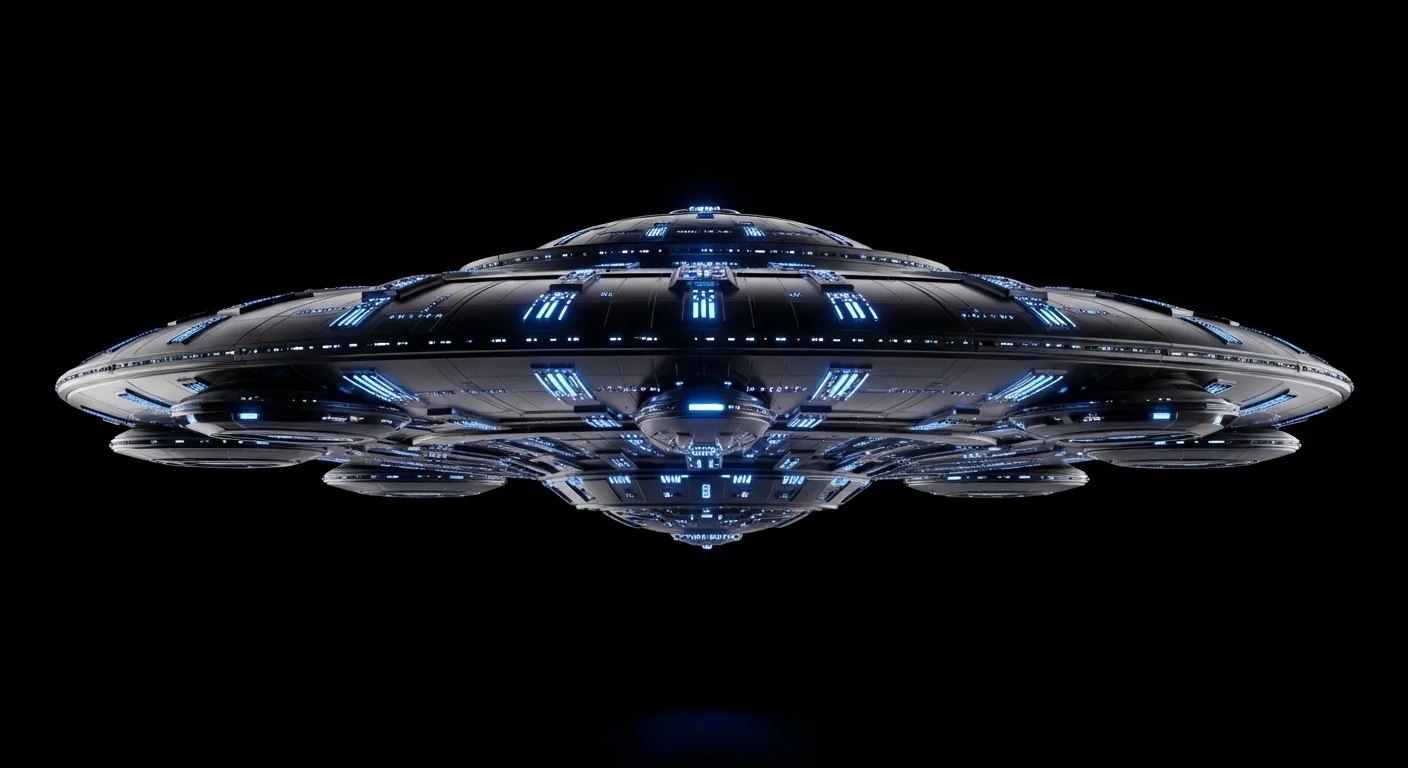
On July 7, 1947, just days after the Roswell incident and Kenneth Arnold’s famous sighting, Phoenix resident William Rhodes photographed an unusual disc-shaped object from his backyard. His photographs were subsequently confiscated by military intelligence, and Rhodes was never able to recover his originals.
The Sighting
William Rhodes was an amateur scientist and musician living in Phoenix when, at approximately 4:00 PM on July 7, 1947, he heard a distinctive “whooshing” sound outside his home.
Running to investigate, Rhodes observed an unusual object circling above. He grabbed his camera and managed to take two photographs before the object departed to the southwest.
The Photographs
Rhodes’ images showed a disc-shaped object with a raised center or dome, a heel-shaped or rounded-off triangular outline, dark coloration, and a clear definition against the sky. The shape closely resembled descriptions from Kenneth Arnold’s sighting two weeks earlier—a detail that supported the photos’ authenticity, as Rhodes claimed to have taken them before learning the details of Arnold’s description.
Public Response
Rhodes provided his photos to the Arizona Republic newspaper, which published them on July 9, 1947. The images generated significant attention, being among the first clear UFO photographs of the modern era.
The timing—during the initial 1947 UFO wave and concurrent with Roswell—meant the images received both public interest and official attention.
Military Investigation
Representatives from Army Air Force intelligence soon visited Rhodes. According to his account, they examined and copied his photographs, asked detailed questions about the sighting, and later returned and confiscated his original negatives. He was told they would be returned—they never were. Rhodes spent years attempting to recover his original negatives from various government agencies without success.
Analysis
The Rhodes photographs were studied by various parties. Military analysts found them consistent with other 1947 reports, considering the image quality good for the era, and noting that the object’s shape matched witness descriptions from other cases. No evidence of obvious fraud was detected.
The “Heel Shape”
Rhodes described the object as resembling a heel or a man’s shoe viewed from above. This distinctive shape appeared in his photographs and matched certain other 1947 reports.
The consistency between Rhodes’ description, his photographs, and independent witness reports from the same period suggested either a genuine unknown aerial object or remarkable coincidental fabrication matching unknown details.
Official Interest
The continued official interest in Rhodes’ photographs—including their confiscation—suggests authorities took the case seriously. Whether this indicated belief in their authenticity or concern about potential hoaxes is unclear.
Legacy
The Rhodes photographs represent some of the earliest clear UFO images from the modern era. Their confiscation by military authorities, and the fact that the originals were never returned despite repeated requests through formal channels, added to the growing perception of government secrecy around UFO matters that would solidify in the decades to come. The case is frequently cited in UFO historiography as one of the early instances in which civilian evidence vanished into military filing systems and was never recovered, a pattern that would repeat with sufficient regularity to become a fixed feature of the modern UFO discourse.
Rhodes himself maintained his account throughout his life, describing a genuine sighting and expressing frustration at losing his original evidence. He was reportedly visited a second time in the early 1950s by men who identified themselves as government investigators and who took further copies of any remaining material. By the time researchers in the wave of 1960s civilian UFO investigation began trying to track down the originals, the trail had gone cold. Project Blue Book records released decades later acknowledge the case but contain only newspaper-quality reproductions of the images, not the original negatives that Rhodes claimed to have surrendered.
The photographs, in their published form, remain part of the historical record of the 1947 UFO wave that launched the modern UFO era. Researchers including J. Allen Hynek and later civilian investigators returned to the Rhodes case repeatedly, weighing it against the broader pattern of crescent or heel-shaped craft reports from that summer. Whether the consistency of those descriptions reflects something genuinely seen in the skies of the American Southwest, or the rapid contagion of a single influential image and description through wartime-era newspapers and word of mouth, remains a matter of interpretation. What is not in dispute is that something photographed by an amateur scientist in his Phoenix backyard, two weeks after the modern era of UFO reporting began, was considered important enough by military intelligence to remove from civilian hands and never return.
Cultural Impact
The Rhodes case helped establish a template that would recur throughout the early Cold War era: a civilian witness produces photographic evidence, military authorities arrive promptly to take possession of the material, the evidence vanishes into classified channels, and the witness is left with only their own recollection of what they saw. Subsequent generations of UFO researchers have argued that this pattern itself constitutes a form of evidence, suggesting that authorities took the phenomenon seriously enough to act on it consistently. Sceptics counter that the routine confiscation of any unusual evidence reflected ordinary intelligence-gathering practice during a period of heightened secrecy, and that absence of returned material does not imply paranormal significance. The Rhodes photographs, sitting at the start of this long chain of similar cases, retain their position as a foundational document of the modern UFO era.
Sources
- Rhodes UFO photographs — Wikipedia
- Project Blue Book — National Archives — USAF UFO investigation files, 1947–1969
- CIA UFO/UAP Reading Room — Declassified CIA documents on UAP
- Chronicling America — Historic US newspapers (1690–1963)