Drawn from the hollow-Earth tradition popularised by nineteenth-century occultists and later Mount Shasta lore, the Agarthans are catalogued in Craig Campobasso's 2021 reference 'The Extraterrestrial Species Almanac' as inner-Earth humans descended from survivors of Lemuria and Atlantis who, forewarned of the destruction of their surface civilisations, withdrew underground to evolve in tranquillity. They are said to be indistinguishable from surface humans except for their great height, some reaching fifteen feet or more, and to be governed by the Agarthan Network, a unified council of ancient elders, from the capital city of Telos beneath Mount Shasta and a sister city named Catharia. In the book's cosmology they are a spiritually elevated society devoted to the Cosmic Law of One and students of the Angelic Hierarchy and the Melchizedek Order, the universe's spiritual university of 490 worlds. Campobasso claims they hold that every planet, and even the sun, is hollow and inhabited by advanced civilisations within. Their cosmic agenda is presented as guiding humanity's accelerated ascension, the Almanac stating that the inner-Earth councils intend to move directly into the fifth dimension as the fourth is dissolved.

A Pleiadian sub-group named in Craig Campobasso's 2021 'The Extraterrestrial Species Almanac' as hailing from Alcyone, the brightest star of the Pleiades cluster in Taurus, long treated in esoteric tradition as a spiritual focal point. They are described as Nordic and largely indistinguishable from Earth humans, with females around five-and-a-half to six feet and males five-seven to six-two; their skin is said to shift with the dimension they inhabit, ranging from white to pale blue, violet or red. In the book's cosmology they follow the Cosmic Law of One and connect through long heart-to-heart embraces, pressing chest to chest to pass unconditional love between bodies. Campobasso casts them as friendly scientists of the Galacterian Alignment who visit selected contactees, study the cellular structure of living things and claim to have catalogued close to half a million civilisations. Their craft, said to be one to three hundred feet across, are described as driven by a crystal template and plasma energy, with pilots whose minds are married to the ship's organic brain matter and a hull that allegedly changes shape and emits colour at speed.

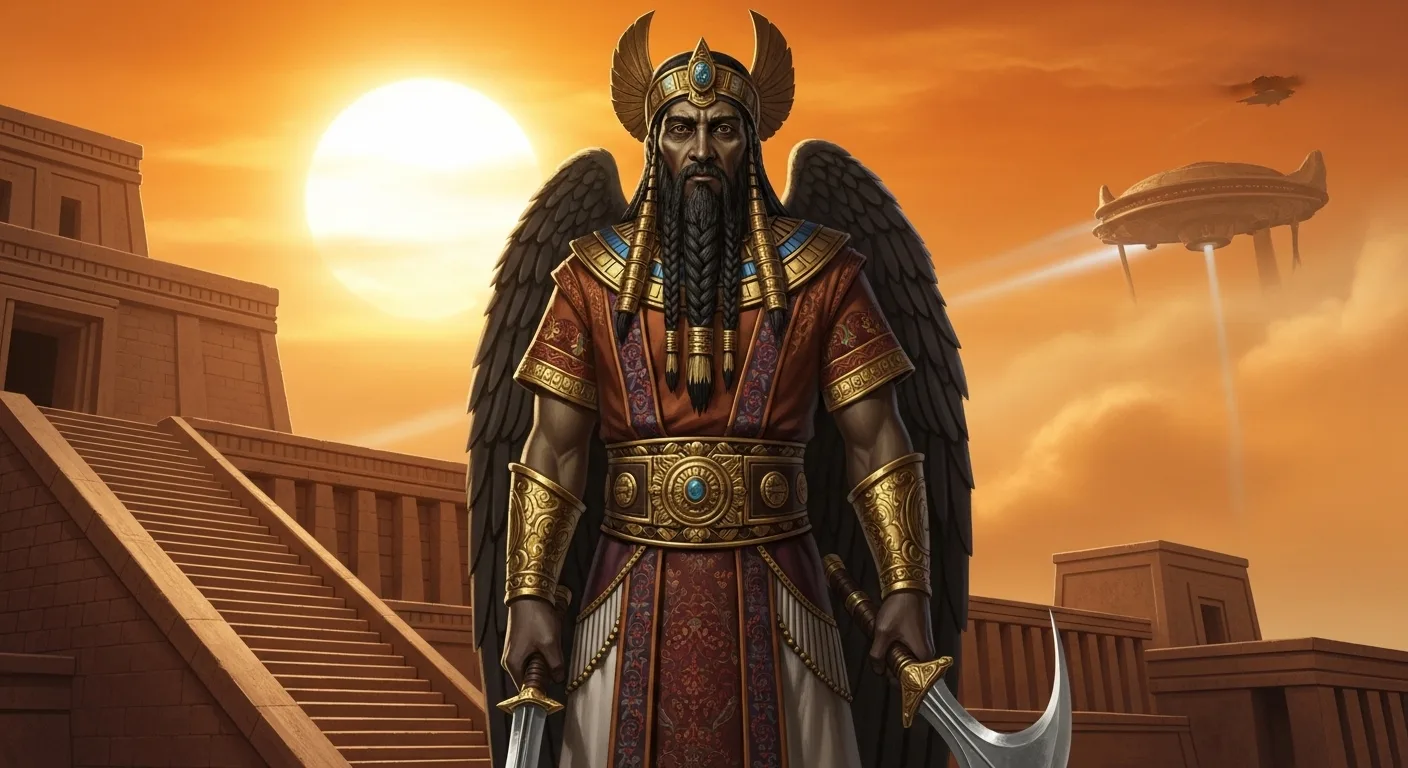
The supreme caste of the reptilian Orion Empire as described in Craig Campobasso's 2021 'The Extraterrestrial Species Almanac,' extending the Draconian-overlord lore popularised by researchers such as David Icke. Said to hail from the Orion constellation, these monstrous winged beings stand from ten to over twenty feet tall, with pure-white hides of scales and scutes, clawed hands, bony brow crests and small burnt-yellow or orange reptile eyes covering razor-sharp teeth. In the book's cosmology a long royal bloodline rules the reptilian caste, and the Almanac claims the Albino Dracs taught their Draconian subordinates, possibly created to do their dirty work, that the reptile community was the first race in the universe and owns it, drilling their young that humans are 'the dreck of the universe.' Campobasso presents their cosmic agenda as turning as many species as possible to service-to-self before folding them into the Orion Empire, and claims the Albino Dracs and Draconians govern Earth 'from behind the cosmic curtain.' Their organic ships are described as blue-black spheres resembling a black widow's hump, with motherships shaped like fierce winged creatures, and the race is said to hide in secret antimatter realms unknown to the Galacterian Alignment.

A benevolent human star nation placed by Craig Campobasso's 2021 'The Extraterrestrial Species Almanac' in the Aquila constellation, where they are said to share nearby worlds with humanoids, reptilians and Greys as great cohabiters with other races. Altarians are described as indistinguishable from Earth humans but taller, with men reaching six to nine feet and women five-nine to seven; most are light-skinned, though breeding with other human races is said to produce blue, green, tan and brown tones. In the book's cosmology they follow the Cosmic Law of One and study science and natural philosophy, analysing fundamental questions of creation and the colour frequencies of suns and stars, and they allegedly believe the universe is a symphony and its peoples its instruments, each soul raising its octave from world to world until it masters the whole composition. Campobasso presents their cosmic agenda as membership of the Galacterian Alignment and participation in the Melchizedek Star Seed Program, the body said to be focused on raising consciousness on Earth ahead of a coming dimensional shift.

A celestial order described in Craig Campobasso's 2021 'The Extraterrestrial Species Almanac' as originating from the Isle of Paradise at the centre of creation, a cosmology borrowed directly from 'The Urantia Book' (1955). The Corps is presented as a multiplicity of universally created beings whose physical appearances mirror cultures across the universe, encompassing seraphim, guardian angels and ministering angels. In the book's belief system they work for the Source of All Existence regardless of one's faith, every being given a body to expand its spark from the formless to form; Campobasso writes that seraphim guide mortals along the steep path of experiential life to grow the soul from learning planet to learning planet, while guardian angels oversee the oversoul's journey and ministering angels attend the individual from behind the veil. Their cosmic agenda is said to be maintaining the calibration of Living Light across the universe and delivering ascension curriculums to worlds ready to rise out of duality. The Almanac claims the Angelic Corps oversees the Galacterian Alignment and labours in unison with the University of Melchizedek in the Mira System, from where Living Light programmes are dispersed.

A human star nation catalogued in Craig Campobasso's 2021 'The Extraterrestrial Species Almanac' as hailing from Antares, the red supergiant marking the heart of Scorpius and a star that recurs across channelled contact literature. Antarians are described as indistinguishable from Earth humans but taller, women six feet to seven-five and men seven to nine, with skin tones from white to olive, brown or a distinctive copper, and are framed as a fit, attractive race. In the book's belief system they follow the Cosmic Law of One and hold that all beings are mirrors of one another, treating everyone they meet with honour and love; the Almanac claims they can peer into the window of every soul to read its history, and that they believe the universe is the master teacher and its peoples its students, destined to merge their consciousness with it. Campobasso presents their cosmic agenda as membership of the Galacterian Alignment and participation in the Melchizedek Star Seed Program, assisting Earth's star seeds from the elevated dimensions of their home through dream states, downloads into consciousness and astral visitation, stepping down their energy to interact with humans.

Human extraterrestrials said to come from Alpha Centauri, tied by Craig Campobasso's 2021 'The Extraterrestrial Species Almanac' to contact reports from the Peruvian Andes in the early 1950s, where the Quechua people are said to have named them Apunians after 'Apu,' lord, protector and spirit of the mountains. The Alpha Centauri origin also echoes the Mission Rama contact movement founded in Lima by Sixto Paz Wells in 1974. Campobasso describes them as a tall, attractive, Nordic-looking race, females six-five to nine feet and males up to twelve, basically indistinguishable from Earth humans. In the book's belief system they follow the Cosmic Law of One, are aware of the higher self and oversoul, and claim there are 1,019,000 inhabited civilisations in the universe. Their cosmic agenda is presented as masterful transformation of negative energy and complete service to all worlds; the Almanac says words such as advantage, favouritism and privilege are absent from their vocabulary, and that, having merged their own consciousness with their higher self, they choose heart-based contactees to spread their message of brotherly love and to help raise humanity's vibration.

A human race placed by Craig Campobasso's 2021 'The Extraterrestrial Species Almanac' on the planet Arian in the Aldebaran system of Taurus, a star better known in fringe lore for the Vril and Nazi-UFO mythos but recast here as benevolent. Arians are described as indistinguishable from Asian peoples of Earth, slender and five-nine to six-six tall, with oval faces framed by lustrous black hair, golden-to-tan skin and lifespans exceeding four thousand years; the Almanac adds a related Asian race, the Gne of planet Pall, who serve among their crew. In the book's belief system they follow the Cosmic Law of One and hold that all souls share the primordial cell and are therefore one, their advanced consciousness granting awareness of the universe's seen and unseen realms. Campobasso presents their cosmic agenda as galactic exploration through anthropologists, psychologists, geneticists and intergalactic linguists who study civilisations and collect genetic material; crucially, the Almanac says they share with younger worlds the hard-won lesson that ended their own long history of war, after countless years of loss taught both sides how useless conflict was and they ceased manufacturing weapons.

An insectoid star nation introduced in Craig Campobasso's 2021 'The Extraterrestrial Species Almanac' as hailing from the Boötes constellation in the northern sky. Beesonites are described as five-five to six feet tall with thin insectoid bodies, four long three-jointed fingers, enlarged aqua bee-like eyes, a human nose and mouth and the ears of a small dog, their tan skin smooth as soft leather. In the book's belief system they are master teachers of the Cosmic Law of One to cultures newly transformed from duality to full consciousness, known as benevolent 'sensitives' whose energetic connection to all living things commands a singular respect; the Almanac says they hold that every being carries the entire history of the universe in its cells, forming what it calls the Living Library of Akasha. Campobasso presents their cosmic agenda as membership of the Galacterian Alignment and participation in the Melchizedek Star Seed Program, with crews stationed in motherships above Earth and across the solar system in preparation for its dimensional shift. Their spherical fleet craft are said to be skinned to mimic their own hypersensitive bee-like eyes, acting as visual amplifiers that pull distant images closer through thought alone.

One of several distinct Sirius B races separated out in Craig Campobasso's 2021 'The Extraterrestrial Species Almanac,' placed on the white-dwarf companion of Sirius in Canis Major. Blue Sirians are described as tall, hairless 'warriors of the light' with bright blue skin, elongated faces, appreciative features and large ears tuned to universal frequencies, said to prefer being perceived for their multidimensional energetic frequency rather than their physicality. In the book's belief system they follow the Cosmic Law of One and consider themselves at one with the universe, the heart and mind of Source from which all beings are interconnected. Campobasso presents their cosmic agenda as that of superintuitive, ultrapsychic beings able to perceive the unseen ley lines and holographic grids of the cosmos and planetary fields, which they are said to stimulate with 'Living Light codes' to anchor new energetic frequencies and awaken empowerment codes during a world's ascension, balancing planetary meridians and soul frequencies. Counted among the Galacterian Alignment, they are cast as the universe's experts on grid templates and guardians of ancient spiritual technologies, fully conscious telepaths and mental kineticists able to move energy through ley and grid lines.

A human star nation placed by Craig Campobasso's 2021 'The Extraterrestrial Species Almanac' in the Cassiopeia constellation, a name distinct from the channelled 'Cassiopaeans' of Laura Knight-Jadczyk. The Almanac's Cassiopeians are described as indistinguishable from Earth humans apart from faint clear webbing between their fingers, developed over generations as avid swimmers and lovers of ocean life whose slim bodies glide through water like dolphins. In the book's belief system they follow the Cosmic Law of One and hold water sacred, purifying it in clear quartz crystal vats over which goddesses meditate to infuse it with love; Campobasso claims this devout practice activated a crystalline matrix within their blood cells, granting unmatched endurance, and expanded their brain's storage capacity beyond 100 percent, categorising them as superhumans. Their cosmic agenda is presented as membership of the Galacterian Alignment and participation in the Melchizedek Star Seed Program, studying oceans on many worlds and communicating with sea creatures through telepathic pictures. The Almanac says many of their kind crew galactic command centres above and below Earth, eager to meet what it calls their extended human family.

A human race catalogued in Craig Campobasso's 2021 'The Extraterrestrial Species Almanac' as hailing from the Cetus constellation. Ceitans are described as indistinguishable from Earth humans, women five-five to seven feet and men six to eight, with olive to reddish-brown skin, mostly dark hair, eyes commonly royal blue and a heritage said to resemble Spanish, Italian and Native American peoples of Earth. In the book's belief system they follow the Cosmic Law of One and live by natural law, holding that sovereignty in the cosmos begins when a being achieves direct knowing that it is a co-creator with the Creation; the Almanac says they vividly recall the sublime moment their own world was activated to full consciousness and the rush of love from the universal masses who assisted them. Campobasso presents their cosmic agenda as membership of the Galacterian Alignment and a wish to share all they have learned with younger worlds, choosing love to reveal wisdom. Heart-oriented beings, they are cast as 'cosmic guidance counsellors' who release teachings to their star seeds on Earth so humanity may come to know them as benevolent cosmic neighbours.

A class of ascended beings described in Craig Campobasso's 2021 'The Extraterrestrial Species Almanac' as having risen from the astral realm to become 'celestial realm creators,' their hearts and minds consciously woven into the seen and unseen worlds. Campobasso writes that Celestials may choose any bodily form from their past incarnations, appearing inwardly beautiful and clothed in ultradimensional garments depicting stars, suns, moons, galaxies and nebulae, with a celestial fragrance emanating from their presence. In the book's belief system they are devotional beings and the appointed overseers of the Cosmic Law of One, said to labour from behind the veil of the celestial curtain. Their cosmic agenda is presented as preparing written code within Living Light and dispersing these ascension grids across the heavens to guide planetary consciousness to its next level, working in union with the Angelic Corps and the University of Melchizedek. The Almanac adds that when travelling the multiverse they are said to mould an express craft from 'gammamyne,' a buoyant milky-white matter infused with starlight and high-vibratory crystals, which forms around them instantly at a thought.

A human race from the planet Clarion, described by Craig Campobasso's 2021 'The Extraterrestrial Species Almanac' as a binary-sun world in the constellation Aquila. The name was first popularised by Californian contactee Truman Bethurum, who claimed a 1952 desert encounter aboard a craft captained by the beautiful Aura Rhanes of Clarion and recounted it in his 1954 book 'Aboard a Flying Saucer,' though Bethurum placed Clarion hidden behind the Moon. The Almanac describes Clarions as indistinguishable from Earth humans, females averaging five-five and males five-nine, with petite round features and slanted, almond-shaped 'angelic' eyes. In the book's belief system they follow the Cosmic Law of One, creating light in honour of 'the One with no name,' and hold that time and space are their temples, planets their cathedrals and the universe their sanctuary; the Almanac says they know death is only transformational and that souls reincarnate from planetary school to planetary school until reaching the consciousness of the Primordial One. Campobasso presents their cosmic agenda as assisting Earth out of duality into ascension, claiming some Clarions have lived among us for over eighty years and that one of their bases lies beneath the Amazon jungle.

Biologically manufactured beings described in Craig Campobasso's 2021 'The Extraterrestrial Species Almanac' as either human or alien in appearance, grown in artificial embryo sacs and, in the book's cosmology, void of a soul, since souls are said to be born of the Creation with divine love and intent. Lacking a belief system, they are presented as 'constituted consciousness units' that serve as extensions of their programmers for good or ill. The Almanac states that clones heavily implanted and joined to a group mind become 'robotoids,' which the dark Orion Empire is said to create, use and trade to perform its work and shield it from harm. Campobasso also describes a further variety that uses artificial-intelligence consciousness to impersonate a voice of truth, its messages designed to create fear through false love and to detour star seeds from their missions. The book frames the danger as something a developing star seed can recognise and uproot through meditation, conjuring an imagined magnetic sphere above the head to draw off untrustworthy thought forms, an example of the Almanac's blend of cosmology with self-styled spiritual practice.

Entities described in Craig Campobasso's 2021 'The Extraterrestrial Species Almanac' as not born of man and woman but generated directly by the godhead — and so, in the book's lore, lacking navels. Archangels, angels, gods and goddesses fall under this category, known collectively as the Elohim and defined as magistrates of heaven; some are said to be created as adults and others as infants reared by celestial parents. They are described as generating a body to suit whatever world they visit, human or otherwise, with serene yet 'almighty' voices. In the book's belief system they follow the Cosmic Law of One, in constant communion with the godhead, and their cosmic agenda is presented as that of mighty messengers who activate Living Light programmes, educate teachers of cosmic reality, and command motherships and fleets as members of the Galacterian Alignment. The Almanac's best-known example is Valiant Thor, the figure popularised by Frank Stranges' 1967 booklet 'Stranger at the Pentagon,' said to have met President Eisenhower in March 1957 and lived three years beneath the Pentagon, arriving with a proposal to eliminate disease, poverty and nuclear weapons.

A single-eyed humanoid race introduced in Craig Campobasso's 2021 'The Extraterrestrial Species Almanac' as hailing from 'planet 555,' one of the numbered worlds on the far side of the universe from Earth. Cyclops are described as roughly six feet tall, females six feet and males up to six-five, with elongated heads housing enlarged brains for extra storage and a single large purple, blue, green or brown eye that functions like a telephoto lens, reads energy patterns and auras, attunes to higher psychic abilities and flows side to side for peripheral vision. In the book's belief system they follow the Cosmic Law of One and share the saying common to every star nation, 'judge the individual, not the race.' Campobasso presents their cosmic agenda as part of the Star Seed Alignment, a subdivision of the Galacterian Alignment, overseeing the incarnation of evolved souls to raise Earth's vibration, and writes that members of the race have served secretly aboard saucer fleets and starships since the 1950s as officers under created-being commanders, their unusual appearance keeping their work hidden. Their craft are said to use biological supercomputers and travel through time-space funnels and the innerspace continuum.

A human star nation catalogued in Craig Campobasso's 2021 'The Extraterrestrial Species Almanac' as hailing from the Cygnus constellation in the northern sky. Cygnus Alphans are described as indistinguishable from Earth humans but much taller, men and women ranging from seven-five to nine feet, with women typically taller than men and skin tones likened to a floral bouquet. In the book's belief system they follow the Cosmic Law of One and hold that unity is the embodiment of the Infinite Creator, that there is no right or wrong but only learning, and that the dark and light polarities are one; the Almanac says they practise a 'unified field of trust, truth and unconditional love' reaching out to every particle of space and time. Campobasso presents their cosmic agenda as membership of the Galacterian Alignment and participation in the Melchizedek Star Seed Program, championing younger worlds in becoming sovereign cosmic citizens built on free will and the right use of action; the book claims that once Earth attains full consciousness, the Cygnus Alphans will become its cosmic teachers. Their craft are described as the standard Galacterian fleet, with command centres using biological supercomputers.

A superbeing class described in Craig Campobasso's 2021 'The Extraterrestrial Species Almanac' as originating from the Mira System. Digital Immortals are presented as hairless, uniformly six-foot human forms with translucent milky-white skin and vivid blue eyes — androgynous, sexless beings whose consciousnesses were transferred into engineered 'soul vector suits,' the physical bodies they now inhabit. In the book's belief system they follow the Cosmic Law of One, having re-entered physical form to assist the Galacterian Alignment in raising younger worlds with their evolved perspective. Campobasso writes that they number a thousand evolved souls who once had light bodies and petitioned the constellation fathers, after deliberation with the angelic councils, to experience physical form again, the creator gods and goddesses then granting their wish. Their cosmic agenda is presented as serving the star nations as commanders of various classes; linked to the 'Living Library of Akasha,' they are said to process equations, distances and interdimensional calculations at extraordinary speed, and the Almanac claims their hyper-thinking has averted catastrophes and crashes aboard craft, casting them as the cosmos's navigators and brains.

A malevolent reptilian race placed by Craig Campobasso's 2021 'The Extraterrestrial Species Almanac' at Bellatrix, the third-brightest star of the Orion constellation, with some populations said to dwell in the inner Earth. Dinosaurians are described as males about six feet tall and females five-five to six-two, with dark green skin lightening to beige around the torso, bulbous heads, large round yellow binocular-vision eyes, a short snout and a wide lipless mouth, balancing on three clawed toes with jerky movements and a gift for fast distance running. In the book's belief system they believe in service to self. Campobasso presents their cosmic agenda as service to the Orion Empire, writing that these creatures work to intimidate missionary star seeds, halt their spiritual elevation and inject fear in the hope they abandon their assignments, and that they infiltrate troubled human minds to plant the disinformation that the universe is malevolent — claims the Almanac explicitly labels untrue. As Orion Empire members they are said to have access to Draconian craft, and to be crafty 'mind technicians' able to project telepathically into other realms to poison minds with fear and hate.

The most fearsome reptilians in Craig Campobasso's 2021 'The Extraterrestrial Species Almanac,' said to come from Alpha Draconis in the constellation Draco. Dragon Dracs are described as standing fifteen to twenty feet tall — some reaching thirty or more — with shiny black hides of scales, scutes and bony plates, horns, three-clawed hands, an elongated crocodilian snout of two rows of grey teeth, cold deep-blue slit-pupil eyes and a menacing double wingspan likened to dark sails. In the book's belief system they believe in complete service to self at any expense, killing or ruining whatever stands in their way, and hold themselves to be the dragon gods who rule the universe; the Almanac says the Galacterian Alignment and Angelic Corps watch them closely, locking their auras to prison worlds for cosmic-law infractions, and that many have been sentenced to 'soul-death' for heinous crimes. Campobasso presents their cosmic agenda as working in secrecy alongside the Alpha Albino Royal Dracs to seize world after world for the Orion Empire. They are said to travel in 'dark ark' motherships tooled to the frequency of 'undermonics,' undetectable even to the Galacterian Alignment as they slip into a younger world's sky.

A reformed reptilian race introduced in Craig Campobasso's 2021 'The Extraterrestrial Species Almanac' as hailing from Nu Draconis, a double star in the constellation Draco. E'all reptoids are described as muscular lizard-skinned beings, males six to nine feet and females five-ten to six-five, with colourations from tan to brown, green and red, flat wide noses, lipless mouths, human-shaped brown, gold or green eyes and variable digits, some clawed and some not. In the book's belief system they follow the Cosmic Law of One; Campobasso writes that they fled the evil Orion Empire to found their own society and, working with fully conscious humans who understood their plight, have spent generations blending human DNA into their genetics to slowly erase their aggressive traits. Their cosmic agenda is presented as that of a neutral race who keep to themselves yet contribute by sharing their history with younger worlds, especially reptilian ones ready to shed a dualistic nature. The Almanac says they joined the Galacterian Alignment about a century ago, prefer craft of their own fashioned after birds and eggs, and communicate as fully conscious telepaths by releasing pheromones that project mental images to the receiver.

The term 'EBE' entered UFO lore through alleged crashed-disc accounts of the 1947 Roswell era and was elaborated in the MJ-12 mythos. Craig Campobasso's 2021 'The Extraterrestrial Species Almanac' describes EBEs as engineered humanoid automatons three to four-and-a-half feet tall, with milky-white to grey skin, hauntingly large slanted eyes shielded by dark lenses, diminutive features, no genitals and a childlike, androgynous, chlorophyll-based physiology. In the book's cosmology they are believed to have been created in the Orion constellation or Zeta Reticuli II, the Almanac claiming that Draconian reptiles harvested Zeta biological material through abduction over a million years ago to manufacture the EBE slave race, now said to be widespread across the universe. Campobasso writes that they have only limited consciousness, performing tasks programmed by their creators, and that their cosmic agenda is to be sent on scientific expeditions in place of their technological superiors, collecting human DNA during abductions and placing 'alien implants' into generations of human families — a claim tied to the implant research of podiatrist Dr. Roger Leir, whose books on alleged implant surgeries the Almanac invokes as supporting evidence.

A human star nation catalogued in Craig Campobasso's 2021 'The Extraterrestrial Species Almanac' as hailing from Eridanus, the sixth-longest constellation in the sky. Eridaneans are described as an attractive, Nordic-looking people — men six-four to eight feet, women six to seven — with blond or brown hair, blue or green eyes and a naturally glistening light-blue skin. In the book's belief system they follow the Cosmic Law of One and, like other spiritually advanced races, hold that everything created is part of 'the All,' that individual and collective experience are aspects of the One self, and that they see their own strengths and weaknesses reflected in others; the Almanac says they practise a 'unified field of trust, truth and unconditional love.' Campobasso presents their cosmic agenda as membership of the Galacterian Alignment, writing that the cautious Eridanean consciousness deliberated for three millennia over the Melchizedek Star Seed Program — wary of incarnating into dualistic worlds without cosmic memory — before enlisting a hundred volunteers, then, after several successful incarnation missions, voting unanimously to join, with hundreds of thousands of volunteers since.

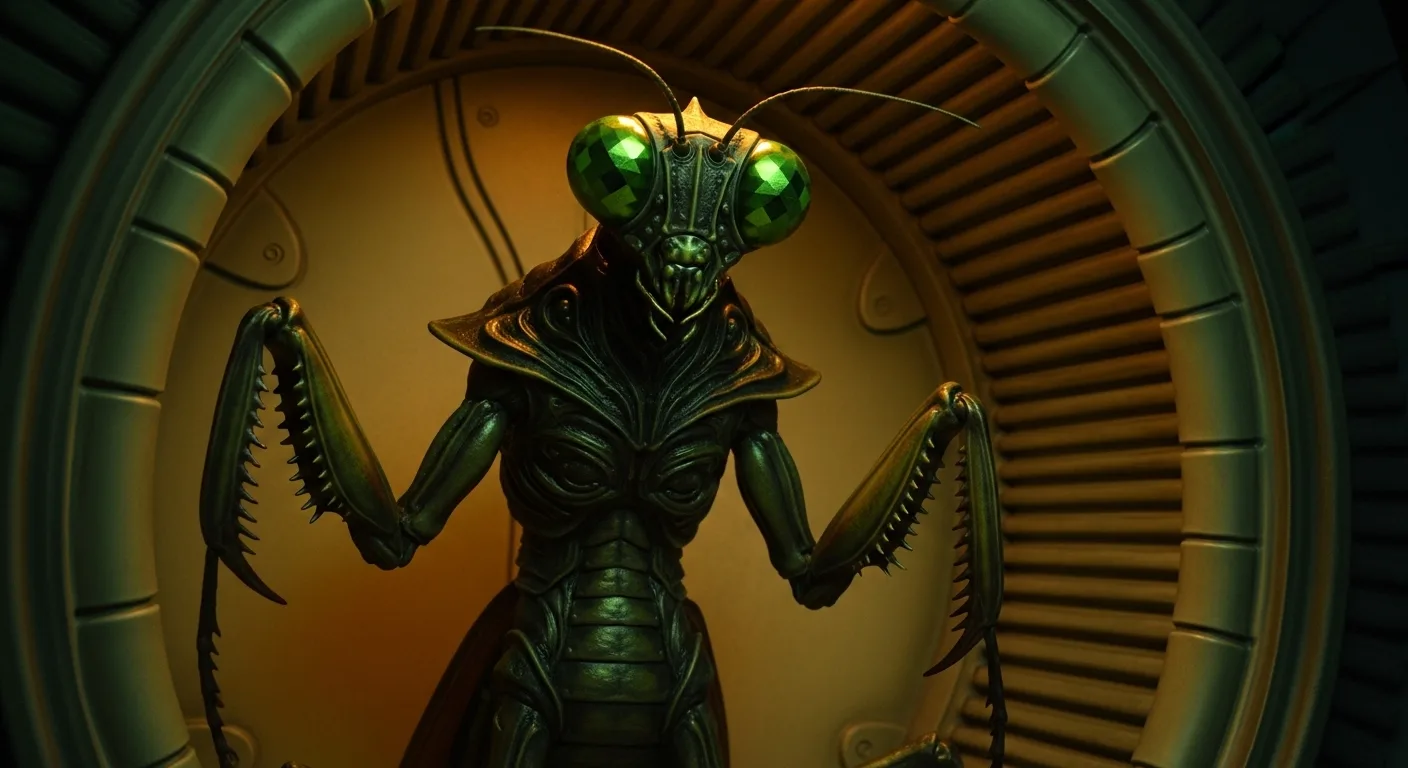
A hybrid race described in Craig Campobasso's 2021 'The Extraterrestrial Species Almanac' as a crossing of Tall Greys and Mantis beings, originating from Mu Draconis, a binary star in the constellation Draco. Grey Insectoids are presented as eight to ten feet tall with long, emaciated-looking bodies, spiny arms, extra-long slender fingers and oversized bulbous eyes blending Grey and mantis traits — some bearing the mantis pupil, some not — and, though frail-looking, said to be quite strong. In the book's belief system they are primarily in service to themselves, a neutral yet secretive race who keep to their own kind. Campobasso presents their cosmic agenda as that of proficient geneticists who collect genetic material from the races they encounter, the Almanac admitting their role in genetic engineering on Earth is unclear. They are said to travel in advanced cube-shaped craft fitted with state-of-the-art genetic laboratories, using multidimensional instruments to extract material without causing pain, and the book claims their telepathic range exceeds normal limits and that, through electromagnetic enhancements built into their auras, they can tune their frequency to become invisible and walk through walls.

Craig Campobasso's umbrella treatment in his 2021 'The Extraterrestrial Species Almanac' of the Greys as a renegade group originally from Zeta Reticuli II in the Reticulum constellation, who left their worlds thousands of years ago, with some later captured and genetically altered by groups within the tyrannical Orion Empire. The Almanac distinguishes Short Greys (four to five feet, oversized heads, sinister dark wraparound eyes), Tall Greys (six to eight-and-a-half feet, bulbous elongated heads, protruding insect eyes over human-like eyes beneath nictitating lenses) and Taller Greys (nine to twelve feet, crepe-paper facial skin, small pure-black eyes and the most menacing of the three). In the book's belief system the Grey races believe in complete service to self at any cost to other species' free will. Campobasso writes that the Short Greys lost their spiritual nature through inbreeding, cloning and the pursuit of technology and are desperate to regain that union before extinction; their cosmic agenda is presented as driving the abduction programme against humanity, inserting biologically covered metallic implants into abductees in a bid to upgrade their failing race, while aligned with the malevolent reptilian Orion Group.

One of several Sirius B races separated out in Craig Campobasso's 2021 'The Extraterrestrial Species Almanac,' placed on the white-dwarf companion of Sirius in Canis Major. Human Sirians are described as indistinguishable from Earth humans but taller — men six-five to eight feet, women six to seven — with well-proportioned bodies, spectral and sometimes patterned skin tones and expressive eyes likened to windows of love in every dimension. In the book's belief system they follow the Cosmic Law of One, conscious of the higher self and the oneness of all creation, and are said to have attained the ultimate human potential, living in joy, learning in light and empowering one another with tremendous self-worth; other star nations are said to call them 'blissful spiritual warriors.' Campobasso presents their cosmic agenda as membership of the Galacterian Alignment and participation in the Melchizedek Star Seed Program, counting some of the Alignment's greatest science commanders among their number. Their star seeds on Earth are described as masters of psychic protection, aura amplification, DNA rejuvenation and energy balancing.

Inhabitants of the planet Iarga, drawn directly from Dutch contactee Stefan Denaerde, whose account — later published in English with Wendelle Stevens as 'UFO Contact from Planet Iarga' — described being taken aboard a craft after a boating collision. Craig Campobasso's 2021 'The Extraterrestrial Species Almanac' places Iarga in the Cygnus Alpha constellation, an island-and-water world with green topography and cherry-blossom-pink skies, and describes the Iargans as once-amphibious beings with grey-brown sealskin, webbed hands and feet, small almond eyes, a central bony head plate and stocky, powerfully built bodies, said to live ten thousand to a building in vast cylinders ringed by manicured gardens. In the book's belief system they follow the Cosmic Law of One and hold that there is no separation between science and religion, that dualistic cultures must evolve their soul to earn immortality, and that creation's goal is to integrate every intelligent race into one realm of love. Campobasso presents their cosmic agenda as coming to Earth to share what they have learned of creation's evolutional cycles, teaching that humanity's first cycle is carried out in ignorance.

A malevolent reptilian race in Craig Campobasso's 2021 'The Extraterrestrial Species Almanac,' originally of the Orion constellation and later settled on a water planet in Boötes. Iguanoids are described as three-five to five-five tall, balancing on a long tail, with dark green and tan reptile skin, four extra-long clawed fingers and toes and orb-shaped black or brown slit-pupil eyes; the Almanac claims their DNA is half iguana, a quarter human and a quarter 'evil Grey,' bred by the Orion Empire with aggressive dominant genes. In the book's belief system they believe in service to self and are said to thrive in darkness. Campobasso presents their cosmic agenda as that of black-cloaked troublemakers and 'conjurors of gloom' who practise the dark arts, despise the Galacterian Alignment and interfere on worlds about to become fully conscious, primarily targeting star seeds with fear to prevent them from raising their consciousness; the Almanac says their goal is to see people fail, which feeds their need to control. They are said to fly decommissioned Orion Empire saucers and to wield psychic abilities that infiltrate minds, stealing a person's inner dialogue and making it their own.

Inhabitants of the Itipura system, drawn from the contactee account of Ludwig Pallmann, the German salesman whose claimed encounters were published by Wendelle Stevens as 'UFO Contact from Itibi-Ra: The Cancer Planet Mission.' Craig Campobasso's 2021 'The Extraterrestrial Species Almanac' relates that the Itipurians' former home, Itibi-Ra I, dried of water, prompting them to transfer their entire population to Itibi-Ra II and switch from a solid to a liquefied diet. They are described as Caucasian-appearing with light-brown skin, of normal Earth height, elegant and slender; Campobasso notes their thin jawlines, rudimentary teeth and small tongues, the gum guards worn to disguise their malformed mouths, and the fingertip gloves covering their sensitive, nailless fingers. In the book's belief system they live by seven laws of nature, which they call their 'cosmophilosophy,' studying God in nature and the science of the soul known to them as Amat Mayna, and hold that any punishment they suffer comes not from God but by their own hand. The Almanac presents their cosmic agenda as that of a heart-centred people sharing this nature-based philosophy with humanity through their telepathic translation devices.

A human race from the planet Klermer, drawn from the Brazilian contactee case of the Reis brothers, published by Wendelle Stevens as 'UFO Contact from Planet Klermer' and set in 1976. Craig Campobasso's 2021 'The Extraterrestrial Species Almanac' describes Klermers as indistinguishable from Earth humans but taller, eight-five to ten feet, attributing their height to the lower gravity of their world. Campobasso writes that they retard ageing by isolating nutrients in marine algae and ingesting the oil-based liquid, drink no water but draw liquid from fruit, and speak a language said to sound like French. In the book's belief system they follow the Cosmic Law of One, holding that all is provided by the Creator and that all beings are co-creators, and they understand death as 'the separation from matter,' after which they are reborn retaining all prior knowledge. Campobasso presents their cosmic agenda as having returned to Earth in 1976 — claiming the Klermers once lived here among eleven other races before solar explosions drove them out — to encourage humanity toward full consciousness, teaching that uniting with nature unites one with the mind, heart and soul of the universe. Because the Almanac frames humanity as their distant descendants, they are said to wish the same unity for us.

Inhabitants of the planet Koldas, drawn from the South African contactee Edwin, whose claimed radio and in-person contacts beginning in 1960 were documented by Carl van Vlierden and Wendelle Stevens as 'UFO Contact from Planet Koldas.' Craig Campobasso's 2021 'The Extraterrestrial Species Almanac' describes Koldashans as indistinguishable from Earth humans, of average height, with the same range of skin, hair and eye colours and light-blue uniforms, and recounts the claim that the warring people of Mars once destroyed their civilisation in a nuclear holocaust, the survivors relocated to the world Siton. In the book's belief system they follow the Cosmic Law of One and believe in one Supreme Consciousness, the 'Divine One,' who created everything seen and unseen. Campobasso presents their cosmic agenda as having first visited Earth in the time of Atlantis and again in the 1940s and 1960s; he writes that future commanders, such as Valdar, who began his Earth education in South Africa in 1960, must first live for years as ordinary humans, learning a country's language and customs and securing regular jobs before revealing themselves to a Koldashan star seed. The Almanac claims the Koldashans maintain three hundred bases on Earth and, as of 1969, had enjoyed over two thousand years of peace.

An omnipresent feminine being described in Craig Campobasso's 2021 'The Extraterrestrial Species Almanac' as the very fabric of time and space, her essence said to imbue the universe and nature. Campobasso depicts her as a magnanimous woman about five feet tall with spectacular blue eyes, moonlight-glowing skin, blond hair and an ultradimensional white celestial gown within which stars live and move. In the book's belief system she follows the 'Mother, Father, Children of the Universe' principle, holding that all sentient beings own the consciousness of the primordial atom, and she is cast as the personification of unconditional love who watches over humanity. The Almanac identifies her with Marian apparitions — Our Lady of Fátima, Medjugorje and Guadalupe — and with the White Buffalo Calf Woman of Native American tradition and the goddesses Isis, Hathor, Demeter and Diana. Her cosmic agenda is presented as appearing at intervals to deliver urgent warnings; her most recent contactee is named as Christopher Bledsoe Sr., to whom she is said to have appeared on Easter Sunday 2012 with a message about his experience on the Cape Fear River, later confirmed, the book claims, by a backyard tree that caught fire and reignited twice before regenerating.

Feline humanoids catalogued in Craig Campobasso's 2021 'The Extraterrestrial Species Almanac' as hailing from the Sirius star system in Canis Major, with related feline civilisations in Antares and Lyra — a lineage that echoes the 'lion people' of various channelled traditions. Campobasso describes them as a blended cat-and-human form nearly seven feet tall, with manes of hair, soft chamois-like flesh in orange, grey, black and white, larger eyes with cat pupils, cat noses, smaller mouths and tails, the body itself more human in form. In the book's belief system they follow the Cosmic Law of One and hold that every being across the universe is interconnected and affects the chain, living in love, affection and mutual championing. Campobasso presents their cosmic agenda as membership of the Galacterian Alignment and participation in the Melchizedek Star Seed Program, wishing to help humanity learn the customs of its most unusual cosmic brethren; he writes that awakening star seeds often see their home peoples first and then the Lion-Felines, who are said to long for the day they can openly interact with humanity and to want us to know how much they love us.

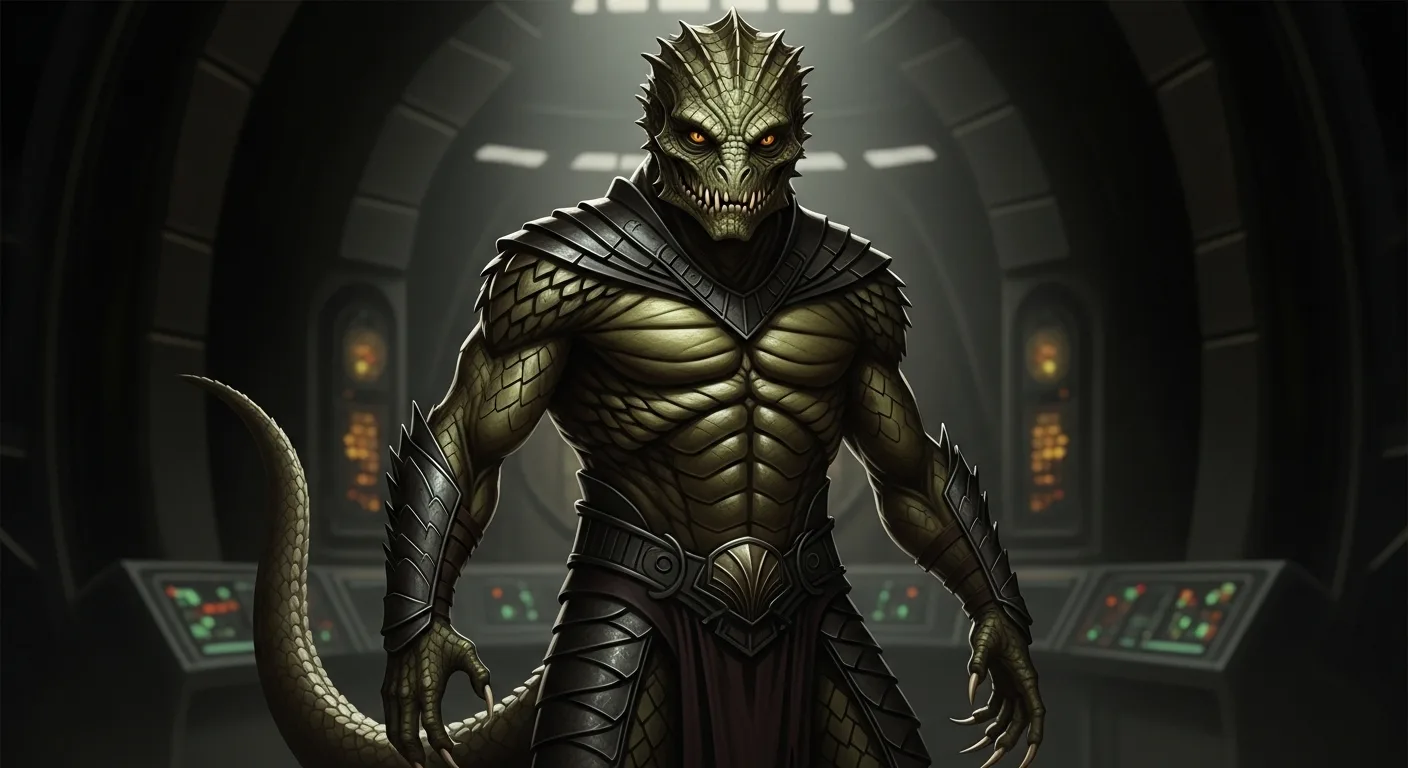
A benevolent reptilian race introduced in Craig Campobasso's 2021 'The Extraterrestrial Species Almanac' as subterranean dwellers from Lacerta, a small northern constellation whose name also features in the well-known 'Lacerta File' hoax. Campobasso describes Lizardian People as five-nine to six-five tall, with malleable bony plates on their torsos, lime-green snakeskin-patterned flesh, slit reptilian eyes of yellow, brown, gold or green and four fingers and a thumb; their society is said to be led by females, not as monarchs but as 'social stewards' guiding the people toward enlightenment. In the book's belief system they follow the Cosmic Law of One and hold that Source is interconnected to all through the weaving of light, and that creating light in one's own life brings joy to others. Campobasso presents their cosmic agenda as membership of the Galacterian Alignment, casting them as analytical thinkers who study social behaviour and oversee their negative reptilian counterparts, bringing as many as possible into consciousness; the Almanac says they wish Earth to understand that reptilians and lizard peoples are not uniformly barbaric and that their negative faction is small beside their enlightened society. They are said to travel in tube-shaped motherships as well as standard Galacterian craft.

A foundational human race catalogued in Craig Campobasso's 2021 'The Extraterrestrial Species Almanac' as originating in the Lyra constellation, a lineage central to channelled works such as Lyssa Royal and Keith Priest's 1989 'The Prism of Lyra.' Campobasso writes that Lyrans ventured out to settle Vega, the Pleiades and Sirius, and that all humans descend from their original colony worlds. They are described as indistinguishable from Earth humans except for tremendous height — the so-called Lyran Titans being characterised, in the book's contentious phrasing, as 'the original Aryan race' — and as powerfully built warriors of genuine heart. In the book's belief system they follow the Cosmic Law of One and hold that all intelligent life, sharing a DNA-RNA code, shares a common ancestry, and that through ritual meditation they can manifest the invisible into physical form; the Almanac says they practise a 'unified field of trust, truth and unconditional love.' Campobasso presents their cosmic agenda as membership of the Galacterian Alignment and participation in the Melchizedek Star Seed Program, said to assist Earth's consciousness from twelve dimensions, with dimensionally elevated Lyrans splintering fragments of their souls to reincarnate as star seeds and mighty messengers.

An advanced spiritual order described in Craig Campobasso's 2021 'The Extraterrestrial Species Almanac' as based in the Mira System, where an outer-space city of 490 planets is said to form the University of Melchizedek — a cosmology adapted from the biblical priest-king Melchizedek and 'The Urantia Book.' Campobasso describes the Melchizedeks as indistinguishable from Earth humans, naming Father Melchizedek as the order's architect, working with archangels Michael and Gabriel, and citing Machiventa Melchizedek as a priest said to have served as a planetary prince of Earth. In the book's belief system they are the 'first order of creator sons,' an order of emergency sons who administer knowledge, wisdom and resolution where conflict arises. Campobasso presents their cosmic agenda as membership of the Galacterian Alignment, casting their university as the nucleus from which Living Light programmes are dispatched to all worlds. The Almanac says messengers schooled there must incarnate repeatedly to experience each of Earth's races and belief systems in lives that are many and short, and that those who fulfil their quota become 'mighty messengers' trained to traverse from mortal to full consciousness and teach the masses.

A priestly race described in Craig Campobasso's 2021 'The Extraterrestrial Species Almanac' as coming from the planet Morama in 'superuniverse one,' a setting drawn from the self-published 'Autobiography of an Extra Terrestrial Saga,' which the Almanac directly recommends to readers. Campobasso describes Moramiams as generally eight to nine feet tall, some reaching ten or eleven feet or more, with extra-long elongated heads housing extraordinary brains, expressive large almond eyes, small human noses and mouths, and a diamond crest between the brows whose folds of skin vibrate during telepathic communication; initiates are said to wear silver robes and masters multicoloured 'sun-celled' robes. In the book's belief system they hold that the teachings of the 'Infinite I AM THAT I AM' flow from the Sacred Heart and Mind of the first heaven, and that knowledge rests on three principles of creational thought — the original thought, the deliberation upon it, and the free-will choice to create. Campobasso presents their cosmic agenda as that of keepers of the 'Flames of Knowledge and Wisdom,' a priest and priestesshood who transmit the Creator's language, encoded in what the book calls the Light of Fire, to other worlds.

An ancient race catalogued in Craig Campobasso's 2021 'The Extraterrestrial Species Almanac' as the original human inhabitants of the Orion constellation, predating the reptilian Orion Empire. Campobasso describes Orion men as ten to twelve feet tall and women eight to ten, with skin from milky white to light blue, green or violet, visible whites of the eyes set with faint violet or light-blue irises, and a flair for the dramatic carried with confidence and expressed in green, blue or purple hooded capes. In the book's belief system they work in union as co-creators of the Prime Creation. Campobasso presents their cosmic agenda as that of the 'time lords' who first seeded magic in the universe, allies of the Galacterian Alignment who serve to empower all races; he recounts that they once coexisted with Draconians of all classes until the reptile clan's lust for power, and that some original Orions were forced into the Orion Empire when they refused to surrender their magical secrets while those who refused entirely were killed — and so, the Almanac says, the light in magic gave way to the dark arts. They are described as transferring innovative thought forms into planetary fields through 'magical disks' free for a population to draw upon.

A negative hybrid race introduced in Craig Campobasso's 2021 'The Extraterrestrial Species Almanac' as coming from the Orion constellation. Orons are described as six to seven feet tall and predominantly female and female-run, with dark pigmentation, rounder heads than the Greys, long extra-jointed limbs, slender fingers and bulbous eyes, fitted with nictitating lenses, that glow orange-red under night vision; Campobasso suggests they are a hybridisation of insectoids, reptiles and Greys. In the book's belief system they believe only in service to self. Campobasso presents their cosmic agenda as that of a race who, like other negative abductors, make humans feel special to bend them to their will, abducting them for genetic experiments and prizing human DNA — regarded by the Almanac as 'DNA royalty' — for the 'ascension capability' their own degenerating life force has lost. The book notes the irony that, through human hybridisation, the Orons may yet become an enlightened people. Their genetic engineering is said to be over two thousand years ahead of humanity's, and they are described as travelling in metallic discuses fitted with genetic laboratories and monitoring abductees through implants.

A human star nation catalogued in Craig Campobasso's 2021 'The Extraterrestrial Species Almanac' as hailing from Procyon in the Canis Minor constellation, a star that recurs in 1990s abduction lore as a base of resistance against hostile Greys. Campobasso describes Procyonans as basically indistinguishable from Earth humans but with sharply chiselled, symmetrical features and a taller build, six to nine feet, said to give those near them a feeling of safety and an intense, progressive tenacity that sees every problem through to its end. In the book's belief system they follow the Cosmic Law of One and are cautious of governments, though not of peoples, on dualistic worlds, casting themselves as champions of cosmic underdogs. Campobasso presents their cosmic agenda as charting uncharted universal territory for the Galacterian Alignment and participating in the Melchizedek Star Seed Program; cast as 'profound spiritualists,' or spiritual scientists, they are said to uncover creation's meaning in whatever body they study and to keep an extensive library shared with the Alignment. Their starships are described as carrying crystal amplifiers that the book claims help star seeds raise their vibration on schedule with the 'Divine Plan.'

A human race placed by Craig Campobasso's 2021 'The Extraterrestrial Species Almanac' in the Proxima Centauri system of Centaurus, the nearest star to the Sun. Proxima Centaurians are described as indistinguishable from Earth humans, females five-five to five-nine and males five-eight to six-five, with magnificent eyes said to convey a deep understanding of the cosmos and a beauty felt from within. In the book's belief system they follow the Cosmic Law of One and hold that everything vibrates at a different frequency; Campobasso claims they can briefly tune a younger soul to their own frequency to give it a preview of the spiritual growth to come, helping a student work toward its goals on a balanced path. Campobasso presents their cosmic agenda as membership of the Galacterian Alignment and participation in the Melchizedek Star Seed Program, here to help raise Earth spiritually, mentally and physically; on a galactic scale they are said to prepare star-system worlds for human habitation and to act as master botanists who introduce flora, especially healing herbs, to worlds in need. The Almanac says they keep galactic command centres stationed above and below Earth.

A malevolent offshoot of the Pleiadians described in Craig Campobasso's 2021 'The Extraterrestrial Species Almanac' as 'evil Titans' standing eight to thirteen feet tall, said to have manipulated their gene pool to produce tank-like warriors and to alter their hair and eyes to black or dark brown. In the book's belief system they believe in service to self and in what the Almanac calls 'dark undermonic laws,' pursuing power, technology and wealth, defiling all that is good and mocking the Cosmic Law of One; Campobasso adds that they remain ignorant of how their afterlife will confine them to the dark astral universe unless they choose to correct their karma through new reincarnation cycles. Campobasso presents their cosmic agenda as alliance with the Orion Empire, writing that the renegade giants are massing a male army through genetic engineering and intend one day to overthrow their Draconian allies and exterminate the Greys in a bid to rule the universe. The Almanac claims the Angelic Corps's psychic detectives monitor such dangerous beings through a heightened-intuition process it terms 'reflectivating.'

A native reptilian race described in Craig Campobasso's 2021 'The Extraterrestrial Species Almanac' as having evolved on Earth, the majority said to have left to join the Orion Empire before returning to thrive in subterranean worlds. Campobasso describes Repterrian males as six to eight feet tall and females five-eight to six, with hides blending dinosaur and monitor-lizard traits in tan, brown and green, vertical-slit eyes in vibrant hues, flat wide noses, lipless mouths, four fat fingers and a thumb tipped with thick human-like nails; cold-blooded, they are said to warm themselves on heated rock-beds underground. In the book's belief system they believe in service to self. Campobasso presents their cosmic agenda as alliance with the Orion Empire, writing that they manipulate human elites, institutions and financial systems, influence religion and militarism, and ages ago removed human history from the records and rewrote it to fit their agenda — a clear echo of the reptilian-elite conspiracy theories popularised by David Icke. The Almanac allows that not all Repterrians are malevolent, some having broken away to form benevolent clans, and credits the race with Draconian-like telepathic hypnosis.

A reptilian race catalogued in Craig Campobasso's 2021 'The Extraterrestrial Species Almanac' as hailing from the Rigel star system in the Orion constellation, a star that recurs in abduction literature as a hostile homeworld. Campobasso describes the Rigelian head as an upside-down triangle with large pointed ears, full irises with tiny slit pupils and clear frog-like eyelids, set over square shoulders tapering to a thin waist, three extra-long two-jointed fingers and a thumb, three-pronged clawed feet and milky-green flesh. In the book's belief system they are said only to be believed to resonate with the Cosmic Law of One, the Almanac unusually cautious here. Campobasso presents their cosmic agenda as conducting scientific studies on Earth, carefully selecting contactees to whom they explain their technology and unique race so that the information may be shared with the world. The book devotes unusual detail to their craft — motherships they call 'galactic voyagers,' with specialised saucers said to be driven by diamagnetism, proton-ion thrust and stores of free electricity, positrons and positronium, the hull made to harmonise with a beam of energised photons that generates a matter-repelling magnetic field.

A benevolent dinosaur-derived race described in Craig Campobasso's 2021 'The Extraterrestrial Species Almanac' as hailing from Bellatrix, the third-brightest star of the Orion constellation. Royal Dinoids are presented as six to eight feet tall, an old universal race said to have been hybridised over centuries to incorporate the best traits and physical attributes of the dinosaur tribes, their caste ruled by a monarchy. In the book's belief system they follow the Cosmic Law of One and assist those ready to become fully conscious, helping them rise from their former sleeping selves to awaken to the universe. Campobasso presents their cosmic agenda as membership of the Galacterian Alignment, their master teachers reawakening their culture and past transgressions in their star seeds, who in turn share it with humanity. The Almanac contrasts them with negative 'dark dinosauroids' aligned to the Orion Empire, said to carry DNA markers of predators such as Tyrannosaurus, Velociraptor, Troodon and Spinosaurus. Their craft are described as the standard Galacterian fleet plus arthropod-shaped variants, and the book attributes to them a healing technique using gelatinous hand pads unique among star nations.

A human star nation catalogued in Craig Campobasso's 2021 'The Extraterrestrial Species Almanac' as hailing from the Sagittarius constellation in the southern sky. Sagittarians are described as humanlike but very tall — women eight to ten feet, men eight to twelve — and 'very angelic, pure and refined,' with an extensive range of skin colours and eyes that may be linear or slightly slanted. In the book's belief system they follow the Cosmic Law of One, connected to the unseen universe from which all things flow and believing in what the Almanac calls 'unity intelligence.' Campobasso casts them as geniuses of the physical, biological and psychological sciences, with the largest research departments of any star nation, who — unlike the Draconians and Greys, said to have lost their connection to Source and their capacity to ascend — maintained a healthy spiritual equilibrium. Their cosmic agenda is presented as membership of the Galacterian Alignment and a modest part in the Melchizedek Star Seed Program focused on Earth, working from galactic command centres above and below the planet. The book describes one of their starships as a giant crystal sphere studded with long crystalline points.

A half-human, half-Grey hybrid race tied to the channelled entity Bashar, communicated since 1984 by Darryl Anka, who places the Sassani on the planet Essassani roughly three thousand years in our future. Craig Campobasso's 2021 'The Extraterrestrial Species Almanac' recounts the Sassani origin story — a parallel future Earth whose people lost their way and destroyed their planet, mutated into the dying Greys when they could no longer reproduce, then crossbred with our timeline because human DNA was close to theirs. In the book's cosmology this produced a chain of hybrid races, named the Maz'e, Mazani, Sassani, Sha'ya'el and Ya'ya'el, with Earth humanity itself becoming a later hybrid and the blended Anu-Het foreseen a thousand years hence. Campobasso describes the Sassani as about five feet tall, pale-skinned, with thin bodies, larger heads and eyes, smaller ears, noses and mouths, five fingers and five toes, and balanced emotions; the males are hairless and the females typically white-haired. The Almanac frames their cosmic agenda as continuing their culture through hybridisation and, via Bashar's channelled teachings, sharing perspectives on consciousness, ascension and healing with humanity from their quasi fifth-density reality.

A reptilian race introduced in Craig Campobasso's 2021 'The Extraterrestrial Species Almanac' as coming from Lacerta, a small northern constellation. Saurian beings are described as females five to six feet and males five-nine to six-five, their beaded and scaled hides ranging from brown to green-beige to vibrant colour combinations, with yellow-to-orange reptile eyes, ridged brows, a single crest running across the head to the nose, tiny razor-sharp teeth and trim bodies with six clawed fingers and toes; the Almanac adds that the rare birth of an albino is said to foretell good fortune for the clan. Campobasso notes that a Saurian's tail is cut in adolescence to regenerate stronger, and that adults may keep it as a supporting prop or cauterise it for good. In the book's belief system they follow the Cosmic Law of One and live by an 'All Are One' philosophy. Campobasso presents their cosmic agenda as educating star nations about their unique culture; they are said to dabble in genetics but to be more fascinated by other peoples' cultural similarities and differences. Most belong to the Galacterian Alignment, though the book notes renegade splinter groups aligned with the Orion Empire.

A reptilian race catalogued in Craig Campobasso's 2021 'The Extraterrestrial Species Almanac' as hailing from Serpens, a constellation of the northern sky. Serpent beings are described as roughly six feet tall with a humanlike body shape but glistening vibrant green-brown snakeskin, hairless, with yellow, yellow-orange or steel-silver slit-pupil eyes, a transparent nictitating third eyelid, a nose half human and half serpent and a wide serpent tongue. In the book's belief system they follow the Cosmic Law of One and are devout practitioners of connecting to Source through daily group meditation. Campobasso presents their cosmic agenda as that of a people who may still live underground on Earth and who select contactees throughout history to share spiritual information — citing the Hopi, who are said to have named them the 'Sheti,' their snake brothers; the Almanac allows that, as in all races, renegade offshoots give the caste a poor name. They are described as fully conscious interdimensionals who travel in elongated craft and communicate through 'telepathic scent pictographs,' an advanced skill said to derive from using their tongues to collect odours.

A hybrid people described in Craig Campobasso's 2021 'The Extraterrestrial Species Almanac' as bred from half Earth genes and half star-nation genes drawn from the Pleiades cluster and the Mira System; the name echoes the 'Seventh Ray' of Theosophy and the I AM teachings. Campobasso describes them as indistinguishable from Earth humans but slightly taller — men five-nine to nearly seven feet, women five-four to six-six — with vibrant eye clarity and colour and auras so lively their invisible glow can be felt. In the book's belief system they follow the Cosmic Law of One, are bred with divine purpose, and embody what the Almanac casts as the best human qualities — intelligent, joyful, egoless and peaceful — practising a 'unified field of trust, truth and unconditional love.' Campobasso presents their cosmic agenda as membership of the Galacterian Alignment and the Melchizedek Star Seed Program, their gene pool extracted from incarnated star seeds as part of a cosmic contract. Raised by communal parents, they are said to be groomed in their teenage years toward full consciousness through activation of five dormant chakra centres above the head, forming a new system the book names the 'Yod Spectrum.'

An insectoid race catalogued in Craig Campobasso's 2021 'The Extraterrestrial Species Almanac' as hailing from the Sirius star system in Canis Major. Sirian Insectoids are described as seven-five to eight-two tall, with ultrathin bodies, long arms, four extra-jointed fingers and no thumbs, spiny legs with suction-fibred toes used for balance, elongated craniums, thin facial structures and large almond eyes usually in purple or blue. In the book's belief system they believe in service to self and partial service to humanity, a neutral race that sometimes disobeys cosmic law; the Almanac says the Star Seed Alignment is working with them to bring them into full consciousness and ultimately into the Galacterian Alignment. Campobasso presents their cosmic agenda as living on a world of insects of many shapes and sizes, where they specialise in insect genetics. They are described as dualistic beings moving into the fourth density, travelling in oval globes, and — though not yet telepathic — 'tonalpathic,' their buzzing tonal language able to be sent, bounced and catapulted to a recipient across great distances.

A diminutive reptilian race described in Craig Campobasso's 2021 'The Extraterrestrial Species Almanac' as coming from Beta Draconis, a binary star in the constellation Draco. Small Reptoids are presented as about three feet tall and raptor-like, carrying a small percentage of snake DNA, with robust chests, muscular arms, springy legs, four black clawed fingers and three-pronged clawed feet, hides of scutes, scales and bony plates and long serpent tongues over lethal razor teeth; females are drab brown, beige and green while males are brilliantly coloured. In the book's belief system they believe in service to self and are aligned to the Orion Empire. Campobasso presents their cosmic agenda as that of the Orion Empire's military scouts, genetically created by the Draconians for swiftness, agility and keen eyesight, acting on instinct rather than morals; in battle they are said to ricochet off the enemy like pinballs, digging poisonous claws and teeth into flesh. The Almanac wryly notes their aggressive, relentless and annoying behaviour, observing that the Alpha Albino Royal Dracs and Draconians have been known to kill them when they get on their nerves. They are said to travel only in Draconian vessels and to be permitted 'sonic blasters' that destroy an opponent's aura.

Beings of pure light described in Craig Campobasso's 2021 'The Extraterrestrial Species Almanac' as having attained their status through multiple ascensions or created status, so that they form part of every race and exist in every constellation; the oldest are said to dwell in Paradise, the heart of the central universe also called Source, where the book holds there is no duality, only supreme love and fellowship. Campobasso writes that they are formless energy but, if they peeled away their garments of illumination, would choose the most beautiful and perfect embodiment of their kind, with heights ranging from six feet to a hundred or more depending on the light a mission requires them to expel. In the book's belief system they teach that every soul gathers light through its journey, and that, being part of the one soul of creation, this light increases the light within Source. Campobasso presents their cosmic agenda as facilitating learning programmes so that every soul may fulfil its life contract, with some assigned to mighty-messenger star seeds to help prepare universal teachings; the Almanac casts them as divine creatures who remind readers, in its plainest devotional register, to give and receive love and to treat every moment as sacred.

A giant race introduced in Craig Campobasso's 2021 'The Extraterrestrial Species Almanac' as coming, like the Sirians, from Sirius B, the white-dwarf companion of Sirius in Canis Major. Soulzars are described as twelve to fifteen feet tall, hairless, thin-waisted yet muscular, moving as though gliding on air, decorating their heads with jewellery or a 'starry glowing gel'; males are born with blue eyes and females with violet, while a hermaphrodite class bears one eye of each as a balance of masculine and feminine. Campobasso writes that they were engineered using the thirty-three finest human DNA chains from across the universe, with plans over the coming millennia to adjoin eleven more for a total of forty-four, and that their large computer-like brains retain vast knowledge. In the book's belief system they follow the Cosmic Law of One, believing in the oneness of every race and in an invisible architect of the universe. Campobasso presents their cosmic agenda as membership of the Galacterian Alignment and participation in the Melchizedek Star Seed Program, helping to raise younger worlds into universal society; the Almanac says they regard themselves as cosmic mother and father figures to other races.

A high angelic class described in Craig Campobasso's 2021 'The Extraterrestrial Species Almanac' as 'superb seraphim' from the Isle of Paradise, a cosmology lifted from 'The Urantia Book' and its account of the Lucifer Rebellion. Campobasso describes Superangels as androgynous beings who work in pairs — one ascended angel and one created angel — to model harmony between the two factions, a response, the book says, to the past resentment of some created angels toward ascended beings granted equal status. Their cosmic agenda is presented as working in union with the Galacterian Alignment as universal guardians, protectors of higher realms, mentors to administering angels and counsellors to the redemption angels of the Lucifer Rebellion. The Almanac recounts that Lucifer, a created son who reigned as the sovereign of the system to which Earth belongs, rebelled against the Universal Father and the vicegerent son Michael, was tried and imprisoned, and turned a third of the Angelic Kingdom against Michael; during that rebellion the created superangel Gavalia and the ascendant superangel Galantia are said to have measured planetary consciousnesses and gathered antidotes from other troubled worlds.

Malevolent artificial beings described in Craig Campobasso's 2021 'The Extraterrestrial Species Almanac' as biological synthetic creatures — 'AI with an evil twist' — designed to look human or alien and grown in artificial embryo sacs without a soul, since souls, the book holds, are born of the Creation with divine intent. Campobasso writes that their dark designers found a way to attach disincarnate dark entities under their control into the 'spirit matrix' to host them, that their auras are extremely dark, and that from birth they are bred to do their programmers' bidding. In the book's framing they have no belief system, wishing only to carry out their creators' orders. Campobasso presents their cosmic agenda as internal psychic-war agents who, sitting in a room, direct dark thoughts at a person or group, or taint a tract of land so that good people will instinctively sense the dark vibes and stay away — the Almanac claiming their programmers, knowing the power of prayer, do its opposite to achieve the opposite result. They are described as 'constituted consciousness units' that have speech but not telepathy, and as rarely mingling with humanity.

Inhabitants of Telos, an underground city beneath Mount Shasta drawn from Lemurian and Agartha lore popularised by writers such as Aurelia Louise Jones. Craig Campobasso's 2021 'The Extraterrestrial Species Almanac' describes Telos as an ancient Lemurian colony that relocated a mile beneath the mountain before its destruction, home to 1.5 million people and capital of the Agarthan Network, with a sister city named Catharia beneath the Aegean Sea, governed by an Ascended Master Council of twelve and overseen by the high priest Adama, cast as a master spiritual advisor of total cosmic knowledge. Telosians are described as indistinguishable from Earth humans but taller and broader. In the book's belief system they follow the Cosmic Law of One, work directly with the Melchizedek Priesthood, and see God as the Source of all creation who individualised itself to experience love in every form; they are said to hold that Earth's surface dwellers suffer sickness and pain because of their dualistic separation from God. Campobasso presents their cosmic agenda as membership of the Galacterian Alignment, sharing tools to prepare humanity mentally and spiritually; the Almanac claims that when Earth's consciousness shifts, the Telosians will rise to the surface as guides, beginning a citizen exchange between surface dwellers and Agartha.

An exalted Sirius B race described in Craig Campobasso's 2021 'The Extraterrestrial Species Almanac' as a people who 'now exist beyond identity in form or place,' a race with no name and many names, their image revealed only as an energetic blueprint of their multidimensional consciousness for human curiosity. Campobasso describes Titan Sirian men and women as eight to twelve feet tall, with elongated heads tapering to an extended thin chin, large almond eyes likened to 'aqua blue water jewels' said to draw the gazer into the womb of creation, and long, bony-jointed limbs moving with melodic elegance. In the book's belief system they are of the One Consciousness and the universal community, representing the unity of all species and the meeting of all polarities within a single circle of Source. Campobasso presents their cosmic agenda as higher-realm mentors to the Galacterian Alignment and participants in the Melchizedek Star Seed Program, master teachers to worlds such as Earth. Closer to light forms than physical bodies, they are said to speak the 'light essence language,' to shift their appearance at will, and to mentally integrate their minds into the quantum field for travel rather than build physical craft.

A supreme governing council described in Craig Campobasso's 2021 'The Extraterrestrial Species Almanac' as residing on Callonus Planet in the great city of Beta Andromedae, also called 'Merkabah Star Station 144' — the figure of twenty-four elders echoing the throne of the Book of Revelation. The Almanac says they are sovereign to twenty-four vast territories monitoring 144,000 sectors, of which Earth and the Pleiades are part, their Star Station boasting towers and portals that connect across the universe. Campobasso describes them as twelve women and twelve men, 'human celestial gods and goddesses' of varied skin tones, some haired and some hairless. In the book's belief system they are pure divine consciousness, the 'divine scribes' of the Cosmic Law of One, who govern Living Light programmes and pass them to the Angelic Corps for distribution. Campobasso presents their cosmic agenda as the pinnacle of universal government, mentoring ascended and created master teachers and currently focusing on Earth's consciousness-raising programmes, working closely with the Galacterian and Star Seed Alignments. They are said to travel in Merkabah vehicles, creating a transport around themselves to enter the star towers.

Inhabitants of the planet Ummo, drawn from the famous UMMO letters — thousands of pages of typewritten correspondence that began reaching Spanish contactees such as Fernando Sesma in 1965, later attributed to the hoaxer José Luis Jordán Peña. Craig Campobasso's 2021 'The Extraterrestrial Species Almanac' places Ummo, a one-continent world of many large lakes, near the dim northern constellation Sagitta, and describes Ummites as Nordic-appearing and indistinguishable from Earth humans, eight to nine feet tall, with a heightened sense of smell and a primarily nocturnal nature. In the book's belief system their world is overseen by four people chosen by the populace, without money, society thriving through joint effort and discipline under what the Almanac calls the principles of the 'One Spirit'; they follow the Cosmic Law of One, holding that a world's collective consciousness is responsible for its own demise or elevation. Campobasso recounts that Ummite explorers came to Earth in March 1950 to study its cultures and disseminated environmentally safe scientific information to selected scientists through letters, hoping to focus humanity on urgent planetary problems, and that they continue to visit periodically, sharing spiritual knowledge in the hope humanity will not destroy itself.

A human race catalogued in Craig Campobasso's 2021 'The Extraterrestrial Species Almanac' as hailing from Vega, a bright star in the Lyra constellation often cited in channelled lore as a Lyran colony world. Vegans are described as indistinguishable from Earth humans, women five-five to six-four and men six to just over seven feet, with skin in white, golden or brown tones, a unique copper hair colour and a shade of yellow eye found in no other star nation; their women are called the most beautiful in the universe. In the book's belief system they follow the Cosmic Law of One, holding that all beings are particles of God interconnected through the universal mind, and they also practise what the Almanac calls the Law of Love — that love flowers from within while law governs how one interacts with others; the book says they revere Goddess energy and embrace the divine feminine. Campobasso presents their cosmic agenda as membership of the Galacterian Alignment and participation in the Melchizedek Star Seed Program, with command centres above and below Earth. Their goddesses and women are said to focus their healing energies on Earth's heart centre, tending what the Almanac casts as the planet's own living soul as humanity's consciousness rises.

Inhabitants of Venus, a claim rooted in the 1950s contactee movement — above all George Adamski, whose 1953 'Flying Saucers Have Landed' and 1955 'Inside the Space Ships' described meetings with Venusian visitors. Craig Campobasso's 2021 'The Extraterrestrial Species Almanac' places Venusians inside the planet beneath what it calls 'synchrotron skies' and describes them as indistinguishable from Earth humans, women five-five to six-two and men five-nine to six-nine, exceptionally beautiful and handsome, clear and precise thinkers with unusually vibrant eyes; the Almanac claims even the Pleiadians say to stand before a Venusian is to stand before divinity in its true form. In the book's belief system they follow the Cosmic Law of One and are master teachers of the foundations of unconditional love and the infinite 'I AM THAT I AM' teachings, holding that all is unified in a sea of energy and that every being is responsible for its actions. Campobasso presents their cosmic agenda as that of superb diplomats sought by star nations to transform conflict, exceptionally loving motivators who can nonetheless become fierce warriors when challenged by antagonistic races.

Caretaker beings described in Craig Campobasso's 2021 'The Extraterrestrial Species Almanac' as elders of the universe based at 'Central Control,' said to lie at the centre of the universe — a name that recasts the Watchers of the apocryphal Book of Enoch in a wholly benevolent light. Campobasso describes them as indistinguishable from Earth humans but taller, females five-eleven to seven feet and males six to eight, ascended and created masters of indefinable age, with varied skin tones and usually long, snowflake-coloured hair, some choosing facial hair or a more youthful look. In the book's belief system they follow the Cosmic Law of One and, holding every being to be sovereign, monitor younger races to protect them from aggressors who would pillage their lands. Campobasso presents their cosmic agenda as working in unison with the Galacterian Alignment as the caretakers of worlds, monitoring and recording Earth's daily affairs from inner-Earth command centres — watching leaders, potential wrongdoers and otherworldly visitors alike — and reporting to the universal hierarchy with recommendations that do not interfere with a planet's right to ascend. The Almanac says that where an aggressor tries to infiltrate a world, the Watchers report it so an emissary may offer its leaders another choice.

A reptilian hybrid race described in Craig Campobasso's 2021 'The Extraterrestrial Species Almanac' as coming from Alpha Draconis in the constellation Draco. Zeta Dracs are presented as three to five feet tall, with large round craniums, oversized yellow slit-pupil eyes, ridges for brows, a narrow nose with tiny nostrils, sunken cheeks, a slit mouth and unblemished, smooth light-green skin. In the book's belief system they believe in service to self, taught from childhood that humans are the enemy and reptilians superior to all; Campobasso notes, however, that some Zeta Dracs escaped their oppressors to become fully conscious members of the Galacterian Alignment. Campobasso presents their cosmic agenda as that of another hybrid bred by the Draconians to expand the tyrannous Orion Empire, created specifically to be controlled and enslaved. Those still bound are said to travel as Draconian subordinates and to wield a special telepathic ability, psychically entering the dark consciousnesses of the lower astral worlds to collect proven 'diabolical deeds' and report them to the Draconians; through electromagnetic enhancements built into their auras, they are said to be able to turn invisible and walk through walls.

A diminutive race catalogued in Craig Campobasso's 2021 'The Extraterrestrial Species Almanac' as hailing from Cetus, a large constellation of the southern sky. Zeta humans are described as three to three-and-a-half feet tall with thin bodies and bulbous heads, very long arms reaching below their knees, three lengthy fingers and a thumb, a thin petite mouth with little teeth, hearing cavities low on the head, and eyes twice the size of ours in blue, green, brown or violet, fitted with a pair of nictitating lenses that act as built-in sunglasses over their hypersensitive sight. In the book's belief system they follow the Cosmic Law of One, treasuring the arts, laughter and joy, and reminding humanity to make happiness a priority. Campobasso presents their cosmic agenda as membership of the Galacterian Alignment and participation in the Melchizedek Star Seed Program, enjoying the study and nurturing of cultures and hoping to take part in First Contact on Earth. Their craft are said to be tailored to their small size and run by their own 'mind-tech,' a variation on the Alignment's mental control systems in which they make a biological copy of their own brain and join their mind to it.

One of several Reticulum races separated out in Craig Campobasso's 2021 'The Extraterrestrial Species Almanac,' said to come from Zeta Reticuli and distinct from the better-known abduction Greys. Zeta Reticulans are described as about four feet tall, with round heads, three long extra-jointed fingers and a thumb, very large oval eyes with huge round irises in blue, green, brown, steel blue or violet, and nictitating lenses; of indeterminate sex, they are hermaphrodites able to procreate as either male or female, their eyes said to slant upward in emotional expression during telepathy. In the book's belief system they follow the Cosmic Law of One, holding that all beings are united with the One Spirit, some souls awake and serving the universe while others still sleep, enslaved to ego and service to self. Campobasso presents their cosmic agenda as membership of the Galacterian Alignment, claiming they possess the technology to rewire human neural patterns to raise brain function, after which their invited contactees interface with screens via neural helmets that merge consciousness with machine, being shown Earth's needs and taught the Alignment's consciousness-raising programmes so they may choose to be part of positive change.

Craig Campobasso's treatment in his 2021 'The Extraterrestrial Species Almanac' of the classic Reticulum Greys, the type most associated with the 1961 Betty and Barney Hill abduction in New Hampshire and the star map Betty Hill drew under hypnosis. The Almanac describes a four-and-a-half to five-foot leader-examiner type with a head larger than its body, large gecko-like vertical-slit eyes, a broad forehead tapering to a small jaw, no body hair or external ear flaps and bumpy blue-grey-to-aluminium skin over a membrane-covered toothless mouth that flutters in a singsong drone, alongside a smaller three-and-a-half-foot crew type with a melon-shaped cranium, broad shoulders and a barrel chest. In the book's framing their belief system is admitted to be unknown. Campobasso presents their cosmic agenda as curiosity about how humanity is alike or different from them, writing that they do their abductees no lasting harm, examining the eyes, throat, bone structure and nervous system with points on wires; he explicitly recounts the famous case of Betty and Barney Hill, in which a needle was inserted into Betty Hill's navel, a detail that anchors this otherwise speculative entry to one of UFO history's best-documented abduction reports.