Chiles-Whitted Encounter
Two airline pilots saw a cigar-shaped object with windows streak past their aircraft at tremendous speed. The early case influenced the Air Force's initial conclusion that UFOs might be extraterrestrial.
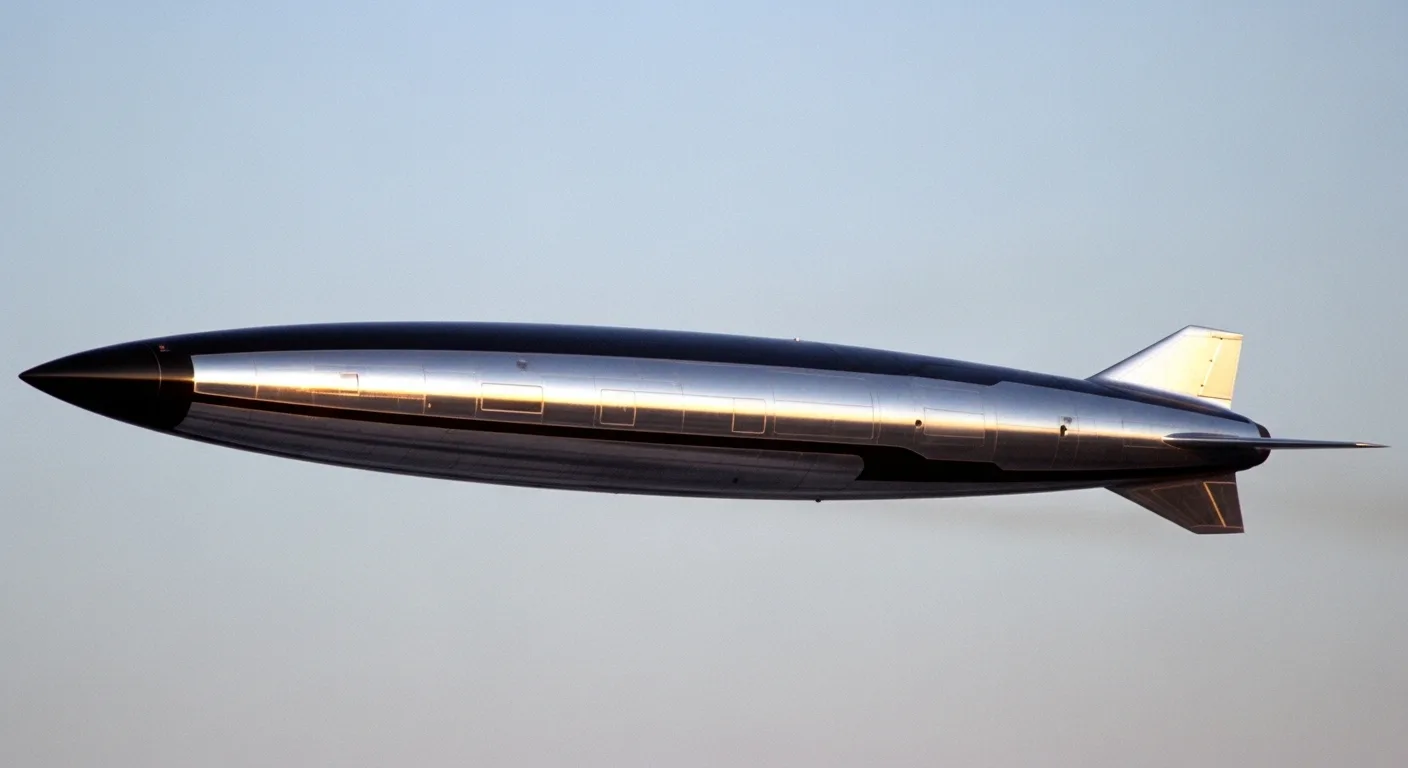
In the small hours of July 24, 1948, two experienced airline pilots flying a routine overnight flight through the skies of Alabama encountered something that would shake the foundations of the newly formed United States Air Force and briefly lead its top investigators to conclude that the objects being reported across the nation were of extraterrestrial origin. Captain Clarence Chiles and First Officer John Whitted, both former military aviators with thousands of flight hours between them, watched as a cigar-shaped craft with two rows of glowing windows streaked past their Eastern Air Lines DC-3 at a speed far beyond anything in the American or Soviet arsenal. Their detailed, consistent descriptions of a structured, illuminated vehicle left the investigators of Project Sign with a disturbing conclusion that was ultimately rejected and destroyed by the highest levels of Air Force command. The Chiles-Whitted encounter became one of the pivotal cases in the early history of UFO investigation, the moment when the possibility of extraterrestrial visitors was taken seriously at the highest levels of military authority and then forcibly suppressed.
The Pilots
Understanding the significance of the Chiles-Whitted encounter requires an appreciation of who these witnesses were and why their testimony carried extraordinary weight. These were not excitable amateurs scanning the skies for anomalies. They were seasoned professionals whose careers depended on their ability to accurately identify and respond to objects in the airspace around them.
Captain Clarence S. Chiles was a veteran pilot with Eastern Air Lines, one of the major domestic carriers of the postwar era. Before joining Eastern, Chiles had served as a military pilot during World War II, flying transport aircraft in the dangerous skies over the North Atlantic and the European theater. He had accumulated thousands of hours of flight time in conditions ranging from clear daylight to the most challenging instrument weather. His professional reputation was beyond reproach, and his ability to identify conventional aircraft at various distances, altitudes, and lighting conditions was the product of years of training and experience.
First Officer John B. Whitted was similarly qualified. A former military pilot who had transitioned to civilian aviation after the war, Whitted brought his own substantial experience to the cockpit of the DC-3. Both men were accustomed to the visual environment of nighttime flight, where stars, planets, other aircraft, meteorological phenomena, and optical illusions could all present themselves to pilots who had to make rapid assessments about what they were seeing and whether it posed a threat to their aircraft.
These were, in short, precisely the kind of witnesses that any investigator would consider highly credible. They were trained observers, they were stone sober on duty, they had no history of making fantastic claims, and they had everything to lose and nothing to gain by reporting something that might make them look foolish. What they saw that night in July was so extraordinary that both men were willing to stake their professional reputations on their account.
The Flight
Eastern Air Lines Flight 576 departed Houston, Texas, on the evening of July 23, 1948, bound for Atlanta, Georgia, with intermediate stops along the route. It was a routine overnight flight of the kind that both pilots had flown countless times before. The aircraft was a Douglas DC-3, the workhorse of postwar commercial aviation, a reliable twin-engine transport that carried approximately twenty passengers in relative comfort at cruising speeds of around 170 miles per hour.
By 2:45 in the morning on July 24, the flight was cruising at approximately 5,000 feet over east-central Alabama, southwest of Montgomery. The weather was clear, with excellent visibility and scattered clouds at higher altitudes. The cockpit was quiet, the kind of peaceful predawn atmosphere that long-haul pilots knew well. Most of the passengers were asleep.
Captain Chiles was the first to notice a bright light approaching from the northeast. At first glance, he assumed it was another aircraft, perhaps a military jet, as the Air Force was increasingly operating high-speed jet fighters from bases throughout the southeastern United States. But the light was moving with a speed and brilliance that immediately set it apart from any aircraft Chiles had ever encountered. He drew Whitted’s attention to the approaching light, and both men watched as the object closed the distance between them with startling rapidity.
The Object
What Chiles and Whitted saw in the next ten to fifteen seconds would become one of the most detailed and compelling descriptions of an unidentified flying object in the early history of the phenomenon. Both pilots provided independent accounts that were remarkably consistent, differing only in minor details that would be expected from two observers viewing the same event from slightly different angles within the same cockpit.
The object was cigar-shaped or torpedo-shaped, roughly 100 feet in length, with no visible wings, tail surfaces, or other conventional aerodynamic features. Its fuselage appeared to be solid and well-defined, not a vague luminous blob but a structured craft with clear dimensions and proportions. The most striking feature was two rows of what appeared to be windows or ports running along the side of the object, through which an intensely bright light emanated. Chiles described the interior glow as resembling burning magnesium, a brilliant blue-white light that illuminated the entire craft and cast a glow on the surrounding air.
The object’s propulsion seemed to originate from the rear, where both pilots observed a trail of orange-red flame extending approximately fifty feet behind the craft. This exhaust, if that is what it was, flickered and pulsed as the object moved, suggesting some form of continuous propulsion rather than a ballistic trajectory. The nose of the craft was described as slightly rounded, with what appeared to be a darker area or a more solid structure at the forward end.
The object passed to the right of the DC-3, traveling in the opposite direction, at a distance that both pilots estimated at roughly 700 feet. As it passed, both men felt a blast of turbulent air that rocked the aircraft, a physical effect consistent with the passage of a large, fast-moving object at close range. The object then appeared to pull up sharply, climbing at a steep angle before vanishing into the cloud layer above.
The total duration of the encounter was approximately ten to fifteen seconds, a brief window that was nevertheless sufficient for two highly trained observers to note the object’s shape, size, features, speed, and behavior in considerable detail. Their ability to provide such a thorough description in so short a time is itself evidence of their professional competence as observers.
The Third Witness
Chiles and Whitted were not the only people aboard Flight 576 who saw something unusual that night. Clarence McKelvie, a passenger seated on the right side of the aircraft, was awakened from sleep by a brilliant flash of light. Looking out his window, McKelvie caught a brief glimpse of what he described as an intensely bright object streaking past the aircraft. While his observation was too brief to provide the kind of detailed description that the pilots offered, McKelvie’s independent confirmation that something bright and fast had passed the aircraft corroborated the pilots’ account and eliminated the possibility that they had experienced a shared hallucination.
McKelvie’s testimony was significant for another reason. He had been asleep before the encounter and was awakened by the light, which meant that the object’s luminosity was sufficient to penetrate the interior of the aircraft and rouse a sleeping passenger. This detail was consistent with the pilots’ description of an object radiating intense light from its windows or ports, and it supported the contention that the encounter involved a genuine physical phenomenon rather than a misperception of a distant light source.
Project Sign and the Estimate of the Situation
The Chiles-Whitted encounter occurred at a critical moment in the early history of Air Force UFO investigation. Project Sign, the first official Air Force program dedicated to investigating reports of unidentified flying objects, had been established at Wright-Patterson Air Force Base in Dayton, Ohio, in January 1948, just six months before the encounter. The program was staffed by intelligence officers and technical analysts who were tasked with evaluating UFO reports and determining whether they represented a threat to national security.
The investigators of Project Sign took the Chiles-Whitted case very seriously. The credibility of the witnesses was beyond question. The detailed, consistent descriptions of a structured craft with windows and propulsion suggested a manufactured vehicle rather than a natural phenomenon. The object’s speed, which the pilots estimated at a minimum of 700 miles per hour, exceeded the capabilities of any known aircraft of the era. The physical turbulence experienced by the DC-3 confirmed that the object was a real, massive, fast-moving body rather than an optical illusion.
The Chiles-Whitted case, combined with other compelling reports that had accumulated during the first half of 1948, led the investigators of Project Sign to a conclusion that was as logical as it was inflammatory: the objects being reported were extraterrestrial in origin. This conclusion was formalized in a document that has become one of the most legendary artifacts in UFO history, the so-called “Estimate of the Situation.”
The Estimate of the Situation was a top-secret intelligence assessment prepared by the staff of Project Sign and sent up the chain of command to the highest levels of the Air Force. The document reportedly laid out the evidence from the most compelling UFO cases, including Chiles-Whitted, and concluded that the most probable explanation for the phenomena was interplanetary visitation. It was, so far as is known, the only time that an official United States military intelligence organization formally concluded that UFOs were of extraterrestrial origin.
General Vandenberg’s Rejection
The Estimate of the Situation reached the desk of General Hoyt S. Vandenberg, the Chief of Staff of the United States Air Force. Vandenberg, a shrewd and politically astute officer who understood the implications of the document he was holding, rejected it outright. His stated reason was that the evidence, while interesting, was insufficient to support so extraordinary a conclusion. The document was ordered destroyed, and all known copies were burned.
Vandenberg’s rejection of the Estimate of the Situation was a watershed moment in the history of UFO investigation. It established the pattern that would persist for decades: no matter how compelling the evidence, the official position of the United States military would be that UFOs did not represent anything beyond misidentified conventional phenomena. The investigators of Project Sign, who had approached the question with genuine scientific curiosity and had followed the evidence to its logical conclusion, were effectively overruled by a political decision.
The destruction of the Estimate did not erase the Chiles-Whitted case from the record, but it ensured that the case’s most radical implications would be suppressed. Project Sign was eventually renamed Project Grudge and then Project Blue Book, each iteration adopting a more skeptical posture toward UFO reports and placing less emphasis on cases that resisted conventional explanation. The Chiles-Whitted encounter, once considered compelling enough to support the extraterrestrial hypothesis, was retroactively explained as a meteor sighting.
The Meteor Explanation
The official explanation for the Chiles-Whitted encounter, adopted after the rejection of the Estimate of the Situation, was that the pilots had observed a particularly bright meteor. This explanation, while convenient, was deeply unsatisfying to the witnesses and to many researchers who examined the case.
Meteors are among the most commonly reported aerial phenomena, and experienced pilots are generally familiar with their appearance. A bright fireball meteor can indeed be spectacular, producing an intensely luminous trail that can momentarily illuminate the landscape. However, the Chiles-Whitted object bore little resemblance to a meteor. Meteors do not have windows. They do not have two rows of illuminated ports along their fuselage. They do not pull up and climb away after passing an aircraft. And they do not produce turbulence consistent with the close passage of a large, solid object.
Both Chiles and Whitted rejected the meteor explanation firmly and consistently throughout the rest of their lives. They had seen meteors before, many times, and what they observed that night was fundamentally different. The object they described was a structured craft, not a streak of incandescent debris burning up in the atmosphere. It had a defined shape, distinct features, and it maneuvered in a way that no natural phenomenon could replicate.
The meteor explanation also failed to account for the object’s apparent pull-up maneuver at the end of the encounter. Meteors follow ballistic trajectories determined by their entry angle and velocity; they do not change course. The fact that the object appeared to climb sharply after passing the DC-3 suggested controlled flight, a capability that is by definition absent from any natural phenomenon.
Historical Significance
The Chiles-Whitted encounter occupies a unique position in the history of UFO investigation. It was not the first significant UFO report of the postwar era, nor was it the most widely publicized at the time. But its impact on the internal deliberations of the United States Air Force was profound and lasting. It was the case that tipped the balance within Project Sign, that led trained intelligence analysts to conclude that the phenomenon they were investigating might have its origins beyond Earth, and that provoked the political intervention that would shape the Air Force’s approach to UFOs for the next two decades.
The case also established several precedents that would recur throughout UFO history. The pattern of credible witnesses providing detailed descriptions of structured craft, followed by official explanations that the witnesses themselves rejected, became the standard dynamic of military UFO encounters. The tension between investigators who followed the evidence wherever it led and commanders who preferred explanations that did not challenge the existing worldview became a defining feature of the field.
Perhaps most significantly, the destruction of the Estimate of the Situation established the principle of suppression that would haunt the UFO debate for generations. The idea that the military possessed evidence supporting the extraterrestrial hypothesis but had chosen to conceal it became a central article of faith among UFO researchers, and the Chiles-Whitted case was one of the foundation stones of that belief. Whether the Estimate would have been persuasive to the public, or whether its release would have caused the panic that Vandenberg presumably feared, are questions that can never be answered, because the document was reduced to ashes.
Legacy
Captain Chiles and First Officer Whitted continued their careers in aviation after the encounter, their professional reputations intact despite their extraordinary report. Both men maintained their accounts consistently over the years, never embellishing, never recanting, and never expressing any doubt about what they had seen. They had encountered something in the skies over Alabama that was real, structured, and far beyond anything in the known inventory of human technology, and they said so plainly, without regard for the official explanations that were offered on their behalf.
The object they described, a cigar-shaped craft with rows of glowing windows and a trail of flame, became one of the iconic images of early UFO encounters. Similar craft would be reported by other witnesses in the years and decades that followed, suggesting either that the type of vehicle Chiles and Whitted observed continued to operate in Earth’s atmosphere or that their account became a template that shaped subsequent observations.
The Chiles-Whitted encounter reminds us that the UFO phenomenon was taken seriously at the highest levels of American military intelligence at the very beginning of the modern era of sightings. The men and women of Project Sign who evaluated the evidence were not cranks or conspiracy theorists. They were professional intelligence analysts who applied standard analytical methods to an unusual problem and arrived at a conclusion that their superiors found politically unacceptable. The evidence that led them to that conclusion, of which the Chiles-Whitted case was a cornerstone, was never refuted on its merits. It was simply overruled by authority and then buried. The skies over Alabama, on that clear night in July 1948, had offered an answer. The Air Force chose not to accept it.
Sources
- Project Blue Book — National Archives — USAF UFO investigation files, 1947–1969
- CIA UFO/UAP Reading Room — Declassified CIA documents on UAP
- Chronicling America — Historic US newspapers (1690–1963)