The Rendlesham Forest Incident
U.S. Air Force personnel encountered a craft in a British forest in what became 'Britain's Roswell.'
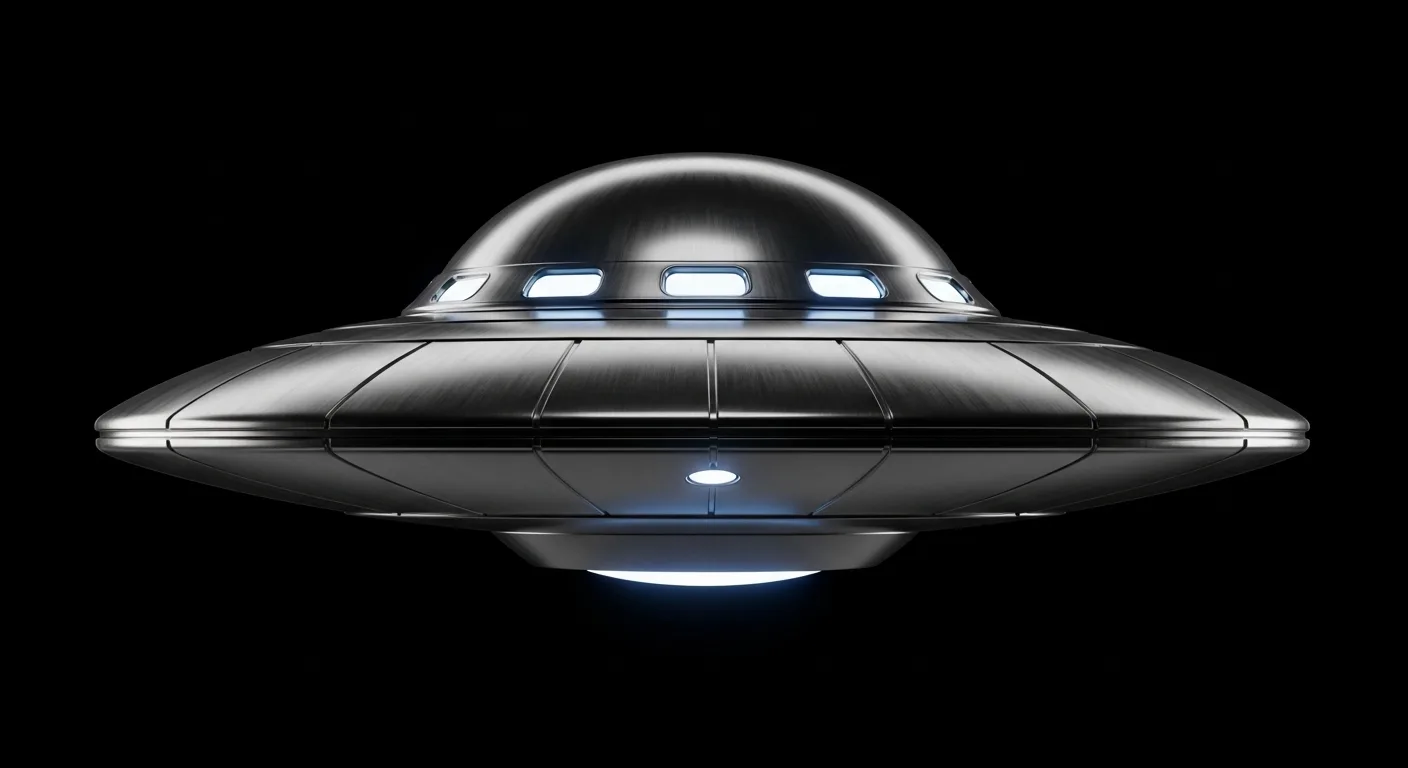
In the final days of December 1980, a series of extraordinary encounters unfolded in a quiet pine forest on the Suffolk coast of England. United States Air Force personnel stationed at the twin NATO bases of RAF Woodbridge and RAF Bentwaters reported close contact with an unidentified craft of apparent non-human origin, observed strange lights maneuvering through the trees, and documented physical evidence including ground impressions and elevated radiation readings at the landing site. What makes the Rendlesham Forest incident unique among UFO cases is not merely the strangeness of what was reported, but who reported it. These were not casual observers or excitable civilians. They were trained military professionals serving at one of the most sensitive installations in the Western alliance—a base widely understood to house tactical nuclear weapons during the Cold War. Their testimony, supported by official documentation, audio recordings, and physical trace evidence, has earned this case its enduring reputation as “Britain’s Roswell.”
The Twin Bases on the Suffolk Coast
To appreciate the significance of the Rendlesham Forest incident, one must first understand the nature of the military installation where it occurred. RAF Woodbridge and its sister base RAF Bentwaters were American-operated facilities situated in the flat, sparsely populated countryside of coastal Suffolk. During the Cold War, these bases served as forward operating positions for the United States Air Force in Europe, housing the 81st Tactical Fighter Wing equipped with A-10 Thunderbolt II ground attack aircraft. The bases were regarded as among the most strategically important NATO installations in Western Europe, and their proximity to the North Sea made them a frontline element in the alliance’s defence posture against the Soviet Union.
Though never officially confirmed at the time, it was widely believed—and has since been acknowledged—that the bases stored tactical nuclear weapons in specially hardened bunkers known as the Weapons Storage Area. The security implications of this arrangement were profound. Any unexplained incursion into the airspace or perimeter of these installations was taken with the utmost seriousness. The men who patrolled these bases were elite security police, trained to respond to threats ranging from Soviet special forces to terrorist attacks. They were not given to flights of fancy, and their professional credibility depended on accurate, sober reporting.
Between the two bases lay Rendlesham Forest, a dense plantation of Corsican pine managed by the Forestry Commission. The forest stretched for several square miles, its orderly rows of conifers creating a dark, enclosed landscape that could feel isolated and disorienting even in daylight. At night, the forest was virtually impenetrable to vision, and its floor of fallen needles and soft earth muffled sound in unsettling ways. It was into this forest, in the early hours of December 26, 1980, that the first witnesses ventured after observing something inexplicable descending from the sky.
The First Night: December 26, 1980
The sequence of events began shortly after midnight on December 26, when security patrolmen at the East Gate of RAF Woodbridge observed unusual lights apparently descending into Rendlesham Forest just beyond the base perimeter. The lights were initially assumed to be a downed aircraft—a plausible concern given the base’s function and the volume of military air traffic in the region. Three security police officers were dispatched to investigate: Sergeant Jim Penniston, Airman First Class John Burroughs, and Airman First Class Edward Cabansag.
What the men encountered as they moved through the dark forest bore no resemblance to any aircraft they had ever seen. Penniston, who got closest to the object, later described a craft of distinctly triangular shape, approximately three meters across and two meters tall, resting in a small clearing among the pines. The surface appeared metallic, smooth, and almost glass-like, with no visible seams, rivets, or joints of the kind one would expect on any conventional aircraft. The craft emitted a faint luminous glow, and colored lights—blue, red, and white—pulsed in a seemingly deliberate pattern across its surface.
Penniston reported that as he approached, the air around the craft felt electrically charged, with a tingling sensation on his skin and a feeling of resistance, as though he were pushing against an invisible field. He managed to get close enough to observe what appeared to be symbols or markings etched into the surface of the craft—shapes he later described as resembling hieroglyphic characters, though unlike any known writing system. He sketched these symbols in his patrol notebook, drawings that would later become some of the most scrutinized pieces of evidence in the case.
The craft remained stationary for a period—Penniston estimated several minutes, though he acknowledged that his sense of time felt distorted during the encounter—before it began to rise silently from the ground. It moved slowly at first, threading between the trees with apparent precision, then accelerated with breathtaking speed, departing into the night sky in a manner that no known aircraft could replicate. Throughout the encounter, animals at a nearby farm were reported to be in a state of extreme agitation, with cattle bellowing and smaller animals displaying obvious distress.
Burroughs, who had approached from a different angle, corroborated the essential details of Penniston’s account while noting his own distinct impressions. He described the light from the craft as intensely bright yet somehow contained, not flooding the surrounding forest the way a conventional light source would. The silence of the object struck both men as profoundly strange—there was no engine noise, no rotor wash, no sonic disturbance of any kind. Whatever propulsion system this craft employed, it operated on principles entirely outside their experience.
The men returned to base and filed their reports. Their accounts were treated seriously by their commanding officers, though the full implications of what they had witnessed would not become apparent for another forty-eight hours.
Ground Traces and Radiation
Later that morning, as dawn broke over the forest, a team returned to the area where the craft had been observed. What they found provided the first physical corroboration of the previous night’s testimony. In the soft earth of the clearing, three distinct impressions were visible, arranged in a triangular pattern consistent with landing gear marks. Each depression was roughly one and a half inches deep and seven inches in diameter, and the spacing between them matched the approximate dimensions of the craft as described by Penniston and Burroughs.
The trees immediately surrounding the clearing showed evidence of damage. Branches were broken at heights consistent with the passage of a solid object, and scorch marks were visible on the trunks of several pines facing the clearing. The bark in these areas appeared to have been exposed to intense heat, though the damage was localized rather than widespread—suggesting a directed energy source rather than a conventional fire.
Most significantly, radiation measurements taken at the site by Sergeant Monroe Nevels using a Geiger counter revealed readings substantially above normal background levels. The readings were highest at the three ground impressions and at the scorch marks on the trees, with levels diminishing as the team moved away from the central clearing. While the readings were not at levels dangerous to human health, they were sufficiently elevated to be considered anomalous—roughly seven to ten times higher than readings taken at control locations elsewhere in the forest. This physical evidence transformed the incident from an eyewitness account into something far more difficult to dismiss.
The ground traces were photographed and measured, and plaster casts were made of the impressions. These materials were retained by base personnel, though their subsequent handling and storage would become a matter of controversy in later years as researchers attempted to locate and examine the original evidence.
The Second Night: Lieutenant Colonel Halt’s Investigation
The events of December 26 might have remained an internal military matter, noted in security logs and gradually forgotten, had the phenomenon not returned two nights later. On the evening of December 28, reports again reached the base of unusual lights in the forest. This time, the investigation would be led by a far more senior officer—Lieutenant Colonel Charles Halt, the Deputy Base Commander of RAF Woodbridge.
Halt was precisely the sort of witness whose testimony carries extraordinary weight. As deputy commander of a major NATO installation, he was a career military officer of considerable rank and experience, accustomed to making critical decisions under pressure and trained to observe and report with precision. He was not a man predisposed to believe in flying saucers, nor one whose career would benefit from making extraordinary claims. When he led a team of approximately fifteen men into Rendlesham Forest that night, he brought with him something that would prove invaluable: a handheld audio recorder.
The tape recording made by Halt that night has become one of the most remarkable documents in the history of UFO research. Over the course of approximately eighteen minutes, Halt’s voice can be heard narrating events in real time as his team moves through the forest. His tone begins measured and professional—the voice of a senior officer conducting a methodical investigation. He describes the team taking radiation readings at the original landing site, confirming elevated levels at the indentations and on the affected trees. He notes the readings with clinical precision, comparing them to background measurements and expressing quiet concern at the discrepancies.
Then the lights appear.
Halt’s voice shifts as he and his team observe a pulsing red light moving through the trees ahead of them. “I see it too,” he says, his tone sharpening. “It’s back again… it’s coming this way.” The object appears to break into multiple lights, which move independently through the forest at varying speeds and altitudes. The team pursues the lights across open farmland beyond the forest’s edge, where the objects become more clearly visible against the night sky.
What follows on the recording is the sound of a composed military officer struggling to describe something that defies his frame of reference. Halt narrates as a beam of light descends from one of the objects and strikes the ground near the team’s position. “Here he comes from the south,” Halt says, his voice tight with controlled tension. “He’s coming toward us now. Now we observe what appears to be a beam coming down to the ground.” The implication is unmistakable—the light appeared directed, purposeful, as though the objects were actively illuminating the ground near the military team.
Other beams were reportedly directed toward the Weapons Storage Area of the base itself—a detail that would later assume enormous significance given the presumed presence of nuclear weapons at the facility. The idea that an unknown intelligence was probing the most sensitive area of a nuclear-capable NATO base raised profound questions about national security that have never been satisfactorily answered.
The objects eventually withdrew, moving away at extraordinary speed until they disappeared from view. Halt’s team returned to base shaken but disciplined, their experience preserved on the audio tape that Halt had the foresight to keep running throughout the encounter.
The Halt Memo and Official Response
In January 1981, Lieutenant Colonel Halt composed a memorandum addressed to the British Ministry of Defence, formally documenting the events of December 26 and 28. This document, which would come to be known simply as “the Halt Memo,” was written in the restrained, factual language of an official military communication. It described the sightings, the physical evidence, and the radiation readings in straightforward terms, making no attempt to interpret or explain what had been observed. The memo was classified and filed away by the MoD, where it might have remained indefinitely had it not been for the efforts of researchers and journalists in the years that followed.
The British government’s handling of the Rendlesham incident reflected the institutional discomfort that UFO reports invariably provoked in official circles. The MoD’s public position was that the events posed no threat to national security and therefore warranted no further investigation—a stance that struck many observers as remarkably incurious given that unidentified objects had been reported maneuvering over a nuclear-capable military base. Behind closed doors, the degree of official interest remains a matter of dispute. Some former officials have suggested that the incident received considerably more attention than the public record indicates, while others insist that it was treated as a minor security matter of no lasting significance.
The Royal Air Force’s initial explanation suggested that the lights observed by the witnesses could be attributed to the beam from the Orford Ness lighthouse, located several miles to the east on the Suffolk coast. This explanation was met with incredulity by those involved. The servicemen stationed at the twin bases were intimately familiar with the lighthouse beam, which swept across the forest every five seconds as a matter of routine. The suggestion that trained security personnel would mistake a lighthouse they saw every night for an unknown craft at close range was, to the witnesses, insulting to their professional competence.
Release Under Freedom of Information
The Rendlesham Forest incident might have faded into the same obscurity that claimed countless other military UFO reports were it not for the persistent efforts of researchers who suspected that official records contained more than had been publicly acknowledged. In the United States, the Freedom of Information Act provided the mechanism through which the Halt Memo and associated documents were eventually pried from government files.
The release of the Halt Memo in 1983, obtained by American researchers through FOIA requests, created an immediate sensation. Here was an official military document, written by a senior officer and addressed to a foreign government’s defence ministry, calmly describing encounters with unidentified objects displaying capabilities far beyond any known technology. The memo’s matter-of-fact tone only enhanced its impact—this was not the breathless account of a UFO enthusiast but the measured report of a career military professional who understood the gravity of what he was committing to paper.
Subsequent FOIA releases yielded additional documents, including witness statements and investigation notes that fleshed out the details of the incident. The audio recording made by Halt during the second night’s investigation also entered the public domain, allowing anyone to hear the real-time reactions of military personnel confronting something they could not explain. The combination of official documentation, physical evidence, and audio recording gave the Rendlesham case a weight of evidence that few other UFO incidents could match.
In 2001, the British government’s own files on the incident were released under the UK’s Freedom of Information Act, providing further insight into how the MoD had handled the reports. While the released files did not contain the dramatic revelations that some researchers hoped for, they confirmed that the incident had been taken more seriously internally than official public statements had suggested. Correspondence between MoD officials revealed a degree of concern and uncertainty that contrasted sharply with the dismissive tone of public pronouncements.
Britain’s Roswell
The comparison to Roswell—the 1947 incident in New Mexico that remains the most famous UFO case in history—is one that the Rendlesham Forest incident has earned through several striking parallels. Both cases involve military witnesses of unimpeachable credentials. Both produced physical evidence that was collected and subsequently became difficult to trace. Both were initially acknowledged by official channels before being publicly minimized or explained away. And both generated a documentary trail that, when examined closely, suggests a greater degree of official interest than authorities were willing to admit.
Yet in some respects, the Rendlesham case stands on even stronger ground than Roswell. The Roswell incident relies heavily on retrospective testimony gathered decades after the event, and the physical evidence has long since disappeared into the recesses of military storage—if it ever existed in the form that witnesses described. Rendlesham, by contrast, produced contemporaneous documentation: written reports filed within days, an audio recording made during the event itself, and radiation measurements taken at the scene. The witnesses were identified, serving military personnel who went on record with their names and ranks, accepting the professional consequences of their testimony.
The case also raises questions that extend beyond the simple matter of whether extraterrestrial craft visited a Suffolk forest in 1980. The apparent interest shown by the objects in the Weapons Storage Area touches on issues of nuclear security that governments are inherently reluctant to discuss. If an unknown intelligence demonstrated the ability to penetrate the airspace of a nuclear-capable NATO base with impunity, the implications for national defence are deeply uncomfortable regardless of whether that intelligence proves to be extraterrestrial, terrestrial, or something else entirely.
A Forest That Remembers
More than four decades after those extraordinary nights, Rendlesham Forest remains largely unchanged. The Forestry Commission still manages the pine plantation, and walkers can follow a designated “UFO Trail” that passes through the areas where the encounters occurred. A modest marker indicates the approximate location of the original landing site, and the forest floor still bears the contours of the clearing where Penniston and Burroughs first approached the craft. The Orford Ness lighthouse, whose beam was once offered as an explanation for the sightings, was decommissioned in 2013—an ironic footnote for those who found the lighthouse theory unconvincing from the start.
The principal witnesses have maintained their accounts with remarkable consistency over the decades. Penniston and Burroughs have spoken publicly about their experiences on numerous occasions, submitting to interviews, participating in documentaries, and testifying before citizens’ hearings on the UFO phenomenon. Halt, now retired from the military, has become an outspoken advocate for transparency regarding the incident, stating publicly that he believes the objects he observed were under intelligent control and were not of human origin. Their willingness to stake their reputations on their testimony speaks to the profound impact the experience had on their lives.
The Rendlesham Forest incident endures because it resists easy dismissal. Skeptics have proposed various explanations—the lighthouse, a fireball from a Soviet satellite re-entering the atmosphere, a prank involving a police car’s lights—but none has satisfactorily accounted for the full range of evidence. The ground traces, the radiation readings, the audio recording, the official memo, and the consistent testimony of multiple trained observers combine to create a case that demands serious consideration, whatever one’s prior assumptions about the possibility of unexplained aerial phenomena.
In the annals of the unexplained, Rendlesham Forest stands as a place where the ordinary and the extraordinary collided with a force that neither military protocol nor official denial could contain. Something happened among those dark pines in the dying days of 1980—something that left marks in the earth, readings on instruments, words on tape, and impressions on the minds of those who witnessed it that time has done nothing to diminish. The forest keeps its secrets beneath a canopy of silence, and the questions raised on those cold December nights remain as open and unsettling as the Suffolk sky.
Sources
- CIA UFO/UAP Reading Room — Declassified CIA documents on UAP
- UK National Archives — UFO Files — MoD UFO investigation records
- British Newspaper Archive — UK press archive