Xenia, Ohio UAP Encounter, 1947 — USAAF Box 7 #20
An archived U.S. Army Air Forces report documents an unidentified object sighting near Xenia, Ohio, during the height of the 1947 saucer wave.
Historical Context of the 1947 Wave
The summer of 1947 represents a pivotal period in the history of aerial unidentified phenomena. Following the June 1947 Kenneth Arnold sighting, which introduced the concept of “flying saucers” to the public consciousness, and the subsequent July 1947 Roswell incident, the United States experienced a significant surge in reported unidentified aerial phenomena (UAP). This period, often referred to by historians as the first “saucer wave,” coincided with the early stages of the Cold War, a time when the rapid advancement of aeronautical technology and the increasing presence of high-altitude surveillance equipment created a climate of heightened atmospheric scrutiny.
During this era, the United States military and civilian authorities were navigating a landscape of emerging technologies, including early jet propulsion and high-altitude reconnaissance. The presence of experimental aircraft and the deployment of specialized monitoring equipment often led to ambiguous sightings that were difficult to categorize using the limited radar and visual tracking capabilities of the time.
The Xenia, Ohio Incident
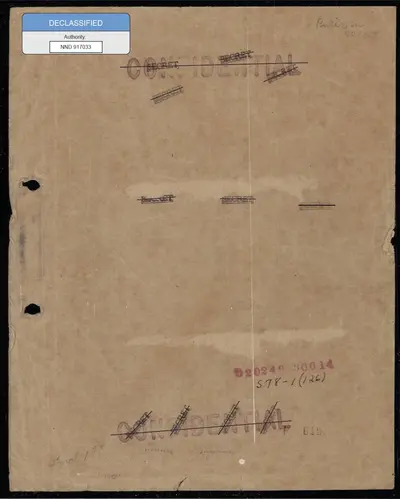
In 1947, near Xenia, Ohio, the U.S. Army Air Forces recorded an unidentified-object incident that became Incident #20 in the “Check-List - Unidentified Flying Objects” series archived in Box 7 of file 38_143685. The records were released by the Department of War on May 8, 2026, as part of the Presidential Unsealing and Reporting System for UAP Encounters (PURSUE). The case is one of the first wave of “flying saucer” reports that swept the United States after the Kenneth Arnold sighting of June 1947 and the Roswell incident of July 1947.
The documentation for Incident #20, as preserved within the archives of Box 7 of file 38_143685 and released via the PURSUE program, provides a summary of the event. The records indicate that an unspecified observer reported a sighting near Xenia, Ohio. The nature of the report is classified as a visual sighting, which could have been documented by either ground-based or air-based observers.
Analysis and Classification
The classification of this case remains subject to the ongoing investigations of modern oversight bodies. All records released under the PURSUE program are designated unresolved by the All-domain Anomaly Resolution Office. The federal government has not concluded these 1947-era incidents were anomalous, has not concluded they were conventional, and has not ruled out either possibility.
When evaluating reports from the 1947 era, researchers often consider several conventional candidates that could account for such sightings. One prominent possibility involves the Project Mogul balloon flights, which were active over the United States Southwest during this period to detect Soviet nuclear tests. Other potential explanations include the presence of experimental jet and rocket aircraft, various atmospheric optical effects, or astronomical objects that were misidentified due to unusual viewing angles. Despite these potential explanations, the lack of definitive resolution in the official military records leaves the Xenia sighting categorized as an unconfirmed aerial phenomenon.