Columbus, Ohio UAP Encounter, 1945 — USAAF Box 7 #154
Records from the U.S. Army Air Forces detail a 1945 unidentified object sighting near Columbus, Ohio, recently released via the PURSUE program.
Historical Context of the 1945 Encounter
In 1945, the landscape of American aerial surveillance was defined by the closing months of the Second World War. During this period, the United States Army Air Forces (USAAF) maintained rigorous monitoring of the skies to defend against potential incursions by Axis powers. This era is characterized by the emergence of “foo-fighter” reports, a phenomenon where allied aircremens documented luminous, unexplained objects that appeared to shadow or pace their bombers during combat sorties. These sightings often involved small, glowing spheres or orbs that exhibited maneuvers inconsistent with the known capabilities of contemporary propeller-driven aircraft.
The geographic location of the Columbus, Ohio, incident places it within the industrial and logistical heart of the American Midwest. During the mid-1940s, Ohio served as a critical hub for military manufacturing and air transport, making the monitoring of unidentified aerial phenomena (UAP) a matter of significant interest to military intelligence. The sighting in question, documented as Incident #154 in the “Check-List - Unidentified Flying Objects” series, represents a specific entry within the larger pattern of wartime aerial anomalies observed across the United States.
Documentation and Official Records
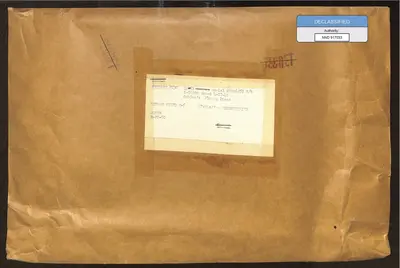
The specifics of this encounter are preserved within the official archives of the U.S. Army Air Forces, specifically located in Box 7 of file 38_143685. For decades, these documents remained classified or inaccessible to the general public. However, on May 8, 2026, the Department of War released these records as part of the Presidential Unsealing and Reporting System for UAP Encounters (PURSUE). This modern administrative initiative was designed to provide transparency regarding historical aerial anomalies that had previously been shielded from civilian oversight.
According to the summary records provided in the released files, the incident involved an unspecified observer who reported a sighting of an unidentified object in the vicinity of Columbus, Ohio. The nature of the observation is classified as a visual sighting, likely captured by either ground-based personnel or air observers patrolling the region. While the technical specifics of the object’s flight path or physical characteristics are not detailed in the summary, the entry serves as a formal acknowledgment of an anomalous aerial event recorded by military authorities during the final year of the war.
Analytical Status and Interpretations
The classification of Incident #154 remains officially unresolved. Under the protocols of the All-domain Anomaly Resolution Office, all records released through the PURSUE program are designated as unresolved. This designation indicates that the federal government has not reached a definitive conclusion regarding the nature of the object. The authorities have neither confirmed that the event was the result of conventional technology nor concluded that the sighting was truly anomalous in a way that defies known physics.
When analyzing reports from this era, researchers often consider several conventional candidates that could explain such sightings. During the late 1940s, the deployment of Project Mogul balloon flights over the American Southwest provided a precedent for high-altitude, unidentified objects appearing on radar and in visual ranges. Additionally, the rapid development of experimental jet and rocket aircraft, alongside atmospheric optical effects and the misidentification of astronomical bodies at unusual angles, provides a framework for interpreting many wartime sightings. Despite these possibilities, the Columbus incident remains a subject of ongoing scrutiny within the official archives, as the lack of definitive identification prevents a final determination of its origin.