Columbus, Ohio UAP Encounter, 1947 — USAAF Box 7 #155
An archived U.S. Army Air Forces report documents an unidentified object sighting near Columbus, Ohio, during the 1947 wave of aerial phenomena.
Historical Context of the 1947 Aerial Wave
The summer of 1947 is widely recognized by historians of anomalous phenomena as the beginning of the modern “flying saucer” era. This period was characterized by a sudden, massive increase in reports of unidentified aerial phenomena (UAP) across the United States. The phenomenon was catalyzed by the Kenneth Arnold sighting in June 1947 and the subsequent Roswell incident in July 1947. During this era, the concept of “flying saucers” entered the public consciousness, driven by a mixture of post-war technological anxiety and the rapid advancement of aerospace engineering.
The geopolitical landscape of 1947 played a significant role in how such sightings were perceived and documented. As the Cold War began to coalesce, the United States military was increasingly focused on monitoring the skies for potential Soviet incursions. Consequently, the U.S. Army Air Forces maintained various internal tracking mechanisms to catalog unusual aerial activity. These records, often categorized within specific administrative files, served as a primary method for the military to distinguish between known experimental aircraft, atmospheric phenomena, and truly unidentified objects.
The Columbus, Ohio Incident
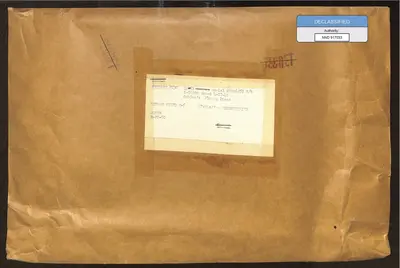
The specific event documented as Incident #155 in the “Check-List - Unidentified Flying Objects” series represents a notable entry within the U.S. Army Air Forces archives. This particular record is housed in Box 7 of file 38_14685 and details an unidentified-object incident that occurred near Columbus, Ohio, in 1947. The documentation was made public by the Department of War on May 8, 2026, through the Presidential Unsealing and Reporting System for UAP Encounters (PURSUE).
The content of the official form is sparse, adhering to the standardized reporting protocols used by the military at the time. The summary records that an unspecified observer reported a sighting in the vicinity of Columbus. The nature of the sighting is categorized as a visual sighting, which implies it was observed by either ground-based or air-based observers. Despite the lack of granular detail regarding the object’s trajectory or physical characteristics, the existence of the report within the official USAAF check-list confirms that the sighting was processed through military channels during the height of the 1947 aerial wave.
Classification and Resolution Status
Within the framework of modern anomalous studies, the Columbus sighting is classified as a visual sighting of an unidentified object. The official status of this case remains unresolved. According to the All-domain Anomaly Resolution Office, all records released under the PURSUE program are designated as unresolved. The federal government has maintained a neutral stance regarding the nature of the Columbus encounter, neither concluding that the object was anomalous nor confirming that it was a conventional phenomenon.
The ambiguity of the 1947-era reports often stems from the technological limitations of the period. When evaluating potential explanations for such sightings, researchers frequently consider several conventional candidates. During the late 1940s, the United States was engaged in Project Mogul, a series of high-altitude balloon flights designed to detect Soviet nuclear tests, which could have been misidentified as unidentified objects. Additionally, the rapid development of experimental jet and rocket aircraft, along with various atmospheric optical effects and the misidentification of astronomical objects at unusual angles, provided a range of plausible, non-anomalous explanations for the surge in reported sightings. The Columbus, Ohio incident remains part of this complex historical dataset, awaiting further clarification through future declassification or technological analysis.