The Roswell Incident: Complete Guide to the 1947 UFO Crash
The definitive account of the 1947 Roswell crash, from Mac Brazel's debris field to modern whistleblower allegations.
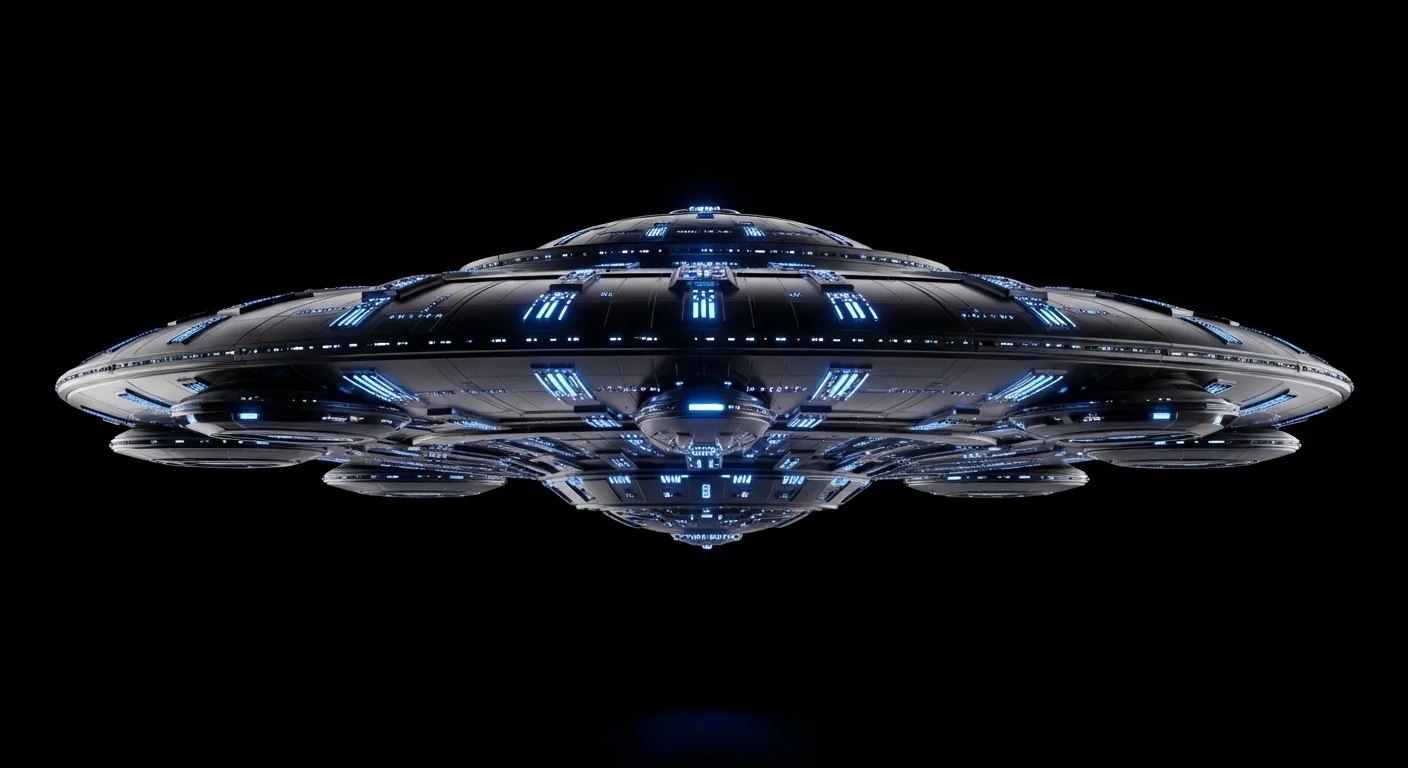
No event in UFO history casts a longer shadow than what happened in the high desert country outside Roswell, New Mexico, in the summer of 1947. What began as a rancher’s discovery of unusual debris in a remote pasture became the most investigated, most debated, and most culturally significant UFO case in the world. Seventy-nine years later, Roswell remains at the center of the UFO controversy, its name synonymous with government secrecy, conspiracy, and the tantalizing possibility that we are not alone.
The Roswell incident matters not only because of what may or may not have crashed in the New Mexico desert, but because it established the template for the relationship between the public, the military, and the UFO phenomenon that persists to this day. Understanding Roswell is essential to understanding everything that has followed.
Mac Brazel’s Discovery
In early July 1947, William “Mac” Brazel, a foreman on the J.B. Foster ranch approximately seventy-five miles northwest of Roswell, discovered a large field of unusual debris scattered across his pastureland. The debris field was extensive, stretching roughly three-quarters of a mile long and several hundred feet wide. Brazel described the material as consisting of metallic foil-like strips, lightweight I-beams with strange purple symbols or writing on them, and a tough, parchment-like material that resisted cutting or burning.
Brazel had heard radio reports of “flying discs” being seen across the country in the wake of Kenneth Arnold’s famous sighting near Mount Rainier on June 24, and he wondered whether what he had found might be connected. On July 7, he drove into Roswell and reported his discovery to Sheriff George Wilcox, who in turn contacted the Roswell Army Air Field (RAAF), home of the 509th Bomb Group—the only nuclear-armed military unit in the world at the time.
Major Jesse Marcel, the base intelligence officer, was dispatched to examine the debris. Marcel later stated that the material was unlike anything he had ever seen. The metallic foil, when crumpled, would return to its original shape without creasing. The I-beams were extraordinarily light yet rigid. Marcel was convinced the debris was not from any conventional aircraft, weather balloon, or known military device.
The Famous Press Release
On July 8, 1947, the public information officer at Roswell Army Air Field, First Lieutenant Walter Haut, issued a press release that would become the most consequential in UFO history. The release stated that the 509th Bomb Group had recovered a “flying disc” from a ranch in the Roswell region. The story was picked up by wire services and made headlines around the world.
Within hours, the narrative changed dramatically. Brigadier General Roger Ramey, commanding officer of the Eighth Air Force at Fort Worth, Texas, intervened. Marcel was ordered to fly the debris to Fort Worth, where Ramey held a press conference in his office. Displaying material that he identified as the remnants of a standard weather balloon and its radar reflector, Ramey announced that the initial identification had been in error. There was no flying disc. It was just a balloon.
Photographs taken during Ramey’s press conference show Marcel and others posing with the balloon debris. Researchers have debated for decades whether this was the same material recovered from the Brazel ranch or whether a substitution was made. In one photograph, General Ramey holds a document that has been subjected to extensive digital enhancement and analysis, with some researchers claiming to have deciphered text that references “victims of the wreck” and “disc,” though these interpretations are disputed.
The press accepted Ramey’s explanation, and the story died almost immediately. It would remain dormant for more than three decades.
The Cover Story and Its Problems
The weather balloon explanation held for thirty years. Then, in 1978, nuclear physicist and UFO researcher Stanton Friedman interviewed Jesse Marcel, who had long since retired from the military. Marcel was unequivocal: the material he recovered from the Brazel ranch was not a weather balloon. He stated that the debris had been switched before the Fort Worth press conference and that the material displayed to reporters was not what he had collected in the field.
Marcel’s testimony opened the floodgates. Over the following decade, researchers William Moore, Charles Berlitz, Stanton Friedman, Kevin Randle, and Don Schmitt tracked down and interviewed hundreds of witnesses connected to the Roswell events. The accounts they collected painted a picture far more complex than a misidentified balloon.
Multiple witnesses described a second debris site, located about forty miles from the Foster ranch debris field, where the main body of the craft—and, according to some accounts, bodies of non-human occupants—were said to have been recovered. Glenn Dennis, a mortician working at the Ballard Funeral Home in Roswell, claimed he received inquiries from the base about the availability of small, hermetically sealed caskets and about procedures for preserving bodies that had been exposed to the elements. He also described being told by a nurse at the base hospital about the autopsies of small, non-human beings.
Retired military personnel, including Colonel Philip Corso, claimed in a 1997 book that debris from the Roswell crash had been fed into defense industry research programs, leading to advances in fiber optics, integrated circuits, and other technologies. Corso’s claims were sensational but difficult to verify, and his credibility has been debated extensively.
The GAO Investigation
Public pressure and Congressional interest led to an official reinvestigation. In 1994, Congressman Steven Schiff of New Mexico requested that the General Accounting Office (GAO, now the Government Accountability Office) locate all government records related to the Roswell incident. The GAO’s search discovered that administrative records from Roswell Army Air Field covering the period of the incident had been destroyed, with no record of who had authorized the destruction or when it occurred.
The Air Force, anticipating the GAO report, released its own study in 1994 titled “The Roswell Report: Fact versus Fiction in the New Mexico Desert.” This report concluded that the debris recovered at the Brazel ranch was from a classified Project Mogul balloon array—a string of high-altitude balloons carrying sensitive acoustic sensors designed to detect Soviet nuclear tests. The Mogul explanation accounted for some features of the debris, including the unusual metallic material and the I-beams, which matched components used in the balloon arrays’ radar targets.
A follow-up Air Force report in 1997, “The Roswell Report: Case Closed,” addressed the accounts of non-human bodies by suggesting that witnesses had confused their memories with observations of anthropomorphic test dummies dropped from high-altitude balloons in the 1950s as part of Project High Dive. The report also suggested that some body recovery accounts were conflated memories of a 1956 aircraft accident that killed eleven crew members.
The Counter-Arguments
The Project Mogul explanation has not satisfied many researchers. Several key objections have been raised.
First, Jesse Marcel was the intelligence officer for the only nuclear-armed bomber group in the world. He would have been familiar with weather balloons, radar targets, and the various equipment used in military operations. The suggestion that he could not distinguish between a balloon array and something genuinely anomalous strains credulity for many investigators.
Second, the behavior of the military was inconsistent with a balloon recovery. The Brazel ranch was quarantined. Roads were blocked. Civilian witnesses reported being threatened with severe consequences if they spoke about what they had seen. This level of security response seems disproportionate for what the Air Force later claimed was routine debris.
Third, Project Mogul, while classified in its purpose, used standard off-the-shelf components. The individual balloons, radar reflectors, and instruments were not themselves classified and would have been recognizable to military personnel. If the debris were simply Mogul components, there would have been no reason for the extreme security measures or the initial press release claiming a “flying disc.”
Fourth, the test dummy explanation for the body accounts has been criticized on timeline grounds. The dummy drops occurred in the 1950s, years after the 1947 incident. While the Air Force argued that witnesses had conflated memories over the intervening decades, critics noted that many witnesses were interviewed in the late 1970s and early 1980s, when their recollections were still relatively fresh and consistent.
Key Witnesses and Testimony
The Roswell case rests on an unusually large body of witness testimony. Beyond Marcel, key witnesses include:
Brigadier General Thomas DuBose, who served as General Ramey’s chief of staff in 1947. In interviews conducted in the 1980s and 1990s, DuBose confirmed that the material displayed at the Fort Worth press conference was a cover story and that orders to conceal the true nature of the recovered material came from Washington.
Major Edwin Easley, the provost marshal at Roswell Army Air Field who oversaw security operations during the recovery. On his deathbed, Easley reportedly confirmed to researcher Kevin Randle that the material was extraterrestrial in origin, though the circumstances of this confirmation have been debated.
First Lieutenant Walter Haut, the public information officer who issued the original “flying disc” press release. In a sealed affidavit opened after his death in 2005, Haut stated that he had personally seen the recovered craft and bodies in a hangar at the base, and that a meeting of senior officers had concluded the material was of non-terrestrial origin.
Loretta Proctor, Mac Brazel’s neighbor, who saw pieces of the debris before Brazel reported his find. She described the material as unlike anything she had ever encountered, particularly its ability to return to its original shape after being folded or crumpled.
Roswell in the Modern Disclosure Era
The Roswell incident has taken on renewed significance in the context of the modern UAP disclosure movement. David Grusch, in his 2023 Congressional testimony, alleged that the U.S. government operated crash retrieval programs and possessed non-human craft and biologics. While he did not specifically name Roswell, the implication was clear, and subsequent reporting suggested that Roswell-related materials were among the programs he had been briefed on.
President Trump’s 2026 executive order directing the release of classified UAP files has raised hopes that definitive Roswell-related documents may finally be released. The discovery that administrative records from the base had been destroyed adds both frustration and intrigue—what was in those records, and why were they eliminated?
The connection between Roswell and Area 51 has long been a subject of speculation. Some researchers believe recovered materials were transferred to the Nevada test site for analysis, potentially forming the basis of the reverse-engineering programs that Bob Lazar later claimed to have worked on. While direct evidence for this chain of custody remains elusive, the narrative has become embedded in UFO lore.
Cultural Impact
Roswell’s impact on popular culture has been immense. The city of Roswell, New Mexico, has embraced its UFO heritage, with the International UFO Museum and Research Center attracting hundreds of thousands of visitors. The annual Roswell UFO Festival is one of the largest paranormal-themed events in the world. The alien imagery associated with Roswell—the grey-skinned, large-eyed being—has become one of the most recognizable icons of the twentieth century.
In film, television, and literature, Roswell has served as the foundation for countless fictional treatments. The 1994 Showtime film “Roswell” dramatized the events with considerable fidelity to witness testimony. The television series “Roswell” (1999-2002) and its reboot “Roswell, New Mexico” (2019-2022) used the incident as a springboard for science fiction narratives. “Independence Day” (1996) built its entire plot around the premise that Roswell technology had been secretly studied for decades.
Assessing the Evidence
After nearly eight decades, the Roswell incident remains genuinely unresolved. The Project Mogul explanation accounts for some features of the case but leaves significant questions unanswered, particularly regarding the military’s extreme security response and the testimony of personnel who insist the material was not a balloon array. The extraterrestrial explanation accounts for the security measures and the witness testimony but lacks the kind of physical evidence that would constitute definitive proof.
What is beyond dispute is that something unusual was recovered near Roswell in July 1947, that the military initially announced it as a flying disc, that this announcement was rapidly retracted under pressure from higher command, that administrative records covering the period were destroyed, and that numerous military personnel maintained to the end of their lives that what they saw was not of earthly manufacture.
In the context of the ongoing disclosure process, Roswell represents both the origin of the modern UFO mystery and its ultimate test. If classified files contain definitive answers about what crashed in the New Mexico desert in 1947, their release would resolve one of the greatest mysteries of the twentieth century. If they do not, Roswell will continue to occupy its unique position at the intersection of evidence, speculation, and the enduring human desire to know whether we are alone.
Sources
- Roswell incident — Wikipedia
- Project Blue Book — National Archives — USAF UFO investigation files, 1947–1969
- CIA UFO/UAP Reading Room — Declassified CIA documents on UAP
- Chronicling America — Historic US newspapers (1690–1963)