The Westall High School UFO
Over 200 students and teachers watched a silver disc land near their school.
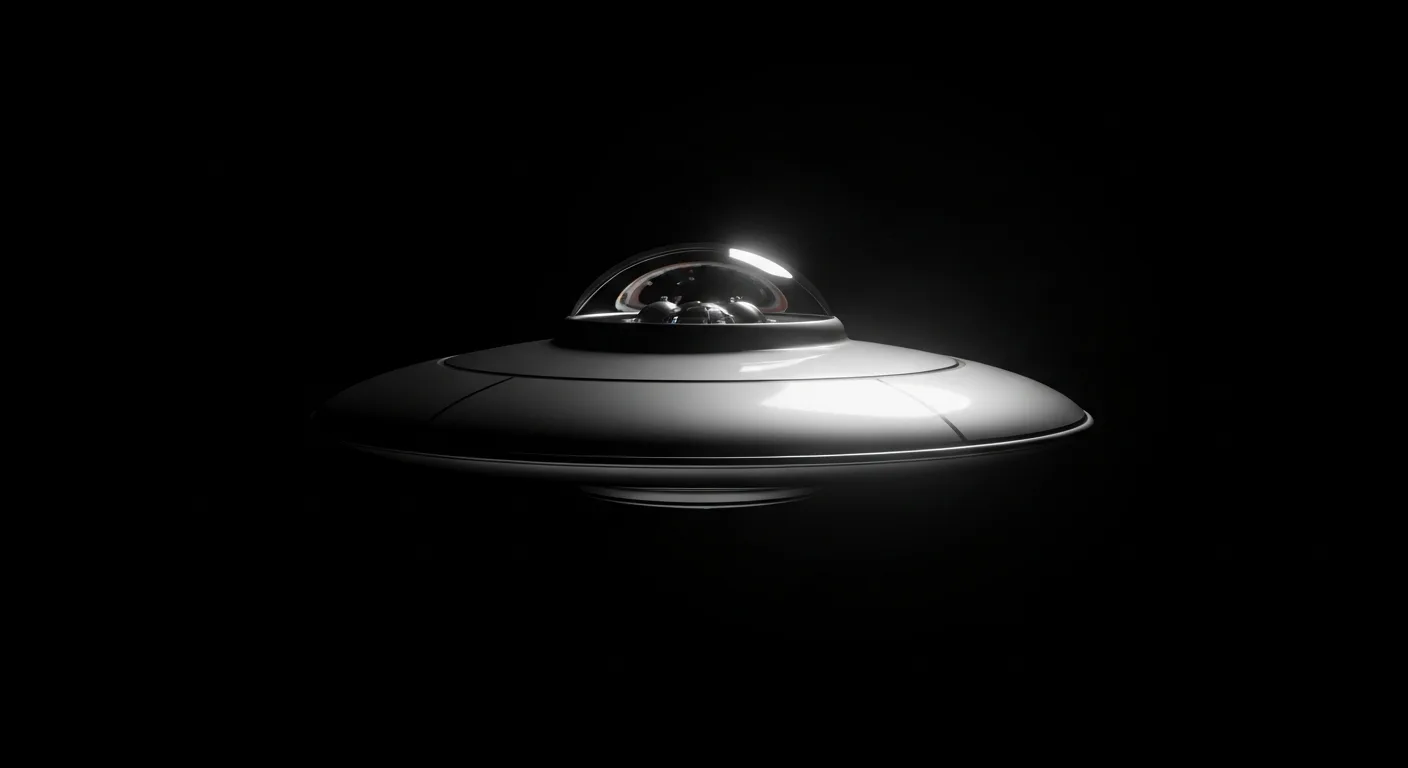
On the morning of April 6, 1966, at a high school in the southern suburbs of Melbourne, Australia, over two hundred students and teachers witnessed something that none of them could explain and that many of them would carry with them for the rest of their lives. A silver, disc-shaped object descended from the sky, appeared to land briefly in a paddock adjacent to the school, and then ascended at extraordinary speed and vanished. The event lasted only minutes, but its impact on the witnesses was permanent. In the hours and days that followed, unidentified officials arrived at the school, students and teachers were warned not to discuss what they had seen, and a process of official suppression began that would continue for decades. The Westall incident remains Australia’s largest mass UFO sighting, and the questions it raised about what the witnesses saw and why they were told to forget it have never been answered.
Westall in 1966
Westall High School—later renamed Westall Secondary College—sat in Clayton South, a suburb in Melbourne’s southeastern sprawl. In 1966, this was still an area in transition from rural to suburban, with housing developments pushing into what had recently been farmland. The school’s grounds bordered open paddocks, including an area known as the Grange, a large grassy reserve that stretched south toward a line of pine trees. Beyond the pines lay more open ground and, further south, a nature reserve. The landscape was flat and open, offering clear sightlines from the school to the surrounding fields.
The school itself was a typical Australian government secondary school of the era, serving the children of working-class and middle-class families who had settled in Melbourne’s expanding outer suburbs. The student population included recent immigrants from Britain, Europe, and elsewhere, as well as Australian-born families. It was an ordinary school in an ordinary suburb, and nothing in its history or character suggested that it was about to become the site of one of the most significant UFO events in Australian history.
Australia in the mid-1960s was deeply connected to the Western alliance and to the security architecture of the Cold War. American military installations operated on Australian soil, including the Joint Defence Facility at Pine Gap and the communications station at North West Cape. The relationship between Australia and the United States was close and, in many respects, secret, governed by agreements that the public knew little about. This context would become relevant in the aftermath of the Westall incident, when the apparent involvement of official agencies in suppressing information about the sighting raised questions about who was managing the response and why.
The Morning of April 6
The events began at approximately 11:00 AM, during the mid-morning break between classes. Students in a physical education class on the school’s oval were among the first to notice something unusual. Looking south toward the Grange and the pine trees beyond, they saw a silver, disc-shaped object descending toward the ground. The object was metallic in appearance, roughly the size of two or three cars, and it moved with a controlled, deliberate motion that was unlike any aircraft the students had ever seen.
The news spread through the school with the speed that only a school full of excited teenagers can produce. Within minutes, students were pouring out of classrooms and converging on the southern boundary of the school grounds, drawn by the spectacle of a flying object that was now hovering low over the Grange or had actually touched down in the paddock. Teachers followed their students, some out of concern for their safety and others out of the same curiosity that was driving the children.
Andrew Greenwood, a science teacher, was one of the staff members who observed the object. He later described seeing a silvery-grey disc hovering above the pine trees, moving slowly and silently. Other teachers confirmed the sighting, though the precise number of staff witnesses has been difficult to establish, as many teachers were reluctant to discuss the incident in later years.
The students, less constrained by professional caution, were more forthcoming. Dozens of them rushed toward the Grange to get a closer look at the object. Some crossed the school boundary and entered the paddock, running toward the area where the object appeared to have landed or was hovering at very low altitude. The leading students reached the Grange within minutes and reported finding a circle of flattened grass at the apparent landing site, the vegetation pressed down in a swirled pattern that suggested something heavy had rested on it.
The Object Departs
The object did not remain on the ground for long. Witnesses described it rising from the paddock with a smooth, rapid motion, accelerating vertically and then moving away at a speed that left observers stunned. Some witnesses reported that the object rose at an angle, climbing steeply before shooting away toward the north or northeast. Others described a more vertical ascent. The discrepancies in these accounts are consistent with observations made from different vantage points and at slightly different moments, and they do not undermine the fundamental agreement on what happened: a solid, metallic-looking disc rose from the ground and departed at extraordinary speed.
Several witnesses reported seeing additional objects in the sky during or immediately after the primary sighting. These secondary objects were typically described as smaller than the main disc and appeared to be at higher altitude. Some witnesses interpreted them as escort or companion craft; others were uncertain whether they were related to the primary object or were separate phenomena entirely. The presence of these additional objects has been difficult to confirm or explain, as fewer witnesses observed them and their descriptions were less consistent than those of the primary disc.
One detail that has persisted across decades of retelling is the account of a girl who collapsed at or near the landing site. According to multiple witnesses, a female student who was among the first to reach the Grange either fainted or became incapacitated near the area where the object had been. She was carried or assisted back to the school and reportedly required medical attention. The identity of this girl has been disputed, and some researchers have been unable to confirm the account, but it appears in enough independent witness statements to suggest a genuine incident.
The Aftermath: Officials Arrive
What happened after the sighting is, in many ways, more disturbing than the sighting itself. Within hours of the event, unfamiliar vehicles appeared at the school, and men in suits and military uniforms began questioning students and staff. The identity and affiliation of these officials has never been established with certainty. Some witnesses believed they were from the Royal Australian Air Force; others thought they might be from the Commonwealth Investigation Service, the precursor to the Australian Security Intelligence Organisation. Some witnesses described men who appeared to be American, raising the possibility that U.S. military or intelligence personnel were involved in the response.
The school’s principal, Frank Samblebe, called a special assembly at which students were told in no uncertain terms that they were not to discuss what they had seen. The instruction was presented as coming from a higher authority than the school administration, though the specific source was not identified. Students were warned that there would be consequences for those who talked about the sighting, though the nature of these consequences was left vague enough to be thoroughly intimidating.
Teachers received similar instructions, with the added professional pressure of knowing that their careers could be affected by their response. Several teachers who had witnessed the event declined to discuss it for the rest of their lives, and the culture of silence that was imposed on the school was remarkably effective. For decades, the Westall incident was known only to those who had been present and to a small number of UFO researchers who had picked up fragmentary accounts.
The landing site in the Grange was reportedly inspected by official personnel in the days following the sighting. Some witnesses described seeing the area being examined by men with equipment, though the nature of their investigation was not apparent to observers watching from a distance. There were also reports that the flattened grass at the landing site was burned or removed, though these accounts are difficult to confirm.
Breaking the Silence
The wall of silence around the Westall incident began to crack in the 1990s, when some of the original witnesses, now middle-aged adults, began speaking publicly about their experiences. The most significant breakthrough came through the work of researcher Shane Ryan, who dedicated years to tracking down and interviewing the original witnesses, building a comprehensive picture of the event from dozens of independent accounts.
Ryan’s work revealed that the sighting had affected many witnesses profoundly and permanently. Some described it as the defining event of their lives, the moment that changed their understanding of the world and their place in it. Others spoke of the frustration of having experienced something extraordinary and being told to pretend it had never happened. The official suppression of the event had, in some cases, created lasting psychological distress, as witnesses struggled to reconcile what they had seen with the insistence of authority figures that they should forget it.
In 2006, forty years after the sighting, a reunion brought together dozens of original witnesses at the school. The event was organized to allow witnesses to share their experiences publicly for the first time in many cases, and it produced a remarkable demonstration of the consistency of their memories. Men and women who had been teenagers in 1966 described the same object, in the same location, behaving in the same way, with a level of agreement that is difficult to explain if they were not describing a real event.
The reunion also highlighted the emotional weight that the witnesses still carried. Several broke down in tears as they recounted their experiences, overwhelmed not only by the memory of the sighting itself but by the decades of enforced silence that had followed. The act of finally speaking publicly, of having their experience acknowledged and validated by others who had shared it, was clearly cathartic for many of the attendees.
The Documentary Evidence
Despite the number of witnesses, physical evidence from the Westall incident is frustratingly scarce. No photographs of the object are known to exist, though some witnesses have claimed that photographs were taken and confiscated by the officials who arrived at the school. One persistent account describes a student who filmed the object with a movie camera and was subsequently visited by men who took the film and warned the student’s family not to discuss the matter. This account has not been verified, but the absence of any photographic evidence from an event witnessed by over two hundred people is itself suggestive of systematic suppression.
The landing trace in the Grange was observed by dozens of witnesses but was apparently dealt with by official personnel before it could be independently documented. The circle of flattened grass was a tangible piece of physical evidence that could have been photographed, measured, and analyzed, but the window of opportunity was apparently closed by the rapid response of unidentified officials.
Government records relating to the incident have been sought through freedom of information requests, but the results have been incomplete. The Australian Department of Defence has acknowledged that it has no records of the event, which is itself remarkable given the number of witnesses and the apparent involvement of military personnel in the aftermath. Either the records were never created, which seems implausible, or they have been destroyed or classified at a level that places them beyond the reach of normal FOI processes.
Theories and Explanations
Various explanations have been proposed for what the Westall students and teachers saw on the morning of April 6, 1966. None has proven fully satisfactory.
The most common skeptical explanation is that the witnesses observed an experimental aircraft or a weather balloon, and that the official response was designed to protect classified military technology rather than to conceal evidence of extraterrestrial contact. This theory accounts for the suppression and the official silence but struggles to explain the object’s described behavior—its disc shape, its hovering capability, its vertical ascent, and its extraordinary departure speed are inconsistent with any known aircraft or balloon technology of the 1960s.
Some researchers have suggested that the object may have been a Skyhook balloon or similar high-altitude research platform that descended to low altitude before rising again. While balloon descents can occur, they do not typically produce the kind of controlled, deliberate movement described by the Westall witnesses, nor do they ascend at the speeds reported.
The possibility that the witnesses experienced a mass hallucination or shared misperception has been raised but is difficult to sustain given the number and independence of the observations. Over two hundred people, including adults with professional training, observed the same object at the same time from multiple vantage points. While group psychology can influence perception, the scale and consistency of the Westall reports exceed what is normally attributed to such effects.
The extraterrestrial hypothesis—that the Westall witnesses observed a craft of non-human origin—remains the explanation that best fits the reported characteristics of the object but carries the enormous evidential burden that always accompanies such claims. Without physical evidence or official acknowledgment, the extraterrestrial explanation remains speculation, however well it accords with the witness testimony.
A Legacy of Questions
The Westall incident occupies a unique position in the history of UFO sightings. Its significance lies not only in the number of witnesses but in the quality and consistency of their testimony, the apparent official suppression of the event, and the decades-long persistence of the witnesses’ memories and convictions. It is, in many respects, the ideal UFO case: a daytime sighting by hundreds of people, including trained observers, producing consistent independent accounts and apparent physical traces, followed by an official response that raises as many questions as the sighting itself.
What flew over the Grange on that April morning in 1966 remains unknown. The witnesses know what they saw, and their certainty has not wavered in the sixty years since they saw it. The officials who told them to be silent have never explained why. The records, if they exist, have never been released. The flattened grass has long since regrown, the school has been renamed, and the paddock where the object landed has been partially developed. But the memory persists, carried by the men and women who were children on that morning, who looked up from their games and their lessons and saw something descend from the sky that was not supposed to be there.
The Westall incident challenges us to consider what we would do if confronted with evidence that did not fit our understanding of the world. The witnesses accepted what they saw because they had no choice—it was there, in front of them, undeniable. The authorities responded by demanding denial, by insisting that what had been seen had not been seen, by erasing the event from the official record. Between these two responses—the honest bewilderment of the witnesses and the determined suppression of the authorities—lies the gap that the Westall incident, like so many UFO cases, ultimately occupies: the space between what we experience and what we are permitted to acknowledge.
Sources
- Project Blue Book — National Archives — USAF UFO investigation files, 1947–1969
- CIA UFO/UAP Reading Room — Declassified CIA documents on UAP