The Westall UFO Incident
Over 200 students and teachers witnessed a UFO land near their school.
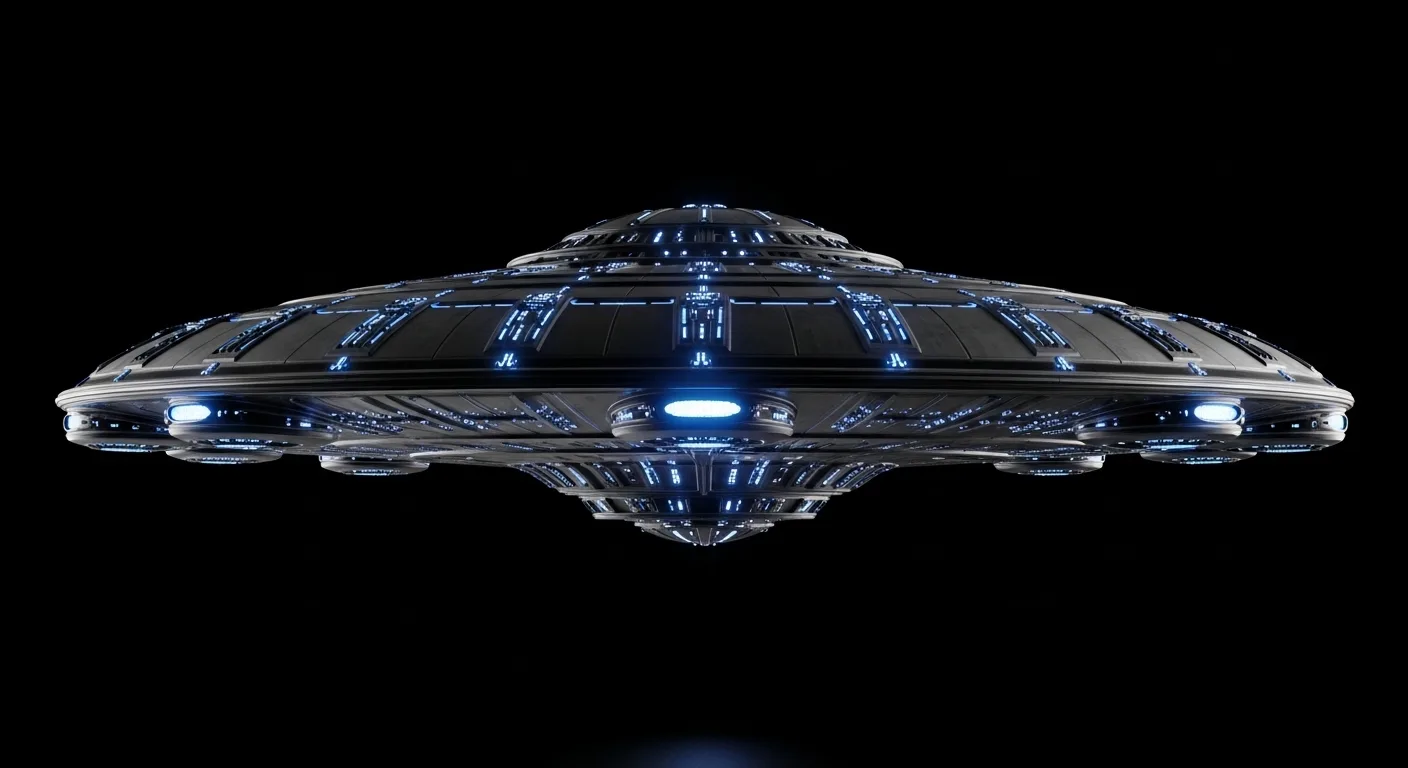
On the morning of April 6, 1966, in the quiet southeastern suburbs of Melbourne, Australia, something descended from the sky and landed in a paddock next to Westall High School. What makes this particular event extraordinary is not the strangeness of the object itself—though it was strange enough—but the sheer number of people who witnessed it. Over two hundred students and teachers watched the object descend, land, remain on the ground for approximately twenty minutes, and then ascend and vanish at speed. They were not scattered observers reporting from different locations at different times. They were a concentrated mass of witnesses, standing together in the school grounds, watching the same event unfold in broad daylight at mid-morning. And then, in the hours and days that followed, they were told in no uncertain terms to forget what they had seen.
A Wednesday Morning in Clayton South
Westall High School sat in the suburb of Clayton South, a working-class area in Melbourne’s southeastern corridor. The school served a modest community of families whose lives revolved around factories, trades, and the everyday rhythms of suburban Australia in the mid-1960s. It was not a place accustomed to extraordinary events, and the students and staff who populated its classrooms and corridors that Wednesday morning had no expectation that the day would be anything other than perfectly ordinary.
The morning break period began at approximately 10:45 AM. Students spilled out of classrooms into the schoolyard, scattering across the grounds in the casual, restless way that teenagers do when temporarily liberated from desks and textbooks. The sky was overcast but bright, the visibility good, and the paddock adjacent to the school—a stretch of open grassland known locally as “the Grange”—was clearly visible from the school grounds.
It was during these minutes of freedom, as students talked and played and did nothing in particular, that someone looked up and noticed something in the sky. Within moments, the entire school was watching.
The Descent
The object came from the northwest, descending at an angle through the overcast sky toward the paddock next to the school. Witnesses described it as grey or silver-grey, roughly circular or disc-shaped, with a slight dome on top. Estimates of its size varied—some witnesses said it was about the size of two or three cars, others suggested it was larger—but all agreed that it was a solid, structured object, clearly metallic, and clearly under controlled flight.
The object descended smoothly and deliberately, not tumbling or drifting but moving with purpose, as though it were being piloted or guided to a specific landing site. It made no sound that witnesses could recall, or at most a faint humming that was barely perceptible. It passed over the school grounds at relatively low altitude—low enough for students to see its underside clearly—before settling into the paddock beyond the fence line.
The landing was gentle. The object touched down in the grass of the Grange and remained there, sitting in the open field in full view of hundreds of witnesses. Students crowded against the fence that separated the school grounds from the paddock, pressing forward to get a better look. Some of the bolder ones climbed the fence and began running toward the object across the grass.
Twenty Minutes on the Ground
For approximately twenty minutes, the object sat in the paddock. This extended period of observation is one of the most remarkable aspects of the Westall case. This was not a fleeting glimpse of something in the distance—it was a prolonged, close-range observation by a large group of witnesses in good visibility conditions. Students who reached the paddock got within a few hundred feet of the object and studied it with the unfiltered curiosity of adolescence.
The object appeared to be resting on the grass, though some witnesses thought it might have been hovering just above the ground rather than actually touching it. Its surface was smooth and metallic, reflecting the ambient light with a dull sheen. There were no visible windows, doors, markings, or protrusions—just a smooth, featureless surface that gave no indication of propulsion systems, openings, or any functional detail that might explain how it worked or what it was for.
Some witnesses reported seeing what appeared to be other objects in the sky during this period—smaller craft or aircraft that seemed to be circling or observing the landed object from above. The nature of these additional objects has been debated; some witnesses believed they were conventional aircraft, possibly military, while others thought they were additional objects of the same type as the one on the ground. The accounts are not consistent enough to draw firm conclusions, but the suggestion of additional aerial activity adds another dimension to an already complex event.
Several students who got close to the object reported physical effects. At least one girl was said to have collapsed or fainted near the craft, and had to be carried back to the school by other students. Whether this was caused by proximity to the object—perhaps through some form of electromagnetic emission—or simply by the overwhelming stress of the situation has never been determined.
The Departure
After approximately twenty minutes on the ground, the object began to move. It rose smoothly from the paddock, ascending with the same deliberate, controlled movement that had characterized its descent. As it gained altitude, it tilted slightly—witnesses disagreed on whether it tilted to one side or simply angled its trajectory—and then accelerated dramatically, climbing away to the northwest at a speed that no conventional aircraft could match. Within seconds it had crossed the sky and vanished from view, leaving behind a schoolyard full of stunned and excited witnesses.
The departure left a visible trace in the paddock. Where the object had rested, the grass was flattened in a roughly circular pattern, pressed down as though a heavy weight had sat upon it. The flattened area was clearly defined, with sharp edges where the affected grass met the undisturbed grass around it. Some witnesses described the flattened grass as swirled, pressed down in a spiral pattern rather than simply crushed flat. The impression persisted for some time after the event, visible to anyone who walked into the paddock.
The Silencing
What happened in the hours following the object’s departure may be as significant as the sighting itself. Almost immediately, authority figures descended on the school with a singular message: the students were to stop talking about what they had seen.
The school’s headmaster, Frank Samblebe, called an assembly at which he instructed students not to discuss the sighting. His tone, according to witnesses, was not one of gentle guidance but of firm prohibition. Students who persisted in talking about the event were threatened with disciplinary action, up to and including expulsion. The message was clear: whatever you think you saw, you did not see it, and if you continue to say you did, there will be consequences.
Teachers received similar instructions. Those who had witnessed the event alongside their students were told not to discuss it, not to encourage student discussion of it, and not to engage with any media inquiries about it. The career implications were left unstated but clearly understood. In the hierarchical world of public education in 1960s Australia, instructions from the headmaster were not suggestions; they were orders.
Within hours of the sighting, men in suits—their identity and affiliation never clearly established—appeared at the school. Witnesses describe them as official-looking, possibly military or government, though no one was able to confirm their credentials or authority. These men were seen in the paddock where the object had landed, apparently examining the site. They were also seen speaking with school administrators. Some witnesses reported that the flattened grass in the paddock was subsequently burned or cut, eliminating the physical evidence of the landing.
The identity of these men has never been definitively established. They may have been officers from the Royal Australian Air Force, which maintained a low-profile interest in UFO reports during this period. They may have been officials from some other government agency. Or they may have been private individuals of some kind. Their appearance at the school, combined with the headmaster’s order of silence, created an atmosphere of suppression that effectively shut down public discussion of the event for decades.
The Long Silence
The suppression was remarkably effective. For over forty years, the Westall sighting remained a local memory shared quietly among those who had been there but largely unknown to the broader public. Students who had witnessed the event grew up, married, built careers, and raised children, carrying the memory of that April morning with them but rarely speaking of it publicly.
The silence was maintained not by force but by social pressure and the passage of time. The students of 1966 became the adults of subsequent decades, and the habits of silence they had learned as teenagers persisted into their later lives. Some had tried to discuss the event in the years immediately following and had been met with ridicule or disbelief. Others simply filed the experience away as something too strange to share comfortably. A few sought out other witnesses privately, confirming to each other that they had indeed seen what they thought they had seen, but these conversations happened behind closed doors.
The silence was also maintained by the absence of documentation. No official report on the Westall sighting has ever been located in government or military archives, though researchers have searched extensively. If an investigation was conducted—and the appearance of the suited men at the school suggests that one was—its findings have never been made public. The event exists in the historical record primarily through the memories of its witnesses, supplemented by a few contemporary newspaper articles that treated the story with the mixture of curiosity and condescension typical of 1960s UFO reporting.
The Documentary
In 2010, filmmaker Shane Ryan released “Westall ‘66: A Suburban UFO Mystery,” a documentary that brought the Westall incident to a wide audience for the first time. Ryan, who had grown up in the area and heard stories about the sighting, spent years tracking down witnesses and persuading them to speak on camera about their experiences.
The documentary was a revelation. Witness after witness came forward—now middle-aged men and women in their fifties and sixties—to describe, often with visible emotion, what they had seen that morning in 1966. Their accounts were remarkably consistent, despite the passage of more than four decades. They described the same object, the same descent, the same landing, the same departure. They described the same official response—the assembly, the threats, the men in suits. And they described the same lasting impact on their lives—the frustration of having experienced something extraordinary and being told to pretend it had never happened.
The consistency of the accounts is perhaps the documentary’s most powerful element. These witnesses had not been in regular contact with each other for forty years. They had not collaborated on their stories or coordinated their recollections. Yet when they described the event independently, their descriptions aligned in ways that are difficult to explain by anything other than shared observation of the same real phenomenon.
Several witnesses broke down during their interviews, overcome by the emotion of finally being able to speak freely about an experience they had been carrying in silence for most of their lives. The tears were not performative; they were the release of decades of suppressed frustration and wonder, the reaction of people who had been told that the most remarkable thing they had ever witnessed was nothing at all.
The Unanswered Questions
The Westall incident raises questions that have never been satisfactorily addressed. What was the object that landed in the paddock? No conventional aircraft or atmospheric phenomenon matches the descriptions provided by over two hundred witnesses. Weather balloons do not land and sit on the ground for twenty minutes before departing at high speed. No known military aircraft of 1966 was capable of the silent, vertical flight that the witnesses described.
Who were the men in suits who appeared at the school? If they were government or military officials, what agency did they represent, and what were they investigating? If an official investigation was conducted, where are the records? The absence of documentation is itself suspicious—a mass sighting of an unknown object near a school, witnessed by hundreds of people, would normally generate some form of official record, even if only to dismiss the reports as misidentification.
Why was the suppression so thorough and so immediate? The speed with which the headmaster imposed silence and the men in suits appeared suggests a response that was coordinated and purposeful rather than spontaneous. Someone, somewhere, made decisions about how to handle the Westall sighting, and those decisions prioritized silence over investigation and denial over truth.
A Memory That Would Not Die
Despite four decades of suppression, the Westall sighting refused to disappear. The memory persisted in the minds of its witnesses, resistant to the erosion of time and the pressure of authority. When the opportunity finally came to speak—when Shane Ryan’s documentary gave them a platform and the passage of years had freed them from the professional consequences that had once kept them silent—the witnesses of Westall came forward with accounts that were vivid, detailed, and remarkably uniform.
Their testimony constitutes one of the largest bodies of consistent witness evidence in the history of UFO research. Over two hundred people, observed from a common vantage point in good daylight conditions, for an extended period of time, an object that landed, remained on the ground, and departed. The witnesses included students of various ages and teachers of various backgrounds, providing a cross-section of observers that is difficult to dismiss collectively.
The Westall incident demonstrates that the most effective evidence for extraordinary events is sometimes not physical traces or radar returns or photographic images but simply the accumulated weight of human testimony. Two hundred people saw something land in a paddock in Clayton South on April 6, 1966. They were told to forget it. They could not. And the story they have carried all these years—told now with the conviction of people who have waited a lifetime for someone to listen—remains one of the most compelling accounts of a UFO landing ever recorded.
Whatever descended from the sky that Wednesday morning and sat in the grass beside a suburban high school, it left an impression deeper than any mark in a paddock. It left an impression in the minds of every person who witnessed it, an indelible memory that no order of silence could erase and no passage of years could diminish. The children of Westall High School are elderly now, but their memory of that morning remains as clear and as troubling as the day it was formed—a day when something impossible happened in the most ordinary of places, and the world told them to pretend it had not.
Sources
- Project Blue Book — National Archives — USAF UFO investigation files, 1947–1969
- CIA UFO/UAP Reading Room — Declassified CIA documents on UAP