The Westall UFO Encounter: Australia's Most Witnessed Mass Sighting
On April 6, 1966, over 200 students and teachers at Westall High School witnessed a UFO descend and land in a nearby paddock. Men in suits arrived within hours. Teachers were silenced. The grass was burned. Australia's most witnessed UFO event remains unexplained over 50 years later.
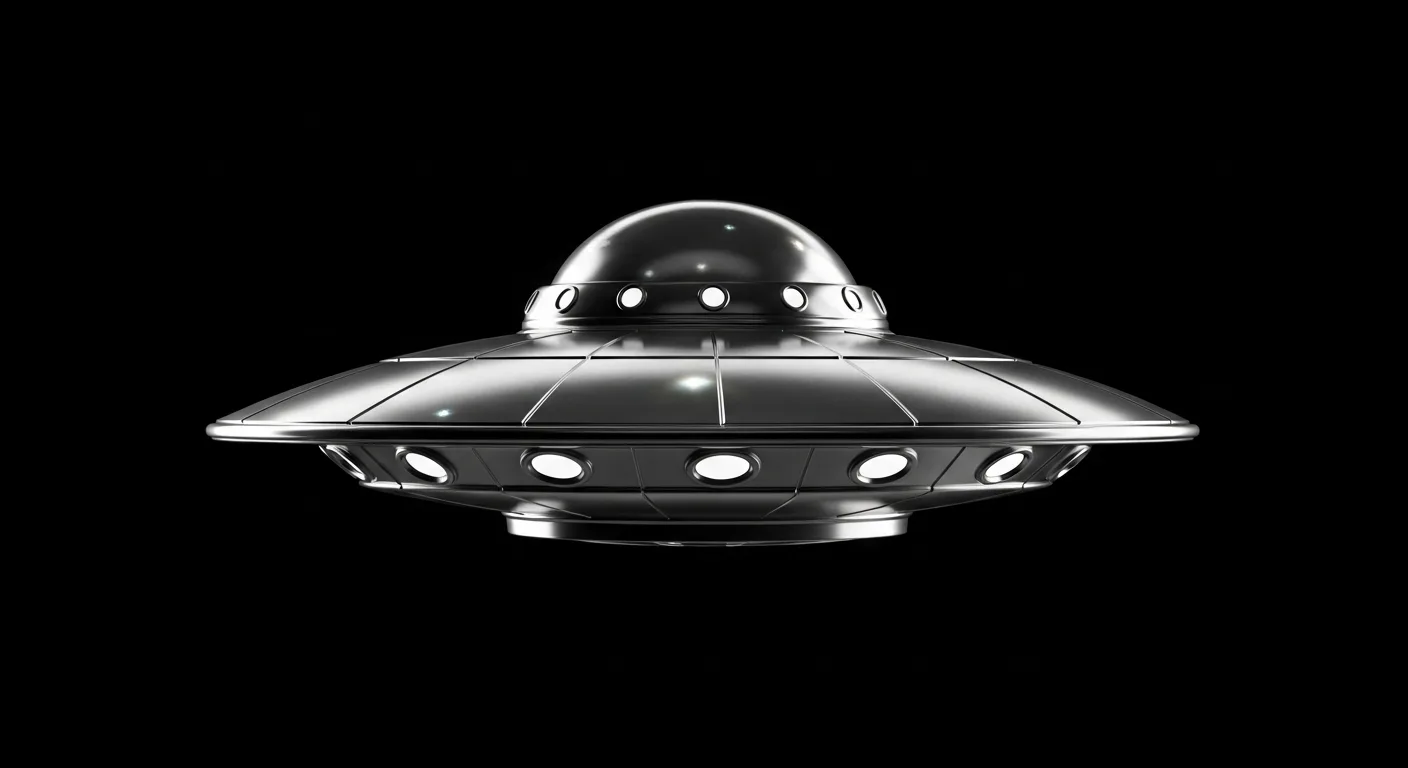
On the morning of April 6, 1966, something descended from the sky over Clayton South, Melbourne, and changed the lives of everyone who saw it. Over two hundred students and teachers at Westall High School watched as a grey, disc-shaped object dropped toward a nearby paddock called The Grange, hovered near the ground, then rose and departed at impossible speed. Within hours, men in dark suits arrived. The grass was burned or flattened where the object had landed. Teachers were ordered not to discuss it. Students were threatened. And for over fifty years, the Australian government never officially acknowledged what happened that Wednesday morning.
The Westall UFO encounter stands as one of the most witnessed — and most suppressed — UFO events in history. When two hundred people see the same thing, at the same time, in broad daylight, something happened. The only question is what.
A Wednesday Morning at Westall High
It was a clear autumn day in Melbourne’s southeastern suburbs, the kind of crisp April morning that made outdoor classes a small mercy for restless teenagers. By approximately eleven o’clock, students at Westall High School were scattered across the school grounds — some in physical education classes, others drifting toward early lunch. The school sat in Clayton South, a modest suburb where residential streets gave way to light industrial lots, with the open expanse of The Grange paddock stretching out nearby and a stand of pines the students called simply “The Pine” marking its western edge. Moorabbin Airport lay not far to the south, and the students were accustomed to the sound and sight of small aircraft overhead.
What appeared in the sky that morning was not an airplane.
Students noticed it first — something descending toward The Grange, moving with a slow, deliberate control that immediately set it apart from anything they had seen before. It made no sound at all. Where an engine should have roared or a propeller should have droned, there was only silence. The object came down at a steep but unhurried angle, not falling but landing, with the purposeful trajectory of something piloted. Students pointed and called out. Within moments, the normal rhythms of a school morning had dissolved into something unprecedented.
The object, as described with remarkable consistency by witness after witness over the following decades, was disc or saucer-shaped, silver-grey and metallic in appearance, roughly twenty to thirty feet in diameter. It bore no visible windows, no markings, no openings of any kind. There was no exhaust, no contrail, no visible means of propulsion. It descended behind the tree line at The Grange and appeared to land — or to hover just above the ground — where it remained stationary for what witnesses estimated at roughly twenty minutes.
The reaction among the students was immediate and electric. Approximately two hundred of them abandoned their activities and surged toward the paddock, some running flat out across the school grounds, others climbing to elevated positions for a better view. Teachers emerged from classrooms to find the grounds in chaos and looked up to see for themselves what had caused it. Staff members, students on lunch break, people in the surrounding streets, and drivers on nearby roads all became witnesses to the same extraordinary sight. Some students reached the paddock itself and observed the object from close range — perhaps two hundred feet or less. Others watched from the school perimeter. The distances varied, but the accounts did not. They all saw the same thing: a silent, metallic disc, sitting in a field where no such thing should have been.
Departure at Impossible Speed
After hovering near or on the ground for those strange, elongated minutes, the object rose. It ascended silently at a steep angle, accelerated with a swiftness that defied every aerodynamic principle the witnesses understood, and vanished to the northwest. It was gone in seconds. One moment it occupied the sky; the next it had simply ceased to be there, as though the air had swallowed it.
Some witnesses reported seeing more than one object. A number of students described what appeared to be five small aircraft circling the area — either pursuing or escorting the disc. Whether these arrived during the sighting or after the object departed is a point on which accounts diverge, but the presence of conventional aircraft in the vicinity only deepened the mystery. Were they military? Were they monitoring the situation? No official record has ever confirmed their presence or explained their purpose.
The Girl Who Got Closest
Among the students who ran toward The Grange, one figure has taken on particular significance in the Westall story, though she has never given a full public account. Known in most retellings simply as Tanya — her surname withheld at her own request — she was among the first to reach the landing site and claimed to have approached within feet of the object itself. What happened next is unclear in its details but vivid in its consequences: she collapsed near the landing site and had to be carried back to the school by other students. An ambulance was reportedly called, and she was taken from the grounds. Whether her collapse was the result of psychological shock, some physical effect of proximity to the object, or simple terror has never been determined. She was hospitalized afterward, and the closest witness to Australia’s most significant UFO event has remained largely silent ever since.
Men in Suits
What happened in the hours after the object departed may be, in its own way, more disturbing than the sighting itself.
Unknown men arrived at the school with striking speed. They wore dark suits and carried themselves with an official bearing, though witnesses recall no clear identification being shown — or if identification was presented, its details have been lost to the fog of a bewildering day. These men questioned students. They questioned teachers. And then they gave orders.
The principal called an emergency assembly. Students were told, in terms that left little room for misunderstanding, to forget what they had seen. The incident was not to be discussed — not with friends, not with family, not with anyone. Some students recall explicit threats of academic consequences, and a few have claimed the warnings were more severe than that, though the precise nature of these threats varies between accounts. Teachers were told that speaking publicly about the event could end their careers, and the pressure came not just from the mysterious visitors but from the education department itself. Orders, it was clear, had come from above.
Most of the teachers complied. They were professionals with livelihoods to protect, and the machinery of institutional authority had been brought to bear with unsettling efficiency. One notable exception was Andrew Greenwood, a science teacher who made detailed observations of the event and later spoke to media, confirming the sighting and describing the pressure that had been applied to keep witnesses silent. His willingness to break ranks made him one of the few adult voices to lend public credibility to what the students had experienced.
The Evidence That Vanished
At The Grange, the object had left traces. Multiple witnesses who reached the landing site before officials arrived described a circular impression in the grass, approximately thirty feet in diameter, where the vegetation had been flattened in a perfect ring. Some reported burn marks. Whatever had sat in that paddock had been heavy enough, or had produced enough energy, to leave a visible scar on the earth.
The traces did not last. Reports from witnesses describe the area being cordoned off, the affected grass removed or burned, and the physical evidence either disturbed or destroyed with a thoroughness that spoke of professional intent. A photographer from the Dandenong Journal, a local newspaper, reportedly took photographs at the scene, but the images were never published. The photographer’s camera or film was confiscated, and the pictures vanished into the same silence that had been imposed on everything else.
This pattern of erasure extended to official records. The Royal Australian Air Force claims to hold no records of the incident. School records are silent. Government files are either empty or classified. Freedom of Information requests over the decades have turned up nothing. The documentation was either never created — an extraordinary omission for an event involving two hundred witnesses and the apparent deployment of official personnel — or it was deliberately expunged.
Cold War Skies
The timing of the Westall encounter matters. In 1966, the Cold War was at its height. Australia was a firm ally of the United States, and the joint intelligence facility at Pine Gap was in the early stages of its development. Any unidentified aircraft in Australian airspace was, by default, a potential Soviet threat — or, if it belonged to the Western allies, a secret that needed protecting. The rapid official response and the severity of the silencing campaign make a certain kind of sense in this context, regardless of what the object actually was. In the paranoid calculus of Cold War security, an unexplained flying object over a Melbourne suburb was a problem that needed to disappear, and disappear it did — from the official record, if not from the memories of those who were there.
Decades of Silence, Then a Reckoning
For most of the witnesses, the years after Westall were defined by a peculiar kind of loneliness. They had seen something extraordinary, been told by every authority figure in their lives that it had not happened, and been left to reconcile those two realities on their own. Some avoided the topic entirely, burying the memory beneath the ordinary business of growing up, starting careers, raising families. Others could not let it go, turning the morning of April 6 over in their minds for decades, waiting for an explanation that never came.
The psychological toll was considerable. Being told you did not see what you saw — by teachers, by officials, by the implicit silence of a government that refused to acknowledge the event — is a form of gaslighting that leaves deep marks. For many Westall witnesses, the cover-up ultimately caused more lasting distress than the sighting itself. The object, whatever it was, had come and gone in less than an hour. The silence lasted a lifetime.
The case might have faded entirely were it not for the work of Shane Ryan, a researcher who devoted years to tracking down Westall witnesses, conducting interviews, and assembling a comprehensive account of the event. Ryan contacted former students and teachers, many of whom had never spoken publicly about what they saw. He organized reunion events where witnesses reconnected after decades apart, shared their stories, and — perhaps most importantly — validated each other’s experiences. The consistency of the accounts, even after more than fifty years, was striking. Details matched. Descriptions aligned. Independent witnesses who had not spoken to each other in half a century described the same object, the same behavior, the same aftermath.
Ryan’s work culminated in renewed public attention, including the 2010 documentary “Westall ‘66: A Suburban UFO Mystery,” which featured on-camera interviews with witnesses, visits to the original site, and expert analysis. The documentary brought the case to a new generation and reignited calls for official acknowledgment — calls that, for the most part, continued to go unanswered.
What Did They See?
The question has never been settled, and the leading theories each carry their own weight and their own problems.
The extraterrestrial hypothesis is the most dramatic and, for many witnesses, the most intuitive. The object behaved like no known aircraft: silent operation, extreme acceleration from a standing hover, no visible propulsion, and a disc shape that matched no military or civilian design of the era — or, arguably, of any era since. For those who saw it firsthand, the simplest interpretation was that it was not of this Earth. The difficulty, of course, is that the physical evidence was destroyed, and government denial, while suspicious, does not by itself prove an otherworldly origin.
The secret aircraft theory holds that the object was an experimental military craft — Australian, American, or British — being tested in the skies over Melbourne. This would neatly explain the cover-up: the government was protecting classified technology, not concealing alien contact. The problem is that no known aircraft in 1966, classified or otherwise, matches the described performance characteristics. Silent flight, the ability to hover motionless and then accelerate to extraordinary speed, and a disc-shaped airframe were beyond the engineering capabilities of any nation at the time. Moreover, testing an experimental aircraft directly over a populated suburb and a school full of children would represent a reckless disregard for secrecy that undermines the very premise of the theory.
The mass hallucination hypothesis — that two hundred people simultaneously imagined the same object in the same place at the same time — strains credulity to its breaking point. Mass psychogenic events are documented in the medical literature, but they typically involve subjective symptoms such as nausea or anxiety, not detailed visual observations of a physical object that leaves ground traces. The witnesses were not a single homogeneous group primed by expectation; they included students of varying ages, teachers, staff, and members of the surrounding community, all observing from different vantage points. Their descriptions are consistent not because they influenced each other in the moment but because they were looking at the same thing.
The weather balloon explanation — the perennial default of official dismissal — was rejected by the witnesses themselves, many of whom had seen weather balloons before and knew perfectly well that balloons do not descend in a controlled manner, hover for twenty minutes, and then accelerate to vanishing speed. This was not a balloon. The witnesses were emphatic on this point, and no one who has examined their testimony seriously has argued otherwise.
Westall Today
The paddock where the object landed is gone now, built over with houses in the decades since 1966. Westall High School still stands, and Clayton South remains a quiet Melbourne suburb where the extraordinary events of that April morning have left no visible scar on the landscape. The past has been buried beneath brick and concrete, as thoroughly as the official record was buried beneath silence and denial.
But not entirely. In 2014, after years of advocacy by Shane Ryan and other researchers, a memorial plaque was installed near the former site of The Grange. It is a modest thing — a small piece of metal that acknowledges the sighting without explaining it, names no cause, and offers no apology. It took forty-eight years for even this minimal recognition to appear. But it exists, and for the witnesses who spent decades being told that what they experienced never happened, it represents something: proof that they were heard, even if they were never answered.
The Silence That Speaks
April 6, 1966. A Wednesday morning in autumn. Students at play under a clear sky. A silver disc descending in silence toward an open paddock. Two hundred people watching — teachers, teenagers, neighbors, passing drivers — as something impossible settled onto the grass of The Grange and sat there, gleaming and mute, for twenty minutes that would stretch across the rest of their lives.
Then the departure, swift and vertical, the object gone before the mind could fully register its leaving. Then the men in suits, arriving with an efficiency that suggested they had been expected, or at least prepared for. Then the assembly, the orders, the threats. Then the evidence removed, the photographs confiscated, the records erased or never created. Then fifty years of nothing — no investigation, no explanation, no acknowledgment from a government that had, for all practical purposes, decided that the event had not occurred.
The witnesses grew up. They married, had children, built careers. They carried their memories like stones in their pockets, heavy and smooth from decades of turning. Some talked, cautiously, to researchers and filmmakers. Most did not. But they all remembered, with a clarity that time could not erode, the morning they saw something land in a Melbourne paddock and were told, by every authority in their lives, to forget it.
They did not forget. Two hundred people cannot all be wrong. Two hundred people cannot all hallucinate the same thing at the same time in broad daylight. Something landed in that field in 1966, left its mark on the grass, and departed into a sky that closed behind it like water.
We still do not know what it was. The Australian government has never said. The witnesses are aging now, their numbers thinning with each passing year, and the window for answers grows narrower. But the question remains, as vivid and unresolved as it was on that autumn morning when the world briefly cracked open over a suburban school in Melbourne, and something from beyond the ordinary slipped through.
April 6, 1966. Over 200 witnesses. A silver disc descending in broad daylight. Men in suits. Orders to forget. Fifty years of silence. Westall: Australia’s most witnessed UFO encounter, denied by authorities, remembered by those who were there, still unexplained after all these years.
Sources
- Project Blue Book — National Archives — USAF UFO investigation files, 1947–1969
- CIA UFO/UAP Reading Room — Declassified CIA documents on UAP