Westall UFO Encounter
Over 200 students and teachers at an Australian high school witnessed a UFO land in a nearby paddock before departing. Officials threatened witnesses into silence, but many have spoken out decades later.
The suburb of Clayton South in Melbourne, Australia seemed an unlikely setting for one of history’s most significant UFO events. Yet on April 6, 1966, this quiet residential area adjacent to Westall High School became the stage for a mass sighting that would affect over two hundred witnesses and generate controversy that persists to this day. What the students and teachers saw that morning, and the lengths to which authorities went to silence them, has transformed the Westall encounter into a touchstone case for UFO researchers worldwide.
The Sighting Unfolds
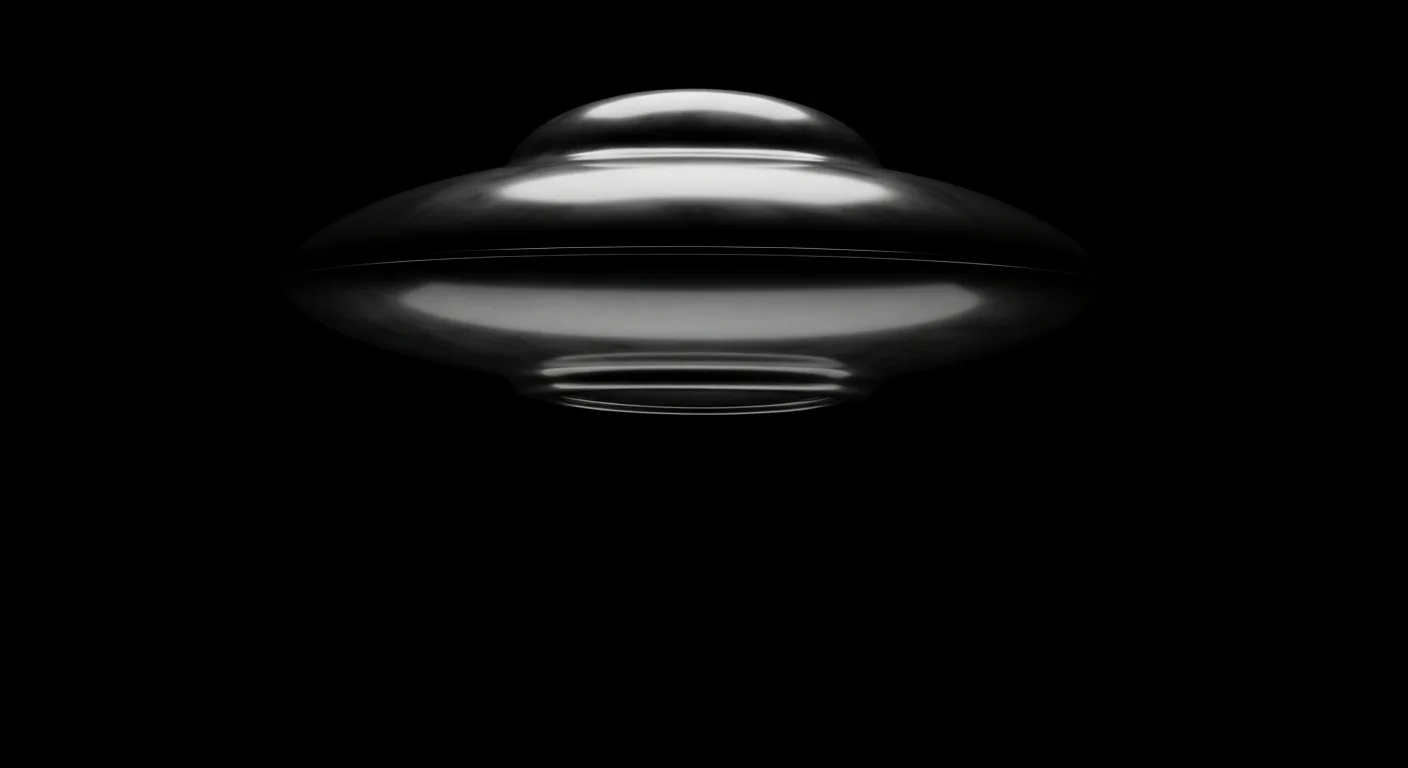
At approximately 11:00 AM during morning recess, the ordinary rhythms of school life were shattered. Students noticed a grey, disc-shaped object descending from the sky toward The Grange, an open paddock adjacent to the school grounds. The object moved with deliberate purpose, lowering itself toward the grass in full view of the assembled students and staff.
The craft appeared to touch down or hover just above ground level in the paddock. Some accounts suggest it was pursued or accompanied by smaller aircraft, possibly military planes, though this detail remains disputed among witnesses. For several minutes, the object remained visible, drawing more and more observers as word spread across the schoolyard. Then, without warning, it ascended at remarkable speed and vanished into the sky.
The Witnesses
The strength of the Westall case lies in its witnesses. This was not a lonely observer on a dark road or a single farmer in a remote field. Over two hundred students from Westall High School observed the event, along with their teachers and students from the nearby Westall State School. Local residents in the surrounding area also reported sightings, adding to the pool of independent observers.
Conservative estimates placed the witness count above two hundred, making this one of the largest mass sightings ever recorded. The witnesses ranged in age from young children to adult educators, representing a cross-section of the community united by their shared experience of something inexplicable.
The Craft Described
Witness descriptions of the object showed remarkable consistency. They spoke of a grey, silvery disc approximately twenty feet in diameter. Its surface was smooth and uniform, without visible windows, seams, or identifying markings of any kind. There was no visible propulsion system, no flames or exhaust, nothing that could explain how it moved through the air.
The object was either silent or produced only a low humming sound, depending on the witness. Its ability to hover motionless and then accelerate instantaneously defied the flight characteristics of any known aircraft. Whatever it was, it operated according to principles that witnesses could not reconcile with their understanding of physics.
The Landing Site
Some students, overcome by curiosity, ran toward the paddock where the object had descended. They found a circular area where the grass had been flattened or pressed down, physical evidence that something heavy had rested there. The vegetation appeared swirled or depressed in a distinct pattern, creating a visible trace of the craft’s presence.
This evidence was short-lived. Within hours of the sighting, the area was cordoned off by official-looking personnel whose identity and authority were never clearly established. Students were prevented from returning to the site, and whatever examination or collection of evidence occurred happened beyond public view.
The Suppression Campaign
What followed the sighting was, in many ways, as disturbing as the event itself. Military or government personnel arrived at the school and began a systematic effort to suppress witness accounts. Students were assembled and told explicitly that they had not seen what they thought they had seen. The event was not to be discussed publicly.
The headmaster reportedly threatened students with expulsion if they spoke to the media about the sighting. Teachers were instructed to deny the incident had occurred. Witnesses who had taken photographs or film were allegedly approached and had their materials confiscated. The message was clear: this event was to be forgotten.
Decades of Silence
The suppression effort succeeded in its immediate goals. For years, witnesses largely kept their experiences private. The fear of official consequences combined with the social stigma attached to UFO claims created a powerful incentive for silence. Students who had stood together watching something impossible now navigated their adult lives carrying a secret they could not easily share.
Professional concerns weighed heavily on many witnesses. Speaking publicly about seeing a UFO could damage careers and reputations. The lack of any supporting evidence, confiscated or simply never taken, made personal accounts easy to dismiss. Most witnesses chose the path of least resistance, keeping their memories private even as they remained vivid.
The Investigation Renewed
The early 2000s brought renewed interest in the Westall case. Researcher Shane Ryan began the painstaking work of locating witnesses who had scattered across Australia and the world in the four decades since the sighting. What he discovered was extraordinary: witness after witness told essentially the same story, maintaining their accounts with remarkable consistency despite having no contact with each other for years.
Ryan’s documentary “Westall ‘66: A Suburban UFO Mystery” brought these voices together for the first time. Elderly men and women who had been schoolchildren in 1966 shared their experiences on camera, often visibly emotional as they recounted memories they had suppressed for decades. The film documented not only what they had seen but the lasting impact the experience and its suppression had wrought on their lives.
Testimonies Aligned
The consistency of witness testimonies across independent interviews proved one of the most compelling aspects of the modern investigation. Details that might have been expected to diverge over forty years instead remained stable. The shape and color of the object, its behavior, the timeline of events, the nature of the official response: these elements aligned across accounts in ways that suggested genuine shared memory rather than constructed narrative.
Some witnesses expressed frustration at decades of official denial. Others reported lasting psychological effects, a sense of having been shown something profound and then forced to pretend it never happened. The suppression itself had become part of their trauma, a wound compounded by years of enforced silence.
Official Silence Continues
Australian government authorities have never officially acknowledged the Westall incident. No investigation records have been released, and military involvement has been consistently denied despite witness accounts to the contrary. If official files on the event exist, they remain classified or hidden from public view.
This official silence stands in stark contrast to the mountain of witness testimony that has accumulated over the years. The government position requires believing that over two hundred people simultaneously hallucinated the same object and that their consistent memories over five decades are somehow coincidental. For many researchers, this official stance strains credulity far more than accepting that something unexplained occurred.
Physical Traces Lost
The landing site where witnesses observed physical evidence has long since been developed, eliminating any possibility of modern forensic investigation. Whatever samples might have been collected in the immediate aftermath of the sighting remain unaccounted for. The physical evidence that could have provided scientific corroboration exists now only in witness memories.
Some who entered the landing area shortly after the event reported feeling strange or disoriented, though these accounts are difficult to evaluate at this distance. The opportunity to study the site with modern scientific instruments passed long ago, leaving only questions about what might have been discovered.
Reunion and Recognition
Witness reunions held in recent years have served multiple purposes. They have allowed former students to compare memories and validate each other’s experiences, providing emotional support for those who carried the weight of their sighting in isolation. They have also generated media attention that keeps the incident in public awareness, ensuring that new generations learn of what occurred at Westall.
These gatherings have become, in a sense, acts of collective resistance against the suppression that characterized the official response. By speaking out together, witnesses have reclaimed ownership of their experience and challenged authorities to explain what they saw.
A Case Without Closure
The Westall UFO encounter remains one of the most significant unsolved cases in UFO history. The combination of mass witnesses, daylight observation at close range, physical landing traces, and documented official suppression creates a case of unusual strength. The decades of consistent testimony add a temporal dimension that few UFO cases can match.
For the witnesses who lived through that April morning and its troubling aftermath, closure may never come. They saw something that existing frameworks cannot explain, were told to forget it by authorities who offered no alternative explanation, and have carried the memory into old age. Their willingness to eventually speak out has preserved the Westall incident for history, ensuring that whatever occurred over that Melbourne paddock in 1966 will not be erased by official silence or the passage of time.
Sources
- Project Blue Book — National Archives — USAF UFO investigation files, 1947–1969
- CIA UFO/UAP Reading Room — Declassified CIA documents on UAP