RAF Topcliffe UFO Incident
On September 19, 1952, RAF personnel at Topcliffe airbase in Yorkshire witnessed a silver, circular object follow a Meteor jet fighter, hover, and then accelerate away at impossible speed. Multiple officers and airmen observed the encounter. The British Air Ministry investigated but never explained the incident.
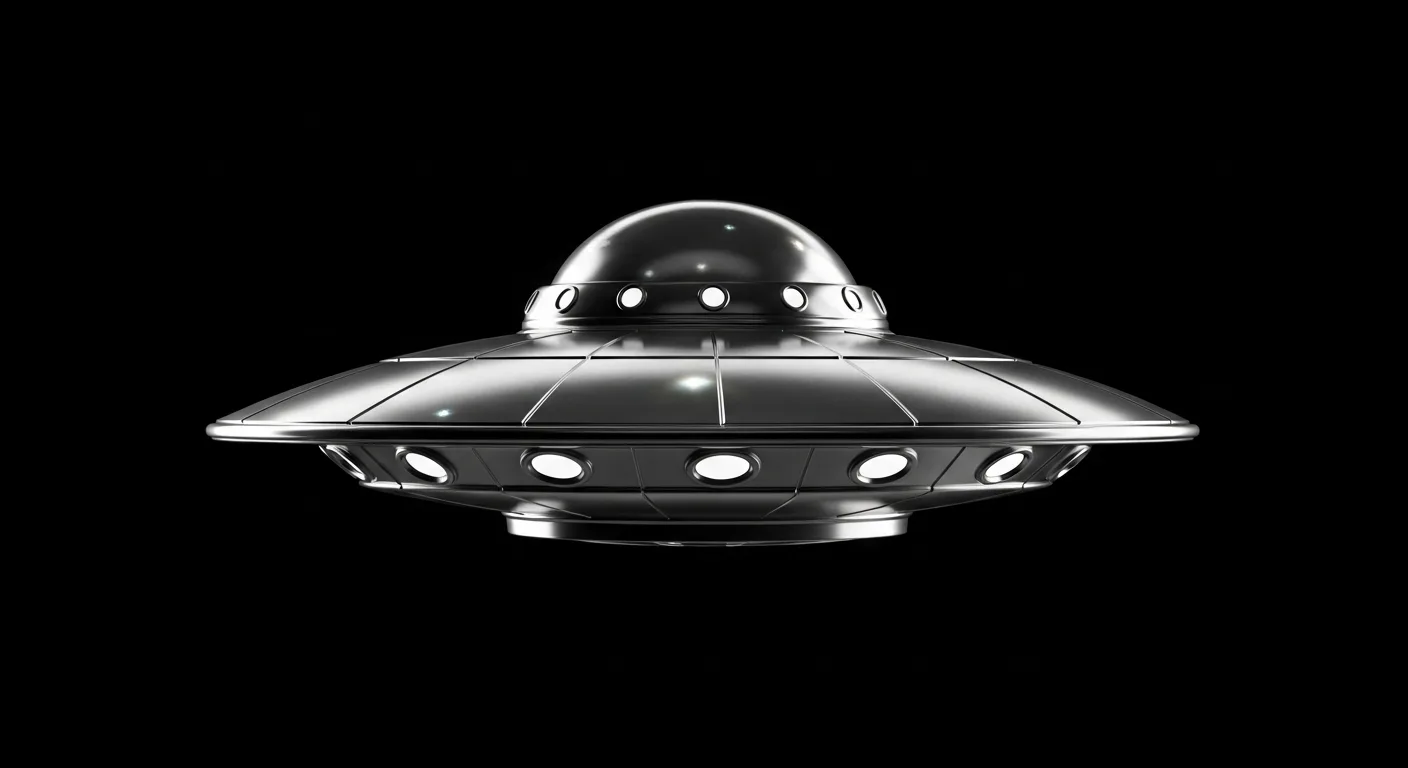
The Topcliffe incident stands as one of the most credible British UFO cases – a daylight sighting by multiple Royal Air Force personnel of a structured object that demonstrated flight characteristics beyond any known aircraft. The Air Ministry took the case seriously, investigated, and never found an explanation.
RAF Topcliffe was an active Royal Air Force station in North Yorkshire, England. In September 1952, it was home to fighter aircraft and experienced military personnel who knew what conventional aircraft looked like.
At approximately 10:53 AM, Flight Lieutenant John Kilburn and other RAF personnel were observing a Meteor jet returning to the airfield. As they watched the Meteor descend, they noticed a white, circular object at a higher altitude. The object appeared to be following or tracking the Meteor jet. The object stopped and hovered, rotating on its axis. Observers could see it was disc-shaped, silver or white in color. After hovering briefly, the object accelerated away to the west at tremendous speed, disappearing from view in seconds. The entire observation lasted approximately 20 seconds, but in that time, multiple trained observers witnessed behavior no 1952 aircraft could perform.
The quality of witnesses made this case significant: Flight Lieutenant John Kilburn, an experienced RAF officer who later provided detailed written testimony, along with several other officers and enlisted personnel who observed the object. Approximately 20 people observed some or all of the incident. These weren’t casual observers – they were military aviation professionals who spent their careers around aircraft.
Observers provided consistent descriptions: The shape was disc or circular, clearly structured rather than amorphous. The color was white or silver, reflecting sunlight. The size appeared substantial, though difficult to estimate without knowing altitude. The object could hover stationary and then accelerate instantly to extreme speed. While hovering, the object appeared to rotate on its axis, wobbling slightly.
The object displayed capabilities that no 1952 aircraft possessed: It could hover, no fixed-wing aircraft of the era could hover (helicopters could, but this was clearly not a helicopter). The object demonstrated instant acceleration, going from stationary to extreme speed with no visible acceleration curve. Observers estimated the departure speed as exceeding any known aircraft. Despite the performance, no sound was reported.
The British Air Ministry investigated the incident, documenting the sighting through official channels and conducting witness interviews. The Air Ministry could not identify the object or explain its performance, and the case remained unexplained in official files.
The Topcliffe incident occurred during a global UFO wave: In 1952, UFO sightings peaked worldwide, including the famous Washington D.C. incidents in July. Multiple UFO reports came from across the United Kingdom that year. Both American and British governments were taking UFO reports seriously.
Kilburn provided a detailed account that was later published. He described watching what he initially thought might be a parachute or debris, but which clearly showed powered, controlled flight. The object’s behavior – stopping to hover, then departing at speed – convinced him this was no natural phenomenon or conventional aircraft. His account remained consistent throughout his life, and he maintained that he witnessed something genuinely unexplained.
The Topcliffe sighting shares characteristics with other significant cases: The Washington D.C. 1952 incident, similar disc-shaped objects tracked on radar, and the RAF Bentwaters 1956 encounter. A global pattern of disc-shaped objects with hovering capability and extreme acceleration were reported worldwide.
Various explanations have been proposed: A weather balloon could appear to hover; however, balloons don’t accelerate away at high speed. Experimental aircraft, though no known project matches the observed capabilities. An optical illusion, arguing against this due to multiple trained observers seeing the same thing. Misidentification of the Meteor itself or another aircraft, acknowledging the observers’ expertise. None of these explanations adequately account for the observed behavior.
The Topcliffe incident contributed to British UFO research: The Air Ministry maintained files on UFO reports. Cases like Topcliffe demonstrated that UFOs weren’t just an American phenomenon. British researchers documented and analyzed such cases.
The Topcliffe incident remains significant because multiple military witnesses observed a structured object, the object displayed capabilities beyond 1952 technology, the Air Ministry investigated and found no explanation, the witnesses were trained aviation professionals, and the case has never been explained. What flew over RAF Topcliffe that September morning demonstrated capabilities that remain beyond known technology seventy years later.
Sources
- Project Blue Book — National Archives — USAF UFO investigation files, 1947–1969
- CIA UFO/UAP Reading Room — Declassified CIA documents on UAP
- UK National Archives — UFO Files — MoD UFO investigation records
- British Newspaper Archive — UK press archive