Braxton County Monster
Seven witnesses encountered a 10-foot alien being after a UFO landed in West Virginia. The creature's glowing eyes, spade-shaped head, and noxious mist left witnesses physically ill for days.
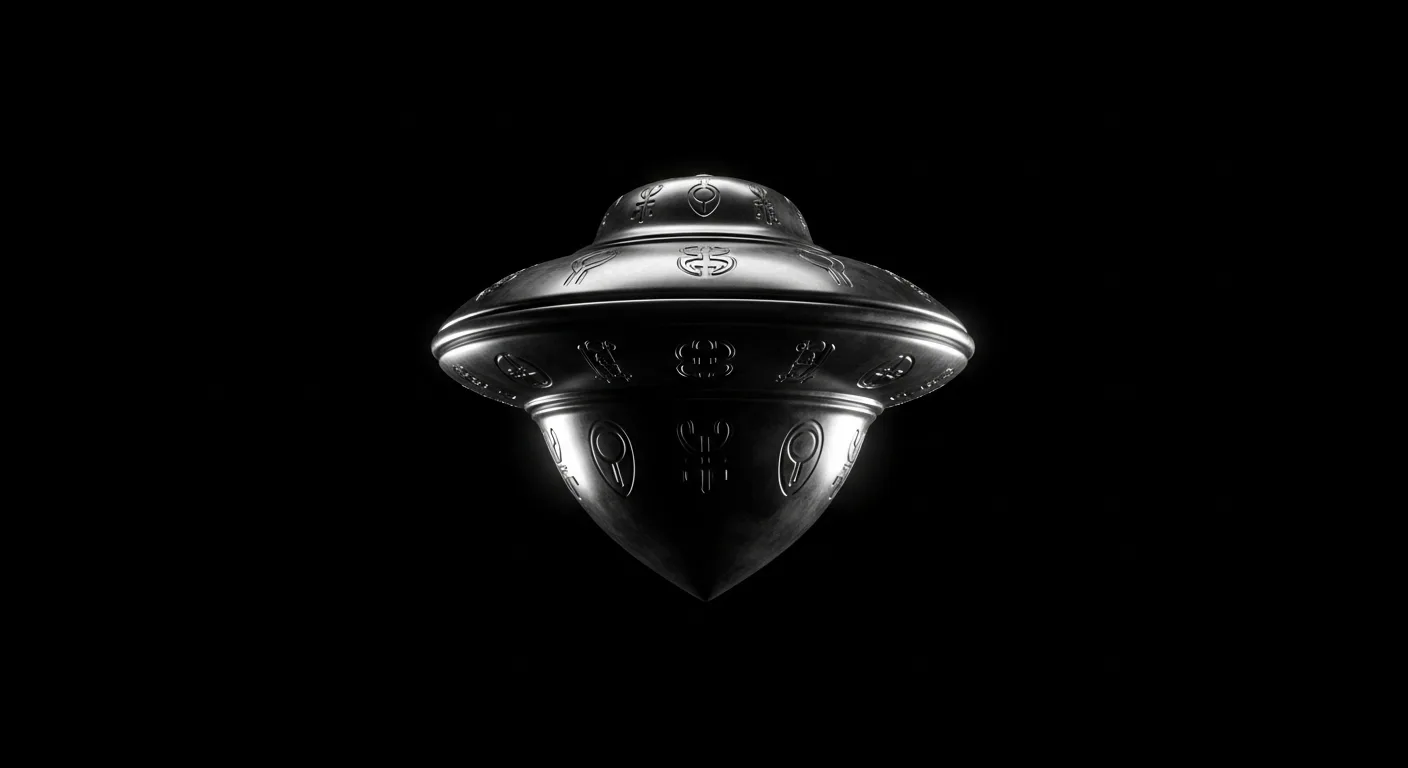
On the evening of September 12, 1952, in the small town of Flatwoods, West Virginia, seven people climbed a hill to investigate what they believed was a crashed aircraft and found instead something that none of them could explain, something that defied every category of experience they possessed. What they encountered on the hilltop that night—a towering figure with glowing eyes and a spade-shaped head, surrounded by a nauseating mist that left them physically ill for days—became one of the most distinctive and enduring cases in the history of UFO entity encounters. The Braxton County Monster, also known as the Flatwoods Monster or the Green Monster, has never been satisfactorily explained, and the witnesses who encountered it maintained their accounts without contradiction for the rest of their lives.
Flatwoods, West Virginia
To appreciate the impact of the encounter, one must first understand the community in which it occurred. Flatwoods in 1952 was a small, quiet settlement in the mountains of central West Virginia, a place where people worked hard, went to church on Sundays, and lived lives of unremarkable rural normalcy. Braxton County was not a place that generated national headlines, and its residents were not the sort of people who sought attention or fabricated stories for entertainment. They were practical, no-nonsense mountain folk, and when they said they saw something, their neighbors took them at their word.
The evening of September 12 was warm and clear, the kind of late summer night that draws people outdoors. Shortly after 7:15 PM, several boys playing football in the schoolyard saw a bright, reddish object streak across the sky and appear to land—or crash—on the hillside of the nearby Fisher farm. The boys were excited rather than frightened, assuming they had witnessed a meteorite or perhaps a downed aircraft. Their curiosity aroused, they ran to the home of Kathleen May, the mother of two of the boys, to report what they had seen and to ask for help investigating.
Kathleen May was a practical woman, and her initial reaction was concern that an aircraft might have crashed, potentially with injured passengers or crew. She agreed to accompany the boys up the hill, bringing along Gene Lemon, a seventeen-year-old National Guard member who lived nearby. The group that set out for the Fisher farm that evening consisted of seven people: Kathleen May, her sons Eddie (thirteen) and Fred (twelve), Gene Lemon, Neil Nunley (fourteen), Tommy Hyer (ten), and Ronnie Shaver (ten). Lemon brought a flashlight, and his dog ran ahead of the group as they began the ascent.
The Climb
The path to the hilltop led through pastures and woodland, and as the group climbed, the atmosphere changed in ways that several of them noted independently. The air became thick with an acrid, metallic smell that burned their nostrils and made their eyes water. Lemon’s dog, which had been running ahead with typical canine enthusiasm, suddenly tucked its tail, whimpered, and ran back down the hill, refusing to continue. Animals are often cited as sensitive to unusual environmental conditions, and the dog’s behavior was the first indication that something genuinely abnormal awaited the group at the summit.
As they approached the crest of the hill, the group could see a pulsating reddish-orange light emanating from beyond a slight rise. The light was not steady like a fire but rhythmic, brightening and dimming in a regular pattern that reminded some witnesses of breathing. The metallic smell intensified with proximity, and a thin mist or fog hung in the air around the light source, despite the clear weather conditions elsewhere on the hill.
Gene Lemon, leading the group with his flashlight, crested the rise first and swept the beam across the hilltop. The light illuminated a large, dark, roughly spherical object resting on the ground—or hovering just above it—that was the apparent source of the pulsating glow. The object was described as approximately ten feet across, and its surface appeared to be metallic, reflecting Lemon’s flashlight beam with a dull sheen.
But the object was not what captured their attention. What captured their attention was the thing standing beside it.
The Creature
When Gene Lemon directed his flashlight toward a large oak tree to the left of the glowing object, the beam illuminated a figure that bore no resemblance to anything in the witnesses’ experience. The creature stood at the base of the tree, and its appearance was so alien, so completely outside the bounds of anything the witnesses had ever seen or imagined, that for a moment they simply stared at it in paralyzed disbelief.
The figure was enormous—ten to twelve feet tall according to the witnesses’ consistent estimates. Its most striking feature was its head, which was shaped like an ace of spades or a heart—pointed at the top and widening at the sides before narrowing again at what would have been the chin. This unusual head shape was framed or enclosed by what appeared to be a hood or cowl of dark material that contributed to the impression of a pointed, non-human cranium.
The creature’s eyes were the detail that haunted the witnesses most. They were large, round, and set far apart in the spade-shaped head, and they glowed with a steady orange or greenish-orange luminescence that was visible even without the flashlight. The eyes did not reflect light in the manner of an animal’s eyes caught in a beam—they appeared to generate their own light, burning with an internal radiance that several witnesses described as hypnotic and deeply frightening.
The body below the head was dark in color—black or very dark green—and appeared to be covered in a material that was difficult to categorize. Some witnesses described it as resembling a pleated skirt or dress that extended from the waist to the ground, while others compared it to a metallic fabric or a segmented suit of some kind. The overall impression was of a being encased in some form of protective covering rather than exhibiting its natural exterior. Arm-like appendages were visible, described as small or spindly in proportion to the massive body, and ending in claw-like extremities.
The creature was not stationary. As Lemon’s flashlight beam struck it, the figure appeared to move toward the group, gliding rather than walking, as if propelled by some mechanism hidden beneath the skirt-like lower body. As it moved, it emitted—or its accompanying mist intensified to produce—a choking, acrid spray or gas that immediately affected the witnesses.
The Mist and the Retreat
The noxious emission that accompanied the creature was perhaps the most physically consequential element of the encounter. Witnesses described it as a thick, acrid mist with a metallic, chemical smell that was unlike anything they had encountered before. The mist made their eyes burn, their throats constrict, and their stomachs churn with immediate nausea. Gene Lemon, who was closest to the creature, was the most severely affected, vomiting almost immediately and experiencing difficulty breathing.
The combination of the creature’s terrifying appearance and the physically debilitating effects of the mist broke the group’s paralysis. Gene Lemon dropped his flashlight and fled, and the rest of the group followed in a panicked rush down the hillside. Kathleen May later described the retreat as chaotic—people stumbling over rocks and roots in the darkness, children crying, everyone desperate to put distance between themselves and whatever they had encountered on the hilltop.
The group reached the May residence in a state of near-hysteria. Kathleen May immediately called the local sheriff, while Lemon, still vomiting and visibly shaken, tried to describe what they had seen. The children were crying and several members of the group were exhibiting symptoms of exposure to some kind of irritant—red, watering eyes, sore throats, and persistent nausea.
The Aftermath
The physical effects of the encounter persisted well beyond the immediate aftermath. Gene Lemon was the most seriously affected, experiencing nausea, vomiting, and throat irritation that lasted for several days. A local physician, Dr. William Turner, examined several members of the group and noted symptoms consistent with exposure to a chemical irritant, though he could not identify the specific substance. Kathleen May also experienced prolonged throat irritation, and several of the children reported nightmares and sleep disturbances that continued for weeks.
When Sheriff Robert Carr arrived at the May residence and heard the group’s account, he organized a return to the hilltop. However, by the time the sheriff’s party reached the site—approximately an hour after the original encounter—both the creature and the glowing object were gone. What they found instead was a residual chemical smell that lingered in the area and, according to some accounts, traces of a dark, oily substance on the grass where the object had rested. The traces were not collected for analysis, a failure that has been a source of regret for researchers ever since.
The story reached the media almost immediately. By the following day, reporters from regional and national outlets had arrived in Flatwoods, and the sleepy mountain community found itself at the center of a media sensation. The witnesses were interviewed repeatedly, and their accounts remained remarkably consistent across multiple retellings—a consistency that impressed some investigators and that the witnesses themselves pointed to as evidence of their honesty.
The Investigation
The case attracted the attention of several investigators, most notably Ivan Sanderson, a Scottish-American biologist and paranormal researcher who visited Flatwoods shortly after the encounter. Sanderson conducted extensive interviews with the witnesses and examined the site, concluding that the witnesses were sincere and that something genuinely unusual had occurred on the hilltop. He noted the physical symptoms, the residual odor at the site, and the consistency of the witness descriptions as evidence supporting the reality of the encounter.
Gray Barker, a West Virginia journalist who would later become a prominent figure in UFO literature, also investigated the case and published an account that brought it to wider attention. Barker’s work was more sensationalized than Sanderson’s but served to ensure that the Flatwoods encounter entered the permanent record of UFO events.
The Air Force’s Project Blue Book investigated the case and offered an explanation that the witnesses found deeply unsatisfying: the glowing object was a meteor, and the creature was a barn owl perched in a tree, its eyes reflecting Lemon’s flashlight beam. According to this explanation, the frightened witnesses had misperceived a large owl as a ten-foot alien being, their imaginations inflamed by the excitement of the apparent meteor landing.
The owl explanation has been vigorously disputed by the witnesses and by many researchers. Kathleen May, who was familiar with the wildlife of rural West Virginia, rejected the identification categorically. “I know what an owl looks like,” she stated in interviews over the years. “What we saw was not an owl. It was not any animal I’ve ever seen. It was something else entirely.” The physical symptoms experienced by the witnesses are also difficult to reconcile with an owl sighting, as barn owls do not emit noxious gases that cause vomiting and throat irritation.
The Cultural Legacy
The Braxton County Monster has become an indelible part of West Virginia’s cultural identity and one of the most recognizable figures in American UFO lore. The town of Flatwoods has embraced its connection to the 1952 encounter, transforming what was once a source of fear and embarrassment into a point of civic pride and a tourist attraction.
The Flatwoods Monster Museum, located on the town’s main street, houses exhibits dedicated to the encounter, including recreations of the hilltop scene, displays of newspaper clippings and investigation documents, and a collection of artwork depicting the creature based on witness descriptions. The museum serves as both a serious research archive and a tourist destination, attracting visitors from around the world who are drawn to the case’s combination of compelling witness testimony and enduring mystery.
A large statue of the Flatwoods Monster stands in the town as a permanent landmark, its spade-shaped head and glowing eyes rendered in painted metal. The figure has become the town’s unofficial mascot, appearing on signs, merchandise, and promotional materials. An annual festival celebrates the encounter, featuring guest speakers, panel discussions, and activities that bring together researchers, enthusiasts, and curious visitors.
The cultural embrace of the Flatwoods Monster represents a fascinating evolution in the community’s relationship with the event. In the immediate aftermath of the encounter, the witnesses faced skepticism, ridicule, and unwanted attention that disrupted their lives. Over the decades, as the case entered the permanent literature of UFO studies and the witnesses maintained their accounts with unwavering consistency, the community’s attitude shifted from embarrassment to acceptance and eventually to celebration.
The Witnesses’ Testimony
What distinguishes the Braxton County Monster case from many other UFO entity encounters is the quality and consistency of the witness testimony. Seven people saw the creature, ranging in age from ten to approximately thirty-five, and their accounts have remained substantially unchanged over decades of retelling. Kathleen May, in particular, was an articulate and credible witness who repeated her account in interviews spanning more than fifty years without significant variation.
The witnesses did not seek publicity, did not profit from their experience, and did not embellish their accounts over time. They described what they saw in plain, direct language, acknowledged what they did not know, and resisted the temptation to speculate about the nature or origin of the creature. This restraint, combined with the physical evidence of their exposure to some kind of irritant, gives their testimony a weight that is difficult to dismiss.
The Braxton County Monster remains unexplained. The owl hypothesis satisfies some observers but is rejected by the witnesses and by many researchers who find it inadequate to account for the totality of the evidence. Whatever appeared on that hilltop on September 12, 1952—whether alien visitor, unknown natural phenomenon, or something else entirely—it was real enough to terrify seven people, make them physically ill, and leave an impression on their community that endures to this day. The creature that Kathleen May, Gene Lemon, and five children encountered on the Fisher farm that evening has never been identified, and the mystery of the Flatwoods Monster stands as one of the most distinctive and compelling cases in the annals of unexplained encounters.
Sources
- Project Blue Book — National Archives — USAF UFO investigation files, 1947–1969
- CIA UFO/UAP Reading Room — Declassified CIA documents on UAP
- Internet Archive — Cryptozoology texts — Digitised cryptozoology literature
- Chronicling America — Historic US newspapers (1690–1963)