RAF Bentwaters Radar Case
Multiple UFOs were tracked on radar at RAF Bentwaters and Lakenheath, with fighter jets scrambled to intercept. The objects displayed intelligent evasion and impossible speeds.
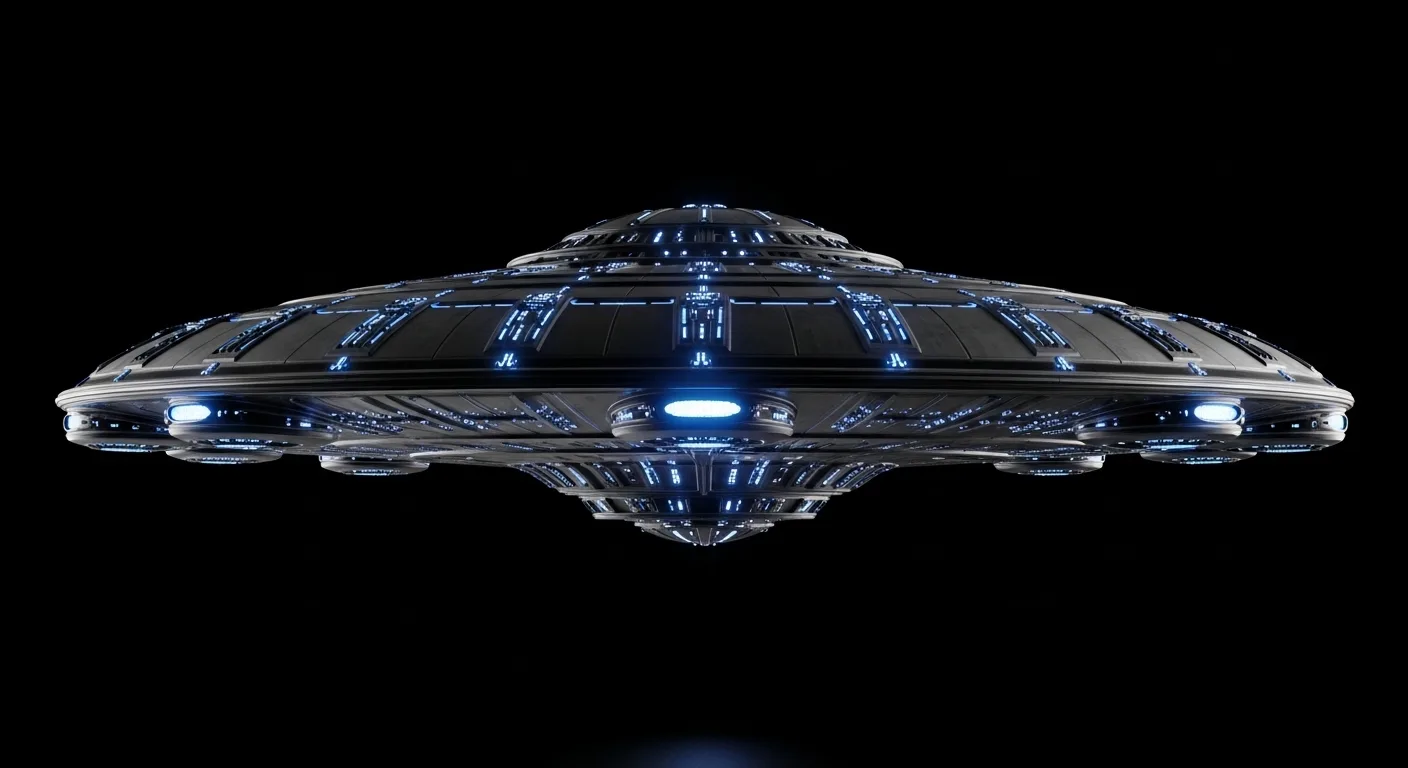
On the night of August 13, 1956, the skies over eastern England became the stage for one of the most compelling and thoroughly documented UFO encounters in history. Across two Royal Air Force stations in Suffolk, radar operators tracked objects performing maneuvers that defied the capabilities of any known aircraft, reaching speeds of 4,000 miles per hour, stopping instantaneously, reversing direction, and hovering motionless before accelerating away. When a de Havilland Venom night fighter was scrambled to intercept one of the objects, the encounter that followed would become the stuff of legend: the hunter became the hunted, as the unknown object executed a maneuver that placed it squarely behind the pursuing fighter, turning predator into prey. The Bentwaters-Lakenheath incident stands as one of the rare cases in UFO history where radar evidence, visual observation, and fighter pilot testimony converge to create a picture that no conventional explanation has been able to adequately address.
The Bases in the Cold War Landscape
RAF Bentwaters and RAF Lakenheath were twin pillars of the Western alliance’s aerial defense of Europe during the Cold War. Located in Suffolk, in the flat, open countryside of eastern England, both stations were operated by the United States Air Force under agreements with the British government. Their position on England’s eastern coast placed them squarely on the front line of any potential Soviet air assault on Western Europe, and their radar systems were among the most advanced in NATO’s defensive network.
RAF Bentwaters, situated near the village of Rendlesham (a name that would gain its own UFO notoriety in 1980), was home to USAF fighter-interceptor squadrons tasked with defending British airspace. RAF Lakenheath, approximately twenty miles to the northwest, served as a major USAF tactical fighter base and also housed important radar and ground-controlled intercept facilities. The two bases operated in close coordination, their overlapping radar coverage providing comprehensive surveillance of the skies over East Anglia and the approaches from the North Sea.
The radar systems at both bases were operated by trained technicians, career military personnel whose competence was tested daily in the demanding environment of Cold War air defense. These were not amateur observers prone to misidentifying weather returns or equipment artifacts; they were professionals whose lives and careers depended on accurately distinguishing genuine aerial targets from false returns. Their testimony about the events of August 13, 1956, carries correspondingly significant weight.
The Night Unfolds
The evening of August 13 began unremarkably at both bases. Weather conditions were clear, with good visibility and no significant atmospheric disturbances that might have affected radar performance. The radar screens displayed the usual traffic: commercial flights, military aircraft on routine missions, and the occasional return from migratory birds or weather phenomena. Nothing in the early evening hours suggested that the night would become historic.
The first anomalous returns appeared on the Bentwaters radar at approximately 9:30 PM local time. An operator detected a target moving at an extraordinary speed from east to west across the screen. The object’s velocity was calculated at approximately 4,000 miles per hour, a speed that exceeded anything in the aviation inventory of any nation in 1956. For context, the world speed record at the time was held by a Bell X-2 research rocket plane at approximately 2,094 miles per hour, and that speed was achieved only briefly and under extreme conditions. A sustained flight at 4,000 miles per hour was beyond the capability of any known technology.
The operator initially suspected an equipment malfunction, the natural first response of a trained technician confronting an impossible reading. But the return was solid and consistent, tracking smoothly across the screen in a manner inconsistent with electronic noise or atmospheric interference. Moreover, a second radar set at Bentwaters was also tracking the object, providing independent confirmation that the return was genuine.
Over the next hour, multiple targets appeared on the Bentwaters radar, some moving at extreme speed, others hovering motionless or moving at more conventional velocities. The objects exhibited a range of behaviors that collectively defied explanation: instantaneous acceleration from a dead stop, sudden reversals of direction, and the ability to hover with absolute stability before darting away at speeds that would have destroyed any conventional aircraft.
Lakenheath Joins the Watch
As the situation developed at Bentwaters, controllers contacted their counterparts at RAF Lakenheath, approximately twenty miles away. Lakenheath’s radar operators confirmed that they were also tracking unusual returns, providing crucial independent verification from a geographically separate location. The objects were real; they were being tracked on multiple radar systems at two different installations, eliminating the possibility that a single equipment malfunction was responsible.
The radar picture at Lakenheath was, if anything, more remarkable than at Bentwaters. Controllers watched as a target appeared on their screens moving at moderate speed, then suddenly stopped. The object remained stationary for several minutes, a behavior inconsistent with any known aircraft (which must maintain forward speed to remain airborne, with the exception of helicopters, which would have been visible and identifiable). The object then resumed movement, changed direction, and accelerated to a speed that took it rapidly off the screen.
At this point, multiple visual sightings corroborated the radar data. Personnel on the ground at both bases reported seeing unusual lights in the clear night sky, bright objects that moved in patterns consistent with what the radar was showing. The convergence of radar and visual evidence elevated the incident from an interesting anomaly to a serious concern. Whatever was in the sky over Suffolk, it was physically present and visible to the naked eye.
The ground-controlled intercept center at Lakenheath made the decision to scramble a fighter to investigate. A de Havilland Venom NF.3 night fighter from RAF Waterbeach was vectored toward the nearest target, beginning an intercept sequence that would become one of the most famous encounters in UFO history.
The Venom Intercept
The de Havilland Venom was a twin-boom, twin-seat night fighter equipped with airborne radar and armed with cannon and rockets. It was a capable aircraft for its era, designed specifically for the interception of hostile aircraft in darkness and poor weather. The pilot and navigator who launched from Waterbeach were experienced professionals, trained in the demanding discipline of night interception and accustomed to the challenges of identifying and engaging aerial targets in less than ideal conditions.
Ground controllers at Lakenheath vectored the Venom toward one of the stationary returns. The pilot reported acquiring the target on his own airborne radar, confirming its presence through yet another independent sensor. He closed on the target, preparing for a visual identification pass.
What happened next has been described consistently by multiple sources, including the pilot himself, ground controllers, and official reports. As the Venom closed on the target, the object began to move. But rather than fleeing in a direction away from the approaching fighter, as any conventional aircraft attempting to evade interception would do, the object executed a maneuver that placed it directly behind the Venom. In a matter of seconds, the pursuer had become the pursued.
The pilot, now acutely aware that an unknown object was on his tail, attempted to shake it. He executed a series of evasive maneuvers, the standard repertoire of a fighter pilot attempting to break a radar lock: hard turns, altitude changes, speed variations. None of them worked. The object remained locked in position behind the Venom, matching every maneuver with apparent ease. Ground controllers, watching the drama unfold on their radar screens, confirmed that the object was maintaining a fixed position behind the fighter, following every twist and turn as if attached by an invisible tether.
The pursuit continued for several miles, with the pilot growing increasingly alarmed. The object’s ability to match the Venom’s maneuvers in real time demonstrated a level of performance and, more disturbingly, apparent intelligence that was wholly unprecedented. This was not a natural phenomenon or an equipment artifact; this was something that was actively responding to the fighter’s actions, demonstrating awareness and intention.
Eventually, the object disengaged, breaking away from behind the Venom and accelerating to a speed that took it off both the airborne and ground radar screens within seconds. The pilot, shaken but unharmed, returned to base.
The Second Fighter
A second Venom was scrambled from Waterbeach to continue the investigation, but this aircraft experienced mechanical difficulties shortly after takeoff and was forced to return to base without engaging any targets. The decision was made not to launch additional fighters, and the objects gradually faded from radar screens as the night progressed.
The termination of the intercept attempts without resolution left the incident hanging in an uncomfortable ambiguity. The military had responded to the situation with the tools at its disposal, scrambling fighters and attempting identification, and had been comprehensively outmatched. The unknown object had demonstrated not merely superior performance but apparent tactical awareness, positioning itself behind an armed fighter in a gesture that could be interpreted as either defensive maneuvering or a deliberate demonstration of superiority.
The Investigation
The Bentwaters-Lakenheath incident was investigated by multiple agencies and reviewed by some of the most respected scientific figures in the UFO debate. The official USAF investigation concluded, as was typical for the period, that the sightings could be attributed to conventional causes, though the specifics of this attribution were vague and unconvincing to many who reviewed the evidence.
Far more significant was the case’s treatment by the Condon Committee, the University of Colorado project commissioned by the Air Force in 1966 to provide a definitive scientific assessment of the UFO phenomenon. The Condon Committee reviewed hundreds of cases, and its final report, published in 1968, was generally skeptical in tone. However, its treatment of the Bentwaters-Lakenheath incident was a notable exception.
The committee’s analysis, written by Dr. Gordon Thayer, a radar propagation expert, concluded that the case was “the most puzzling and unusual case in the radar-visual files.” Thayer noted that the radar returns were consistent with solid objects rather than atmospheric anomalies, that the independent tracking from multiple radar sets at two separate locations virtually eliminated the possibility of equipment malfunction, and that the fighter intercept provided additional confirmation of the objects’ physical reality. His conclusion was cautious but clear: the case remained unexplained, and the conventional hypotheses that had been proposed were inadequate.
Dr. James McDonald, an atmospheric physicist at the University of Arizona and one of the most rigorous scientific investigators of the UFO phenomenon, examined the case independently and reached similar conclusions. McDonald emphasized the quality of the evidence, noting that the combination of multiple radar tracks, visual observations, and a fighter intercept placed the Bentwaters-Lakenheath case in an elite category of UFO encounters. He considered it one of the most significant cases on record and frequently cited it in his presentations to scientific audiences.
The Evidence Assessed
The strength of the Bentwaters-Lakenheath case rests on the convergence of multiple independent lines of evidence, each of which is difficult to dismiss individually and which become collectively compelling when considered together.
The radar evidence was obtained from multiple sets at two geographically separated locations, operated by trained military personnel. Anomalous propagation, the bending of radar beams by atmospheric conditions that can create false returns, was considered and largely ruled out. The weather conditions on the night in question were not conducive to the types of atmospheric ducting that produce anomalous propagation, and the behavior of the returns, particularly the instantaneous stops and reversals, was inconsistent with weather-related artifacts.
The visual observations from ground personnel corroborated the radar data, confirming that physical objects were present in the locations indicated by radar. While visual sightings alone are susceptible to misidentification, their alignment with simultaneous radar data greatly increases their evidential value.
The fighter intercept provided the most dramatic evidence. The pilot’s report of acquiring the target on his own airborne radar, followed by the object’s maneuver to a position behind his aircraft, was confirmed by ground controllers watching on their own radar screens. This three-way confirmation, airborne radar, ground radar, and pilot testimony, is exceptionally difficult to explain away. The pilot was a trained professional performing a task he had practiced hundreds of times; his ability to distinguish a genuine aerial target from a false return was a core competency of his profession.
The object’s behavior during the intercept, the deliberate repositioning behind the fighter, represents perhaps the most significant aspect of the entire case. Natural phenomena do not exhibit tactical awareness. Equipment malfunctions do not respond to the actions of aircraft. Weather anomalies do not follow fighters through evasive maneuvers. Whatever the pilot encountered that night, it was behaving with apparent intelligence and purpose.
Skeptical Perspectives
Not all analysts have been convinced by the Bentwaters-Lakenheath evidence. Skeptical researchers have proposed several alternative explanations, though none has achieved the comprehensive accounting of the evidence that would constitute a definitive debunking.
Some skeptics have suggested that the radar returns were caused by anomalous propagation despite the weather conditions, arguing that localized atmospheric effects not captured by available weather data might have created false returns. Others have proposed that the objects tracked by radar were actually other aircraft, possibly military jets on classified missions whose presence was not communicated to the radar operators at Bentwaters and Lakenheath.
The fighter intercept has proven more difficult for skeptics to explain. Some have suggested that the pilot misinterpreted his radar data, mistaking a return from another aircraft or a ground feature for the UFO. Others have proposed that the “object” behind the Venom was actually the fighter’s own radar ghosting off atmospheric conditions. However, the ground controllers’ independent confirmation of the object’s position behind the fighter argues strongly against these explanations.
The psychosocial hypothesis, which attributes UFO reports to cultural expectations and social pressures, has limited applicability in this case. The witnesses were military professionals operating in a structured environment with institutional incentives to minimize rather than exaggerate unusual events. Reporting a UFO encounter was more likely to attract unwanted scrutiny than praise, and the witnesses had nothing to gain from fabricating or embellishing their accounts.
A Case That Endures
More than six decades after the events of August 13, 1956, the Bentwaters-Lakenheath incident remains one of the strongest cases in the UFO literature. It has survived skeptical scrutiny, scientific review, and the passage of time without yielding to a satisfactory conventional explanation. The convergence of radar data from multiple installations, visual confirmation from ground observers, and the dramatic fighter intercept create a body of evidence that demands serious attention.
The case also illustrates the limitations of the investigative apparatus that existed during the UFO era of the 1950s and 1960s. Despite the quality of the evidence, no sustained scientific investigation was conducted at the time. The USAF investigation was perfunctory, the Condon Committee’s review came twelve years after the fact, and no physical evidence was collected. The fleeting nature of the encounter, the objects appeared, performed their extraordinary displays, and vanished, left researchers with nothing but testimony, radar records, and official reports.
What flew over Suffolk on that August night remains unknown. The objects demonstrated capabilities that exceeded the technology of 1956 and that would challenge the technology of the present day. They appeared on multiple radar systems, were seen by multiple witnesses, engaged with a military interceptor, and departed at will. They behaved with apparent intelligence, responding to the actions of the fighter pilot in ways that suggested awareness, intention, and a command of aerial performance that nothing in the human inventory could match.
The skies over East Anglia have returned to their normal patterns of commercial and military traffic. RAF Bentwaters closed in 1993, its runways and hangars now given over to commercial and recreational uses. RAF Lakenheath remains an active USAF base, its radar systems vastly more capable than those of 1956. But the questions raised on that August night remain unanswered, hovering like the objects themselves over the flat Suffolk countryside, patient and permanent and unresolved.
Sources
- Project Blue Book — National Archives — USAF UFO investigation files, 1947–1969
- CIA UFO/UAP Reading Room — Declassified CIA documents on UAP
- UK National Archives — UFO Files — MoD UFO investigation records
- British Newspaper Archive — UK press archive