The Tehran F-4 Phantom Intercept
Two Iranian Air Force F-4 Phantom jets were scrambled to intercept a brilliant UFO over Tehran. As they approached, all instruments and weapons systems were disabled. When one pilot attempted to fire a missile, his systems went dead. The DIA called it 'a classic which meets all the criteria necessary for a valid study of the UFO phenomenon.'
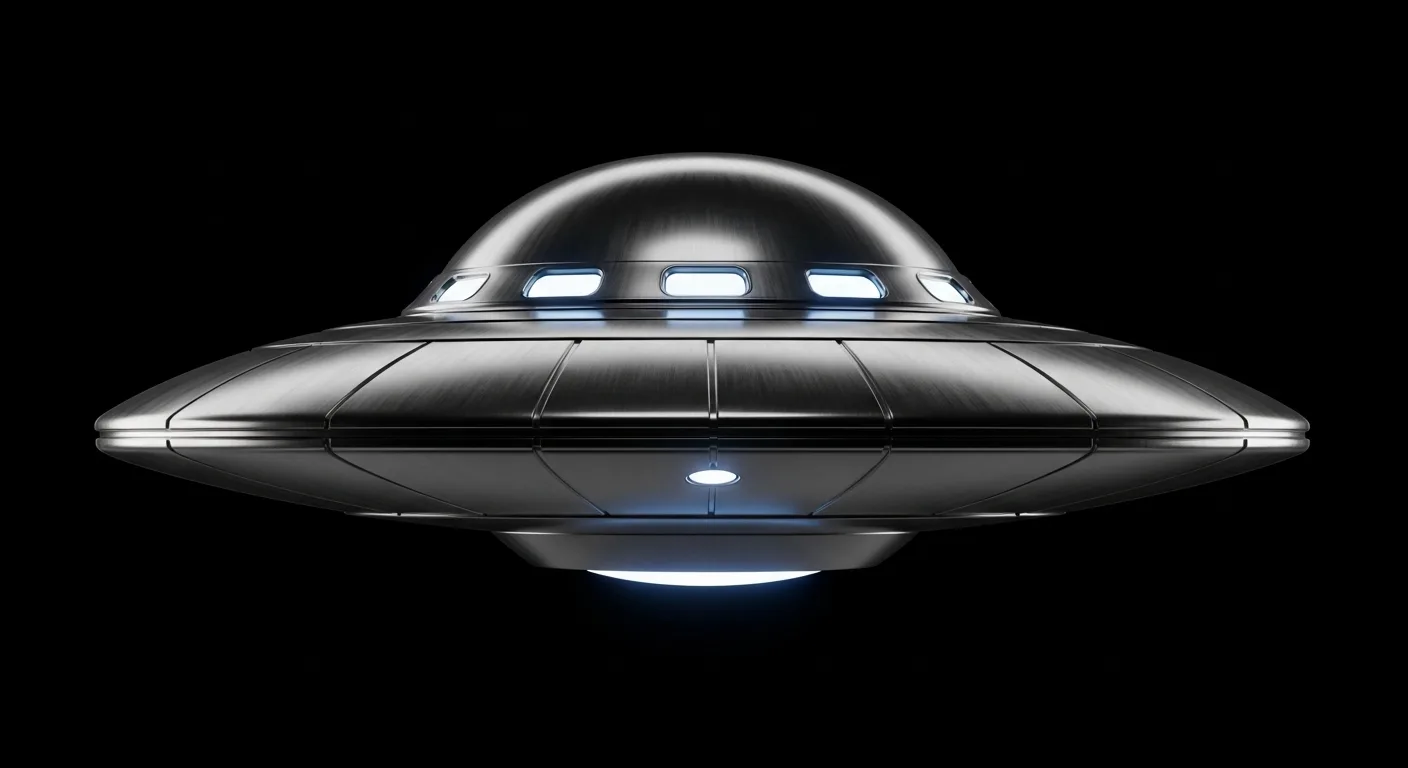
In the early morning hours of September 19, 1976, the Imperial Iranian Air Force scrambled two F-4 Phantom II jets to intercept a brilliant unidentified object over Tehran. As the fighters approached, their instruments and communications failed. When Major Parviz Jafari attempted to fire an AIM-9 Sidewinder missile at an approaching smaller object, his weapons systems went completely dead. The incident was documented in a three-page message to the U.S. Joint Chiefs of Staff, and the Defense Intelligence Agency called it “a classic which meets all the criteria necessary for a valid study of the UFO phenomenon.”
Background
Initial Reports
Multiple civilian reports of a bright object over Tehran began approximately 10:30 PM on September 18th, with at least four civilian witnesses initially reporting the sighting. The Imperial Iranian Air Force was subsequently contacted, and Mehrebad International Airport confirmed the visual sighting, noting that tower radar was initially under repair, leading to an initial confirmation based solely on visual observation.
Air Force Response
Reports were deemed credible, leading to the order to investigate. F-4 Phantom II jets were selected for a night intercept mission, launching from Shahrokhi Air Force Base.
First Intercept Attempt
Lieutenant Yaddi Nazeri
Dispatched from Shahrokhi AFB, Lieutenant Yaddi Nazeri approached the object from approximately 70 miles out. The object was clearly visible, described as a brilliant light source, and he prepared for an intercept.
System Failures
At approximately 25 nautical miles, all instrumentation failed, communications were lost completely, and the aircraft’s systems were rendered dead; the pilot was forced to break off the engagement.
Withdrawal
Nazeri turned away from the object as the distance increased, and as distance increased, the systems restored to full function. He reported the failures to base, noting a pattern of events.
Second Intercept
Major Parviz Jafari
Veteran pilot Major Parviz Jafari, accompanied by First Lieutenant Jalal Damirian as co-pilot, launched a second F-4 Phantom, employing a more aggressive approach planned with better-equipped aircraft.
Radar Lock
Initial success was achieved when a radar lock was acquired at 27 nautical miles, with a solid return detected. The object was tracked, and its size was compared to that of a Boeing KC-135 tanker, indicating a large target.
Visual Description
Major Jafari described the object as “flashing with intense red, green, orange, and blue lights” and stated that “the light was so bright that I was not able to see its body.” The strobing was rapid and intense, revealing a structured object visible between the flashes.
The Engagement
Approach
Jafari continued his approach, and communications systems shut off, mirroring the pattern of the first aircraft. He pressed forward, closing within weapons range.
The Smaller Object
A smaller object emerged from the primary UFO, approaching the F-4 at high speed and heading directly for the aircraft. Jafari made an instantaneous decision, attempting to fire an AIM-9 Sidewinder missile.
Weapons Disabled
The attempt to launch the missile resulted in the complete disabling of the weapons systems: fire control was dead and there was no electrical function to the weapons, leaving the aircraft defenseless.
Evasive Action
Jafari broke away in a steep dive, employing evasive maneuvers to avoid the smaller object, which did not follow the attack. He returned to the primary craft and merged with the larger object.
Second Smaller Object
Another smaller object descended from the primary UFO, heading toward the ground at high speed and appearing to land. Later, a search of the site uncovered a C-141 aircraft beacon transponder, though the coincidence or connection remained unknown.
Electromagnetic Effects
Multiple Aircraft Affected
Both F-4s experienced failures in communication systems and weapon system disabling. A nearby civilian airliner also experienced radio failure. The pattern of system failures was consistent.
Range Dependent
Systems failed when the aircraft were close to the object and were restored when the aircraft moved away, a consistent observation across multiple platforms, suggesting a deliberate or inherent effect, technology beyond current understanding.
Documentation
U.S. Reporting
A three-page message was sent to the U.S. Joint Chiefs of Staff on the day of the incident, providing a detailed account. The message was designated as high-priority distribution.
DIA Report
The Defense Intelligence Agency evaluated the case as “an outstanding report.” It was determined to be a classic encounter meeting all criteria for a valid UFO study: multiple witnesses, high credibility of witnesses (including a General, qualified aircrews, and experienced tower operators), visual confirmation by radar, similar electromagnetic effects reported by three aircraft, physiological effects on crew members, and the object’s demonstrated maneuverability.
Wide Distribution
The report was widely distributed to the White House, the Secretary of State, the Joint Chiefs of Staff, the National Security Agency, the Central Intelligence Agency, and the Defense Intelligence Agency.
High-Level Briefings
Iranian Military
General Nader Yousefi ordered the intercepts, and General Mahmoud Sabahat attended briefings. The incident was taken seriously, and a full investigation was ordered at the highest levels of the Iranian military.
U.S. Presence
General John Secord (USAF mission chief in Iran) attended a briefing, and Lieutenant Colonel Olin Mooy produced a detailed USAF report. U.S. military closely monitored the situation, classifying it as a high-priority intelligence issue.
Primary Object Departure
Final Observations
The primary object eventually departed at extreme speed, towards the east and was lost from view, concluding the encounter.
Aircraft Recovery
Both F-4s returned safely, and pilots were debriefed, reports were filed, equipment checked, and damage assessed.
Skeptical Explanations
Philip Klass
Skeptic Philip Klass attributed the pilots’ observations to seeing Jupiter or a bright star, posited equipment failures due to known F-4 issues, and suggested the first aircraft had maintenance problems. He argued that misidentification was the most likely explanation.
Meteor Theory
Brian Dunning suggested the incident occurred during Gamma Piscids and Southern Piscids meteor showers, with bright meteors possibly explaining radar anomalies and the lack of explanation for the weapons lock-out. However, this theory does not explain the demonstrated maneuverability of the object.
Problems with Explanations
Counterarguments highlighted that Jupiter doesn’t disable aircraft systems, meteors don’t hover, radar locked on the target, multiple trained pilots were involved, and system failures correlated with the approach of the object.
Analysis
Evidence Quality
The DIA assessment emphasized multiple witnesses at different locations, the high credibility of witnesses (including a General, pilots, and tower operators), visual confirmation by radar, electromagnetic effects on three aircraft, physiological effects on crew, and the object’s extreme maneuverability demonstrated.
Weapons System Failure
The pilot’s attempt to fire a missile, resulting in instantaneous weapons system disabling and removing defensive capability, was a critical event, as the object could have destroyed the aircraft if not avoided. The object chose not to.
Technology Implications
The demonstration of the ability to disable military aircraft, selective system targeting, non-destructive interdiction, and superiority over advanced fighters, along with a deliberate, controlled response, suggested advanced technology.
Legacy
Classification
The Guardian ranked the Tehran F-4 Phantom Intercept among the “Top 10 UFO sightings” in 2013. It is considered among the most credible military encounters and is notable for its extensive documentation and the exceptional quality of witness testimony.
Continued Study
The case is continually studied by researchers worldwide, serving as a template for military encounter analysis, establishing a high standard for evidence quality, and preserving multiple-witness military case documentation alongside government reports.
The Question
September 19, 1976. Tehran.
The calls start coming around 10:30. Civilians seeing something bright over the city. The Air Force is notified. Mehrebad tower confirms - they can see it too.
Send the jets.
First F-4. Lieutenant Nazeri. He approaches. Twenty-five miles out. Everything goes dead. Instruments. Radio. Everything.
He turns away. Systems come back. Something doesn’t want him close.
Second F-4. Major Jafari. Squadron commander. He’s going in.
He gets radar lock at 27 miles. The object is the size of a KC-135 tanker. Massive. Flashing red, green, orange, blue. So bright he can’t see the structure behind the lights.
He closes.
His communications die. Same pattern.
Then something new.
A smaller object detaches from the main craft. It comes straight at him. Fast.
Jafari does what fighter pilots do. He arms his Sidewinder. Prepares to fire.
And everything stops.
Weapons systems dead. Fire control dead. He can’t launch. He’s helpless.
He dives. Evades. The smaller object returned to its parent craft. It didn’t attack. It just showed him that it could.
The Defense Intelligence Agency calls this case “a classic which meets all the criteria necessary for a valid study of the UFO phenomenon.”
The report goes to the White House. The Secretary of State. The Joint Chiefs. The NSA. The CIA.
This is serious.
Two F-4 Phantom IIs. The backbone of American air power. Disabled at will. Weapons locked out.
September 19, 1976.
Tehran.
The jets couldn’t catch it.
The missiles couldn’t fire.
The object left when it was ready.
Still classified as unexplained.
Still impossible.
Still the best-documented military UFO encounter in history.
And still no answer.
Sources
- CIA UFO/UAP Reading Room — Declassified CIA documents on UAP