Tehran UFO Incident
Iranian F-4 Phantoms were scrambled to intercept a UFO over Tehran. When pilots tried to fire missiles, their weapons systems jammed. A DIA report called it 'a classic which meets all the criteria for a valid study.'
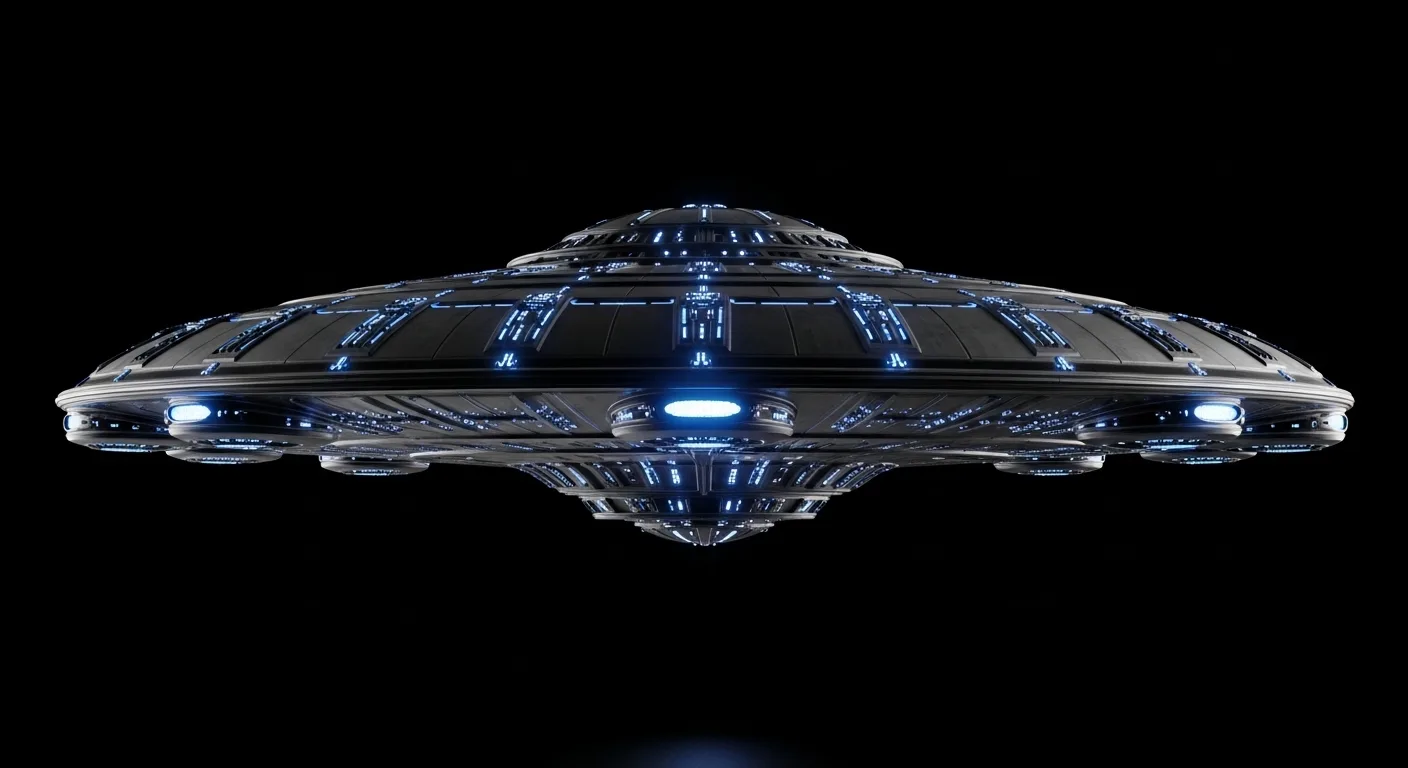
The night of September 19, 1976, produced one of the most significant military UFO encounters in history. Over the skies of Tehran, Iran, two F-4 Phantom jet interceptors were scrambled to engage a brilliant unidentified object. What followed was a terrifying demonstration of technological superiority that left the Iranian Air Force humiliated and the United States Defense Intelligence Agency calling the case “a classic which meets all the criteria for a valid study of a UFO phenomenon.” This was not a casual sighting by amateur observers. This was a military intercept mission against a clearly defined target, conducted by experienced combat pilots in sophisticated aircraft. When those pilots attempted to engage the object, their weapons systems failed in ways that defied explanation. The Tehran incident remains one of the most compelling cases of UFO interaction with military forces.
The evening began with phone calls to the Imperial Iranian Air Force headquarters at Mehrabad Airport. Citizens throughout northern Tehran were reporting a brilliant star-like object in the sky, far brighter than any natural celestial body. The calls were initially dismissed as misidentifications of stars or planets, but as reports continued to flood in, authorities decided to investigate. The duty controller attempted to observe the object himself and was immediately struck by its unusual appearance. It was a brilliant light, pulsating with multiple colors, far too bright and active to be a star. The decision was made to scramble an F-4 Phantom jet to investigate.
At approximately 1:30 AM, the first F-4 Phantom took off from Shahrokhi Air Force Base under the command of an experienced pilot. As he approached the object at high speed, something extraordinary happened. His entire instrument panel began to malfunction. Communications equipment failed. Navigation systems went dark. The aircraft was rapidly becoming unflyable. The pilot was forced to break off the intercept and turn back toward base. As he increased his distance from the object, his instruments gradually returned to normal function. Whatever he had approached had the ability to disable sophisticated military avionics simply by proximity.
A second F-4 Phantom was immediately scrambled, this time with Lieutenant Parviz Jafari at the controls and Lieutenant Jalal Damirian as weapons officer. They achieved radar lock on the target and began closing at high speed. The object appeared as a brilliant multi-colored light, pulsating with red, green, blue, and orange in rapid sequence. As they approached, Jafari was astonished to see a smaller object separate from the main body and head directly toward his aircraft. Believing he was under attack, he attempted to fire an AIM-9 Sidewinder missile at the incoming object. Nothing happened. His weapons panel had gone completely dead. All weapons systems, all communications, all instruments had simultaneously failed. The object continued toward them as Jafari desperately banked the aircraft in an evasive dive, certain he was about to be destroyed.
The object that had approached Jafari’s aircraft did not strike him. Instead, it curved away and rejoined the main body. But the demonstration of the UFO’s capabilities was not finished. A second smaller object emerged from the main craft and descended toward the ground below. Both pilots watched as it approached a dry lakebed south of Tehran, illuminating the terrain with brilliant light before apparently landing or hovering just above the surface. The light was intense enough to be visible from the aircraft’s altitude. After a period of observation, this second object also rose and rejoined the main body. The primary craft then accelerated away to the west, demonstrating speed that no aircraft in the world could match.
When Jafari returned to base, his aircraft was thoroughly examined. The weapons systems and avionics that had failed during the encounter were functioning perfectly. There was no mechanical explanation for the simultaneous failure of multiple independent systems, followed by their complete restoration once distance from the object was achieved. The incident was documented through official channels and eventually reached the United States through intelligence sharing. The Defense Intelligence Agency produced a detailed report that was classified for years before eventual release. The DIA evaluation was striking in its candor. Rather than dismissing the incident as equipment malfunction or pilot error, the report called it “a classic which meets all the criteria for a valid study of a UFO phenomenon.” The language was unprecedented for an official intelligence document.
The credibility of the Tehran incident rests on multiple factors. The initial reports came from hundreds of Tehran residents, providing independent confirmation that something unusual was in the sky. The scrambled intercepts were conducted by professional military pilots with extensive training in aircraft identification. The radar returns were documented. The weapons system failures were verified by post-flight examination. General Nader Yousefi, who ordered the intercepts, later confirmed the events; Lieutenant Jafari has spoken publicly about the incident for decades; radar operators documented the object’s movements; and the DIA report provides official US government acknowledgment. Iranian Air Force records confirm the scramble and intercept attempts.
The selective nature of the equipment failures at Tehran has intrigued researchers. The UFO did not simply emit electromagnetic interference that would affect all electronics equally. Instead, it specifically disabled weapons systems when a missile launch was attempted, while allowing the aircraft to remain flyable. This suggests either intelligence behind the interference or technology sophisticated enough to target specific systems. Similar patterns have been reported in other military encounters. At Malmstrom Air Force Base in 1967, nuclear missiles went offline when a UFO appeared. At various locations worldwide, aircraft have experienced selective instrument failures when approaching unknown objects. Tehran fits into this broader pattern of demonstrated capability to interfere with military technology.
The Iranian government has never provided an official explanation for the Tehran incident beyond acknowledging that something unexplained occurred. The Shah’s government, which was in power at the time, had the resources and motivation to identify any conventional explanation. None was found. The US government’s acknowledgment through the DIA report is equally significant. While not claiming the object was extraterrestrial, the DIA explicitly stated that the case deserved serious study as a genuine UFO phenomenon. This is far stronger language than typically found in official documents.
For those who study the intersection of UFOs and military forces, Tehran represents a clear demonstration of technological superiority. Whatever appeared over the Iranian capital that night could disable weapons at will, evade sophisticated interceptors, and depart at speeds beyond any known aircraft. The pilots who engaged it were left shaken by the encounter and convinced they had faced something far beyond human capability. The DIA’s characterization of Tehran as “a classic” case remains apt. It is a classic example of what happens when military forces encounter technology that renders their weapons useless and their aircraft helpless. It is a classic reminder that some questions about what shares our skies remain unanswered.
Sources
- 1976 Tehran UFO incident — Wikipedia
- CIA UFO/UAP Reading Room — Declassified CIA documents on UAP