Iran Tehran Jet Intercept
Iranian F-4 jets scrambled to intercept a UFO lost all weapons and communications when approaching. The DIA called it a 'classic' case meeting all criteria of a genuine unknown.
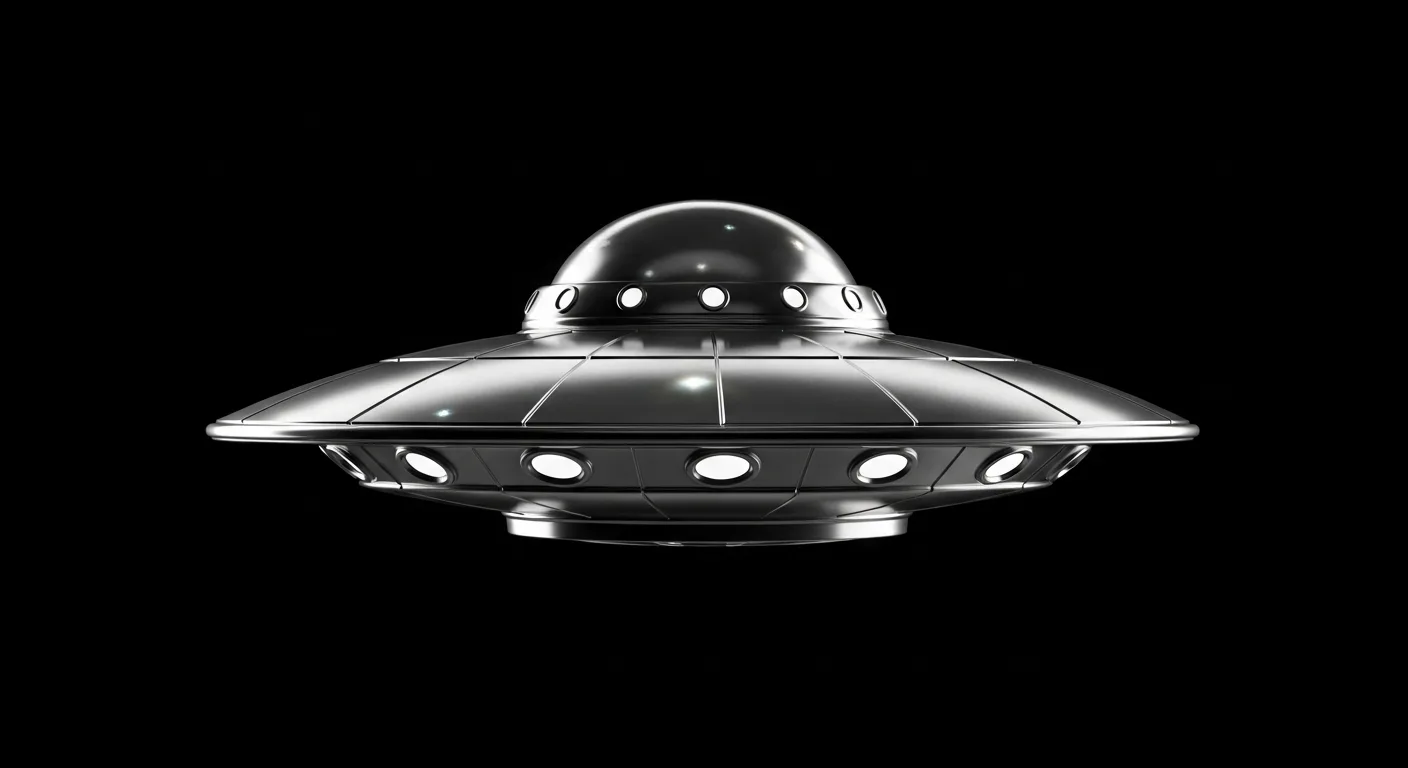
On the night of September 18-19, 1976, the skies over Tehran, Iran, became the stage for one of the most thoroughly documented and officially acknowledged military encounters with an unidentified flying object in the history of aviation. Two Imperial Iranian Air Force F-4 Phantom II fighter jets were scrambled to intercept a brilliant unknown object hovering over the capital city. Both aircraft experienced catastrophic systems failures as they approached the target. One pilot attempted to fire a weapon at a smaller object that emerged from the primary craft and came directly at his aircraft—only to find his weapons panel completely dead. The encounter was observed from the ground by civilians and military personnel alike, tracked on radar, and documented in a detailed report that made its way to the United States Defense Intelligence Agency. The DIA’s assessment was extraordinary: they classified the Tehran incident as a “classic case” that met all the criteria for a genuine unknown. In the careful, measured language of intelligence analysis, the American military establishment acknowledged that something had happened over Tehran that defied conventional explanation.
A City Watches the Sky
Tehran in 1976 was a city of contrasts. Under the rule of Shah Mohammad Reza Pahlavi, Iran was an American ally in the Cold War, its military equipped with the latest Western hardware, including the formidable F-4 Phantom II—one of the most capable fighter aircraft in the world at that time. The Imperial Iranian Air Force was trained to Western standards, its pilots professional and experienced. The air defense network over the capital was sophisticated and vigilant, designed to detect and respond to threats from the Soviet Union to the north.
On the evening of September 18, the Iranian Air Force began receiving telephone calls from citizens in the northern districts of Tehran reporting a brilliant light in the sky. The calls were initially attributed to the sort of misidentifications that any air force receives regularly—stars, planets, aircraft landing lights, or other mundane phenomena that occasionally alarm civilians. The duty officer at Mehrabad International Airport logged the reports without undue concern.
But the calls continued, and their volume and urgency increased. The light was not behaving like any star or planet. It appeared to be moving, changing position against the fixed background of the night sky. It was intensely bright, far brighter than any normal celestial object, and it seemed to pulse or shift in color. Multiple callers, from different locations across northern Tehran, were describing the same phenomenon—a convergence of independent testimony that elevated the reports from nuisance to concern.
General Yousefi Takes Command
The reports eventually reached Brigadier General Nader Yousefi, the assistant deputy commander of operations for the Iranian Air Force. Yousefi was initially skeptical—he had heard UFO reports before, and they inevitably resolved into mundane explanations. But the persistence and consistency of the civilian reports nagged at him. He decided to step outside and look for himself.
What he saw changed the trajectory of the entire evening. Hovering in the sky over Tehran was a brilliant object that Yousefi immediately recognized as nothing he had ever seen before. It was intensely luminous, radiating colored lights that shifted through the spectrum—blue, green, red, orange—in a pattern that suggested structured, purposeful illumination rather than the random scintillation of a star viewed through atmospheric turbulence. It was clearly larger and closer than any celestial object, and it appeared to be stationary or moving very slowly over the northern outskirts of the city.
Yousefi was a military professional with decades of experience. He knew what aircraft looked like, what stars looked like, what atmospheric phenomena looked like. This was none of those things. He made the decision to scramble fighters.
The First Phantom
At approximately 1:30 AM on September 19, an F-4 Phantom II launched from Shahrokhi Air Base, piloted by a lieutenant whose name has been variously reported as Yadhi or Azizkhani. The pilot was vectored toward the unknown object, climbing through the night sky over Tehran with his radar sweeping ahead.
As the F-4 closed to within approximately twenty-five nautical miles of the object, something extraordinary happened. The aircraft’s instrumentation began to fail. Communications equipment ceased functioning—the pilot could no longer transmit or receive on any frequency. Navigation instruments became erratic, providing unreliable readings. The flight control systems, while still operating, showed anomalies that made continued approach hazardous.
The pilot, faced with a fighter aircraft that was rapidly becoming unflyable, made the only sensible decision: he broke off the approach and turned back toward base. The moment the F-4’s nose swung away from the object and the distance between them began to increase, the aircraft’s systems restored themselves. Communications returned. Navigation instruments stabilized. Every system that had failed during the approach resumed normal operation as though nothing had happened.
The implications were chilling. The failure had not been random mechanical malfunction—it had been caused by proximity to the object, and it had ceased the moment that proximity was reduced. Something about the unknown craft was capable of selectively disabling the electronic systems of a modern military fighter aircraft, and that capability was clearly directional, affecting only equipment oriented toward or approaching the object.
Lieutenant Jafari’s Approach
A second F-4 was scrambled shortly after the first returned, this one piloted by Lieutenant Parviz Jafari, a more experienced aviator who would later rise to the rank of general in the Iranian Air Force. Jafari approached the object from a different vector, hoping to avoid whatever had affected the first aircraft. His radar acquired the target at a range of approximately twenty-seven nautical miles, and the return indicated an object roughly the size of a Boeing 707 tanker aircraft—a substantial, metallic object clearly distinct from any atmospheric phenomenon.
Jafari closed the distance cautiously, watching his instruments for any sign of the failures that had crippled the first F-4. The object remained stationary for a time, then began to move—retreating from the approaching fighter at a speed that maintained a consistent separation between them. When Jafari accelerated, the object accelerated. When he slowed, it slowed. The behavior was unmistakably intelligent, a game of cat and mouse played at jet speeds over a sleeping city.
The object’s visual appearance was extraordinary. Jafari described it as radiating intense light in multiple colors—strobing through the spectrum with a rapidity and brightness that was almost painful to observe. The lights were structured, arranged in a pattern that suggested a physical craft rather than a natural phenomenon. The object was clearly solid, blocking out stars behind it as it moved, and its radar return confirmed its physical presence.
The Smaller Object
As Jafari continued his pursuit, a smaller object suddenly detached from the main craft and began moving directly toward his aircraft at high speed. The object was brilliantly luminous, radiating intense light, and it was closing the distance between itself and the F-4 with alarming rapidity. Jafari’s immediate assessment was that it was a missile or some form of weapon.
Training took over. Jafari selected an AIM-9 Sidewinder missile and attempted to fire. Nothing happened. His weapons panel was completely dead—no power, no indicators, no response to any input. He switched to his other weapons systems. Dead. Communications had also failed, cutting him off from base and from any possibility of calling for assistance. In the space of seconds, his multi-million-dollar fighter aircraft had been reduced to a powered glider, capable of flying but stripped of every offensive and defensive capability.
With no weapons and no communications, Jafari’s only option was evasive action. He pushed the F-4 into a hard dive, pulling negative G forces as he attempted to escape the approaching object. The smaller craft followed him partway through the maneuver, matching his trajectory before breaking off and returning to rejoin the larger object. As it departed, Jafari’s weapons and communications systems came back online—instantly, completely, as though a switch had been thrown.
The encounter had demonstrated capabilities that no known technology possessed in 1976—or, for that matter, possesses today. The ability to selectively disable specific aircraft systems at range, in a targeted and reversible manner, implied a level of electromagnetic control that was beyond anything in the military arsenals of any nation on Earth.
The Third Object
The encounter was not over. As Jafari regained control of his aircraft and attempted to reestablish contact with base, a third object detached from the main craft and descended rapidly toward the ground. This smaller object dropped with startling speed, decelerating as it neared the earth and appearing to land or hover at extremely low altitude in an area south of Tehran. As it descended, it illuminated a large section of terrain with intense light, bright enough to be visible for miles.
Jafari marked the approximate location of the landing and continued his flight. He reported the descent to base and recommended that a ground search be conducted at first light.
The next morning, a helicopter was dispatched to search the area where the third object had apparently landed. The crew found no physical evidence of a landing—no scorched earth, no impressions in the ground, no debris. However, as they flew over the area, their communications equipment experienced interference, and a civilian house in the vicinity was found to be emitting an unusual electronic signal—a beeper-like transmission that could not be traced to any known source. The significance of this residual electronic anomaly was never determined.
The DIA Report
The Tehran incident generated a detailed report that was transmitted through military channels and eventually reached the United States Defense Intelligence Agency. The DIA document, which was later declassified, is remarkable for its tone and its conclusions. Written in the measured, analytical language of professional intelligence assessment, the report evaluates the Tehran encounter across multiple criteria and finds it compelling on every count.
The report notes that the case involves reliable witnesses—military officers and experienced pilots whose testimony cannot be casually dismissed. It notes the radar confirmation of the object, providing instrumental corroboration of the visual observations. It documents the electromagnetic effects on the aircraft systems, noting the pattern of failure upon approach and restoration upon withdrawal. And it records the object’s performance characteristics—speed, maneuverability, and the apparent ability to deploy smaller craft—as far exceeding the capabilities of any known technology.
The DIA’s concluding assessment describes the Tehran incident as a “classic case” that meets all the criteria for evaluation as a genuine unknown. The phrase “outstanding report” appears in the evaluation, a characterization that carries significant weight coming from an intelligence agency not known for hyperbole. In the understated vocabulary of intelligence analysis, the DIA was acknowledging that something genuinely extraordinary had occurred over Tehran—something that could not be explained by conventional means and that warranted serious attention.
The Witnesses Speak
Lieutenant Parviz Jafari would later rise to the rank of general in the Iranian Air Force, and his account of the Tehran encounter remained consistent throughout his career. In interviews given decades after the event, he described the experience with the precision and composure of a professional military officer recounting a mission, neither embellishing his account nor minimizing its strangeness.
Jafari made clear that the weapons failure was the most unnerving aspect of the encounter. As a fighter pilot, his aircraft was an extension of himself, and its capabilities were his capabilities. To have those capabilities stripped away by an unknown force, in real time, during what appeared to be a hostile approach by an unidentified object, was an experience of profound vulnerability. He was, for those seconds, helpless in a way that a combat pilot should never be.
General Yousefi, who had ordered the scramble, remained equally certain of what had occurred. He had seen the object with his own eyes before dispatching the fighters, and the reports from his pilots confirmed and amplified his own observation. The encounter, in his assessment, involved a technology that was beyond anything possessed by any nation on Earth—a conclusion that the passage of decades did nothing to alter.
Electronic Warfare Beyond Known Capability
The systems failures experienced by both F-4 aircraft during the Tehran encounter represent perhaps the most significant aspect of the case from a military and technological perspective. The failures were not random—they were selective, targeted, and reversible. Specific systems were disabled while others continued to function. The failures occurred upon approach and ceased upon withdrawal. And in the case of Jafari’s aircraft, the weapons systems were disabled at precisely the moment they were needed—when the pilot attempted to fire on an approaching object.
This pattern suggests not merely the ability to project electromagnetic interference but the ability to monitor the target aircraft’s systems and respond to specific actions in real time. The weapons panel did not fail randomly; it failed when Jafari attempted to use it. This implies either a technology capable of detecting weapons activation and responding instantaneously, or a technology capable of maintaining continuous, selective suppression of specific systems while allowing others to operate normally.
In 1976, no known technology was capable of such precise, selective electromagnetic warfare. The most advanced electronic warfare systems of the era could jam radar or communications through brute-force signal flooding, but they could not selectively disable individual systems aboard a target aircraft while leaving others functional. Nor could they reverse the effects instantly upon the target’s withdrawal. Whatever was operating over Tehran that night possessed capabilities that remain beyond the demonstrated capacity of any military on Earth nearly five decades later.
A Case That Stands Alone
The Tehran incident of September 19, 1976, occupies a singular position in the history of military UFO encounters. Its combination of multiple military witnesses, radar confirmation, documented electromagnetic effects, attempted weapons engagement, and official intelligence assessment makes it one of the most thoroughly documented and credibly evaluated cases in the entire UFO literature.
The DIA’s characterization of the case as “classic” and “outstanding” gives it a stamp of official legitimacy that few UFO encounters possess. This was not a sighting dismissed by the military establishment but one that was evaluated by professional intelligence analysts and found to meet every criterion for a genuine unknown. The Iranian military witnesses were not ridiculed or dismissed but were treated as credible observers reporting an extraordinary event.
The case has been studied by researchers around the world, and no satisfactory conventional explanation has ever been proposed. The object’s size, luminosity, speed, and electromagnetic capabilities exceed those of any known aircraft or weapon system, and its behavior during the encounter demonstrated apparent intelligence and purpose. Whatever hovered over Tehran that September night, it came from a technological tradition that bears no relationship to anything in the human inventory.
The Tehran incident reminds us that the UFO phenomenon is not confined to the backcountry roads of rural America or the lonely skies over empty deserts. It can manifest over a major world capital, engage the military forces of a modern nation, and demonstrate capabilities that render those forces impotent. It can do all of this, be documented by professional intelligence agencies, be acknowledged as genuine and unexplained—and still, somehow, be filed away and forgotten by a world that prefers its mysteries at a comfortable distance.
The lights over Tehran have long since faded from the sky, but the questions they raised burn as brightly as ever. What was it? Where did it come from? And what does it mean that something can appear over a city of millions, defeat the military technology sent against it, and vanish without explanation into a night that offers no answers?
Sources
- CIA UFO/UAP Reading Room — Declassified CIA documents on UAP