Tehran UFO Dogfight
Iranian F-4 jets scrambled to intercept a UFO over Tehran experienced weapons and communications failures when approaching. The DIA called it a 'classic case' of a genuine unknown.
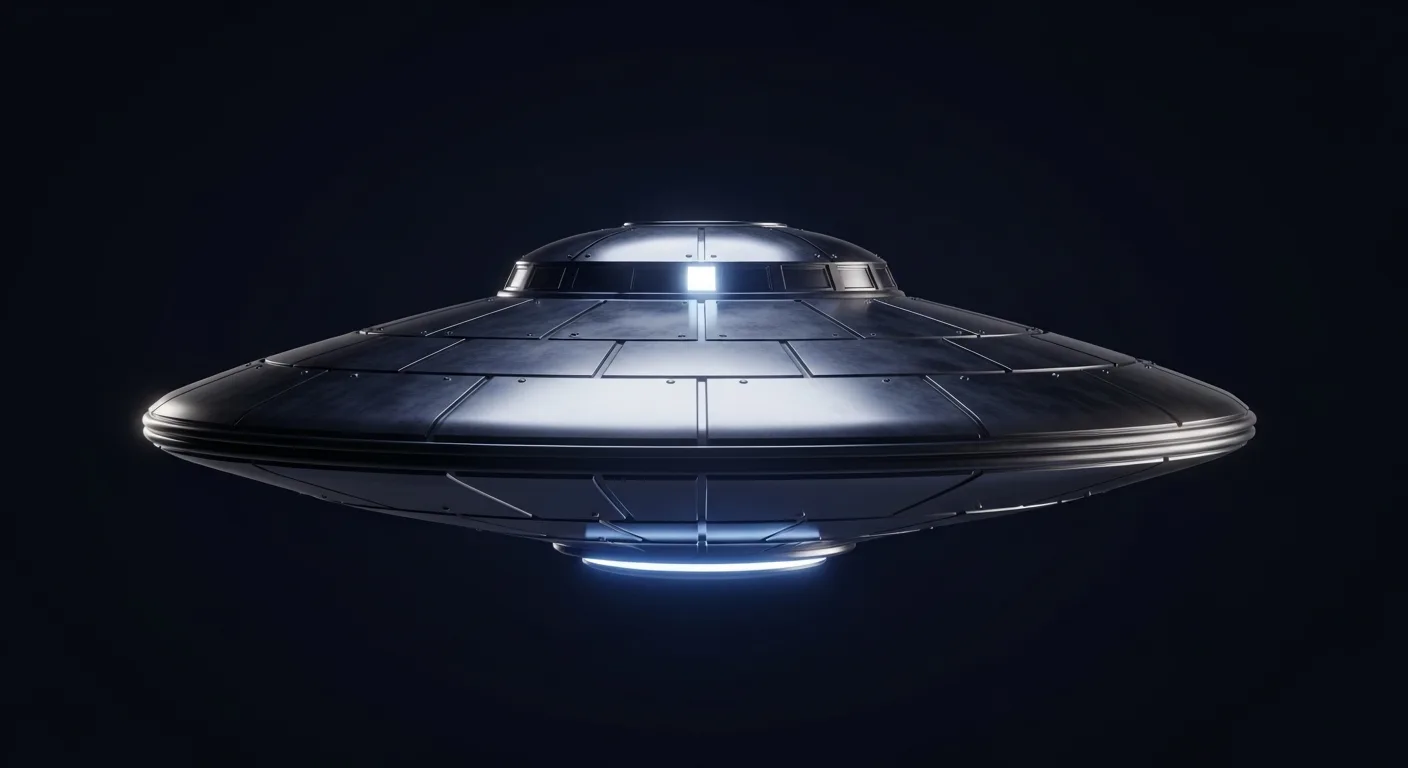
In the early morning hours of September 19, 1976, the skies over Tehran became the stage for one of the most well-documented and officially corroborated UFO encounters in military history. Two Iranian Air Force F-4 Phantom II jets were scrambled in succession to intercept an unknown luminous object hovering over the Iranian capital. Both aircraft experienced total weapons and communications failures as they closed in on the target. The object demonstrated flight characteristics far beyond the capability of any known aircraft, and the encounter was later evaluated by the United States Defense Intelligence Agency, which described it as a “classic case” that met all the criteria for a legitimate study of an unidentified flying object. Nearly five decades later, the Tehran incident remains a cornerstone case in the study of unidentified aerial phenomena, distinguished not by the sensationalism of its claims but by the sobriety and credibility of its witnesses and the official documentation it generated.
A City Looks Up
The evening of September 18, 1976, began unremarkably in Tehran. The capital was in the grip of late summer warmth, and the night sky above the city was clear and dark. At approximately 10:30 PM local time, the Mehrabad Airport control tower began receiving telephone calls from civilians in the Shemiran district, a prosperous northern neighborhood of Tehran situated at the foot of the Alborz Mountains. Residents were reporting something extraordinary overhead: a brilliant, pulsating object hanging in the sky, far larger and more luminous than any star or planet, and seemingly stationary.
The calls came not from a single witness but from dozens of unrelated individuals spread across the district. Some described the object as diamond-shaped; others likened it to a star that had swollen to impossible proportions and begun flashing with colored lights. The descriptions varied in detail but agreed on the essential points: the object was very bright, it appeared to be hovering at considerable altitude, it was unlike anything the callers had ever seen, and it did not behave like a conventional aircraft, helicopter, or celestial body.
At first, air traffic controllers and military personnel treated the reports with measured skepticism. Strange lights in the sky were not unheard of, and most such sightings eventually resolved into mundane explanations: weather balloons, satellites, atmospheric phenomena, or simply Venus shining with unusual brilliance near the horizon. But as the volume of calls increased and the reports remained consistent, the matter was escalated to the Iranian Air Force command post.
The duty officer contacted General Nader Yousefi, the assistant deputy commander of operations for the Imperial Iranian Air Force. Yousefi’s initial instinct was dismissal. He was a career military man, trained to deal in facts and hardware, not rumors of mysterious lights. But the persistence and number of the civilian reports gave him pause. He stepped outside and looked toward the northern sky.
What Yousefi saw instantly changed his assessment. There, hanging above the Shemiran district, was an object of extraordinary brilliance, pulsating with light in a pattern that no conventional aircraft or celestial body could produce. It was clearly not a star, not a satellite, and not any aircraft he recognized from decades of military service. General Yousefi made his decision: he ordered an F-4 Phantom II scrambled from Shahrokhi Air Force Base to investigate.
Lieutenant Yadhi’s Approach
The first F-4 Phantom was piloted by Lieutenant Yadhi, an experienced pilot who lifted off from Shahrokhi at approximately 1:30 AM on September 19. He was directed by ground control toward the object, which radar operators had also begun tracking as an intermittent return. As Yadhi flew northward toward Tehran, the object was clearly visible from a great distance, its intense luminosity marking it unmistakably against the dark sky. Whatever this thing was, it was real, it was radiating enormous amounts of light, and it was exactly where the civilians had said it would be.
Yadhi closed the distance steadily, his instruments functioning normally, his communications with the ground clear and routine. The object appeared to grow larger as he approached, its light resolving into a pattern of rapidly strobing colors: blue, green, red, and orange, cycling so fast they sometimes appeared to merge into white. The pilot estimated its luminosity to be comparable to a star but many times larger, visible from a range that he calculated at roughly seventy miles.
Then, at approximately twenty-five nautical miles from the object, everything went wrong simultaneously. Yadhi’s instrument panel flickered and died. His communications equipment ceased functioning completely. The radio, which moments before had been crackling with clear transmissions from ground control, went utterly silent. His weapons systems showed no response. The sophisticated avionics of the F-4 Phantom, one of the most advanced fighter aircraft in the world at that time, had been reduced to dead weight.
Yadhi was flying blind, deaf, and defenseless, hurtling toward an unknown object at combat speed with no means of communication, navigation, or self-defense. The sudden and total nature of the systems failure was unlike anything in his experience. Equipment malfunctions happened, of course, but they were typically partial and progressive: a gauge would fail, a radio channel would develop static, a warning light would illuminate. This was different. Every electronic system in the aircraft had ceased functioning at the same instant, as though some external force had simply switched everything off.
Left with no alternative, Yadhi made the only reasonable decision available to him. He broke off his approach and turned his aircraft back toward Shahrokhi. What happened next was as remarkable as the failure itself. The moment he reversed course and began flying away from the object, his instruments returned to life. The cockpit illuminated with the familiar glow of functioning avionics. His radio crackled back with the voices of ground controllers who had been desperately trying to raise him. His weapons systems reported nominal status. Every system that had died moments before was now operating perfectly, as though nothing had happened.
The correlation was impossible to ignore. The systems had failed precisely when Yadhi was closing on the object and had restored themselves precisely when he turned away. Whatever force was responsible appeared to be directional and deliberate, a defensive measure that disabled the approaching aircraft without destroying it. General Yousefi, monitoring the situation from the ground, immediately ordered a second F-4 into the air.
Lieutenant Jafari and the Second Intercept
The second Phantom was crewed by Lieutenant Parviz Jafari, a skilled and cool-headed pilot who would later rise to the rank of general in the Iranian Air Force. Jafari was fully briefed on what had happened to the first aircraft before he took off. He knew that the object had the apparent ability to disable the advanced electronics of a military jet at a range of twenty-five miles. He launched regardless, determined to get a closer look and, if possible, identify what they were dealing with.
Jafari’s approach was different from Yadhi’s. He climbed to higher altitude and adjusted his angle of attack, hoping that a different trajectory might yield different results. His backseat weapons officer managed to achieve a radar lock on the object as they closed in, and the return they recorded was extraordinary. The radar signature indicated an object comparable in size to a Boeing 707 tanker aircraft. This was no weather balloon and no atmospheric anomaly. Whatever was generating this return was a massive, solid object occupying real airspace over the Iranian capital.
As Jafari closed the distance, he was able to observe the object in greater detail. It appeared to be roughly rectangular in shape, with lights sequencing rapidly along its length. The colors shifted through the spectrum with a speed and intensity that mesmerized and unnerved him. The object itself seemed to pulse, its luminosity waxing and waning in a rhythm that felt almost organic. And then, as he continued his approach, the situation escalated dramatically.
A smaller, intensely bright object separated from the main craft. It was round, brilliantly luminous, and it was moving directly toward Jafari’s aircraft at tremendous speed. The pilot’s immediate assessment was that the object was hostile. In the language of aerial combat, something had been launched at him. Training and instinct took over simultaneously. Jafari maneuvered his aircraft and reached for the weapons release, intending to fire an AIM-9 Sidewinder heat-seeking missile in self-defense.
Nothing happened. His weapons panel was completely dead. Every offensive system in the aircraft had gone offline at the precise moment he needed them most. His communications were gone. His instruments were failing. Just as with the first F-4, the Phantom’s electronics had been systematically disabled, but this time the failure came not at twenty-five miles but in close proximity, at the moment of maximum vulnerability, when a bright unknown object was bearing down on the aircraft at speed.
Jafari did the only thing he could do. He threw the F-4 into a steep diving turn, attempting to evade whatever was coming at him. The smaller object followed his descent for a short distance before breaking off, looping back, and rejoining the main craft with the same effortless speed with which it had departed. Once again, as Jafari opened distance from the primary object and turned away, his systems began to recover. Instruments flickered back to life. Communications returned. The weapons panel showed green.
A Second Object Falls
The encounter was not over. As Jafari recovered from his dive and regained altitude, both he and his weapons officer observed another smaller object detach from the main craft. This one did not approach the jet. Instead, it descended rapidly toward the ground, dropping at great speed toward the terrain below. Both crewmen watched as the object fell, expecting an impact and possible explosion. Instead, it appeared to land softly, or perhaps hover just above the surface, casting an intensely bright light over a wide area of ground. The illuminated zone was estimated to be roughly two to three kilometers in diameter, an enormous area bathed in brilliant luminosity from a single source.
The crew noted the approximate location of the landing and continued to observe as the main object, still pulsating with its extraordinary light show, began to move away from Tehran, drifting eastward with a smooth and unhurried motion that suggested complete indifference to the two military jets that had attempted to intercept it. Eventually, the main object departed the area entirely, and the smaller ground-level light also faded.
Jafari brought his aircraft home safely, shaken but uninjured. Upon landing, both flight crews were immediately debriefed, and their accounts were recorded in detail. The following day, a helicopter was dispatched to the area where the second smaller object had been observed descending. The crew surveyed the location, a dry lake bed on the outskirts of Tehran, but found no physical evidence of a landing or impact. However, residents in a small house near the site reported hearing a loud noise and seeing a bright light during the night at approximately the time the object had been observed.
The DIA Evaluation
What separates the Tehran incident from the vast majority of UFO reports is what happened next. The encounter did not simply fade into the files of the Imperial Iranian Air Force. Through intelligence-sharing arrangements between Iran and the United States, which were at that time close military allies under the Shah’s government, detailed reports of the incident were transmitted to American intelligence agencies. A comprehensive account landed on the desk of the Defense Intelligence Agency in Washington, D.C.
The DIA’s evaluation of the Tehran incident was remarkable for its tone. Military intelligence agencies are not given to credulity or sensationalism. Their assessments tend toward the dry and the cautious, carefully hedged with qualifications and alternative explanations. The DIA’s report on the Tehran encounter broke from this pattern. The agency described the case as meeting all the criteria necessary for a valid study of the UFO phenomenon: the object was observed by multiple credible witnesses, it was tracked on radar, it was pursued by military aircraft, and the interactions between the object and the intercepting jets were documented in detail by trained observers.
The DIA assessment specifically noted several features that distinguished the case: the credibility of multiple witnesses including a general officer, visual confirmation supported by radar returns, the electromagnetic effects on the aircraft systems of two separate jets, the object’s demonstrated ability to deploy smaller objects with independent flight capability, and the high professional caliber of the observers involved. The report concluded by characterizing the event as “outstanding” in terms of the quality of documentation and noting that the case represented a “classic” example of a genuine unknown.
This evaluation was not made public for many years. When it eventually surfaced through Freedom of Information Act requests and the gradual declassification of military documents, it sent ripples through both the UFO research community and the broader public. Here was not a breathless tabloid account or an attention-seeking witness but a measured assessment by one of the most powerful intelligence agencies on earth, stating plainly that something unexplained had occurred in the skies over Tehran and that the evidence warranted serious attention.
The Witnesses and Their Credibility
The strength of the Tehran case rests in no small part on the caliber of its witnesses. These were not casual observers glimpsing something strange through a car window. The primary witnesses were trained military pilots flying sophisticated aircraft, men whose professional survival depended on their ability to accurately assess aerial phenomena, identify threats, and make split-second decisions under pressure. Their observations were made not from the ground but from the cockpits of interceptor jets engaged in active pursuit of the target.
Lieutenant Parviz Jafari, in particular, became a significant voice in the years following the incident. He rose to the rank of general in the Iranian Air Force, a career trajectory that suggests his superiors did not consider him unreliable or prone to fantasy. In numerous interviews given over the decades, Jafari’s account remained consistent and measured. He described what he saw without embellishment, acknowledged what he could not explain, and resisted the temptation to speculate beyond the facts of his experience. His credibility as a witness has never been seriously challenged.
General Yousefi, who ordered the intercepts and personally observed the object from the ground, similarly maintained his account throughout his career. The ground controllers at Mehrabad Airport, the radar operators who tracked the object, and the dozens of civilian witnesses who first reported the lights all contributed to a body of testimony that was internally consistent and mutually corroborative. No credible evidence of collusion, hoax, or mass hysteria has ever been presented.
Patterns of Interference
For researchers studying unidentified aerial phenomena, the Tehran incident holds particular significance because of the electromagnetic interference experienced by both aircraft. The systematic disabling of avionics, communications, and weapons systems is not unique to this case. Similar effects have been reported in numerous military encounters with unidentified objects across the globe, from American fighter pilots over the Atlantic to NATO aircraft in European airspace.
The pattern observed in Tehran was especially striking for its apparent intentionality. The systems failures occurred at specific distances and during specific approach vectors, suggesting that whatever caused them was selective rather than indiscriminate. The failures reversed themselves the moment the aircraft withdrew, indicating that the effect was not caused by permanent damage but by some form of active suppression. And most provocatively, the weapons systems failed at the precise moment Jafari attempted to fire, suggesting that the object or its operators were aware of the pilot’s intentions and responded accordingly.
These characteristics have led some analysts to describe the electromagnetic effects as defensive countermeasures rather than incidental emissions. If the object was an advanced aircraft of terrestrial origin, it would represent electronic warfare capabilities that were decades beyond anything known to exist in 1976, and arguably remain beyond current capabilities nearly fifty years later. If the object was something else entirely, the implications are even more profound.
Legacy and Significance
The Tehran UFO incident occupies a unique position in the history of unidentified aerial phenomena. It is one of a very small number of cases where multiple military aircraft interacted directly with an unknown object, where sophisticated instruments were brought to bear on the target, where detailed official documentation was created in real time, and where a major intelligence agency subsequently evaluated the case and found it worthy of serious study. Most UFO reports, however sincere, lack one or more of these elements. The Tehran case possesses all of them.
The incident has been featured in countless documentaries, books, and research papers. It has been analyzed by skeptics and believers alike, and while various alternative explanations have been proposed, including the possibility that the pilots were observing Jupiter or that the systems failures were coincidental malfunctions, none of these explanations has convincingly accounted for all the details of the encounter. The combination of visual observations, radar tracking, electromagnetic effects, and the deployment of smaller objects from the main craft presents a puzzle that resists simple solutions.
In the broader context of UAP research, the Tehran incident stands as a reminder that the phenomenon, whatever its ultimate explanation, has been taken seriously by military and intelligence professionals at the highest levels. The DIA did not dismiss the report, explain it away, or bury it. They evaluated it on its merits and found it to be a case of genuine significance. That assessment, coming from an agency not known for credulity, speaks volumes.
For the pilots who were there, the experience was something far more immediate than a research question or a footnote in intelligence files. They were men in machines, hurtling through the night sky toward something they could not identify, watching their instruments die around them, facing an object that seemed to anticipate their every move. Whatever flew over Tehran on the night of September 19, 1976, it left an impression on those who encountered it that no amount of official silence or institutional skepticism could erase. The skies above the Iranian capital held something extraordinary that night, and the men who flew into it came back changed, carrying with them a story that the evidence compels us to take seriously.
Sources
- CIA UFO/UAP Reading Room — Declassified CIA documents on UAP