Tehran UFO F-4 Jet Chase
Two Iranian F-4 jets scrambled to intercept a brilliant UFO experienced complete weapons and communications failure. The DIA called this encounter a 'classic' meeting all criteria of a genuine unknown.
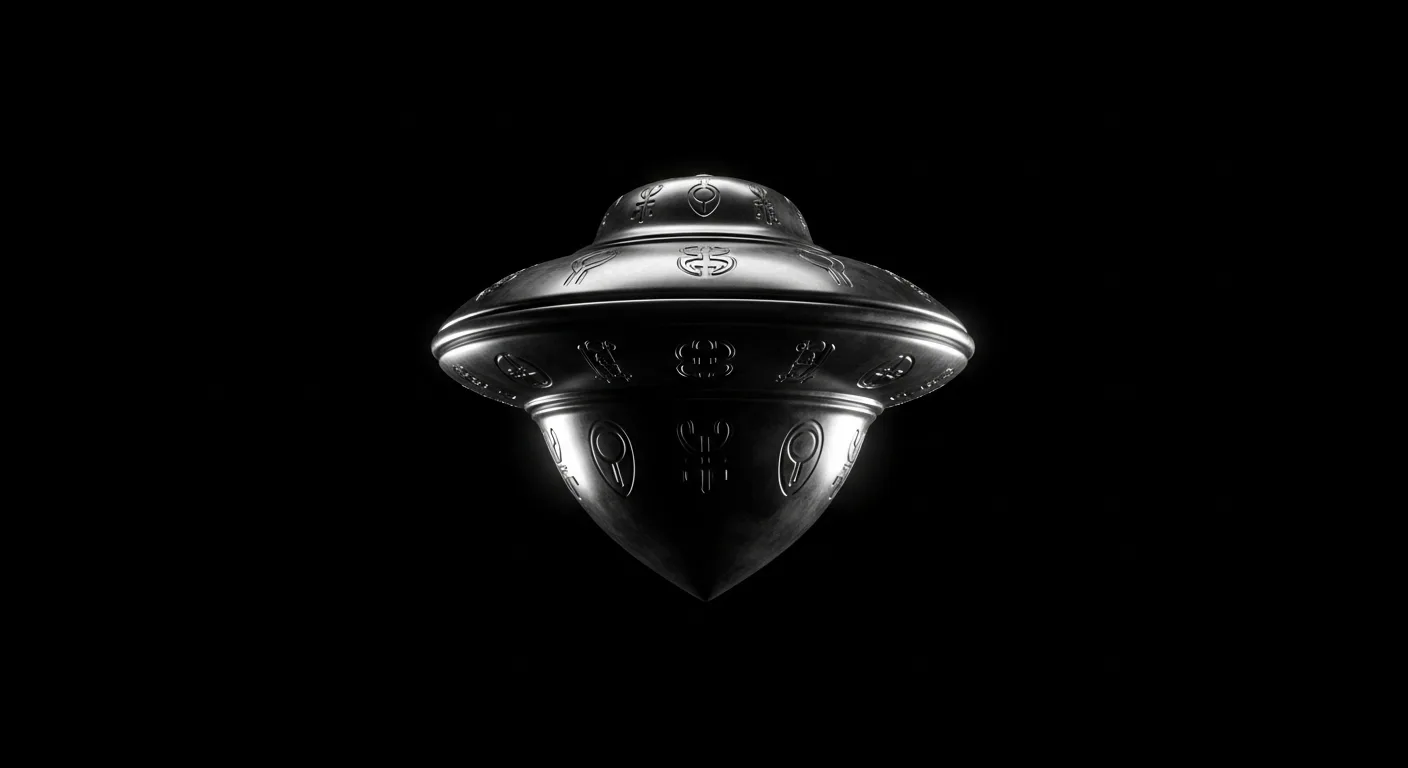
Shortly after midnight on September 19, 1976, the Imperial Iranian Air Force scrambled two F-4 Phantom II interceptors to investigate a luminous, unidentified object hovering over the city of Tehran. What followed was one of the most extensively documented military UFO encounters in history—a confrontation in which the most capable fighter aircraft of the era found their weapons systems disabled, their communications equipment rendered inoperative, and their pilots unable to do anything except watch as an object of unknown origin demonstrated technological capabilities that made the F-4 Phantom, a frontline combat aircraft capable of Mach 2.2, look like a museum piece by comparison. The encounter was documented through multiple independent channels—Iranian Air Force reports, diplomatic cables from the United States Embassy in Tehran, and a formal evaluation by the Defense Intelligence Agency that described the case as a “classic” meeting all the criteria of a genuine unknown. It remains one of the most compelling military UFO cases in the global record.
The Call
The sequence of events began around 11:00 PM on September 18, 1976, when residents of Tehran’s northern suburbs began telephoning the Imperial Iranian Air Force command post at Mehrabad Airport to report a bright, unusual object in the sky. The calls were numerous and persistent—not one or two cranks but a steady stream of reports from different parts of the city, all describing the same brilliant light hovering to the northeast of the capital.
The duty officer at Mehrabad initially suspected a star or planet, the kind of astronomical misidentification that generates routine complaints from concerned citizens in every country where people look up at the night sky. But the volume and consistency of the reports persuaded him to escalate the matter to General Nader Yousefi, the assistant deputy commander of operations for the Imperial Iranian Air Force.
Yousefi was a practical military officer, not a man given to chasing phantoms. But when he stepped outside and looked northeast from his position at the Shahrokhi Air Base, he saw the object himself—a brilliant light, far brighter than any star, hovering motionless in the dark sky over Tehran. Its apparent size, its steady position, and its extraordinary luminosity convinced Yousefi that this was not an astronomical object. He ordered an F-4 Phantom to scramble from Shahrokhi to intercept and identify the unknown contact.
The First F-4
The first Phantom launched at approximately 1:30 AM on September 19, climbing rapidly and turning northeast toward the reported position of the object. The pilot acquired the target visually almost immediately—a luminous object of extraordinary brilliance that appeared to be hovering at a high altitude. The pilot also acquired the object on his airborne radar, obtaining a solid return at a range of approximately twenty-five nautical miles—a significant contact, indicating that whatever the object was, it was large enough and solid enough to reflect radar energy.
The pilot accelerated toward the contact, closing the range with the confidence of a man flying one of the most capable fighter aircraft in the world. The F-4 Phantom II was the premier fighter-bomber of the era, a massive twin-engine jet capable of speeds exceeding Mach 2, equipped with sophisticated radar, advanced avionics, and a weapons suite that included heat-seeking missiles, radar-guided missiles, and a 20mm cannon. Whatever this object was, the pilot had every reason to believe his aircraft could reach it and identify it.
At approximately twenty-five nautical miles from the target, the Phantom’s systems failed. The instruments blanked. The communications equipment went dead—both UHF and intercom channels ceased functioning simultaneously. The pilot found himself in a dark cockpit, unable to communicate with his base, unable to navigate by his instruments, and closing rapidly on an unknown object whose nature and intentions he could not determine.
The pilot made the only decision available to him. He broke off the approach, turning away from the object and heading back toward Shahrokhi. The instant he turned away, his systems restored themselves. Instruments came back online, communications resumed, and the aircraft returned to full operational status as though nothing had happened. The restoration was immediate and complete—not a gradual recovery but an instantaneous return to normal function the moment the pilot discontinued his approach.
The pattern was unmistakable. The closer the aircraft got to the object, the more its systems degraded. When the aircraft retreated, normal operation returned. Whatever was generating the failure was directional and proximity-dependent, and it had the effect of preventing the Phantom from closing to identification range. The object was not merely evading the interceptor; it was actively neutralizing the interceptor’s capabilities while remaining in position.
Lieutenant Jafari’s Pursuit
A second F-4 was scrambled to replace the first, piloted by Lieutenant Parviz Jafari, who would later rise to the rank of general in the Iranian Air Force. Jafari launched from Shahrokhi with full knowledge of what had happened to the first interceptor and with a determination to close the distance that his predecessor had been unable to bridge.
Jafari’s approach was more successful initially. He acquired the object on radar at a range of approximately twenty-seven nautical miles, obtaining a return that he later described as comparable to a Boeing 707 tanker aircraft—a very large radar signature, indicating an object of substantial size. He closed on the target at high speed, watching it on his radar display while simultaneously observing it visually through his canopy. The object was intensely bright, strobing through multiple colors—blue, green, red, and orange—in a display that Jafari found both fascinating and intimidating.
As Jafari closed the range, the object accelerated. It maintained its position relative to the Phantom with ease, staying ahead of the jet despite Jafari’s attempts to close the gap. The object was faster than the F-4—significantly faster—and it demonstrated an ability to change speed and direction that far exceeded the performance envelope of any known aircraft. Jafari found himself in a pursuit that he could not win, chasing an object that could outrun him at will while apparently choosing to remain just beyond his reach.
Then the situation escalated dramatically.
The Ejected Object
While Jafari pursued the main object, a second, smaller object detached from it and began heading directly toward his aircraft. The smaller object was intensely bright—Jafari described it as being about half the size of the moon in apparent visual diameter—and it was closing on his position at high speed. The trajectory was unmistakably aggressive, a direct approach that left no room for interpretation as coincidence or passive behavior.
Jafari’s training took over. He was a fighter pilot confronted with an approaching threat, and his response was instinctive—he attempted to launch an AIM-9 Sidewinder heat-seeking missile at the incoming object. His hands moved to the weapons panel, he selected the missile, he attempted to fire.
Nothing happened. The weapons panel had gone dead. Not merely the missile system but the entire weapons suite—the AIM-9 launch circuits, the weapons selection panel, all of it—had simultaneously ceased functioning. At the same moment, his communications equipment failed, exactly as the first pilot’s had. Jafari was flying a Phantom that had been reduced from a combat aircraft to a powerless platform, unable to shoot, unable to communicate, unable to do anything except watch as the bright object closed on him at terrifying speed.
Jafari did the only thing he could. He threw the Phantom into a steep dive, pulling negative G in a desperate evasive maneuver to avoid the approaching object. The maneuver was violent—a combat pilot’s instinctive response to an incoming threat—and it took the Phantom several thousand feet below its previous altitude before Jafari could arrest the dive and recover.
The smaller object did not follow his evasive maneuver. Instead, it curved away from the diving Phantom, described a wide arc, and returned to the main object, appearing to rejoin or reintegrate with it. The moment the smaller object broke off its approach, Jafari’s weapons and communications systems restored themselves, returning to full functionality as instantaneously and completely as they had failed.
The Third Object
The encounter was not yet over. As Jafari regained altitude and re-established contact with his base, a third object appeared to detach from the main UFO. Unlike the second object, which had approached the Phantom aggressively, this third object descended toward the ground, moving downward in a controlled trajectory until it appeared to land or hover very close to the surface in an area near a dry lake bed outside Tehran.
Jafari observed the third object illuminate the ground below it with a brilliant light, casting a glow over a large area that was clearly visible from his altitude. The illumination lasted for some time before the object’s light dimmed and eventually extinguished. Whether the object had landed, submerged beneath the surface, or simply turned off its luminosity could not be determined from Jafari’s position.
The main object, meanwhile, departed the area, climbing rapidly and disappearing from both visual and radar contact. Jafari, his aircraft now fully functional but his nerves thoroughly shaken, returned to Shahrokhi and landed without further incident.
The Morning After
At first light on September 19, a helicopter was dispatched to the area where the third object had been observed descending. The crew flew a systematic search pattern over the dry lake bed and surrounding terrain, looking for any physical evidence of a landing or an impact.
They did not find a craft. What they found was perhaps equally intriguing. The area where the object had been observed showed no visible landing marks, but the helicopter’s electronic equipment registered unusual readings in the vicinity—elevated radiation levels and a persistent, unexplained beeping signal that the crew could detect on their instruments. A nearby house was also investigated; the residents reported hearing a loud noise during the night and experiencing interference with their electrical systems.
The search did not produce the conclusive physical evidence that would have transformed the case from a remarkable sighting into definitive proof of an anomalous craft. But the readings, combined with the witness reports and the electronic anomalies experienced by both Phantoms, painted a picture of an event that involved measurable physical effects rather than merely visual observations.
The Documentation
The Tehran incident is among the most thoroughly documented military UFO encounters in history, with records preserved through multiple independent channels that lend the case an unusual degree of institutional credibility.
The Imperial Iranian Air Force compiled detailed reports based on debriefings of both F-4 pilots, the radar operators who tracked the objects from ground stations, and the command personnel who managed the intercept. These reports documented the sequence of events, the performance characteristics of the object, and the electronic failures experienced by both aircraft.
The United States Embassy in Tehran, through its Air Attache office, conducted its own investigation. Colonel Olin Mooy, the U.S. Air Attache, interviewed the pilots, reviewed the Iranian Air Force reports, and prepared a comprehensive cable that was transmitted to Washington through diplomatic channels. Mooy’s report was detailed, professional, and notably free of the dismissive tone that often characterized official responses to UFO reports.
Most significantly, the Defense Intelligence Agency prepared a formal evaluation of the case that has become one of the most frequently cited documents in UFO research. The DIA evaluator assessed the Tehran encounter across four criteria used to evaluate the reliability and significance of intelligence reports: the reliability of the source, the credibility of the information, the degree of confirmation from independent sources, and the potential significance of the information. In each category, the Tehran case received the highest possible rating.
The DIA evaluation concluded with a characterization that has echoed through the UFO literature for nearly half a century. The evaluator described the case as “a classic which meets all the criteria necessary for a valid study of the UFO phenomenon.” This was not a casual assessment but a formal intelligence evaluation from an agency whose business was the analysis of threats to national security. The DIA was saying, in the restrained language of intelligence professionals, that the Tehran incident was exactly what it appeared to be—an encounter between military aircraft and an unknown object of extraordinary capability.
The Implications of Systems Failure
The electronic failures experienced by both F-4 Phantoms represent perhaps the most significant aspect of the Tehran encounter from a technological and strategic perspective. The failures were not random malfunctions or equipment degradation—they were targeted, proximity-dependent, and reversible, displaying characteristics that suggested intentional electronic warfare rather than natural interference.
The pattern was consistent across both aircraft. In each case, the failures began as the Phantom approached the object and resolved immediately when the aircraft retreated. The affected systems included communications equipment, navigation instruments, and—in Jafari’s case—the weapons suite. The selectivity of the failures is particularly noteworthy. The engines, flight controls, and other essential systems continued to function normally, ensuring that the aircraft could fly safely. Only the systems that would have enabled the pilot to communicate about the encounter, navigate toward the object, or engage it with weapons were disabled.
This pattern suggests not merely technological superiority but a sophisticated understanding of the F-4’s systems architecture—knowledge of which systems to disable to render the aircraft non-threatening while preserving its ability to fly safely. The entity or intelligence controlling the object was not trying to destroy the Phantoms. It was neutralizing their offensive and communicative capabilities while allowing them to survive the encounter. This combination of overwhelming technological power and apparent restraint is one of the most thought-provoking aspects of the case.
The Global Context
The Tehran incident did not occur in isolation. It belongs to a broader pattern of military encounters with UFOs in which combat aircraft have experienced electronic interference while attempting to intercept or engage unknown objects. Similar incidents have been reported by military forces around the world—American, Soviet, Brazilian, British, and others—spanning decades and involving different aircraft types, different weapons systems, and different national contexts.
The consistency of these encounters—the luminous objects, the extraordinary performance, the electronic interference, the apparent intentionality of the interactions—suggests either a common phenomenon manifesting across cultures and eras or an extraordinary coincidence of independent fabrications. For military analysts and intelligence professionals, the pattern represents a potential threat that cannot be dismissed regardless of its ultimate explanation.
The Tehran case is frequently compared to other landmark military UFO encounters, including the 1980 Rendlesham Forest incident in England, the 1952 Washington, D.C. sightings, and the 2004 USS Nimitz encounter off the coast of California. In each case, trained military personnel observed objects of unknown origin demonstrating capabilities that exceeded the performance of contemporary military technology. In each case, the encounters were documented through official channels and resisted conventional explanation. And in each case, the institutional response was a combination of classification, investigation, and eventual acknowledgment that no satisfactory explanation had been found.
Jafari’s Testimony
Lieutenant Parviz Jafari, the pilot of the second F-4, has spoken publicly about the Tehran encounter on numerous occasions in the decades since the event. His testimony has remained remarkably consistent, and his career trajectory—he eventually rose to the rank of general in the Iranian Air Force—speaks to the credibility he maintained within the military establishment despite the extraordinary nature of his report.
Jafari’s account is notable for its precision and its emotional candor. He describes the encounter with the clinical detail of a trained aviator—speeds, altitudes, radar ranges, weapons system status—while also acknowledging the genuine fear he experienced when the bright object approached his aircraft and his weapons failed. His description of the moment when he attempted to fire a missile and found his weapons panel dead remains one of the most chilling passages in the UFO literature—a combat pilot, trained to respond to threats with lethal force, finding himself suddenly and completely disarmed by an unknown intelligence.
Jafari has testified before international UFO symposia and has cooperated with researchers seeking to analyze the technical aspects of the encounter. He has never recanted, never embellished, and never expressed doubt about the reality of what he experienced. His position is that the object was real, its capabilities were genuine, and the inability of his aircraft to engage it was not a malfunction but a deliberate act by whatever intelligence controlled the object.
An Encounter That Demands an Explanation
The Tehran UFO incident of 1976 occupies a position of singular importance in the history of unidentified aerial phenomena. It combines multiple elements that individually would make a strong case and collectively make an overwhelming one: multiple trained military witnesses, instrumental confirmation through radar, documented electronic interference affecting weapons and communications systems, physical effects at the apparent landing site, and formal evaluations by the intelligence agencies of two nations—Iran and the United States—both of which concluded that the case could not be explained through conventional means.
The DIA’s characterization of the case as “a classic” was not rhetoric. It was an analytical judgment rendered by professionals whose careers depended on accurate threat assessment. When the Defense Intelligence Agency says that a case meets all the criteria for a genuine unknown, it is saying something that the rest of us would do well to take seriously.
Whatever appeared over Tehran on that September night—whatever object outran F-4 Phantoms, disabled their weapons, deployed subsidiary craft, and descended toward the desert floor before departing—it remains unidentified. It was not Iranian, not American, not Soviet. It was not a satellite, not a meteor, not Venus. It was something that two combat aircraft could not catch, could not identify, and could not fight, and it left behind a trail of documentation that stretches from Tehran to Washington and has not faded in nearly fifty years.
The pilots who chased it are old men now, their Phantoms long since retired from service. But the object they pursued has never been identified, the systems failures they experienced have never been explained, and the DIA’s assessment has never been revised. The Tehran incident remains what it was on the night it occurred—a classic, by any standard, of the unknown.
Sources
- CIA UFO/UAP Reading Room — Declassified CIA documents on UAP