Shag Harbour Underwater Phase
After the Shag Harbour crash, evidence suggests the UFO traveled underwater to Government Point, where a second object may have joined it. Divers allegedly observed both objects before they departed.
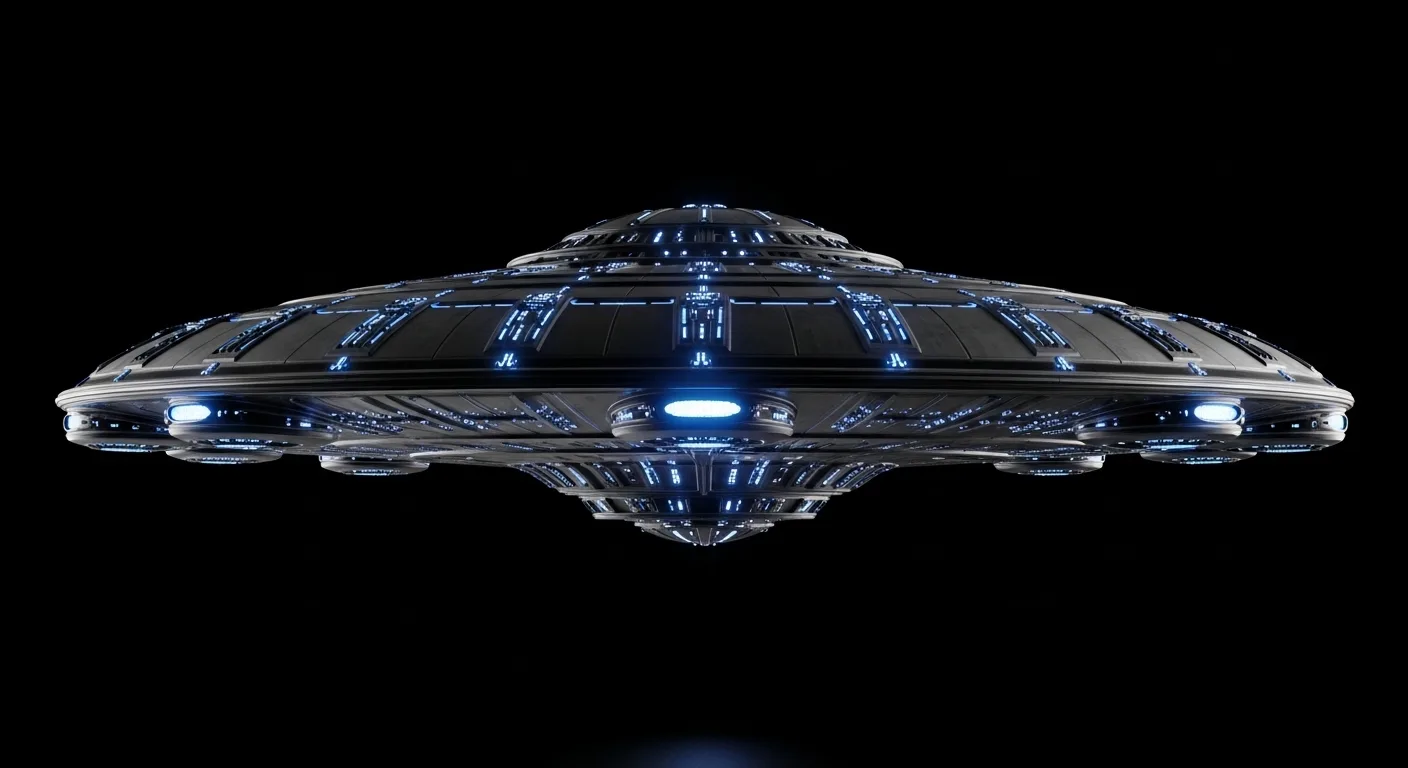
The crash of an unidentified object into the waters off Shag Harbour, Nova Scotia, on the night of October 4, 1967, is widely recognized as one of the most well-documented UFO incidents in Canadian history. Multiple civilian witnesses observed lights descending toward the water, heard the impact, and watched as a glowing object floated briefly on the surface before sinking. The Royal Canadian Mounted Police responded, as did vessels from the Canadian Coast Guard and the Royal Canadian Navy. An official search was conducted. No wreckage, no bodies, and no conventional explanation were ever found. The incident was classified by the Canadian government as a genuine UFO event—one of the very few cases in which a national government has applied that designation to a specific incident.
But the story that most people know—the lights, the crash, the search, the mystery—may be only the first chapter of a much stranger narrative. In the years following the incident, researchers uncovered evidence suggesting that the object did not simply sink and disappear. Instead, it may have traveled underwater for approximately twenty-five miles to a location near a Canadian naval facility at Government Point, where it remained on the ocean floor for several days while military personnel covertly observed it. A second object may have arrived to join the first, and when they eventually departed together, rising from the depths and ascending into the sky, they were tracked by military systems that were powerless to intervene. If these accounts are accurate, the Shag Harbour incident transforms from a remarkable UFO sighting into something unprecedented: evidence of an unidentified object operating beneath the ocean surface, interacting with a second object in what may have been a repair or rendezvous operation, and departing under circumstances that suggest intelligence, purpose, and technology far beyond anything in human possession.
The Night of October 4
To understand the underwater phase, one must first revisit the events that preceded it. On the evening of October 4, 1967, multiple residents of the small fishing village of Shag Harbour, located on the southern tip of Nova Scotia, observed unusual lights in the sky. The lights were described as a row of four orange or amber illuminations, arranged in a horizontal line, that descended from the sky at an angle of approximately forty-five degrees and struck the water of the harbour approximately half a mile from shore.
The witnesses included fishermen, teenagers, and other residents who were outdoors on a clear autumn evening. Several of them independently contacted the RCMP to report that an aircraft had crashed into the water. RCMP Corporal Victor Werbiski arrived at the scene and observed a light on the water’s surface, apparently floating. From his vantage point on the shore, the object appeared to be a large, glowing form resting on the surface, surrounded by a yellowish foam or residue that spread out from the object across the water.
Local fishing boats were dispatched to assist in what was assumed to be the rescue of aircraft crash survivors. When the boats reached the area where the lights had been seen, they found only the strange foam—a thick, yellowish substance that floated on the surface and had an unusual texture. The object itself had sunk. The Coast Guard cutter HMCS Granby was dispatched, and a search of the seabed was conducted. No wreckage was found. No aircraft was reported missing. No submarine or other vessel was identified as the source of the lights.
The Canadian government’s investigation concluded that an “unknown object” had descended into the waters of Shag Harbour. The file was never closed, and no explanation was ever provided.
The Underwater Transit
The conventional account of the Shag Harbour incident ends with the failed search and the unanswered questions. But beginning in the 1990s, researchers Chris Styles and Doug Chicken began uncovering evidence of a second phase of the event that had been concealed from the public for decades.
Through painstaking investigation—interviewing retired military personnel, filing access-to-information requests, and cross-referencing official records—Styles and Chicken pieced together a narrative that extends the Shag Harbour story in a dramatic and unsettling direction. According to their findings, the object that sank in Shag Harbour did not simply settle on the bottom and remain there. Instead, it traveled underwater, moving along the ocean floor at a slow but steady pace, heading northeast toward a location approximately twenty-five miles from the crash site.
The object’s destination, according to these accounts, was the waters near Government Point, a promontory on the southern Nova Scotia coast that housed a Canadian naval facility. Government Point was part of the broader military infrastructure that monitored submarine activity in the North Atlantic during the Cold War. The facility was connected to the SOSUS (Sound Surveillance System) network, a chain of underwater listening stations operated by the United States and its allies that was designed to detect and track Soviet submarines.
The SOSUS system was one of the most closely guarded military secrets of the Cold War era. Its capabilities were extraordinary—it could detect the acoustic signatures of submarines across vast stretches of ocean, providing early warning of Soviet naval movements that might threaten North America. The system was designed to track objects moving through the ocean, and according to the accounts uncovered by Styles and Chicken, it tracked the Shag Harbour object as it moved along the seabed toward Government Point.
The Military Response
The military’s awareness of the object’s underwater movement reportedly triggered a covert response that went far beyond the initial search-and-rescue operation at Shag Harbour. According to accounts from retired military personnel who spoke to researchers decades after the event, naval assets were deployed to the Government Point area to observe and monitor the submerged object.
The most significant element of this response was allegedly the deployment of navy divers to the seabed in the vicinity of Government Point. These divers, according to the accounts, were tasked with visually observing the object and reporting on its condition and behavior. What they reportedly found on the ocean floor was extraordinary: the object from Shag Harbour, resting on the seabed, intact and apparently undamaged despite its violent descent into the water. The object was described as large, dark, and of a design that bore no resemblance to any known submarine, submersible, or underwater vehicle.
The operation was classified at a level that ensured the divers and other military personnel involved could not discuss what they had seen. The men were debriefed, sworn to secrecy, and returned to their normal duties. For decades, most of them honored this oath, and the underwater phase of the Shag Harbour incident remained hidden from public knowledge.
The accounts of the military response come primarily from personnel who spoke to researchers in their later years, often after retirement had released them from the most stringent aspects of their security obligations. These witnesses, who had served in the Canadian Navy during the late 1960s, described their experiences in interviews that were guarded but specific. They confirmed the deployment of divers, the observation of an unusual object on the seabed, and the high level of secrecy that surrounded the operation. Several expressed frustration at the years of enforced silence and stated that they felt the public had a right to know what had occurred.
The Second Object
The most extraordinary element of the underwater phase, and the one that has generated the most debate among researchers, is the reported arrival of a second unidentified object at the Government Point location. According to multiple accounts, while the first object was being observed on the seabed, a second object of similar appearance arrived in the area and descended to join it.
The arrival of the second object was reportedly detected by the SOSUS system, which tracked its approach from an undetermined direction. The military divers who were observing the first object allegedly witnessed the arrival of the second, watching as it descended through the water column and settled on the seabed in close proximity to the original object. The two objects were then observed in close proximity for a period estimated at several days.
The nature of the interaction between the two objects has been the subject of considerable speculation. Some accounts describe what appeared to be a repair operation, with the second object attending to the first as if providing assistance or transferring materials. Others describe a more passive association, with the two objects simply resting near each other on the seabed without any visible interaction. The truth, if it can ever be determined, lies in the memories of the divers who observed the scene—memories that have been filtered through decades of elapsed time and the constraints of military secrecy.
The presence of a second object, if confirmed, elevates the Shag Harbour incident from a remarkable singular event to evidence of coordinated activity by multiple unidentified objects operating beneath the ocean surface. A single object descending into the water might be explained, however improbably, as a piece of space debris, an experimental aircraft, or even a meteorological phenomenon. Two objects, apparently cooperating in an underwater operation, suggest agency, intelligence, and technology that falls entirely outside the boundaries of known human capability.
The Departure
The final act of the underwater phase came when the objects departed. According to the accounts gathered by researchers, after several days on the seabed near Government Point, both objects rose from the ocean floor and ascended through the water column. They broke the surface and were observed ascending into the sky, departing the area at high speed.
The departure was reportedly tracked by military systems, but no attempt was made to intercept the objects. Whether this was due to a decision at the command level that interception was inadvisable or simply to the impossibility of intercepting objects that demonstrated the kind of performance characteristics reported at Shag Harbour and elsewhere, the result was the same: the objects departed unmolested, leaving behind nothing but the memories of those who had observed them and the classified records of an operation that would not become publicly known for more than two decades.
The departure of the two objects together adds another dimension to the case. It suggests a departure that was planned and coordinated, not the random flight of objects at the mercy of physical forces. The objects apparently remained submerged for a specific period—long enough for the second object to arrive, for whatever interaction to take place between them, and for both to complete whatever business had brought them to the ocean floor off Nova Scotia—and then departed together, heading in the same direction at the same speed.
The Research
The underwater phase of the Shag Harbour incident owes its place in public awareness almost entirely to the dedication of two civilian researchers: Chris Styles and Doug Chicken. Styles, a Nova Scotian who became interested in the case as a teenager, spent decades tracking down witnesses, filing access-to-information requests, and building a comprehensive record of both the surface and underwater phases of the incident. Chicken, a retired military officer whose own service background gave him credibility with military witnesses and an understanding of military procedures and terminology, brought a disciplined, methodical approach to the investigation.
Their collaboration, which began in the 1990s, produced a body of research that significantly expanded the known facts of the Shag Harbour case. They identified and interviewed military personnel who had been involved in the Government Point operation, obtained official documents that confirmed certain aspects of the military response, and published their findings in a book that brought the underwater phase to public attention for the first time.
The challenges they faced were considerable. Many potential witnesses had died by the time the investigation began in earnest. Others were reluctant to speak, either because they still felt bound by their security oaths or because they feared ridicule. Official records were incomplete, heavily redacted, or apparently destroyed. The passage of time had eroded memories and made it impossible to verify many details independently.
Despite these limitations, the case that Styles and Chicken assembled is impressive in its scope and its internal consistency. The accounts of different witnesses, interviewed separately and in many cases unaware of each other’s testimony, align on the essential facts: the underwater transit, the military observation, the arrival of a second object, and the eventual departure. This consistency is difficult to explain through fabrication or confabulation, though skeptics have argued that the researchers’ interview techniques may have inadvertently shaped the witnesses’ recollections.
Trans-Medium Capability
The Shag Harbour underwater phase, if the accounts are accurate, represents one of the earliest documented cases of what is now termed “trans-medium” capability—the ability of an unidentified object to operate in both air and water. This capability has been cited with increasing frequency in military UAP reports in the twenty-first century, most notably in the 2004 Nimitz Tic Tac encounter, where Commander David Fravor observed a Tic Tac-shaped object hovering above a disturbance in the ocean that suggested an underwater component.
The engineering challenges of trans-medium travel are immense. Aircraft and watercraft operate in fundamentally different fluid environments that impose radically different design requirements. An aircraft is optimized for low-density fluid (air), while a submarine is optimized for high-density fluid (water). The transition between these environments—plunging from air into water or rising from water into air—involves forces that would destroy most conventional vehicles. An object that can operate in both media, transitioning between them without apparent difficulty, represents a technology that exceeds our current engineering capabilities by an enormous margin.
The Shag Harbour object’s underwater transit adds another dimension to this capability. Not only did the object survive the transition from air to water—a violent impact witnessed by multiple observers—but it apparently moved through the underwater environment with deliberation and purpose, navigating to a specific location and remaining there for an extended period. This suggests not merely the ability to survive in water but the ability to operate in water, to navigate, to communicate with a second object, and eventually to depart. The object was not a crashed aircraft sinking helplessly to the bottom. It was a functional vehicle operating in a medium that happened to be water rather than air.
A Legacy of Questions
More than half a century after the lights descended into the waters of Shag Harbour, the incident remains one of the most compelling and least resolved cases in the history of unidentified aerial phenomena. The surface phase alone would qualify it as a significant event—a multi-witness sighting confirmed by police, investigated by military authorities, and officially classified as unexplained by the Canadian government. The underwater phase, if the accumulated testimony is accurate, elevates it to a case of potentially historic significance.
The questions that the case raises are profound and unsettling. What was the object that crashed into Shag Harbour? Where did it come from? How did it survive the impact and travel underwater to Government Point? What was the nature of its interaction with the second object? Where did the objects go when they departed? And perhaps most troubling: what else does the military know about these events that remains classified more than fifty years later?
The cold waters of the North Atlantic keep their secrets well. The ocean floor off Nova Scotia reveals nothing to casual inspection, and the naval facilities that once monitored the deep have been downsized or decommissioned. The witnesses who saw the lights, who searched the foam-streaked water, who allegedly descended to the seabed and observed something that no training could have prepared them for—these men and women grow fewer with each passing year, their memories fading, their stories in danger of being lost.
What remains is the evidence: the official records, the witness accounts, the research of Styles and Chicken, and the simple, stubborn fact that on the night of October 4, 1967, something fell from the sky into the waters of Shag Harbour, Nova Scotia, and was never recovered. It was not an aircraft. It was not a satellite. It was not a natural phenomenon. It was something else—something that could fly through the air, sink beneath the ocean, travel along the seabed, and depart again when it was ready, leaving behind nothing but questions and the deep, cold, impenetrable silence of the sea.
Sources
- Project Blue Book — National Archives — USAF UFO investigation files, 1947–1969
- CIA UFO/UAP Reading Room — Declassified CIA documents on UAP