The Shag Harbour Incident
Multiple witnesses saw an object crash into the ocean. Divers found nothing. Declassified documents confirm the military took it seriously. What sank into those waters?
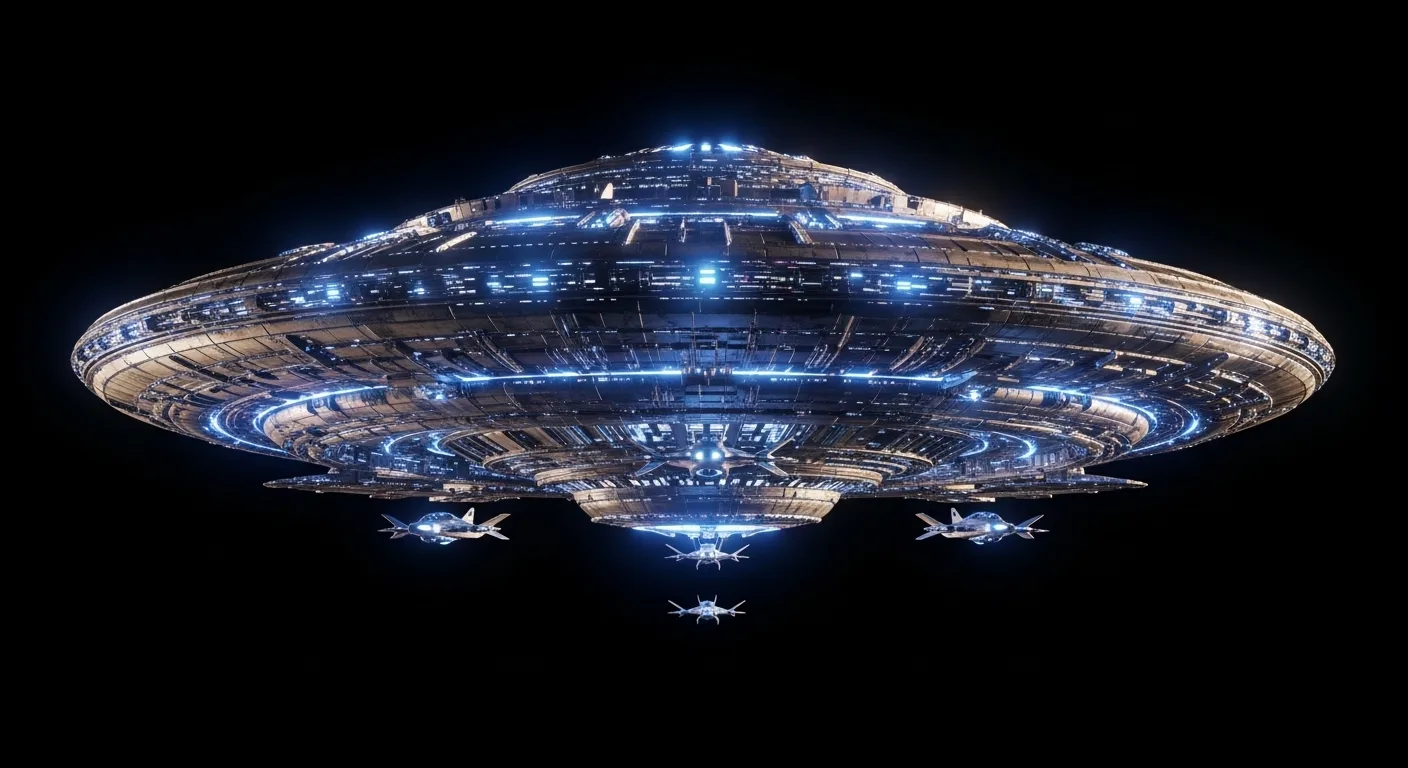
Canada’s best-known UFO case began on a clear autumn night when an object crashed into the ocean, leaving foam and oil but no wreckage. What sets this incident apart from thousands of other UFO sightings is not just the quality of witnesses or the physical evidence, but the official government documentation that confirms Canadian authorities investigated an unidentified flying object and could not explain what it was.
The Sighting
On the night of October 4, 1967, the fishing village of Shag Harbour, Nova Scotia became the site of Canada’s most significant UFO encounter. At approximately 11:20 PM, multiple groups of witnesses observed an unusual phenomenon in the sky above the Atlantic coast.
The first to notice the strange lights were residents along the coastal road. They described seeing four orange lights arranged in a horizontal row, moving together as if attached to a single craft. The lights appeared to be descending toward the water at a controlled angle, their movement deliberate and steady rather than the erratic tumble of falling debris.
A whistling sound accompanied the descent, growing louder as the object approached the water’s surface. Then came a bright flash as the object struck the harbour approximately half a mile offshore. Unlike an aircraft crash, there was no explosion, no fireball, no scattered debris. The object simply entered the water and remained there, its lights still visible beneath the surface for several minutes before finally going dark.
The Witnesses
The credibility of the Shag Harbour incident rests on the exceptional quality of its witnesses.
Laurie Wickens and four friends were driving along Highway 3 when they spotted the descending lights. They stopped, watched the object enter the water, and immediately reported what they had seen. Wickens became the primary civilian witness, his account consistent and unchanging over the decades that followed.
Several other groups of residents independently observed the same phenomenon from different locations around the harbour. The consistency of their descriptions, given without opportunity for coordination, strongly supported the reality of what they had witnessed.
RCMP officers who arrived at the scene became witnesses themselves. They observed lights in the water and the strange yellow foam that marked the object’s entry point. When police officers corroborate civilian accounts, investigations take different trajectories.
Local fishermen, men who spent their lives on and around the water, confirmed that what they had seen was unlike anything in their experience. These were not excitable tourists but practical observers who knew the difference between aircraft, boats, and natural phenomena.
At least 30 people witnessed some aspect of the incident, providing a body of testimony that was consistent, credible, and impossible to dismiss as collective hallucination.
The Object
Witnesses described the object with remarkable consistency across independent accounts.
The four orange lights were the most distinctive feature, arranged in a horizontal row approximately 60 feet across. The lights appeared to be part of a single craft rather than separate objects flying in formation. They moved together, descended together, and entered the water together.
The descent angle was approximately 45 degrees, too steep for conventional aircraft but too controlled for falling debris. The object appeared to be flying, not falling, maintaining deliberate control until the moment of impact.
The impact itself left a yellowish foam on the water’s surface, a thick, strange residue approximately 80 feet across. The foam had an unusual consistency and smell that experienced Coast Guard crews could not identify. It was clearly something, evidence of an event, but what that something was remained unknown.
The Response
The initial assumption was aircraft crash. Coast Guard cutter CCGS Raritan was dispatched to search the impact area. RCMP officers secured the shoreline. The Rescue Coordination Centre in Halifax coordinated the response.
The search vessels found the yellow foam but no wreckage. As hours passed without discovery, the search expanded. Canadian Navy vessel HMCS Granby was dispatched with divers to search the sea floor. The divers found nothing, no debris, no aircraft components, no explanation for what had entered the water.
Air traffic control confirmed that no aircraft were missing in the region. If something had crashed, it was not any aircraft known to Canadian authorities.
The search continued for several days before being called off. The mystery remained unsolved, but the investigation had generated extensive documentation that would prove significant decades later.
Official Response
The Canadian Department of National Defence filed the incident under a specific classification: UFO Report. This was not newspaper speculation or witness interpretation. This was the official government designation for an event that Canadian investigators could not explain.
The documents, later released through freedom of information requests, revealed the seriousness with which authorities treated the incident. Multiple agencies investigated. The search was thorough and professional. And the conclusion was stark: something had entered Canadian waters that could not be identified or explained.
The case was never solved. The official file remains open, an acknowledged mystery in Canadian government archives.
Alleged Second Location
In the years following the incident, researchers uncovered additional claims that extended the story beyond the initial crash.
Some witnesses and later investigators suggested that the object did not simply sink to the bottom of the harbour. Instead, they claimed, it traveled underwater, moving along the sea floor toward Government Point, where Canadian and American military installations monitored submarine activity in the Atlantic.
According to these accounts, the object remained submerged near the military installation for several days. A second object allegedly joined it underwater. Submarines and military divers tracked the objects but did not attempt recovery.
Eventually, the accounts suggest, both objects surfaced and departed at high speed, vanishing as mysteriously as they had arrived.
These extended claims remain unverified, lacking the documentary support that makes the initial incident so credible.
The Legacy
Shag Harbour has embraced its unusual history. The community hosts an annual UFO festival that draws visitors from around the world. A museum preserves documents, photographs, and artifacts from the incident. The Shag Harbour Incident Society maintains witness testimony and promotes ongoing research.
In 2019, Canada Post issued a commemorative stamp honoring the incident, official government acknowledgment of its place in Canadian history.
The original witnesses, those who survived into later decades, remained consistent in their accounts. They never changed their stories, never sought profit or fame, simply reported what they had seen and let others draw their own conclusions.
The Questions
The Shag Harbour incident leaves fundamental questions unanswered.
What was the object? It was not a missing aircraft, not a meteor, not a submarine, not any known military vehicle.
Where did the foam come from? The substance could not be identified or explained.
Why was no wreckage found? If something crashed, where did it go?
What did the military discover? Extensive search operations produced no official explanation.
Why the continued secrecy? Decades later, no definitive answer has been provided.
Something crashed into Shag Harbour that night. The government confirmed it. Divers found nothing. The case has never been solved. The object, whatever it was, entered Canadian waters and disappeared, leaving behind only yellow foam, credible witnesses, and questions that remain unanswered more than fifty years later.
Sources
- Project Blue Book — National Archives — USAF UFO investigation files, 1947–1969
- CIA UFO/UAP Reading Room — Declassified CIA documents on UAP