Nimitz Tic Tac Encounter
Navy pilots from USS Nimitz encountered a 'Tic Tac' shaped object that performed impossible maneuvers. The Pentagon officially released the video in 2020, acknowledging they cannot explain what the pilots encountered.
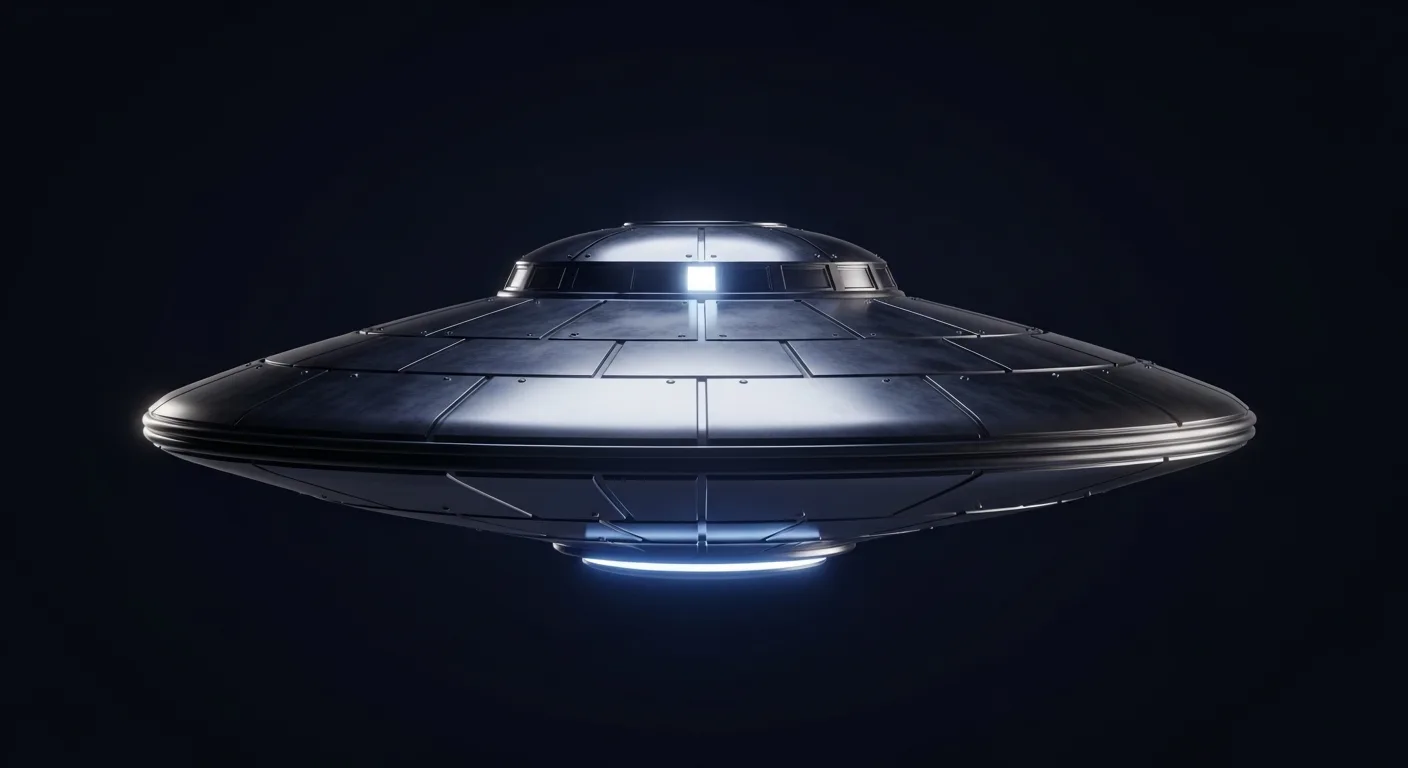
On a clear November afternoon in 2004, approximately one hundred miles southwest of San Diego, a series of events unfolded that would ultimately reshape the way governments, militaries, and the public think about unidentified aerial phenomena. Commander David Fravor, a highly decorated Navy pilot with eighteen years of flight experience, encountered a white, oblong object roughly the size of a fighter jet that demonstrated flight characteristics so far beyond any known human technology that it defied the laws of physics as we understand them. The object had no wings, no visible means of propulsion, no exhaust plume, and no control surfaces. It moved with instantaneous acceleration, changed direction without banking or turning, and appeared to anticipate Fravor’s movements as if it possessed intelligence. The encounter was tracked on multiple radar systems, witnessed by multiple military personnel, and eventually captured on infrared video by a second aircraft. When the Pentagon officially released the footage in 2020 and acknowledged that it could not explain what the pilots had seen, the Nimitz Tic Tac encounter became the single most consequential UFO case in history—the moment when unidentified flying objects ceased to be a fringe topic and became a matter of acknowledged national security concern.
The Carrier Strike Group
The USS Nimitz Carrier Strike Group was one of the most powerful naval formations in the world. Centered on the nuclear-powered aircraft carrier USS Nimitz (CVN-68), the group included the guided-missile cruiser USS Princeton (CG-59), several destroyers, and an air wing of approximately sixty-five aircraft. In November 2004, the strike group was conducting pre-deployment training exercises off the coast of Southern California, preparing for what would be a combat deployment to the Persian Gulf.
The Princeton served as the strike group’s air defense coordinator, operating the Aegis Combat System—one of the most sophisticated radar and tracking systems in the United States Navy’s arsenal. The Aegis system was designed to detect, track, and engage threats ranging from anti-ship missiles to aircraft, and it was operated by highly trained radar technicians capable of distinguishing between known aircraft types, weather phenomena, and genuine anomalies.
For approximately two weeks before the encounter, the Princeton’s radar operators had been tracking a series of anomalous contacts that defied easy explanation. The objects appeared at extremely high altitudes—sometimes above 80,000 feet, well above the operational ceiling of any known aircraft—and then descended rapidly to near sea level in a matter of seconds. The speeds involved were staggering, far beyond anything in the American or any known foreign arsenal. The contacts would hover near the ocean surface for a period, then ascend back to altitude at the same impossible speed. This pattern repeated itself over multiple days, with the objects appearing in roughly the same area of ocean southwest of San Diego.
Senior Chief Kevin Day, the Princeton’s air defense coordinator, grew increasingly concerned about the contacts. They were appearing in the same airspace where the carrier group was conducting training operations, and their behavior—the rapid descents, the hovering, the unpredictable movements—made them a potential collision hazard. Day reported the contacts up the chain of command, but no satisfactory explanation was offered. The objects did not correspond to any known aircraft, satellite, or weather phenomenon. They were not responding to radio queries. And they were operating in restricted military airspace with apparent impunity.
The Intercept
On the morning of November 14, 2004, the anomalous contacts once again appeared on the Princeton’s radar screens. Day made the decision to vector an intercept, directing two F/A-18F Super Hornets from the VFA-41 Black Aces squadron to investigate the nearest contact. The lead aircraft was piloted by Commander David Fravor, with Lieutenant Commander Jim Slaight in the back seat as weapons systems officer. The wingman aircraft was piloted by Lieutenant Commander Alex Dietrich, with another officer in her back seat.
Fravor and Dietrich were on a routine training mission when they received the redirect from the Princeton. They were told to investigate an object at a set of coordinates approximately sixty miles from their position. The vectors were clear, the weather was ideal—clear skies with unlimited visibility—and the two Super Hornets turned toward the contact area with professional curiosity but no particular alarm. Fighter pilots are occasionally asked to investigate unknown radar contacts, and most turn out to be commercial aircraft that have strayed off course or atmospheric phenomena that confuse radar systems.
What Fravor saw when he arrived at the coordinates was unlike anything in his extensive experience. As the two jets approached from altitude, Fravor noticed a disturbance on the ocean surface—a roughly cross-shaped area of churning, whitewater that stood out against the calm blue sea. The disturbance was significant in size, perhaps the area of a 737 aircraft, and appeared to be caused by something just below the surface. Then he saw the object.
Hovering approximately fifty feet above the churning water was a white, oblong shape that Fravor would later describe as resembling a Tic Tac breath mint. It was approximately forty feet long, perfectly smooth, with no wings, no tail, no engine nacelles, no cockpit, no windows, and no visible seams or markings of any kind. It was moving erratically above the water disturbance—not flying in any conventional sense but rather darting back and forth with sudden, sharp movements, as if it were reacting to or observing whatever was causing the disturbance below.
The Dogfight
What happened next has been described by Fravor as the most significant event of his flying career. He decided to descend toward the object to get a closer look, rolling his Super Hornet into a spiraling descent from approximately 20,000 feet. As he did so, the Tic Tac appeared to take notice of his approach. It ceased its erratic movements above the water, oriented toward Fravor’s descending aircraft, and began to ascend—as if rising to meet him.
Fravor described a moment of mutual awareness, a point at which both he and the object seemed to recognize each other’s presence. He continued his descent in a clockwise spiral while the object ascended toward him in what appeared to be a mirroring trajectory. The two paths converged until they were roughly at the same altitude, circling each other at a distance of perhaps a mile. Then the object accelerated.
The acceleration was not like anything Fravor had ever witnessed. There was no gradual increase in speed, no visible exhaust or propulsion effect. The object simply went from a near-stationary hover to a velocity that took it beyond visual range in approximately one to two seconds. Fravor, one of the most experienced fighter pilots in the Navy, estimated that the object’s acceleration would have generated forces that would kill any human occupant and destroy any known airframe. The object did not bank, turn, or follow any recognizable flight path. It simply moved in a straight line at a speed that defied comprehension and was gone.
The water disturbance, notably, disappeared at the same moment the Tic Tac departed, suggesting a connection between the object and whatever was beneath the surface.
Fravor attempted to return to the coordinates where the object had been, but it was no longer there. The Princeton, however, still had the contact on radar. What the radar operators reported next deepened the mystery considerably: the object had appeared at the CAP point—the combat air patrol coordinates where Fravor’s aircraft were supposed to rendezvous after the intercept. This was a pre-assigned location that had been communicated on encrypted radio channels. The object was waiting at the exact spot where Fravor was heading, as if it had access to the Navy’s secure communications.
The Second Encounter
Approximately ninety minutes after Fravor’s encounter, a second pair of Super Hornets was launched to investigate. Lieutenant Chad Underwood, the weapons systems officer in the back seat of the lead aircraft, carried a FLIR (Forward Looking Infrared) targeting pod—an advanced sensor capable of detecting heat signatures and tracking objects at long range. Underwood was instructed to attempt to acquire the object on his sensors and, if possible, record what he saw.
Underwood found the Tic Tac and attempted to lock onto it with his FLIR pod. The resulting footage—which would become known as the “FLIR1” or “Tic Tac” video—shows a white, oblong object moving against a featureless background. The object appears to rotate or tumble while maintaining its trajectory, and at one point, it appears to accelerate rapidly off-screen, breaking the FLIR’s tracking lock. The video is brief, grainy by civilian standards, but represents some of the most compelling physical evidence ever recorded of an unidentified aerial phenomenon.
Underwood later reported that the object exhibited no heat signature consistent with any known propulsion system. A jet engine, rocket motor, or any form of conventional propulsion would have produced a visible thermal plume on the FLIR—a bright exhaust trail that would be immediately recognizable to any trained military observer. The Tic Tac showed no such signature. Whatever was propelling it was not producing heat in any manner consistent with known physics.
The object also demonstrated what is now referred to as “trans-medium” capability—the apparent ability to operate in both air and water. The churning disturbance that Fravor observed on the ocean surface, combined with the object’s hovering behavior above it, suggested that either the Tic Tac itself or a related object was operating beneath the surface of the Pacific. If confirmed, this capability would represent a technological achievement that no known human engineering can replicate. Aircraft cannot operate underwater, and submarines cannot fly. The Tic Tac appeared to do both.
The Witnesses
The credibility of the Nimitz encounter rests in large part on the quality of its witnesses. Commander David Fravor was not a nervous civilian glimpsing something unusual in the night sky. He was a career naval aviator with approximately 3,500 flight hours in high-performance fighter aircraft. He had flown combat missions, commanded a fighter squadron, and been trained to identify aircraft, missiles, and other objects under the most challenging conditions imaginable. His account has remained consistent across hundreds of retellings over nearly two decades.
Lieutenant Commander Alex Dietrich, Fravor’s wingman, provided corroborating testimony. She and her weapons systems officer observed the same object from a different vantage point and confirmed the essential details of Fravor’s account. Dietrich has been more reluctant to discuss the encounter publicly, but her testimony, when given, has aligned precisely with Fravor’s.
Senior Chief Kevin Day and the Princeton’s radar operators provide a third layer of confirmation. They tracked the anomalous contacts for two weeks before the encounter, recorded the object’s impossible descent from 80,000 feet, and observed it appear at Fravor’s CAP point after the intercept. Their radar data corroborated the visual sightings and added quantitative measurements of the object’s speed and altitude changes.
Multiple additional personnel aboard the Nimitz and Princeton reported awareness of the encounter and its aftermath, though not all witnessed the object directly. The total number of military personnel with direct or indirect knowledge of the event has been estimated at upward of twenty, though some researchers believe the actual number is significantly higher.
The Pentagon Acknowledges
For thirteen years after the encounter, the Nimitz Tic Tac remained largely unknown to the public. The military personnel involved were debriefed, and the incident was documented through official channels, but it received no significant public attention. This changed dramatically in December 2017.
The New York Times published a front-page article revealing the existence of the Advanced Aerospace Threat Identification Program (AATIP), a Pentagon program that had been investigating reports of unidentified aerial phenomena since 2007. The article was accompanied by the FLIR1 video from the Nimitz encounter, which was released to the public for the first time. The revelation that the United States Department of Defense had been quietly investigating UFOs—and that it had footage of an encounter that its own analysts could not explain—sent shockwaves through the media and the public.
In April 2020, the Pentagon took the extraordinary step of officially releasing three Navy videos of unidentified aerial phenomena, including the Nimitz FLIR1 footage. A Department of Defense spokesperson confirmed that the videos were authentic, that they depicted objects that had not been identified, and that the release was intended to “clear up any misconceptions by the public on whether or not the footage that has been circulating was real.”
This official acknowledgment was unprecedented. For decades, the United States government had dismissed, debunked, or ignored reports of unidentified flying objects. The Air Force’s Project Blue Book had concluded in 1969 that UFOs posed no threat to national security and that no reported sightings represented extraterrestrial technology. The Pentagon’s admission that it could not explain the Nimitz encounter—and that it had spent millions of dollars investigating similar cases—represented a complete reversal of this position.
Congressional Interest
The Nimitz encounter catalyzed a wave of congressional interest in unidentified aerial phenomena that continues to grow. In June 2021, the Office of the Director of National Intelligence released a preliminary assessment of UAP encounters reported by military personnel, acknowledging 144 cases that could not be explained. The Nimitz encounter was among the most prominent cases discussed.
Congressional hearings followed, with military witnesses testifying under oath about their encounters with unexplained objects. Commander Fravor appeared before Congress, delivering testimony that was calm, detailed, and devastating in its implications. He described an object that demonstrated technology “at least a hundred to a thousand years ahead” of anything in the American arsenal and stated unequivocally that the Tic Tac was “not from this world.”
The hearings led to the establishment of the All-domain Anomaly Resolution Office (AARO) within the Department of Defense, tasked with investigating and resolving UAP reports across all military branches. Legislation was passed requiring the military and intelligence agencies to report UAP encounters and share information with Congress. Whistleblower protections were enacted to encourage military and intelligence personnel to come forward with information about UAP encounters and any related programs.
The Technology Gap
The capabilities demonstrated by the Tic Tac object represent what defense analysts have termed a “technology gap”—a chasm between what the object could do and what any known human technology can achieve. Understanding the scale of this gap requires examining each of the object’s observed capabilities against the current state of aerospace engineering.
Instantaneous acceleration from a hover to hypersonic speed, without any visible propulsion or exhaust, contradicts our understanding of Newton’s laws of motion. Any object with mass requires force to accelerate, and that force must come from somewhere. Jet engines, rocket motors, propellers, and all other known propulsion systems produce visible, detectable byproducts. The Tic Tac produced none.
The absence of a heat signature is equally inexplicable. Any object moving through the atmosphere at high speed generates friction, which produces heat. Hypersonic vehicles—those traveling above Mach 5—generate temperatures sufficient to melt most metals. The Tic Tac moved at speeds that should have made it glow white-hot, yet it registered no significant thermal signature on Underwood’s FLIR pod.
The object’s apparent ability to anticipate Fravor’s movements and appear at his CAP point suggests either extraordinary sensors, access to encrypted military communications, or some form of intelligence that operates beyond our understanding. Its apparent trans-medium capability—operating in both air and water—represents an engineering challenge that no human technology has come close to solving.
Taken together, these capabilities describe an object that operates outside the known laws of physics. This does not necessarily mean the laws of physics are wrong—it may mean that there are aspects of physics we have not yet discovered, or that the Tic Tac employs principles we do not yet understand.
Legacy
The Nimitz Tic Tac encounter represents a watershed moment in the history of unidentified aerial phenomena. Before the Nimitz case entered public awareness, UFOs were a subject consigned to the fringes of respectable discourse—the domain of conspiracy theorists, tabloid journalists, and science fiction enthusiasts. The combination of military-grade evidence, credible witnesses, official acknowledgment, and congressional interest transformed the subject into a matter of legitimate scientific and national security inquiry.
The encounter also changed the language we use to discuss the phenomenon. The Pentagon’s adoption of the term “Unidentified Aerial Phenomena” in place of “Unidentified Flying Objects” was not merely a bureaucratic rebrand. It reflected a fundamental shift in how the subject was being approached—from a question of whether people were seeing things to a question of what, precisely, they were seeing and what it meant for national defense.
Commander Fravor has continued to speak publicly about his encounter, appearing on news programs, podcasts, and at conferences. His account has never wavered in its essential details, and his credibility has never been seriously challenged. He remains a figure of considerable importance in the ongoing public discourse about UAP, a military professional whose testimony cannot be dismissed as fantasy, confusion, or deception.
The questions raised by the Nimitz encounter remain unanswered. What was the Tic Tac? Where did it come from? How does it achieve capabilities that violate our understanding of physics? Is it a product of a terrestrial technology so advanced and so secret that even senior Navy commanders are unaware of its existence? Or does it represent something else entirely—evidence that we share our skies, and perhaps our oceans, with an intelligence that is not human?
These are no longer fringe questions. They are questions being asked by members of Congress, by Pentagon officials, by intelligence analysts, and by scientists. The Nimitz Tic Tac encounter did not provide answers, but it changed the nature of the questions we are willing to ask. That, in itself, may prove to be its most enduring legacy.
On a clear November afternoon in 2004, off the coast of Southern California, a Navy pilot encountered something that should not exist. Nearly two decades later, we are still trying to understand what it was. The Tic Tac has not returned to explain itself. The ocean where it hovered keeps its secrets. And the skies above the Pacific remain as vast and as unknowable as they have always been.
Sources
- CIA UFO/UAP Reading Room — Declassified CIA documents on UAP