Shag Harbour Crash
Multiple witnesses saw an object crash into the waters off Nova Scotia. The Canadian Coast Guard, RCMP, and military all responded but found only yellow foam. The object was never recovered.
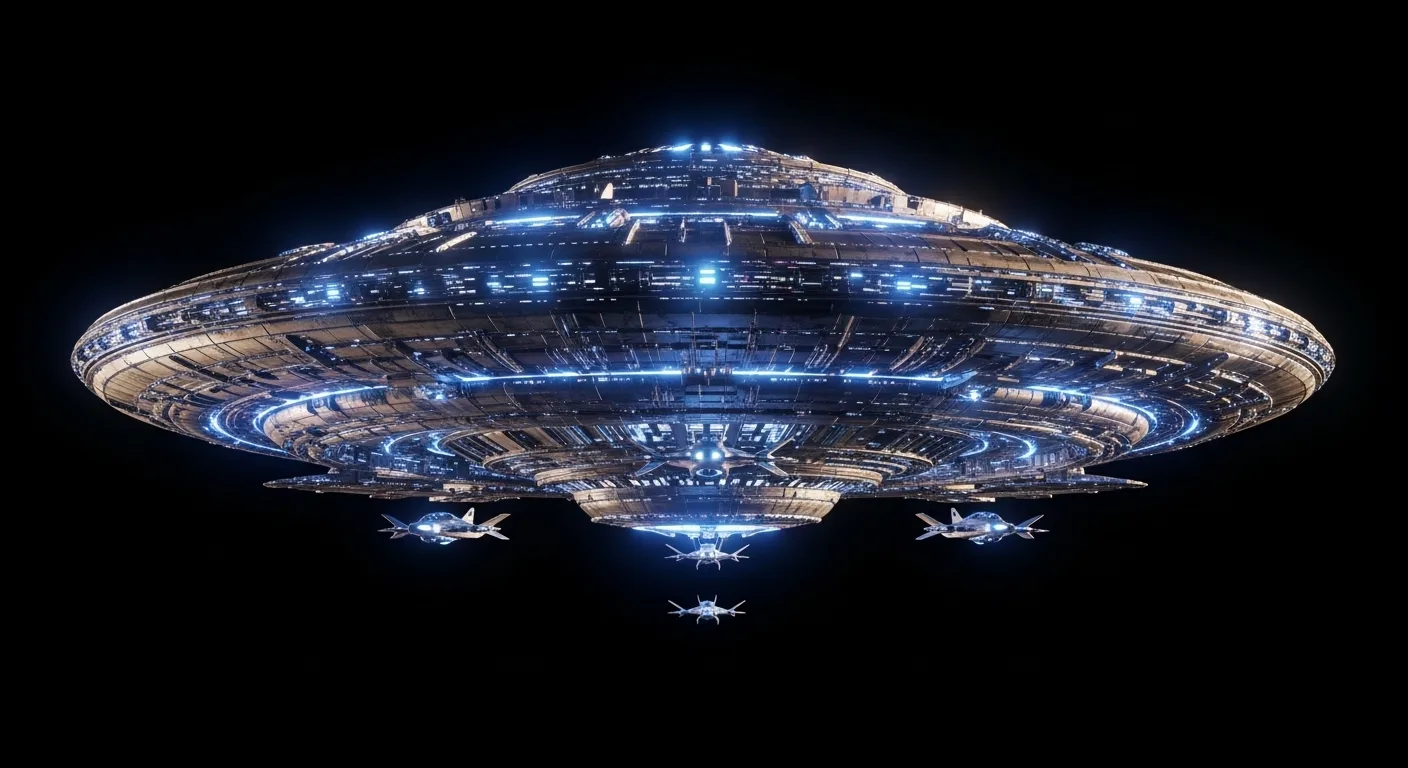
On the night of October 4, 1967, something descended from the sky over the small fishing village of Shag Harbour, Nova Scotia, struck the dark waters of the harbour with a bright flash, and then vanished beneath the surface. What followed was one of the most thoroughly documented UFO incidents in history, a case that involved multiple credible witnesses, an official response by the Royal Canadian Mounted Police, the Canadian Coast Guard, and the Canadian military, and an investigation that ended without explanation. Unlike many UFO cases that rely on a single witness or dubious evidence, the Shag Harbour incident is supported by official government documents, sworn testimony from law enforcement officers, and the physical evidence of a strange, glowing foam that covered the water where the object went down. Often called “Canada’s Roswell,” the Shag Harbour crash remains one of the few UFO incidents that the Canadian government officially classified as involving an unidentified flying object, a designation it has never retracted.
The Village at the Edge of the Atlantic
Shag Harbour sits on the southern tip of Nova Scotia, a tiny fishing community facing the cold waters of the Atlantic Ocean. In 1967, it was home to fewer than four hundred people, most of whom made their living from the sea. The harbour itself is a sheltered inlet, protected from the open ocean by a series of rocky islands and shoals, and its deep, cold waters had sustained generations of fishermen who harvested lobster, cod, and other marine species from the surrounding continental shelf.
The community was close-knit in the way that isolated maritime villages tend to be, bound together by shared labor, shared risk, and the particular intimacy of a place where everyone knows everyone else. The people of Shag Harbour were practical, no-nonsense folk, accustomed to the harsh realities of life on the Atlantic coast and not given to flights of fancy. When these people said they saw something unusual, their testimony carried the weight of credibility that comes from lifetimes of careful observation. Fishermen survive by reading the sky and the water with precision, and they are not easily fooled by tricks of light or atmospheric anomalies.
October on the Nova Scotia coast is a season of transition, when the last warmth of autumn gives way to the bone-deep cold of the approaching Atlantic winter. The nights grow long and dark, and the sky, free from the light pollution that plagues more populated areas, displays the stars with crystalline clarity. It was into this dark, clear sky that the witnesses of October 4 were looking when something extraordinary appeared.
The First Sightings
The events of October 4, 1967, began in the early evening, well before the main incident at Shag Harbour. Beginning around 7:00 PM Atlantic Daylight Time, reports of unusual lights in the sky were received from various locations along the southern Nova Scotia coast. Multiple witnesses in different communities reported seeing a formation of bright lights moving in an unusual pattern, sometimes hovering, sometimes moving at high speed, and sometimes changing direction in ways that seemed incompatible with conventional aircraft.
Among the earliest witnesses was Laurie Wickens, a young man who was driving along Highway 3 near Shag Harbour with several friends at approximately 11:20 PM when they noticed a cluster of bright orange lights in the sky ahead of them. The lights appeared to be descending at a steep angle toward the harbour, moving in a formation that suggested they were attached to a single large object rather than being independent sources of illumination. Wickens later described seeing four lights in a row, approximately sixty feet in extent, tilted at about a forty-five-degree angle as they descended toward the water.
Wickens pulled his car to the side of the road, and he and his companions watched as the lights descended rapidly toward the surface of the harbour. As the object struck the water, there was a bright flash and a sound that witnesses variously described as a “whoosh” or a muffled impact. The lights continued to glow on or just above the water’s surface for a brief period before beginning to subside. Wickens immediately drove to the nearest telephone and called the RCMP detachment to report what he had seen.
The group was not alone in their observations. Several residents of Shag Harbour who were outdoors that evening also witnessed the descent and impact. Fishermen on the water reported seeing the lights from a different angle, confirming that the object had descended from the sky and entered the water at a specific location in the harbour. At least eleven independent witnesses would eventually provide testimony about the event, and their accounts were remarkably consistent in their descriptions of the lights, the angle of descent, and the approximate location of the impact.
Constable Pound’s Observation
Among the most significant witnesses was RCMP Constable Ron Pound, who was driving along Highway 3 in his patrol car when he observed the lights. Pound initially assumed he was witnessing a plane crash and radioed for assistance. He drove to a vantage point overlooking the harbour and observed a single bright light on the water’s surface, which appeared to be slowly moving and leaving a trail of yellowish foam or residue behind it.
Constable Pound’s testimony was crucial to the case for several reasons. As a trained law enforcement officer, he was accustomed to observing and reporting events accurately. He was on duty at the time, which meant his observations were made in a professional capacity and recorded in official RCMP documents. And his initial assumption that he was witnessing a plane crash meant that he approached the situation as a potential emergency rather than as a UFO sighting, which lent his subsequent inability to identify the object additional weight.
Pound reported that the light on the water appeared to be approximately half a mile offshore. It was amber or yellowish in color and seemed to be floating on or just above the surface. As he watched, the light dimmed and eventually extinguished, but the yellowish residue it had left on the water remained visible. Pound contacted the Rescue Coordination Centre in Halifax to determine whether any aircraft were reported missing in the area. The answer came back negative: no aircraft were unaccounted for, and no flight plans had been filed for the region.
The Search
Within minutes of the initial reports, a search operation was launched. Several local fishermen, experienced in maritime rescue and familiar with the harbour’s waters and currents, launched their boats and headed for the area where the object had been seen to impact. The Canadian Coast Guard cutter was dispatched from the nearby port of Clark’s Harbour, and additional RCMP officers converged on the scene.
What the searchers found on the water was strange and unsettling. Covering an area approximately eighty feet in diameter at the point where the object had apparently gone down was a thick layer of yellowish-white foam. The foam was unlike anything the fishermen had encountered in their years on the water. It was dense and persistent, resisting the natural dispersal that wind and current would normally cause, and it had a distinctive quality that witnesses struggled to describe. Some said it looked like the foam generated by aircraft crash-impact in water, but without any of the debris, fuel slicks, or other wreckage that would accompany a plane going down.
The fishermen searched the area thoroughly, looking for survivors, wreckage, oil slicks, or any other indication of what had produced the foam and the lights. They found nothing beyond the foam itself. No debris floated on the surface. No oil or fuel was present. No bodies or personal effects were recovered. The water in the area was deep enough to have swallowed a small aircraft without leaving surface evidence, but the complete absence of any wreckage was unusual even for a deep-water impact.
The Coast Guard cutter arrived and conducted its own search, using spotlights to scan the water and the surrounding shoreline. The results were the same: nothing but the yellow foam, which was gradually dispersing as the night wore on. By dawn, the foam had dissipated entirely, and the harbour looked as it always did, calm, cold, and unrevealing.
The Military Response
The following day, the search entered a new phase. The Canadian Forces were brought in to conduct an underwater investigation of the area where the object had impacted. Military divers from the Fleet Diving Unit based at Halifax were dispatched to Shag Harbour, along with additional naval vessels and equipment. The area where the foam had been observed was marked, and systematic dive operations began.
The divers searched the harbour floor for several days, covering the area in a grid pattern designed to ensure that no significant debris was overlooked. The bottom of the harbour in the impact zone consisted of mud and sand, with depths ranging from approximately fifty to eighty feet. If a substantial object had struck the water with the force suggested by the witnesses’ descriptions, it should have left some trace on the seabed: a crater, scattered debris, disturbed sediment at the very least.
The divers found nothing. The harbour floor showed no evidence of impact, no debris, no disturbance beyond what would be expected from natural currents and marine activity. Whatever had entered the water had either dissolved, disintegrated completely, or moved away from the impact point under its own power. The military concluded its search without explanation and withdrew from the area.
Official Documentation
One of the most remarkable aspects of the Shag Harbour case is the extent to which it was officially documented by the Canadian government. The incident generated reports from the RCMP, the Canadian Coast Guard, the Department of National Defence, and the Rescue Coordination Centre. These documents, many of which were later released through access to information requests, confirm the essential details of the case and demonstrate that the Canadian authorities took the incident seriously.
The Department of National Defence file on the incident includes the following notation: “On 4 October 1967, about 11:20 PM, it was reported to the detachment by Mr. Laurie Wickens of Shag Harbour that he and four others witnessed a large object making a whistling sound like a bomb making a bright light when it hit the water.” The report goes on to describe the search operation, the yellow foam, and the failure to identify the object.
Most significantly, the Canadian government classified the object involved in the Shag Harbour incident as a UFO, using the term in its literal sense: an unidentified flying object. This classification was not applied casually. Before designating the object as unidentified, investigators eliminated all known possibilities: conventional aircraft, military exercises, meteorological phenomena, astronomical objects, and marine activity. None of these explanations fit the evidence, and the UFO classification was adopted as the only honest assessment of what had occurred.
This official classification distinguishes Shag Harbour from the great majority of UFO reports, which are typically dismissed by authorities or attributed to mundane causes. In this case, the Canadian government’s own investigators concluded that something unknown had entered the waters of Shag Harbour and had defied all efforts to identify or recover it.
The Underwater Object Theory
In the years following the incident, additional claims emerged that added layers of complexity to the case. Several military and civilian sources came forward with accounts suggesting that the object had not simply sunk to the bottom of the harbour but had traveled underwater to a location approximately twenty-five miles northeast, near a place called Government Point, where a military submarine detection facility was located.
According to these accounts, military sonar at the facility detected an object on the seabed that had not been there previously. A second object was subsequently detected joining the first, and the two objects remained on the bottom for approximately a week before moving off together and surfacing in the Gulf of Maine. Canadian and American naval vessels reportedly tracked the objects during this period but were unable to identify or intercept them.
These claims are more difficult to verify than the original incident, as they rely on testimony that emerged years after the event and involve military operations that were presumably classified. Some researchers regard the underwater phase of the Shag Harbour case as credible, based on the number of independent sources who have described consistent details. Others view it as speculative embellishment that has accrued around a genuine but more limited event. The Canadian government has neither confirmed nor denied the underwater tracking claims.
What Was It?
The question of what entered the waters of Shag Harbour on October 4, 1967, has never been answered. The list of eliminated explanations is longer than the list of viable possibilities. It was not a conventional aircraft, as confirmed by the absence of any missing aircraft in the region. It was not a meteor, as meteors do not emit orange lights in formation, hover before impact, or leave unusual foam on the water. It was not a military exercise, as no such exercise was scheduled or acknowledged. It was not a marine flare or signal, as the trajectory was clearly from sky to water rather than from water to sky. It was not a satellite or space debris, as re-entering objects do not behave as this object was described.
What remains is the object itself: something that descended from the sky, emitted bright orange lights, struck the water of Shag Harbour with sufficient force to produce a visible impact, left behind a strange yellow foam, and then vanished without a trace. Whether it was a craft of some kind, a natural phenomenon unknown to science, or something else entirely, the evidence does not support any conventional explanation.
The Legacy of Shag Harbour
The Shag Harbour incident has had a lasting impact on both the UFO research community and the village itself. In 1995, a major investigation of the case was undertaken by Chris Styles and Doug Ledger, two Halifax-based researchers who spent years tracking down witnesses, obtaining government documents, and piecing together the events of October 4, 1967. Their work brought renewed attention to the case and established it as one of the most credible UFO incidents on record.
The village of Shag Harbour has embraced its unusual history. An interpretive center dedicated to the incident was established, and the community hosts an annual festival commemorating the event. A road sign at the entrance to the village identifies Shag Harbour as the site of Canada’s most famous UFO incident, and the crash site is marked for visitors who wish to view the harbour from the same vantage point as the original witnesses.
The case continues to attract the attention of researchers, documentarians, and UFO enthusiasts from around the world. It has been featured in numerous books, television programs, and documentary films, and it is regularly cited in discussions of the most credible UFO cases on record. The combination of multiple witnesses, official government documentation, a physical search involving military assets, and the complete failure to identify the object gives the Shag Harbour case a weight of evidence that few UFO incidents can match.
For the people of Shag Harbour, the event of October 4, 1967, remains a vivid memory, passed down through families and discussed with the matter-of-fact certainty of people who know what they saw. They are not UFO enthusiasts or conspiracy theorists. They are fishermen and their families, people whose lives depend on reading the sky and the water with precision. They saw something come down from the sky and enter the harbour, and neither they nor anyone else has been able to explain what it was.
The waters of Shag Harbour keep their secrets. The cold Atlantic, which has swallowed ships and sailors throughout the centuries, added one more mystery to its collection on that October night, and the dark, deep water has never given it back.
Sources
- Project Blue Book — National Archives — USAF UFO investigation files, 1947–1969
- CIA UFO/UAP Reading Room — Declassified CIA documents on UAP