London, England UFO Sighting (July 9, 1950) — FBI Files
An investigation into an unidentified disc-shaped object reported over London, England, on July 9, 195 0, as documented in released FBI files.
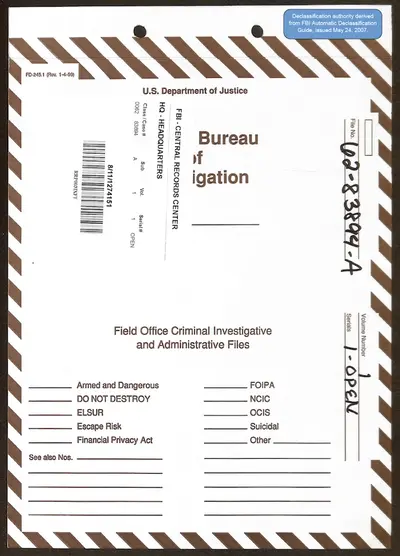
Background
On July 9, 1950, in London, England, U.S. government investigators recorded an unidentified-object incident later released to the public on May 8, 2026, as part of the Presidential Unsealing and Reporting System for UAP Encounters (PURSUE). This specific occurrence belongs to the first wave of “flying saucer” reports that swept the United States and much of the Western world following the Kenneth Arnold sighting of June 1947 and the Roswell incident of July 1947. During this post-war era, the sudden appearance of unidentified aerial phenomena created a period of intense public fascination and geopolitical anxiety. The geopolitical climate of the early Cold War meant that any unidentified movement in the skies was scrutinized through the lens of national security and the potential for advanced adversary technology.
The documentation of this London event is notable because it was filed with the Federal Bureau of Investigation. Under the Bureau’s standing protocols for the protection of vital installations, various field offices, including those in Knoxville, Albuquerque, and Los Angeles, were responsible for routing UFO reports to headquarters. This administrative structure ensured that any aerial anomaly that could potentially threaten sensitive government or military infrastructure was centralized for intelligence analysis. While the sighting occurred in the United Kingdom, the inclusion of the event in FBI files highlights the trans-Atlantic nature of aerial surveillance and the interest the United States government maintained in international unidentified aerial phenomena.
What the document records
The released documentation regarding the London incident provides a window into the contemporary scientific and social attitudes toward unidentified objects. Reports of flying saucers have historically been met with skepticism in Britain, though the specific author of the report suggests that certain photographs may indicate the presence of disc-shaped aircraft. This tension between skepticism and the desire for empirical evidence was a hallmark of mid-century ufology. The document also references a broader context of international sightings, noting that while earlier reports from Spain were considered unreliable, more substantial reports were originating from America. The document posits that these more credible American reports could potentially be related to secret experiments, reflecting the era’s preoccupation with clandestine aerospace development.
The number of witnesses to the London sighting is not specified in the released document. This lack of a precise witness count is common in many historical files from this period, where the focus of the reporting often prioritized the physical description of the object and the official nature of the report over a census of observers.
Type of case
The witnesses involved in the July 9, 1950, incident described the object as being disc- or saucer-shaped. This description aligns with the dominant nomenclature of the era, which was heavily influenced by the visual characteristics of the objects reported during the late 1940s.
Status
All records released under the PURSUE program are designated unresolved by the All-domain Anomaly Resolution Office (AARO) by default. The federal government has not concluded that the events were anomalous, has not concluded that they were conventional, and has not ruled out either possibility. The investigation into such sightings often faces the difficulty of retrospective analysis, as the lack of modern sensor data and high-resolution imagery makes definitive classification nearly impossible.
Conventional candidates for sightings of this period include experimental aircraft, weather balloons, particularly the Project Mogul series in the late 1940s, and atmospheric optical phenomena such as sundogs and lenticular clouds. Additionally, astronomical objects including Venus, the Moon, and meteors near the horizon were frequently mistaken for unidentified craft. The London sighting remains part of this complex historical landscape, where the distinction between advanced human technology and unidentified phenomena remains unverified.