Lisbon, Portugal UFO Sighting (June 25, 1947) — FBI Files
On June 25, 1947, unidentified objects were reported moving at high speeds along the Portuguese coast, according to declassified FBI records.
Historical Context
The mid-twentieth century marked a significant period in the history of unidentified aerial phenomena, characterized by a sudden global increase in sightings. This era, often referred to by researchers as the first wave of the “flying saucer” phenomenon, began in earnest during the summer of 1947. This period was shaped by the technological advancements of the post-World War II era and the onset of the Cold War, which heightened military interest in any unidentified objects occupying the nation’s airspace. The psychological landscape of the time was heavily influenced by the Kenneth Arnold sighting in June 1947 and the subsequent Roswell incident in July 1947, both of which established a cultural and scientific framework for interpreting anomalous aerial activity.
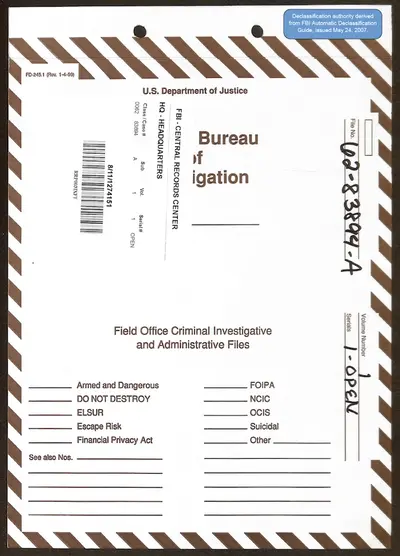
During this period, the United States government maintained a systematic approach to monitoring such reports, particularly when they intersected with the security of vital installations or maritime interests. The Federal Bureau of Investigation (FBI) utilized its various field offices, including those in Knoxville, Albuquerque, and Los Angeles, to collect and route such data to its headquarters. This protocol was designed to ensure that any potential threats to national security or significant atmospheric anomalies were documented and analyzed under standardized procedures.
The Lisbon Incident
On June 25, 1947, an unidentified-object incident occurred in Lisbon, Portugal. The details of this event were later released to the public on May 8, 2026, as part of the Presidential Unsealing and Reporting System for UAP Encounters (PURSUE). The documentation regarding this specific event highlights a series of observations made by coastguards stationed along the North Portugal coast.
The reports indicate that numerous flying saucers were observed by these maritime observers. These objects were noted for their organized movement, as they were seen flying in a line and other specific formations. The trajectory of these objects was directed toward the west, and their velocity was described in the official file as moving “faster than any bullets.” While the document provides a clear description of the movement and formation of the objects, the total number of witnesses involved in the sighting is not specified within the released text.
Analysis and Classification
The Lisbon sighting is classified as a visual sighting reported by ground or air observers. In the context of the late 1940s, such reports were often scrutinized through the lens of emerging aeronautical technology and atmospheric science. The phenomenon of objects moving in formation was a common theme in many contemporary reports, leading to various theories regarding the nature of these unidentified objects.
Under the current oversight of the All-domain Anomaly Resolution Office (AARO), all records released under the PURSUE program are designated as unresolved by default. The federal government has maintained a neutral stance regarding the Lisbon incident, neither concluding that the events were anomalous nor confirming that they were the result of conventional technology. The official position remains that neither the possibility of an anomalous origin nor a conventional explanation has been ruled out.
When evaluating the nature of such sightings, researchers often consider several conventional candidates that were prevalent during the late 1940s. These include experimental aircraft developed during the early stages of the jet age, or weather balloons, such as those used in the Project Mogul series. Additionally, atmospheric optical phenomena, including sundogs or lenticular clouds, are frequently cited as potential misidentifications. Astronomical objects like Venus, the Moon, or meteors appearing near the horizon also serve as standard points of comparison for analyzing the movement and brightness of objects reported in the mid-twentieth century.