Disclosure Documentaries
James Fox's The Phenomenon (2020) is widely credited with helping reopen Congressional UAP hearings — senators cited it in their briefings before the 2022 hearings resumed. His 2024 follow-up, The UFO Movie THEY Don't Want You to See, delivered on-camera testimony from Pentagon insiders who had previously refused any public appearance. Netflix's Encounters (2023) reached audiences with no prior UAP engagement and drove search spikes with each episode's release. These films are no longer fringe curiosities — they are primary sources for the most significant government transparency story of the decade.
 Must Watch
 The UFO Movie THEY Don't Want You to See
dir. James Fox · 2024
🍅 90%
▶ In cinemas / streaming 2024
Fox's most explosive film yet. Pentagon insiders, intelligence officials, and scientists describe non-human craft, retrieval programmes, and the sustained effort to keep the public uninformed. Released as Congressional UAP hearings reached their peak — several sources had testified weeks before cameras rolled. The most consequential UFO documentary since 2020.
 Must Watch
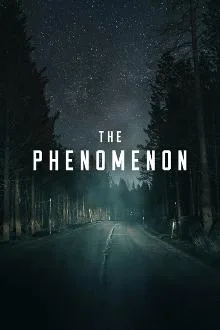
 The Phenomenon
dir. James Fox · 2020
🍅 100% ⭐ 7.4/10
▶ Amazon Prime, Apple TV
The film that helped reopen the US Congressional UAP hearings. Fox secured testimony from senators, generals, and the children of the 1994 Ariel School sighting in Zimbabwe. Methodical, credentialled, impossible to dismiss. Watch it again after the 2023 Grusch testimony — Fox had sources who knew.
 Must Watch
 Bob Lazar: Area 51 & Flying Saucers
dir. Jeremy Corbell · 2018
🍅 20% ⭐ 5.6/10
▶ Netflix
Lazar claimed to have back-engineered alien craft at the S-4 facility near Area 51 in 1989. For thirty years he was easy to dismiss. Then the Navy corroborated the UAP footage he described, the government confirmed AATIP existed, and his story became harder to explain away. Corbell's film presents Lazar without embellishment — you decide.
 Must Watch
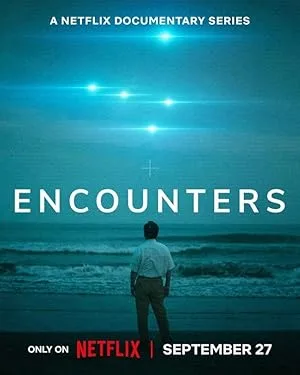
 Encounters
dir. Yon Motskin · 2023
⭐ 6.4/10
▶ Netflix
Four UAP encounter cases across four episodes: Stephenville Texas, a Welsh coastal town, Japanese fighter pilot intercepts, and the Ariel School. Avoids editorial commentary and lets witnesses — pilots, students, fishermen — carry the cases. The Welsh episode is among the most affecting UFO documentaries made.
2019
Unidentified Inside America's UFO Investigation
dir. Various
▶ History Channel / Paramount+
Six-episode series with Luis Elizondo, Chris Mellon, and other AATIP alumni going on record about what the Pentagon documented. The UAP footage released here — Gimbal, GoFast, FLIR1 — had never been publicly acknowledged before. Required viewing for context on every disclosure development since.
2022 ⭐ 7.1/10
Moment of Contact
dir. James Fox
▶ Amazon Prime
The 1996 Varginha, Brazil incident investigated with fresh interviews. Multiple witnesses described a wounded non-human entity recovered by military and transported to a hospital. Brazilian officials, soldiers, and medical staff speak on camera. Fox treats the case as forensically as any crime scene.
Recent Releases
Horror was the fastest-growing genre in US cinema in 2025, representing 17% of all box office revenue — up from 11% the year before. Ryan Coogler's Sinners hit 97% on Rotten Tomatoes, the highest-rated mainstream horror film of the decade. The current wave — Robert Eggers, Coralie Fargeat, Osgood Perkins — is producing the most formally ambitious horror since the 1970s, treating the genre as the legitimate vehicle for ideas it always was. The paranormal in these films is less monster than mirror.
 Must Watch
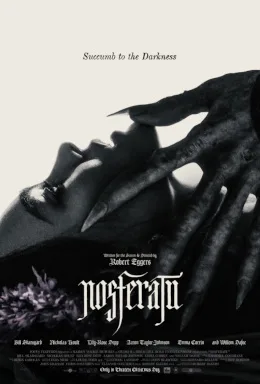
 Nosferatu
dir. Robert Eggers · 2024
🍅 85% ⭐ 7.1/10
▶ Max, digital rental
Eggers' long-awaited take on the vampire myth is unlike any other horror film of the decade: patient, Gothic, and genuinely disturbing in ways that accumulate rather than shock. Bill Skarsgård's Orlok is barely seen and permanently present. The film uses period-accurate occultism and hysteria with the same rigour Eggers brought to The Witch.
 Must Watch
 The Substance
dir. Coralie Fargeat · 2024
🍅 89% ⭐ 7.2/10
▶ MUBI, digital rental
Body horror operating at a pitch rarely sustained for two and a half hours. Demi Moore and Margaret Qualley in a Cannes Palme d'Or-winning film about a pharmaceutical that splits identity into two competing selves. Fargeat uses practical effects with baroque extravagance. Deeply uncomfortable in ways that stay.
 Must Watch
 Skinamarink
dir. Kyle Edward Ball · 2023
▶ Shudder
Shot for $15,000 on consumer cameras, Skinamarink became the most-discussed horror film of 2023 by rejecting every convention. Two children wake to find their parents gone and the house rearranging itself. No monster, no score, no legible faces — just dread as pure atmosphere. Either the most innovative horror film in decades or unwatchable depending on your threshold.
2024 🍅 85% ⭐ 6.5/10
Longlegs
dir. Osgood Perkins
▶ Digital rental
Nicolas Cage's most committed performance in years as a Satanic serial killer investigated by a FBI agent with an inexplicable psychic link to the crimes. Perkins builds dread through atmosphere and withheld logic — what actually happens is more disturbing than any explicit scene. Divisive but difficult to forget.
2024 🍅 95% ⭐ 7.5/10
Strange Darling
dir. JT Mollner
▶ Hulu
Shot on 35mm film in non-linear chapters, Strange Darling is technically a thriller but plays as a slow-burn supernatural puzzle. Won the Academy Award for cinematography. Not strictly paranormal, but its structure — reality revealed in fragments — is the closest cinema gets to documenting how genuine encounters get reported.
2024 🍅 73% ⭐ 6.2/10
MaXXXine
dir. Ti West
▶ Max
The conclusion of Ti West's slasher trilogy (X, Pearl, MaXXXine) is the most stylised entry: 1985 Hollywood, satanic panic, Night Stalker, and Mia Goth's staggering committed performance. West's trilogy is the best sustained horror work of the 2020s.
2024 🍅 72% ⭐ 5.8/10
Immaculate
dir. Michael Mohan
▶ Shudder
Sydney Sweeney produced and stars in this Vatican horror about an American nun whose apparent miraculous pregnancy may have darker origins. A deliberate provocation that earns its escalation. The ending is one of the most committed sequences in recent mainstream horror.
Classic Films
Close Encounters of the Third Kind (1977) earned over $300 million worldwide, holds a 7.6/10 on IMDb, and remains the benchmark for extraterrestrial cinema. Spielberg consulted J. Allen Hynek directly and designed the encounter sequences from actual NICAP case files — it functions as documentary as much as drama. Fire in the Sky (1993) opened at #2 at the US box office and earned $19.8 million worldwide from a story Travis Walton insists is entirely true. These films shaped public expectation of what contact looks and feels like more than any government statement.
 Must Watch
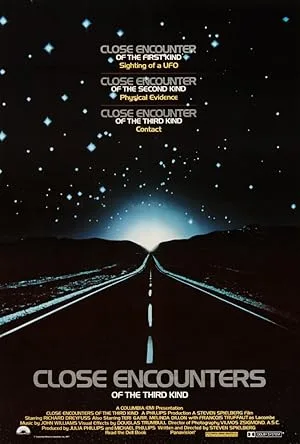
 Close Encounters of the Third Kind
dir. Steven Spielberg · 1977
🍅 91% ⭐ 7.6/10
Still the most emotionally honest UFO film ever made. Spielberg consulted J. Allen Hynek (he appears at the end) and the visual design came from actual NICAP reports. Richard Dreyfuss's obsession mirrors the real psychological disruption reported by encounter witnesses. Watch the Director's Cut.
 Must Watch
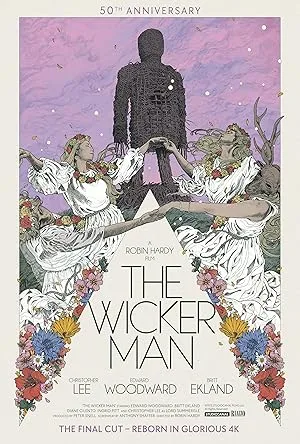
 The Wicker Man
dir. Robin Hardy · 1973
🍅 91% ⭐ 7.5/10
A Scottish police officer investigates a missing girl on a remote island. The paranormal here is folk religion as lived practice — a community that genuinely believes, operating by pre-Christian logic the protagonist cannot process. No jump scares, no monsters. The horror is entirely structural and pays off with one of cinema's great endings.
 Must Watch
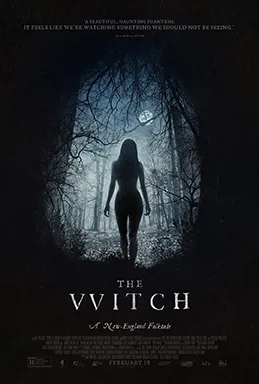
 The Witch
dir. Robert Eggers · 2015
🍅 91%
Set in 1630 New England and scripted entirely from period documents, The Witch asks whether a family's disintegration is caused by a real witch or their own fanaticism. Eggers never resolves the ambiguity — and doesn't need to. The most disciplined paranormal film of its decade.
1982 🍅 62% ⭐ 6.7/10
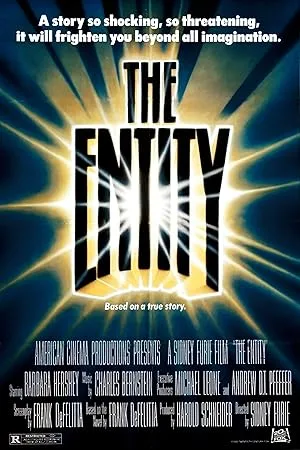
The Entity
dir. Sidney J. Furie
Based on Frank De Felitta's account of the Doris Bither case investigated by researchers Barry Taff and Kerry Gaynor. A woman is violently assaulted by an invisible force — repeatedly, over years. The real case remains one of the most documented poltergeist events in California history. The film is brutal and the best adaptation of an actual poltergeist case.
1993 🍅 52% ⭐ 6.5/10
Fire in the Sky
dir. Robert Lieberman
Travis Walton's 1975 abduction, fairly dramatised except for the abduction sequence itself (the film invented a more cinematic interior that differs from Walton's account). The crew's ordeal — five days suspected of murder before Walton reappeared — is the film's real subject.
1989 🍅 46% ⭐ 5.5/10
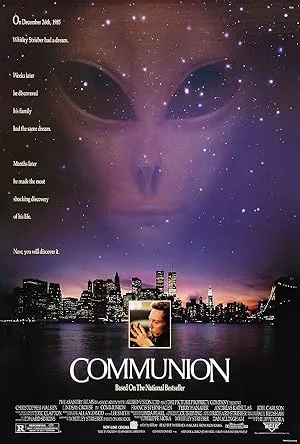
Communion
dir. Philippe Mora
Christopher Walken's performance as Whitley Strieber makes this a genuinely unsettling experience independent of whether you believe the events. Mora and Strieber worked closely on the adaptation. The Visitors' design — pale, triangular-faced — became the visual template for alien contact imagery worldwide.
2013 🍅 86% ⭐ 7.5/10
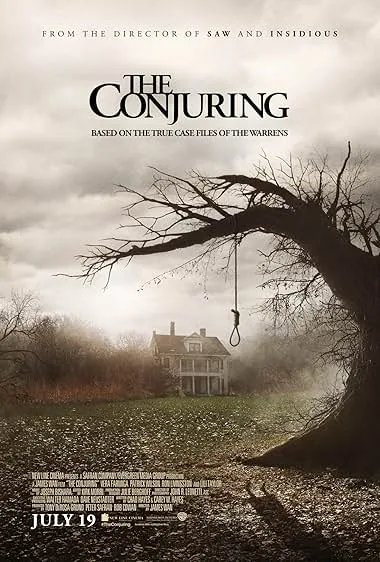
The Conjuring
dir. James Wan
The best haunted-house film since The Shining, and unlike most in the genre it is based on a documented case. Ed and Lorraine Warren investigated the Perron family farmhouse in Rhode Island in 1971. Wan's craft is extraordinary — the tension accumulates through editing and sound before anything is shown.
1982 🍅 88% ⭐ 7.3/10
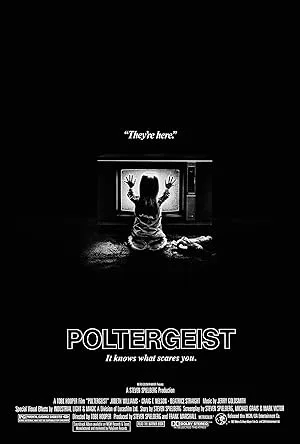
Poltergeist
dir. Tobe Hooper
Co-written and produced by Spielberg. The film defined the suburban haunting genre and drew directly from the Vallée/Keel conception of the paranormal as deeply embedded in ordinary domestic life. The famous real-skeleton production story added a layer of uncomfortable legend.
1997 🍅 69% ⭐ 7.5/10
Contact
dir. Robert Zemeckis
Carl Sagan's novel adapted with remarkable fidelity. The film's argument — that extraordinary experiences can be both genuine and resistant to scientific proof — is more sophisticated than most UFO discussion. Jodie Foster's performance anchors a film that has aged into something like prophecy.
S-4 & Area 51
The most anticipated UAP release of 2026 is S4: The Bob Lazar Story (Amazon Prime, April 2026), which was already rating 7.6/10 on IMDb and 4.8 out of 5 on Amazon ahead of its wide release. Bob Lazar first described the S-4 facility — a series of hangars built into the hillside nine miles south of Area 51 — in a 1989 Las Vegas TV interview. For thirty years the claim seemed extraordinary; since then, AATIP's existence, Navy UAP corroboration, and Grusch's Congressional testimony have made it harder to dismiss. Corbell's 2018 film covers the origin story; the 2026 documentary delivers the reckoning.
 Must Watch
 S4: The Bob Lazar Story
dir. Jeremy Corbell · 2026
⭐ 7.6/10
▶ Amazon Prime (April 2026)
The most anticipated UAP documentary of 2026, already rated 7.6/10 on IMDb and 4.8/5 on Amazon Prime ahead of its April release. Narrated by Lazar himself with exclusive new interviews by journalist George Knapp, it revisits every claim Lazar made in 1989 — element 115, gravity wave propulsion, the nine recovered craft — against thirty years of subsequent corroboration. AATIP's existence, Navy UAP footage, and Grusch's Congressional testimony all point in the same direction Lazar pointed first.
2019
Alien Highway
dir. Various
▶ Travel Channel
Chuck Clark, who has documented Nevada Test Site activity for thirty years, serves as guide for this series examining the geography around the classified facilities near Groom Lake. Less sensational than most in the genre — Clark's knowledge of restricted airspace gives the field work credibility.
2023
Bob Lazar: The Man Who Allegedly Worked at S-4
dir. Jeremy Corbell
▶ Corbell's channel / streaming
Corbell's shorter follow-up documentary examining what has been verified of Lazar's claims since his 2018 film. The corroboration of Lazar's employment through tax records, subsequent AATIP revelations, and the Navy's acknowledgment of UAP programmes changed the calculus. An honest accounting of what holds up.
2018 ⭐ 4.5/10
Hunt for the Skinwalker
dir. Jeremy Corbell
▶ Amazon Prime
Cinematic adaptation of the Kelleher/Knapp book, with additional footage from NIDS investigations and interviews with Robert Bigelow. The Ranch's proximity to the Utah Test and Training Range — a restricted military corridor — raises questions the film leaves deliberately open.
Classic Sci-Fi
Every contemporary disclosure conversation has a 1950s film already in its DNA. The Day the Earth Stood Still arrived four years after Roswell and asked whether humanity could be trusted with contact. The Thing from Another World wrote the template for crash-retrieval secrecy a generation before AATIP existed. Forbidden Planet introduced the ancient-aliens premise to mass audiences. Invasion of the Body Snatchers gave paranormal paranoia its central metaphor. Quatermass and the Pit, 2001, and Solaris pushed further — proposing that contact has already happened, repeatedly, and the question is only whether we are ready to see it. These films are not nostalgia. They are the cultural substrate every later report sits on top of.
 Must Watch
 The Day the Earth Stood Still
dir. Robert Wise · 1951
🍅 94% ⭐ 7.7/10
Klaatu lands a flying saucer on the Ellipse in Washington, demands an audience with world leaders, and is shot before he can deliver his message. Wise made the film during the height of saucer hysteria — the Maury Island incident, Kenneth Arnold's sighting, and the Roswell press release were all within four years. The film's argument that humanity is being observed by a wiser intelligence felt urgent then. It still does.
 Must Watch
 Forbidden Planet
dir. Fred M. Wilcox · 1956
🍅 98% ⭐ 7.5/10
An expedition to Altair IV finds the survivor of a previous mission living among the technology of a vanished alien civilisation called the Krell. The film smuggles The Tempest, Freudian psychology, and ancient-aliens speculation into a Cinemascope studio picture and the result is a masterpiece. The Krell's underground machine — twenty miles deep, still humming — is the most haunting image in 1950s cinema.
 Must Watch
 Invasion of the Body Snatchers
dir. Don Siegel · 1956
🍅 98% ⭐ 7.7/10
Replaced by something that wears your face. Siegel's film became the central metaphor for paranormal-adjacent paranoia: the people around you are not who they appear to be. Whether the threat is Communist infiltration, alien colonisation, or possession depends on the year you watch it. The original ending — Kevin McCarthy screaming "You're next!" into traffic — is one of cinema's purest endings.
 Must Watch
 2001: A Space Odyssey
dir. Stanley Kubrick · 1968
🍅 92% ⭐ 8.3/10
Kubrick and Arthur C. Clarke proposed that human evolution had been catalysed at every major step by a non-human intelligence acting through monoliths buried at key locations. The film argues this proposition without dialogue for most of its runtime. Half a century later it remains the most disciplined and uncompromising film made about contact. Watch on the largest screen available.
 Must Watch
 The Thing
dir. John Carpenter · 1982
🍅 85% ⭐ 8.2/10
Carpenter's remake of the 1951 film is a different proposition entirely. The entity now imitates perfectly, cell by cell, so that the men at the Antarctic station cannot trust each other or themselves. Rob Bottin's practical effects remain unmatched. Beyond the horror, the film is the most paranoid and uncompromising disclosure parable made — what if the cover-up exists because the truth cannot be safely communicated?
1951 🍅 88% ⭐ 7.1/10
The Thing from Another World
dir. Christian Nyby
A military expedition recovers a frozen non-human entity from the Arctic ice. The scientific officer wants to study it; the soldiers want to destroy it. The dynamic — between curiosity, containment, and military doctrine — anticipates every disclosure debate of the next seventy-five years. Produced by Howard Hawks; widely considered the template for every alien-crash narrative since.
1953 🍅 88% ⭐ 7.0/10
War of the Worlds
dir. Byron Haskin
The first major adaptation of Wells's novel, relocated from Victorian England to Cold War California. Gene Barry's scientist watches every conventional weapon fail against the Martian war machines. The film won the Academy Award for special effects and remained the visual reference for invasion cinema until the 1990s. Read in 2026 it plays differently — the powerlessness of governments before a non-human technology no longer feels metaphorical.
1967 🍅 90% ⭐ 7.0/10
Quatermass and the Pit
dir. Roy Ward Baker
London Underground excavation uncovers a five-million-year-old Martian craft and the fossilised insectoid pilots inside. Professor Quatermass realises the craft has been shaping human evolution and racial memory — that what we call "hauntings" and "the devil" are species memory of the Martians' influence. Hammer Studios' most intellectually ambitious film and a direct ancestor of every ancient-aliens documentary made since.
1972 🍅 94% ⭐ 8.0/10
Solaris
dir. Andrei Tarkovsky
A psychologist arrives at an orbiting station above the planet Solaris, where the ocean below is itself an alien intelligence — and is manifesting the crew's dead loved ones as physical presences. Tarkovsky uses the science-fiction premise to investigate grief, memory, and the limits of communication between consciousnesses. The closest cinema has come to taking seriously the idea that contact with the non-human might be unbearable rather than triumphant.
1988 🍅 86% ⭐ 7.2/10
They Live
dir. John Carpenter
A drifter discovers sunglasses that reveal the world's hidden controllers — non-human elites disguised as wealthy humans, ruling through subliminal messaging on every billboard, magazine, and television. Released as satire of Reagan-era consumerism, the film has been reread by every subsequent generation as something closer to prophecy. The six-minute fight scene is one of the longest and most committed brawls in cinema.
Documentary Series
Skinwalker Ranch (6.5/10 IMDb, 5,600+ votes) occupies an unusual position: critics find the pacing manufactured and the drama padded, while the scientific instrumentation — ground-penetrating radar, spectrometers, gamma radiation detectors — regularly produces data that resists simple explanation. Its spin-off, Beyond Skinwalker Ranch, actually rates higher at 7.1/10, suggesting audiences respond better when the methodology is applied to new locations without the familiar ranch drama. Hellier drew over a million viewers for its Season 1 premiere while being released entirely free on YouTube — an anomaly in documentary distribution and a testament to the depth of the rabbit hole it opens.
 Must Watch
 The Secret of Skinwalker Ranch (Season 1–6)
dir. Various · 2020
⭐ 6.5/10
▶ History Channel / Paramount+
What sets this apart from other paranormal reality TV is the genuine scientific team: a geologist, a physicist, a UAP Task Force veteran, and equipment that would be at home in a university lab. Season 4 expanded ground-penetrating radar work and caught the most anomalous aerial data yet. Season 6 (2025) introduced new DOE contractors and produced compelling instrument data around the mesa site.
 Must Watch
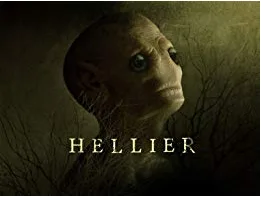
 Hellier
dir. Karl Pfeiffer & Connor Randall · 2019
⭐ 5.9/10
▶ Free on YouTube (Planet Weird)
A paranormal investigation in rural Kentucky that starts as a Goblin sighting follow-up and descends into something genuinely inexplicable. Five investigators, two seasons, and a rabbit hole that connects The Mothman Prophecies, occultist Allen Bennett, and the nature of synchronicity. Released free by the filmmakers — the most rewatchable paranormal series made.
2019 ⭐ 7.6/10
Project Blue Book
dir. Various
▶ History Channel / Paramount+
Dramatised account of J. Allen Hynek's Air Force years investigating UFO cases. The creative team took real cases and gave them dramatic architecture while preserving Hynek's documented arc from skeptic to believer. Two seasons; cancelled before reaching his Center for UFO Studies period.
Horror Classics
The films that built the supernatural-horror vocabulary modern cinema still draws on. The Exorcist drew on the documented 1949 Cottage City case and produced cultural panic — fainting in cinemas, hospital admissions, ecclesiastical commentary — that has not been matched since. Rosemary's Baby was the first major American studio film to take occult practice seriously as a contemporary urban reality. The Haunting (1963) remains the masterclass in psychological haunting cinema, while Carnival of Souls invented the already-dead reveal that hundreds of later films have echoed. Every entry here defined a structural element of the genre.
 Must Watch
 The Exorcist
dir. William Friedkin · 1973
🍅 78% ⭐ 8.1/10
Friedkin and William Peter Blatty drew on the documented 1949 Cottage City possession case. The film treats Catholic exorcism rite as procedural fact and built itself from medical, psychiatric, and theological consultation. The cultural panic it produced — fainting audiences, hospital admissions, ecclesiastical commentary — is itself an artefact worth studying.
 Must Watch
 The Shining
dir. Stanley Kubrick · 1980
🍅 83% ⭐ 8.4/10
Kubrick adapted Stephen King's novel into something the novelist publicly disowned and audiences could not stop watching. The Overlook is haunted but the film's deeper proposition is that history itself has a hostile residue. The Stanley Hotel that inspired King is now one of America's most-investigated active sites — life and art locked in a feedback loop.
1968 🍅 97% ⭐ 8.0/10
Rosemary's Baby
dir. Roman Polanski
The first major American film to take occult practice seriously as a contemporary urban reality. Polanski refuses to confirm or deny the supernatural for two hours and the ambiguity is what holds. Released the same year Anton LaVey published the Satanic Bible — coincidence or signal, the cultural reading depends entirely on you.
1976 🍅 86% ⭐ 7.5/10
The Omen
dir. Richard Donner
The film that injected Antichrist eschatology into the Hollywood thriller form. The production was famously shadowed by accidents and deaths — the screenwriter narrowly survived a head-on collision, the special effects supervisor's assistant was killed in a separate one — that became part of the cultural mythology around it.
1963 🍅 88% ⭐ 7.5/10
The Haunting
dir. Robert Wise
Wise's adaptation of Shirley Jackson's The Haunting of Hill House remains the masterclass in psychological haunting cinema. Nothing is shown; sound and architecture do the entire job. Filmed at Ettington Park in Warwickshire, England — a hotel still reporting paranormal activity sixty years later — the production itself reportedly experienced unexplained equipment failures.
1961 🍅 95% ⭐ 7.8/10
The Innocents
dir. Jack Clayton
Adapted from Henry James's The Turn of the Screw with a screenplay by Truman Capote. Deborah Kerr's governess sees ghosts the children may also be seeing — or may be performing. The film maintains James's ambiguity perfectly and remains the most influential template for tasteful, restrained ghost cinema.
1973 🍅 95% ⭐ 7.2/10
Don't Look Now
dir. Nicolas Roeg
A grieving couple in Venice is pursued by visions of their dead daughter — and possibly by something else. Roeg's elliptical editing turns the supernatural into a structural property of the film itself. Daphne du Maurier wrote the source story; the unease is genuinely theological.
1980 🍅 88% ⭐ 7.2/10
The Changeling
dir. Peter Medak
George C. Scott investigates a haunting in a Seattle mansion that turns out to be a documented historical injustice demanding correction. Russell Hunter's screenplay was based on the writer's own experiences in a Denver house in the late 1960s. One of the most procedural ghost films made — the haunting has motive, evidence, and resolution.
1962 🍅 88% ⭐ 7.0/10
Carnival of Souls
dir. Herk Harvey
Made in Lawrence, Kansas for $33,000 by an industrial-film director on a single feature attempt. A woman survives a bridge accident and finds herself drawn to an abandoned pavilion where the dead seem to gather. Almost certainly the original template for every later "already-dead" reveal in cinema.
1979 🍅 74% ⭐ 6.6/10
Phantasm
dir. Don Coscarelli
A teenager investigates a mortician operating a portal to another dimension where corpses are shrunk to dwarf-zombies and conscripted as extra-dimensional labour. Coscarelli's logic is dream logic and the film operates accordingly. Inexplicable, irreducible, endlessly cited by horror filmmakers as a permission slip.
Modern Horror Auteurs
The current wave — Eggers, Aster, Kent, the Philippous, Mitchell, West — is producing the most formally ambitious horror cinema since the New Hollywood 1970s. Hereditary reset what mainstream horror could attempt. Midsommar demonstrated that horror could function in oppressive daylight for two and a half hours. Ti West's slasher trilogy proved that exploitation forms could carry serious cinematic ideas. The category exists because critics finally stopped treating horror as inferior. The films deserve the framing.
 Must Watch
 Hereditary
dir. Ari Aster · 2018
🍅 89% ⭐ 7.3/10
Toni Collette's performance as a grieving mother whose family is revealed to be the target of a Paimon-summoning cult. Aster's debut feature reset the high-end horror form for a generation. The miniature-house framing argues that the family is a doll's house long before the supernatural confirms it.
 Must Watch
 Midsommar
dir. Ari Aster · 2019
🍅 83% ⭐ 7.1/10
Florence Pugh's grief-shattered student is absorbed into a Swedish solstice cult that turns out to be entirely sincere. The film is shot in oppressive daylight for two and a half hours and the horror is the absence of darkness. The argument about ritual community as both cure and trap is the most uncomfortable thing in mainstream horror this decade.
 Must Watch
 Talk to Me
dir. Danny & Michael Philippou · 2022
🍅 94% ⭐ 7.1/10
Australian teenagers play a party game using an embalmed hand that lets the holder briefly host a spirit. The metaphysics are genuinely well-developed and the consequences escalate with internal logic. The Philippou brothers came out of YouTube and brought a kineticism to possession horror that the form had been waiting for.
2023 🍅 67% ⭐ 6.7/10
Beau Is Afraid
dir. Ari Aster
Joaquin Phoenix's three-hour anxiety odyssey through a world that may be entirely subjective. Aster's most divisive film — it operates by dream logic, refuses to settle into genre, and asks audiences to sit with rather than solve its discomfort. Either his most ambitious or his most self-indulgent depending on the day.
2019 🍅 90% ⭐ 7.4/10
The Lighthouse
dir. Robert Eggers
Two lighthouse keepers (Robert Pattinson, Willem Dafoe) on a New England rock in the 1890s descend into mutual suspicion, mythological vision, and madness. Shot in 1.19:1 aspect ratio on black-and-white 35mm. Eggers' commitment to period nautical idiom is total. A film about whatever lives at the top of the lighthouse — and you never quite see it.
2022 🍅 89% ⭐ 7.0/10
The Northman
dir. Robert Eggers
Eggers' Viking revenge epic treats Norse paganism as lived practice rather than metaphor. The seers, the shapeshifting, the funeral rites — all played absolutely straight. A film that argues there was a coherent supernatural worldview operating in tenth-century Iceland and that worldview deserves cinematic representation on its own terms.
2014 🍅 95% ⭐ 6.8/10
The Babadook
dir. Jennifer Kent
Australian horror about a widowed mother and her son haunted by a children's-book entity that may be real, may be psychological, and refuses to resolve. Essie Davis carries one of the great horror performances of the decade. The grief-as-monster reading is the obvious one; the actual monster reading is harder to dismiss after a third watch.
2014 🍅 95% ⭐ 6.8/10
It Follows
dir. David Robert Mitchell
An entity follows the protagonist at walking pace; she can pass it on through sex but it never disappears. Mitchell's film is rigorous about its own rules and the result is a kind of existential horror — the entity stands in for mortality, contagion, or memory depending on the reading. Disasterpeace's synth score has been universally imitated since.
2022 🍅 95% ⭐ 6.5/10
X
dir. Ti West
1979 Texas, a porn shoot at a remote farmhouse, an elderly couple with their own history. West's slasher trilogy opener (followed by Pearl and MaXXXine) is the most thoughtful exploration of desire-as-haunting since Cronenberg. Mia Goth's dual performance as both Maxine and Pearl is the through-line.
2022 🍅 93% ⭐ 7.0/10
Pearl
dir. Ti West
Prequel to X, shot back-to-back, about the killer's 1918 origin during the Spanish flu. Mia Goth's monologue near the end is the most committed acting in horror this decade. The film is colour-graded as a 1940s Technicolor melodrama — the dissonance between style and content is the engine.
Asian Horror
The late-1990s J-horror wave — Ringu, Pulse, Audition, Ju-on — restructured how Western audiences expected supernatural cinema to operate. Where Hollywood horror leaned on confrontation, the Japanese films leaned on absence: long takes, slow accumulation, dread as atmosphere rather than event. Korean horror followed with A Tale of Two Sisters and a string of films that prized image-making over jump scares. The influence on every subsequent decade of Western horror — A24's roster especially — is direct and traceable. These are the originals.
 Must Watch
 Ringu
dir. Hideo Nakata · 1998
🍅 98% ⭐ 7.2/10
The cursed videotape — watch it, die in seven days — is the central conceit, but Nakata's film operates on dread rather than mechanic. Sadako's emergence remains the most influential horror image in cinema since The Exorcist. The American remake is competent; this is the original signal.
2002 🍅 64% ⭐ 6.7/10
Ju-on: The Grudge
dir. Takashi Shimizu
Shimizu's haunted-house horror operates on a viral logic — once the curse touches you it propagates outward through anyone you contact. Structurally the most innovative ghost film of its era. Kayako's death rattle entered cinema's permanent vocabulary of fear.
2001 🍅 76% ⭐ 7.3/10
Pulse
dir. Kiyoshi Kurosawa
Kurosawa's argument is that the dead are leaking back into the world through the early internet — and the film's atmosphere of slow loneliness is the most accurate prediction of the social-media decades made before them. The Tokyo blackout sequences remain among the most atmospheric in horror cinema.
1999 🍅 83% ⭐ 7.2/10
Audition
dir. Takashi Miike
A widower stages a fake film audition to find a new partner. The film operates as a slow drama for ninety minutes and then becomes something audiences are still arguing about today. Miike's most disciplined film and the one that introduced him to global horror audiences.
2003 🍅 87% ⭐ 7.1/10
A Tale of Two Sisters
dir. Kim Jee-woon
South Korean horror loosely adapted from a Joseon-dynasty folktale. Two sisters return from a hospital to a stepmother and a house with its own intentions. Kim's image-making is impeccable; the third-act reveals reward repeat viewing. The most visually accomplished Asian horror film of the 2000s.
2005 ⭐ 7.0/10
Noroi: The Curse
dir. Kōji Shiraishi
Mockumentary about a paranormal investigator pursuing the demon Kagutaba across a sequence of seemingly-unrelated cases. Shiraishi's commitment to the documentary form is so total that Japanese audiences initially mistook it for non-fiction television. A cult masterpiece that has only grown in reputation.
Cryptid Cinema
The Patterson-Gimlin film of October 1967 is the cultural moment that made cryptid cinema possible. The Legend of Boggy Creek was the first major film to treat its subject as a regional documentary phenomenon rather than a monster movie. Willow Creek's nineteen-minute single-take tent sequence is one of the most committed horror moments of the past decade. Sasquatch Sunset (2024) attempts cryptid biology as straight ethnographic observation. The genre exists in a strange zone between horror, documentary, and folklore — and the best films make all three coexist.
1972 ⭐ 5.7/10
The Legend of Boggy Creek
dir. Charles B. Pierce
Documentary-style account of the Fouke Monster sightings in southern Arkansas, made by a regional advertising executive who used local Fouke residents as on-camera witnesses. The film grossed $25 million on a $160,000 budget and shaped what cryptid documentary should look and sound like for decades after.
2002 🍅 52% ⭐ 6.4/10
The Mothman Prophecies
dir. Mark Pellington
Adapted from John Keel's 1975 book about the 1966–67 Point Pleasant events. Richard Gere as the journalist; the film captures Keel's argument that the Mothman, the Men in Black, and the Silver Bridge collapse are aspects of a single phenomenon better than any documentary effort has. Pellington's elliptical editing earns the comparison.
2013 🍅 78% ⭐ 5.4/10
Willow Creek
dir. Bobcat Goldthwait
Couple drives to the Patterson-Gimlin film site in Bluff Creek, California to make a sasquatch documentary. The 19-minute single-take tent sequence is one of the most committed sustained-tension scenes in modern horror — Goldthwait's directing instinct caught audiences entirely off guard.
2014 🍅 73% ⭐ 4.9/10
Exists
dir. Eduardo Sánchez
Sánchez (Blair Witch co-director) returns to found-footage territory with a Texas cabin sasquatch story. The creature design and forest cinematography are the strongest in the bigfoot subgenre. The film is more sympathetic to its cryptid than most — the violence is consequential rather than instinctive.
2024 🍅 74% ⭐ 5.1/10
Sasquatch Sunset
dir. David & Nathan Zellner
A sasquatch family lives an unspoken year in the Pacific Northwest. No human language, no music cues, no comedic framing despite Riley Keough and Jesse Eisenberg in the lead prosthetics. The film argues for cryptid existence as biology rather than mystery — a thought experiment carried out with absolute commitment.
2021 🍅 63% ⭐ 5.8/10
Antlers
dir. Scott Cooper
Wendigo horror set in rural Oregon, produced by Guillermo del Toro. Cooper treats Algonquian folklore with respect and the creature design is one of the more disturbing physical effects of the early 2020s. An Oregon-mining-collapse film at heart, the supernatural carrying the social commentary.
Possession & Exorcism
The 1976 trial of the priests who exorcised Anneliese Michel produced the legal record that Emily Rose later dramatised. The 1977 Enfield Poltergeist investigation provided the source material for The Conjuring 2. Possession cinema, when it works, is documentary cinema with theological license — the cases exist, the rite exists, the legal apparatus has had to adjudicate the supernatural under oath. These films are not invention; they are the dramatic interpretation of a category of human experience that the institutional church and the secular court have both been forced to take seriously.
2005 🍅 46% ⭐ 6.7/10
The Exorcism of Emily Rose
dir. Scott Derrickson
Based on the 1976 trial of the priests who exorcised Anneliese Michel in Klingenberg, Germany. Derrickson structures the film as a courtroom drama interspersed with possession flashbacks — the legal apparatus is forced to adjudicate the supernatural. Laura Linney's lawyer is the most thoughtful skeptic in possession cinema.
2010 🍅 72% ⭐ 5.6/10
The Last Exorcism
dir. Daniel Stamm
A documentary crew follows a Louisiana evangelical preacher who has decided to publicly debunk his own exorcism practice. The film starts as scepticism and ends somewhere harder to dismiss. Patrick Fabian's performance as the conflicted preacher is the spine — he means his disbelief, and that makes what follows worse.
2005 🍅 46% ⭐ 7.0/10
Constantine
dir. Francis Lawrence
Adapted from the Hellblazer comics with Keanu Reeves as the cynical Catholic occult detective. The film has aged into a cult classic that the original critical reception did not anticipate. The visual design of Hell, the demonic iconography, and the exorcism mechanics are the most committed in mainstream supernatural cinema since The Exorcist.
2016 🍅 80% ⭐ 7.3/10
The Conjuring 2
dir. James Wan
The Enfield Poltergeist case investigated by Ed and Lorraine Warren in 1977 — one of the most documented multi-witness paranormal events in British history. Wan's sequel is the rare follow-up that exceeds the original. The Crooked Man and the nun figure both originated here.
2014 🍅 29% ⭐ 5.4/10
Annabelle
dir. John R. Leonetti
Spin-off origin story for the haunted doll the Warrens kept in their occult artifacts museum. Critically savaged on release; commercially among the most profitable horror films of the decade. Watch it as the Warren extended-universe entry it is — a documented case from the 1970s given Hollywood elaboration.
2010 🍅 67% ⭐ 6.8/10
Insidious
dir. James Wan
Wan's between-Saw-and-Conjuring film proposed a haunting model in which the haunted location is irrelevant — the family is followed by entities through dimensional travel during sleep. The Further (the in-film name for the realm) became its own franchise mythology. The Lipstick-Face Demon scene remains one of the great jump scares of the 2010s.
Cosmic Horror & Weird
H.P. Lovecraft's argument — that the universe is indifferent rather than malevolent and the indifference is itself the horror — was unfilmable for sixty years. Annihilation, The Endless, and Color Out of Space finally cracked it. The category sits at the intersection of science fiction and horror without being entirely either. Event Horizon was rejected on release and steadily reclaimed as the closest a Hollywood studio came to genuine Lovecraftian cinema. Under the Skin treats human strangeness as the alien's perceptual problem rather than ours. The films here ask the largest questions — and refuse to provide answers.
1997 🍅 32% ⭐ 6.7/10
Event Horizon
dir. Paul W.S. Anderson
A rescue crew boards a starship that has returned from a faster-than-light test having travelled through Hell itself. Critically rejected on release, the film has been steadily reclaimed as the closest mainstream studio product ever came to genuine Lovecraftian cosmic horror. The recovered version of the original cut is reportedly more disturbing — never released, possibly destroyed.
2018 🍅 88% ⭐ 6.8/10
Annihilation
dir. Alex Garland
Adapted from Jeff VanderMeer's novel about an expedition into a quarantined zone where local biology is mutating along an alien gradient. Garland refuses to provide the explanation the genre conditioned audiences to expect. The lighthouse sequence is the closest American studio cinema has come to filming Tarkovsky's Stalker.
2013 🍅 85% ⭐ 6.3/10
Under the Skin
dir. Jonathan Glazer
Scarlett Johansson plays an alien predator harvesting men in Glasgow. Glazer shot many sequences with hidden cameras, the men in the van not knowing they were in a film. The dispassionate alien gaze — the camera's and the entity's — produces a study of human strangeness more than alien strangeness.
2017 🍅 95% ⭐ 6.5/10
The Endless
dir. Justin Benson & Aaron Moorhead
Benson and Moorhead play themselves returning to a UFO death cult they escaped from years ago. The cult turns out to be unsettlingly accurate about the local cosmology. Made for $250,000, it does more cosmic horror with less than studio films do with two thousand times the budget.
2012 🍅 88% ⭐ 6.4/10
Resolution
dir. Justin Benson & Aaron Moorhead
Benson and Moorhead's debut, set in the same fictional universe as The Endless, depicts a friend forcibly detoxed in a cabin while a metafictional intelligence watches. The film argues that genre is itself an entity. Watch it before The Endless for full effect — the latter is a sequel only the careful viewer recognises.
2019 🍅 86% ⭐ 6.2/10
Color Out of Space
dir. Richard Stanley
The first faithful Lovecraft adaptation in decades, with Nicolas Cage as a Massachusetts farmer whose property is contaminated by a meteor. Stanley made the film after a twenty-year exile from major productions; the personal investment is on screen. The colour palette transformation is the film's central visual argument.
2007 🍅 74% ⭐ 7.1/10
The Mist
dir. Frank Darabont
Adapted from the Stephen King novella about a New England supermarket besieged by interdimensional creatures emerging from a military experiment. Darabont's ending is more bleak than King's original. Marcia Gay Harden's performance as the religious zealot is an essay on how communities collapse under existential threat.