Wright Field, Dayton, Ohio UFO Sighting (January 22, 1948) — FBI Files
Federal investigators documented a disc-shaped unidentified object sighting at Wright Field, Ohio, during the post-war wave of flying saucer reports.
Background
On January 22, 1948, at Wright Field in Dayton, Ohio, U.S. government investigators recorded an unidentified-object incident later released to the public on May 8, 2026, as part of the Presidential Unsealing and Reporting System for UAP Encounters (PURSUE). This event occurred during a period of intense national preoccupation with aerial phenomena, following the Kenneth Arnold sighting of June 1947 and the Roswell incident of July 1947. During this era, the sudden appearance of unidentified aerial phenomena triggered widespread public anxiety regarding national security and the potential for advanced foreign technology.
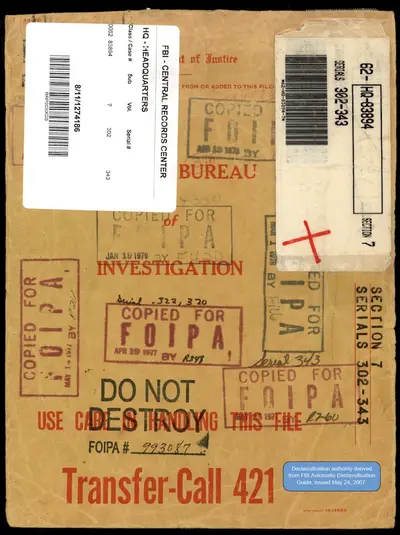
The location of the sighting, Wright Field, was a significant military installation and a primary hub for aeronautical research and development. Given its role in testing experimental aviation technology, the facility was a high-priority site for monitoring aerial activity. The incident was officially filed with the Federal Bureau of Investigation, which utilized standardized protocols to manage reports of this nature. Field offices in Knoxville, Albuquerque, Los Angeles, and other jurisdictions routed UFO reports to headquarters to ensure the protection of vital installations and to monitor potential threats to sensitive airspace.
Investigation and Documentation
On January 22, 1948, the Air Force initiated a special investigation into the reported flying saucers, aiming to reassure the public and determine the nature of the sightings. This investigation, which later became known as Project Saucer, was headquartered at Wright Field. The scope of the inquiry was multidisciplinary, involving personnel from the fields of astronomy, psychology, and law enforcement. This collaborative approach was designed to evaluate whether the sightings were the result of misidentified natural phenomena, psychological mass hysteria, or unprecedented physical objects.
The released documentation does not specify the exact number of witnesses involved in the Wright Field event. However, the witnesses provided descriptions of the object as being disc- or saucer-shaped, a characteristic common to the majority of reports during the late 1940s. This specific shape became the defining visual trait of the “flying saucer” phenomenon that dominated the media and military intelligence reports of the time.
Analysis and Status
All records released under the PURSUE program are designated as unresolved by the All-domain Anomaly Resolution Office (AARO) by default. The federal government has not concluded that the events were anomalous, nor has it concluded that they were conventional, and it has not ruled out either possibility. The lack of a definitive conclusion reflects the difficulty in verifying high-altitude or high-speed aerial phenomena using the limited sensor technology available in the late 1940s.
When evaluating sightings from this period, researchers often consider several conventional candidates. These include experimental aircraft developed during the early Cold War, weather balloons—specifically those associated with the Project Mogul series—and various atmospheric optical phenomena such as sundogs or lenticular clouds. Additionally, astronomical objects like Venus, the Moon, or meteors appearing near the horizon are frequently cited as potential sources for misidentified aerial phenomena. The Wright Field incident remains a documented part of the historical record of unidentified aerial activity during a transformative period in aviation history.