The Tehran UFO Chase
Iranian jets pursued a UFO that disabled their weapons systems.
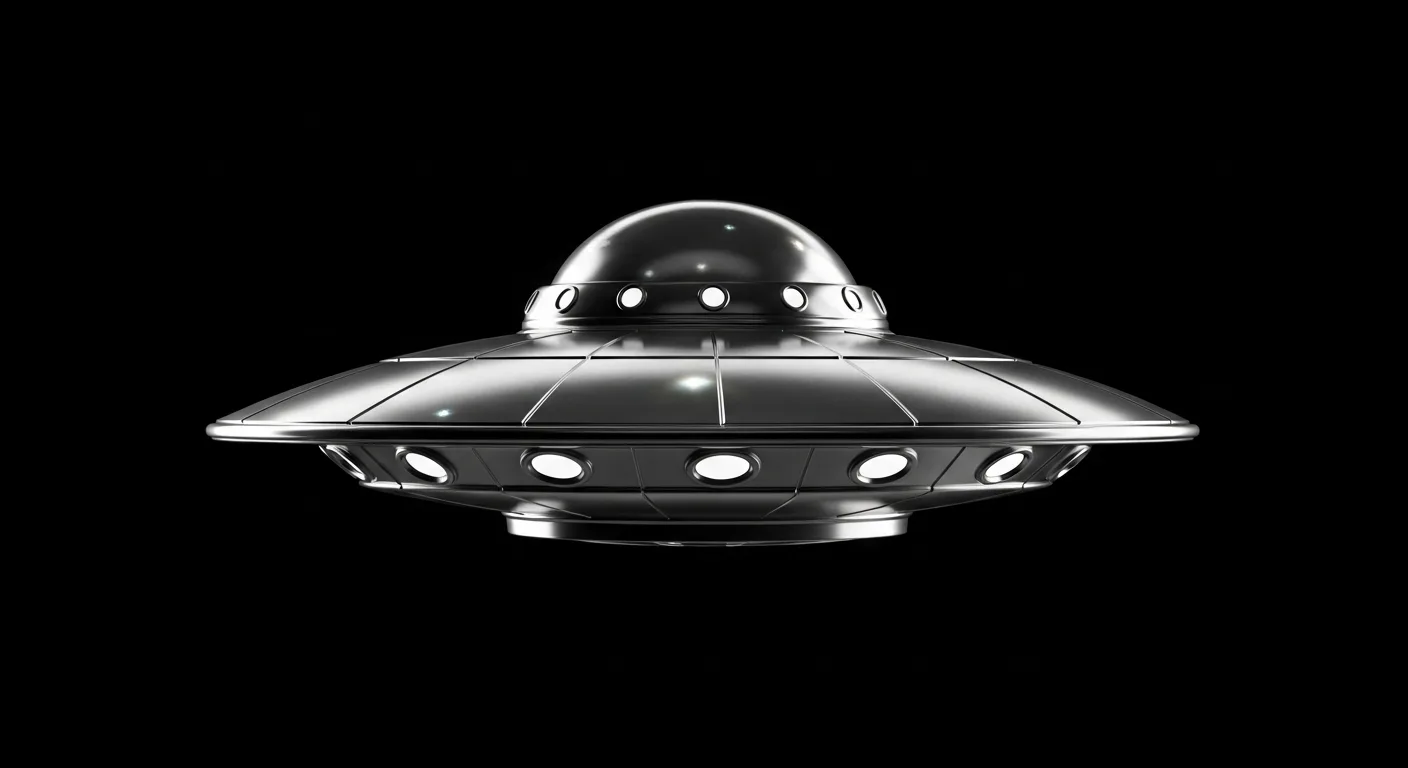
In the early hours of September 19, 1976, the skies over Tehran became the stage for one of the most thoroughly documented and deeply unsettling UFO encounters in military history. Two Imperial Iranian Air Force F-4 Phantom II interceptors were scrambled to confront a brilliant, unidentified object that had been reported by dozens of frightened civilians. What followed was a sequence of events so extraordinary that it would later be classified by the United States Defense Intelligence Agency as a “classic case” meeting all necessary criteria for a legitimate study of the UFO phenomenon. The jets’ weapons systems were rendered useless at the moment of engagement. Their instruments failed and recovered in patterns that defied conventional explanation. A smaller object detached from the main craft and rushed directly at one of the pilots in what could only be interpreted as a defensive or warning maneuver. Whatever was hovering over the Iranian capital that September night demonstrated a mastery of technology that no nation on Earth could claim, and the encounter left military officials on both sides of the Cold War divide quietly shaken.
A City Looks Upward
The incident began with phone calls. At approximately 12:30 AM local time, residents of the Shemiran district in northern Tehran began flooding the switchboard at Mehrabad International Airport with reports of a strange, intensely luminous object in the sky. The callers described something far beyond the ordinary—not a distant star mistaken for a spacecraft, not the navigation lights of an aircraft on approach, but a brilliant, pulsating object that seemed to hang motionless over the city before shifting position with startling speed. The light it emitted was described as extraordinary in its intensity, cycling through vivid colors that included blue, green, red, and orange in rapid succession. Some witnesses said it was the brightest thing they had ever seen in the night sky, outshining everything but the moon itself.
The duty officer at Mehrabad that night initially dismissed the reports. Tehran was a sprawling metropolis even in 1976, home to more than four million people, and unusual calls were not uncommon. Stars, satellites, atmospheric phenomena, and the lights of high-altitude aircraft all generated periodic reports from anxious civilians. But the calls kept coming, and their consistency was difficult to ignore. Caller after caller described the same object in the same part of the sky, and their descriptions of its behavior—the pulsating light, the sudden lateral movements, the sheer brilliance of the thing—were remarkably uniform.
The duty officer eventually stepped outside to look for himself. What he saw convinced him that the reports were genuine. A large, intensely bright object was clearly visible in the sky to the north of the city, and it was unlike anything in his considerable experience. He contacted the Imperial Iranian Air Force command post, and after a brief consultation, a decision was made that would transform a puzzling light in the sky into one of the most significant military UFO encounters on record. The Air Force would scramble fighters to investigate.
The First Intercept: Lieutenant Yassini
At approximately 1:30 AM, the first F-4 Phantom II lifted off from Shahrokhi Air Force Base (now Hamadan Air Base) under the command of a pilot identified in subsequent reports as Lieutenant Yassini. The F-4 was among the most capable fighter-interceptors in the world at the time, a twin-engine, two-seat aircraft designed by McDonnell Douglas for the United States military and widely exported to allied nations. Iran’s fleet of Phantoms was well-maintained and its pilots well-trained, many of them having received instruction in the United States. Lieutenant Yassini was an experienced aviator, fully qualified on the aircraft and its systems.
As the F-4 climbed and turned toward the reported position of the object, Yassini acquired it visually almost immediately. Even at a distance that radar would later indicate was approximately seventy nautical miles, the object was intensely brilliant—so bright that it was difficult to look at directly, its light washing out the surrounding stars. Yassini pushed the throttles forward and began closing the distance.
What happened next set the tone for the entire encounter. As the F-4 approached to within approximately twenty-five nautical miles of the object, the aircraft’s instruments began to fail. The failures were not gradual degradations or partial malfunctions; they were sudden, total, and comprehensive. Navigation instruments went dead. Communications equipment ceased to function entirely—Yassini could neither transmit nor receive on any frequency. The cockpit, which moments before had been alive with the glow of functioning avionics, went dark in the areas that mattered most for the intercept.
Yassini was a trained military pilot, not prone to panic, but he recognized immediately that he was in an untenable situation. Flying a high-performance jet at night with no instruments and no communications was an invitation to disaster. He made the decision to abort the intercept and executed a turn away from the object, breaking off the approach.
The moment was revelatory. As soon as Yassini turned away and began to open the distance between his aircraft and the object, every failed system returned to full operation. Navigation instruments came back online. Communications were restored as if they had never been interrupted. The recovery was as sudden and complete as the failure had been. There was no sputtering return to functionality, no gradual warming up of circuits—one moment the systems were dead, the next they were working perfectly. The implication was difficult to avoid: whatever was affecting the aircraft’s electronics was being directed by the object, and it could be applied and withdrawn at will.
The Second Intercept: Lieutenant Jafari
With Yassini’s unsettling report now on record, the Air Force command post faced a decision. The object was still there, still hovering over Tehran, still being reported by civilians. A second F-4 Phantom II was scrambled, this time under the command of Lieutenant Parviz Jafari, with Lieutenant Jalal Damirian serving as his radar intercept officer in the rear seat. Jafari would later rise to the rank of general in the Iranian Air Force, and his account of what happened that night remained consistent throughout his career, never embellished and never retracted.
Jafari’s F-4 launched at approximately 1:40 AM and quickly acquired the object on radar. The return was strong and unmistakable—comparable, Jafari would later note, to the radar signature of a Boeing 707 tanker aircraft. This was no phantom echo or atmospheric anomaly; the radar was painting a solid, substantial object. Jafari began his approach, closing the distance while maintaining visual contact with the brilliant light ahead.
As the F-4 closed in, Jafari was able to observe the object in greater detail than Yassini had managed. He described it as an intensely luminous object with strobing lights arranged in a rectangular pattern. The lights flashed in sequence—blue, green, red, and orange—so rapidly that all four colors seemed to be visible simultaneously. The object itself was difficult to gauge in terms of size because of its brilliance, but Jafari estimated it to be very large. Its luminosity was so intense that it was visible from a distance of 150 miles away, a fact later corroborated by other observers.
Then the situation escalated dramatically. As Jafari’s F-4 closed to within engagement range and he prepared to assess the object further, a smaller, brightly lit object suddenly detached from the main craft. It was round, intensely luminous, and it moved with breathtaking speed—directly toward Jafari’s aircraft.
The experience of having an unknown object rushing toward your aircraft at enormous velocity in the dead of night is difficult to convey. Jafari’s training took over. He attempted to engage the incoming object with an AIM-9 Sidewinder heat-seeking missile—a natural defensive reaction from a fighter pilot confronting what appeared to be a hostile approach. He selected the missile and attempted to fire.
Nothing happened. The weapons panel had gone completely dead. No power, no indicators, no response from any weapons system on the aircraft. Simultaneously, his communications equipment failed, just as Yassini’s had during the first intercept. The smaller object continued to close the distance at terrifying speed, its brilliant light filling the cockpit.
Jafari did the only thing left available to him. He threw the F-4 into a steep, high-speed diving turn, attempting to evade the incoming object through raw airmanship. The maneuver subjected the aircraft and its crew to punishing g-forces, but it was the only option with weapons and communications both offline.
The smaller object did not follow the dive. Instead, it curved smoothly back toward the main craft and rejoined it with a precision that suggested complete control rather than momentum or inertia. As the distance between Jafari’s F-4 and the objects increased, his weapons and communications systems returned to full operation—the same pattern Yassini had experienced, the same instantaneous recovery, the same unmistakable suggestion of deliberate, targeted interference.
The Object Descends
Jafari, shaken but still in control of his aircraft, continued to observe the main object from a safer distance. What he witnessed next added yet another layer to an already extraordinary encounter. A second smaller object detached from the primary craft, but this time it did not move toward the F-4. Instead, it descended rapidly toward the ground, its brilliant light illuminating a wide area of terrain below. The object dropped with controlled precision and appeared to land or hover very close to the ground in an area south of Tehran, near a dry lake bed.
The light from this second object was so intense that it lit up the ground across a radius of two to three kilometers, casting the terrain in an eerie glow visible from the cockpit of the F-4 thousands of feet above. Jafari circled and observed, but made no attempt to close the distance. He had learned the cost of approaching these objects too closely.
After some time, the light on the ground faded or the object departed—accounts differ on the precise sequence—and the main object moved away to the south, eventually disappearing from both visual and radar contact. Jafari and Damirian returned to base, their aircraft undamaged but their understanding of what military technology could accomplish fundamentally altered.
Daylight Investigation
The following morning, a helicopter was dispatched to investigate the area where the second smaller object had appeared to land. The crew conducted a systematic search of the dry lake bed and surrounding terrain. They found no physical evidence of a landing—no scorch marks, no depressions, no debris. However, during the search, the helicopter crew reported that their communications equipment experienced significant interference when they passed over a particular area, suggesting that something residual may have lingered at the site.
Residents of a small house near the reported landing site were interviewed. They confirmed that they had been awakened during the night by an intense light outside their windows and a loud, unfamiliar sound. They described the light as blindingly bright, flooding through their windows and illuminating their rooms as if by daylight. The experience had frightened them badly, and they were visibly shaken when interviewed the following morning.
The DIA Report
The Tehran incident might have remained an obscure footnote in Iranian military history had it not attracted the attention of the United States intelligence community. In 1976, Iran under Shah Mohammad Reza Pahlavi was a close American ally, and U.S. military advisors were embedded throughout the Iranian armed forces. The UFO encounter was reported through American channels and eventually reached the Defense Intelligence Agency.
The DIA produced a detailed evaluation report on the incident that was later declassified through Freedom of Information Act requests. The document is remarkable for its tone, which is measured and analytical rather than dismissive. The report meticulously catalogued the events of the night, noting the multiple independent witnesses, the radar confirmation, the electromagnetic effects on two separate aircraft, and the apparent intelligent control displayed by the objects.
In its assessment section, the DIA report contained a notation that elevated the Tehran encounter above the vast majority of UFO reports in military files. The evaluating officer wrote that the case met all the criteria necessary for a valid study of the UFO phenomenon: the object was seen by multiple credible witnesses, it was tracked on radar, it produced electromagnetic effects on functioning equipment, and it demonstrated performance characteristics beyond any known technology. The report was distributed to the National Security Agency, the Central Intelligence Agency, and the White House, among other recipients.
The significance of this assessment cannot be overstated. The DIA was not a fringe organization or a group predisposed to believe in extraterrestrial visitation. It was the primary intelligence agency serving the U.S. Department of Defense, staffed by career military and intelligence professionals whose business was the sober analysis of threats and capabilities. For such an organization to classify the Tehran incident as a legitimate case worthy of serious study was an extraordinary acknowledgment.
The Witnesses Speak
Lieutenant Parviz Jafari became the most prominent witness to the incident, speaking about his experience in numerous interviews and at several international conferences over the following decades. His account never wavered in its essential details. “What I saw that night was not from this Earth,” he stated in a 2007 interview at the National Press Club in Washington, D.C. “No country had the technology to do what that object did. It could outrun my Phantom. It could disable my weapons with precision. It knew exactly what I was doing before I did it.”
Jafari’s willingness to speak publicly was notable given the political upheavals that Iran experienced in the years following the incident. The Islamic Revolution of 1979 swept away the imperial government, and many figures associated with the Shah’s military faced suspicion or worse. Yet Jafari survived the transition and continued his career, eventually reaching the rank of general. His willingness to continue discussing the encounter throughout these changes in regime and circumstance lends his testimony additional weight.
Other witnesses from that night offered corroborating accounts. Ground-based military personnel confirmed the radar tracking of the object and the communications disruptions experienced by both aircraft. Civilian witnesses throughout northern Tehran described the brilliant, multicolored object in terms consistent with the pilots’ observations. The convergence of testimony from so many independent sources—military and civilian, airborne and ground-based—created a body of evidence that resisted easy dismissal.
The Question of Technology
What troubles analysts most about the Tehran incident is not simply that an unidentified object was observed, but that it displayed capabilities that implied a technological sophistication far beyond anything in the known arsenal of any nation. The electromagnetic interference, in particular, has drawn intense scrutiny from both believers and skeptics.
The ability to selectively disable specific systems on an aircraft—weapons and communications, but not engines, flight controls, or basic navigation—suggests a precision that goes well beyond simple jamming. Conventional electronic warfare in 1976 was capable of disrupting radar and communications through brute-force signal interference, but it could not selectively target individual subsystems within an aircraft while leaving others operational. Moreover, the interference ceased instantly when the aircraft withdrew, suggesting a controlled, distance-dependent effect rather than a blanket electromagnetic emission.
The performance characteristics of the objects were equally remarkable. The main object demonstrated the ability to hover motionless and then accelerate to speeds that the F-4 Phantoms—capable of Mach 2.2—could not match. The smaller objects that detached from the primary craft moved with velocities and executed maneuvers that would have subjected any human occupant to fatal g-forces. These were not the characteristics of any known aircraft, missile, or drone technology available in 1976, nor for that matter in the decades since.
Skeptical Perspectives
Skeptics have proposed various explanations for the Tehran encounter, though none has gained universal acceptance. The planet Jupiter was particularly bright in the sky that September night, and some analysts have suggested that the initial civilian reports and even the pilots’ visual observations may have been misidentifications of the planet. However, this explanation struggles to account for the radar returns, the electromagnetic interference, the smaller objects, and the ground-level illumination reported by witnesses near the dry lake bed.
Equipment malfunction has been proposed as an explanation for the avionics failures, with critics noting that the F-4 Phantom, while an excellent aircraft, was known for occasional electrical issues. However, the identical pattern of failure and recovery on two separate aircraft—both occurring in direct correlation with proximity to the object—strains the coincidence explanation beyond reasonable limits.
Psychological factors, including pilot misperception under stress and the influence of prior expectations, have also been cited. Yet the pilots involved were trained military professionals operating under controlled conditions, and their accounts were corroborated by radar data and ground observers who had no communication with the pilots during the events.
A Night That Changed Nothing and Everything
The Tehran UFO incident of 1976 occupies a peculiar position in the history of unidentified aerial phenomena. It is among the best-documented military encounters with a UFO ever recorded, supported by multiple credible witnesses, radar data, a detailed intelligence assessment by a major world power, and physical effects on military equipment. By any reasonable standard of evidence, something extraordinary happened over Tehran that September night.
Yet the incident changed remarkably little. No formal investigation was launched beyond the initial intelligence reports. No public acknowledgment was made by either the Iranian or American governments. The pilots returned to their duties, the DIA report was filed and eventually forgotten until researchers unearthed it decades later, and the skies over Tehran returned to normal. The world moved on, preoccupied with the Cold War, oil politics, and the mounting tensions that would soon consume Iran in revolution.
What remains is the testimony, the documentation, and the questions. Two experienced military pilots in high-performance aircraft encountered something that outflew them, outthought them, and neutralized their weapons with casual precision. The object demonstrated awareness of the pilots’ intentions, responding to their approaches with measured countermeasures that were firm enough to communicate a boundary but restrained enough to avoid causing harm. It behaved, in other words, not as a natural phenomenon or a malfunctioning piece of technology, but as something under intelligent control—something that understood exactly what it was dealing with and chose its responses accordingly.
The skies over Tehran are quiet now, decades removed from the events of that September night. The F-4 Phantoms have long since been retired from frontline service. The Cold War that framed the incident has ended. But the questions raised by what Lieutenant Jafari and his fellow pilots encountered remain as vivid and as unsettling as the brilliant, pulsating light that once hung over the Iranian capital, indifferent to the armed jets sent to challenge it and answering their approach with a demonstration of power that left no doubt about which side held the advantage.
Sources
- CIA UFO/UAP Reading Room — Declassified CIA documents on UAP