Canary Islands UFO Sphere
Hundreds of witnesses across the Canary Islands observed a massive luminous sphere with two beings visible inside. Spanish Air Force investigated and declared it unexplained.
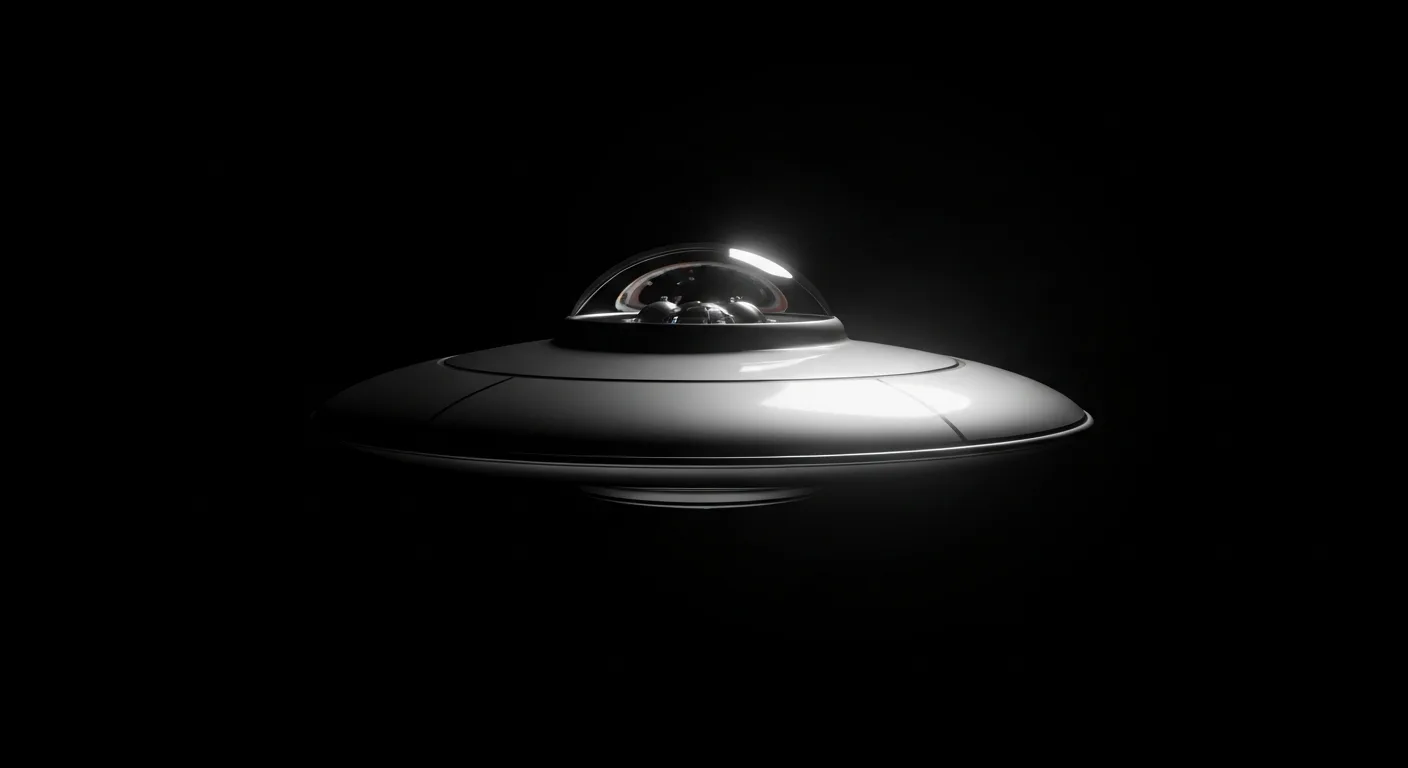
The sun had barely set over the Canary Islands on the evening of June 22, 1976, when the sky above the Atlantic archipelago erupted with something no one could explain. Across multiple islands separated by miles of open ocean, hundreds of witnesses looked upward and saw the same impossible thing: an enormous luminous sphere, pulsating with blue-white light, moving slowly and deliberately through the darkening sky. For some witnesses, the object was a distant spectacle, a glowing orb that defied identification. For others, particularly a doctor traveling by taxi on Gran Canaria, the encounter was far more intimate and far more disturbing. What he described seeing inside the transparent sphere — two tall figures in red clothing, apparently operating some form of machinery — would transform this mass sighting into one of the most significant UFO cases in European history, one that the Spanish Air Force itself would eventually declare officially unexplained.
The Canary Islands: Crossroads of the Atlantic
To appreciate the scope of what occurred that June evening, one must first understand the geography of the Canary Islands. This Spanish archipelago lies roughly sixty miles off the northwest coast of Africa, comprising seven major islands and several smaller ones scattered across the Atlantic Ocean. The distances between islands are considerable — Gran Canaria and Tenerife, the two most populous, are separated by approximately forty miles of open water. La Palma sits further to the northwest, roughly ninety miles from Gran Canaria. The fact that witnesses on all these islands reported observing the same phenomenon at the same time speaks to the extraordinary size or luminosity of whatever appeared that night.
The islands in 1976 were home to approximately 1.3 million people, a mix of Spanish mainlanders and native Canarios whose families had lived on the islands for generations. The military presence was significant, with Spanish naval and air force installations distributed across the archipelago. These military personnel would become crucial witnesses, their training and professional obligations lending weight to reports that might otherwise have been dismissed.
The evening of June 22 was clear and warm, typical for late June in the subtropics. Visibility was excellent across all the islands. The conditions could not have been better for mass observation of an aerial phenomenon.
The First Reports
The sightings began at approximately 10:00 PM local time, though the exact moment of first observation is difficult to pin down given the number of independent witnesses across multiple islands. On Gran Canaria, residents in the southern and western communities were among the first to notice something unusual in the sky. What they described was a luminous object of extraordinary size, appearing to rise from somewhere near the ocean’s surface before ascending and moving slowly across the sky.
The light was described as intensely bright but not painful to look at, emitting a bluish-white glow that illuminated the surrounding clouds and atmosphere with an ethereal halo. Unlike an aircraft’s navigation lights or the beam of a searchlight, the illumination seemed to come from within the object itself, as though the sphere were composed of light rather than merely reflecting or projecting it.
On Tenerife, witnesses reported seeing the same phenomenon from a different angle. Here the object appeared somewhat lower on the horizon, consistent with its position being closer to Gran Canaria but visible across the intervening miles of ocean due to its extraordinary brightness. Residents of La Palma, even further distant, also reported seeing a brilliant light in the southeastern sky that matched the timing and general description provided by witnesses on the other islands.
Naval vessels operating in the waters between the islands provided perhaps the most valuable corroboration. The crew of the Spanish Navy corvette Atrevida, positioned off the coast of Fuerteventura, logged a detailed observation of the phenomenon. The ship’s officers, trained in identifying aircraft, vessels, and astronomical phenomena, recorded an object that matched no known category. Their log entries would later become key documents in the official investigation.
Dr. Francisco Julio Padron: The Key Witness
Among the hundreds who witnessed the phenomenon that evening, one man’s testimony would prove pivotal. Dr. Francisco Julio Padron Leon was a respected physician practicing on Gran Canaria. On the night of June 22, he was traveling by taxi to attend a medical emergency in the town of Las Rosas, located in the island’s mountainous interior. His taxi driver, a man named Santiago del Pino, was at the wheel as they navigated the winding roads through the volcanic landscape.
At approximately 10:15 PM, as the taxi rounded a curve near the village of Gualdar, both men saw something that stopped them in their tracks. Ahead of them, seemingly resting at ground level or hovering just above it, was a massive sphere of blue-gray light. Dr. Padron would later estimate the object was approximately thirty meters in diameter, though he acknowledged that judging the size of an unfamiliar object at night was inherently difficult.
What made Dr. Padron’s observation extraordinary was not merely the object’s presence but what he claimed to see inside it. The sphere, he reported, was semi-transparent, and through its luminous shell he could discern a platform or deck of some kind. On this platform stood two figures. They were tall, perhaps over two meters in height, and appeared to be wearing tight-fitting red clothing or suits. They seemed to be operating some form of equipment or controls, their movements deliberate and purposeful.
“I could see them clearly,” Dr. Padron later testified to investigators. “They were very tall, and they wore something red. They seemed to be working at something, moving their hands. The sphere itself was like looking through frosted glass — you could see shapes inside, but not with perfect clarity. But the figures were unmistakable. They were not human as we understand it, but they were humanoid.”
Santiago del Pino, the taxi driver, corroborated the doctor’s account in its essential details. He described the same sphere, the same location, and confirmed that he too could see figures inside the object. His terror was more evident than the doctor’s clinical observations — del Pino later stated that he had wanted to flee but was unable to move the vehicle, whether from mechanical failure or from his own paralysis of fear he could not say.
The sphere, according to both witnesses, remained in place for several minutes before slowly ascending. As it rose, it appeared to expand in size or luminosity, the halo of light surrounding it growing more intense until it resembled a small sun hanging in the night sky. This was the same expansion of light that witnesses across the other islands had observed. The sphere then moved off toward the north, eventually fading from sight.
The Corvette Atrevida
The observations recorded aboard the Spanish Navy corvette Atrevida provide military-grade documentation of the phenomenon. The ship was stationed off the coast of Fuerteventura, approximately fifty miles from where Dr. Padron had his close encounter. At roughly the same time as the doctor’s sighting, the ship’s watch officers detected an unusual light in the western sky.
Captain of the Atrevida documented the observation in the ship’s official log. The light initially appeared as a brilliant point, brighter than any star, hanging motionless over what the crew estimated to be the island of Gran Canaria. Over the course of several minutes, the light expanded dramatically, eventually resolving into a clearly defined sphere surrounded by a luminous halo. The sphere appeared to rotate, and at one point a beam or column of light extended downward from it toward the ocean surface.
The ship’s crew observed the phenomenon for approximately forty minutes, during which time the object changed shape, size, and intensity several times. At its maximum expansion, the halo of light surrounding the sphere was estimated to cover an area equivalent to a full moon at several times its normal apparent diameter. The object eventually diminished in brightness and moved away toward the northwest before fading from sight entirely.
The Atrevida’s officers were categorical in their report: the phenomenon was not a star, planet, aircraft, weather balloon, or any form of atmospheric anomaly known to them. They had never seen anything like it in their combined decades of naval service.
The Mass Witness Event
Beyond the key witnesses, the sheer number of people who observed the phenomenon across the Canary Islands was staggering. Conservative estimates placed the witness count at over three hundred, though the true number was almost certainly higher, as many observers never came forward or filed formal reports. The witnesses came from every walk of life: farmers, shopkeepers, teachers, police officers, military personnel, fishermen, and tourists.
The consistency of the reports was remarkable. Witnesses who could not possibly have communicated with one another — separated by dozens of miles of open ocean — described the same sequence of events: a brilliant light appearing in the sky, expanding into a visible sphere, maintaining position for an extended period, and then departing. The timing aligned across all locations. The descriptions of color, shape, and behavior matched.
On Gran Canaria itself, witnesses in multiple towns reported seeing the sphere at close range. In Galdar, Agaete, and Las Palmas, residents described a massive glowing object that cast shadows on the ground and illuminated the landscape with an unnatural blue-white light. Some witnesses reported that animals behaved strangely during the event, with dogs howling, cats hiding, and livestock becoming agitated.
Several witnesses reported physiological effects during the sighting. Tingling sensations, feelings of pressure, and temporary disorientation were described by those who observed the object at closer range. Dr. Padron himself noted a feeling of heaviness and mild nausea during his close encounter, though he attributed these symptoms to the shock and stress of the experience rather than to any physical effect of the object.
The Spanish Air Force Investigation
The scale and credibility of the sighting ensured that the Spanish military took the matter seriously. The Spanish Air Force initiated a formal investigation, assigning personnel to interview witnesses, collect physical evidence, and analyze the available data. The investigation was led by experienced officers and conducted with the thoroughness expected of a military inquiry.
Investigators interviewed dozens of witnesses across the affected islands, compiling detailed accounts that were cross-referenced for consistency. They visited the locations where close encounters were reported, including the site near Gualdar where Dr. Padron had his experience. Physical examination of the terrain revealed no obvious traces, though the volcanic soil of the area was not ideal for preserving landing marks.
The investigation considered and systematically eliminated conventional explanations. No military or civilian flights had been scheduled in the relevant airspace during the time of the sightings. Weather balloons launched from the islands were accounted for and none matched the described object. Astronomical phenomena, including meteors, fireballs, and planetary conjunctions, were ruled out based on the object’s behavior — its extended duration, changes in direction, and apparent physical structure were inconsistent with any natural celestial event.
The possibility of a missile launch was examined, as the Canary Islands were within the observable range of certain Atlantic test ranges. However, no launches were scheduled for that date, and the object’s behavior did not match the trajectory of any known missile or rocket. Similarly, atmospheric phenomena such as ball lightning or temperature inversions were considered and rejected as explanations.
The Official Verdict
When the Spanish Air Force completed its investigation, the conclusion was extraordinary: the phenomenon was classified as unexplained. This was not a quiet filing away of an inconvenient case but an explicit acknowledgment that the military had examined the evidence thoroughly and could not account for what hundreds of witnesses had seen.
The official report noted the credibility of the witnesses, particularly Dr. Padron, whose professional standing and detailed, clinical description of the encounter lent considerable weight to the being-observation claims. The report acknowledged that the claim of seeing occupants inside the sphere was the most controversial element of the case but noted that the witness’s credibility and the consistency of his account with that of the taxi driver made dismissal difficult.
The case files were classified for a number of years before eventually being released to the public as part of Spain’s broader declassification of UFO-related military documents. When the files became available, researchers noted the thoroughness of the investigation and the objectivity of the conclusions. The Spanish Air Force had not attempted to force an explanation onto the data but had honestly reported that the phenomenon exceeded their ability to explain.
The 1954 Wave and European Context
The 1976 Canary Islands sighting did not occur in isolation. Spain and its territories had experienced periodic waves of UFO reports throughout the twentieth century, and the Canary Islands themselves had been the site of earlier unexplained sightings. The islands’ position in the mid-Atlantic, their proximity to military testing ranges, and their clear skies made them a frequent locale for reports of unusual aerial phenomena.
Within the broader European context, the Canary Islands case was recognized as one of the most significant sightings of the decade. The combination of mass witnesses, military radar involvement, naval documentation, and an official investigation that concluded with an “unexplained” designation placed it in the top tier of European UFO cases. Researchers from across the continent traveled to the islands to conduct their own investigations, and the case became a staple of serious UFO literature.
The claim of visible beings inside the object connected the case to a broader tradition of occupant reports that had been a feature of European UFO waves since the 1950s. While such claims were often dismissed as unreliable or fabricated, Dr. Padron’s professional credibility and the independent corroboration of his taxi driver gave the Canary Islands case unusual standing among occupant reports.
Skeptical Perspectives
Not everyone was convinced by the official investigation’s conclusions. Skeptics proposed several alternative explanations for the phenomenon, each addressing some aspects of the sightings while leaving others unresolved.
The most commonly cited skeptical explanation was that the witnesses had observed a submarine-launched ballistic missile test. The timing of the sighting coincided with a period of Cold War military activity in the Atlantic, and it was possible that a Polaris or Poseidon missile launch from a submarine could produce a luminous phenomenon visible at great distance. The expanding halo of light, in particular, was consistent with the exhaust plume of a rocket at high altitude catching sunlight after local sunset.
This theory, however, struggled to account for Dr. Padron’s close-range observation and his description of a structured object with visible occupants. If the phenomenon was a distant rocket launch, it should not have appeared as a low-altitude, semi-transparent sphere to a nearby observer. Supporters of the missile theory suggested that Dr. Padron’s close encounter was a separate event — perhaps a misidentification exacerbated by excitement — that happened to coincide with the more distant phenomenon.
Other skeptics pointed to the possibility of psychological contagion, arguing that once the first reports of a strange light circulated, subsequent witnesses were primed to interpret ambiguous stimuli in extraordinary terms. This explanation, while plausible for some peripheral reports, could not account for the independent observations from widely separated locations or the detailed accounts provided by trained military personnel.
The Question of Occupants
The claim that beings were visible inside the sphere remains the most debated aspect of the case. In the world of UFO research, occupant reports occupy an uneasy middle ground — they are frequently reported but difficult to evaluate, as they rely entirely on witness testimony and cannot be corroborated by physical evidence.
Dr. Padron’s description of two tall figures in red clothing operating machinery inside a transparent sphere has been analyzed by researchers for decades. Supporters point to the doctor’s professional training, his reputation for honesty, and the consistency of his account over time as indicators of reliability. They note that he gained nothing from the report — indeed, his willingness to describe such an extraordinary experience put his professional reputation at risk.
Critics argue that even credible witnesses can be mistaken, particularly when observing unfamiliar phenomena under stressful conditions and in poor lighting. The human brain is adept at imposing familiar patterns on ambiguous stimuli, and it is possible that Dr. Padron perceived structural details and occupants that were not objectively present. The semi-transparent quality of the sphere, which the doctor himself acknowledged made detailed observation difficult, supports this interpretation.
The taxi driver’s corroboration is significant but not conclusive. While Santiago del Pino confirmed the presence of figures inside the sphere, it is possible that his account was influenced by the doctor’s more detailed description, particularly if the two men discussed what they had seen before providing their independent statements.
Legacy and Significance
The 1976 Canary Islands UFO sphere sighting endures as one of Spain’s most important and best-documented UFO cases. Its significance rests on several pillars that, taken together, create a formidable body of evidence.
First, the mass witness nature of the event removes it from the realm of individual perception. When hundreds of people across multiple islands, separated by tens of miles of ocean, report the same phenomenon at the same time, individual error or fabrication becomes an inadequate explanation. Something appeared in the sky over the Canary Islands that evening. The question is not whether but what.
Second, the military documentation provides a level of official corroboration rarely seen in UFO cases. The Atrevida’s log entries, the Air Force investigation, and the official “unexplained” classification all indicate that the Spanish military took the sighting seriously and found no conventional explanation for it. In an era when most governments dismissed UFO reports reflexively, Spain’s honest acknowledgment of the mystery was noteworthy.
Third, the occupant claim, while controversial, adds a dimension to the case that purely luminous-phenomenon sightings lack. If Dr. Padron accurately reported what he saw, then the Canary Islands event was not merely the observation of an unusual light but a close encounter with an apparently occupied craft of unknown origin.
The case continues to be studied by researchers worldwide. It has been featured in numerous books, documentaries, and academic papers on UFO phenomena. The declassified Spanish Air Force files have allowed independent researchers to evaluate the evidence for themselves, and the case consistently ranks among the most compelling in the global UFO canon.
For those who look to the skies and wonder, the Canary Islands sighting offers something rare: a case where the witnesses were many, the documentation was thorough, the investigation was professional, and the conclusion was honest. Whatever appeared over the Atlantic archipelago on that warm June evening in 1976, it remains, officially and stubbornly, unexplained.
Sources
- CIA UFO/UAP Reading Room — Declassified CIA documents on UAP