Stanford Kentucky Abduction
Three women returning from a birthday dinner reported a bright object that overtook their car and a missing-time episode that hypnosis later filled in with detailed accounts of medical examinations aboard a craft.
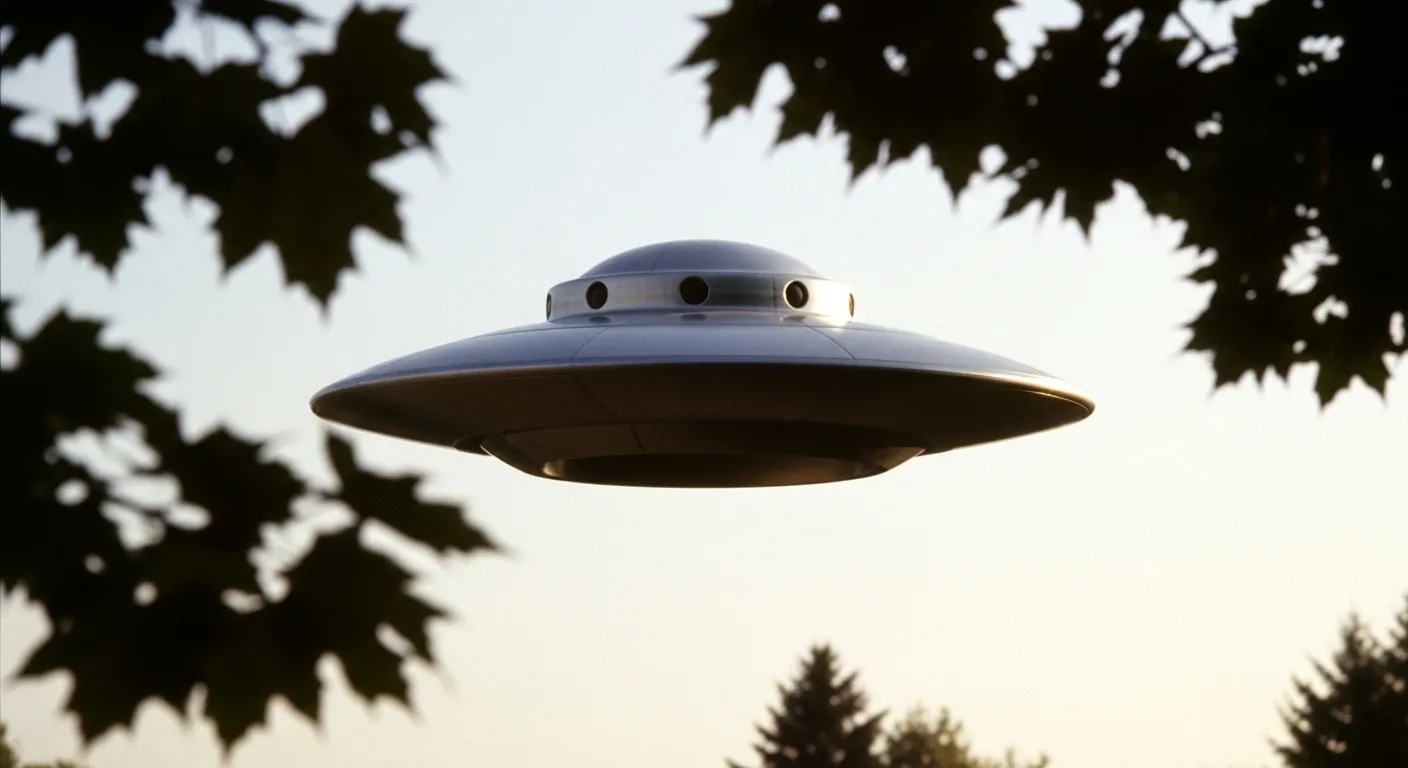
The Stanford abduction is one of the most thoroughly investigated American close-encounter cases of the mid-1970s, less famous than Travis Walton but more carefully documented in some respects. Three women, all middle-aged friends with no prior interest in the subject, came forward voluntarily after experiencing an unaccountable hour of missing time on a quiet Kentucky highway.
Background
Mona Stafford, Louise Smith, and Elaine Thomas were lifelong friends from Liberty, Kentucky. On the evening of 6 January 1976 they had driven into Lancaster to celebrate Stafford’s thirty-sixth birthday at a family-style restaurant. They left for the return drive shortly before 11:30 p.m., taking a familiar two-lane stretch of US 27 between Stanford and Hustonville, a road they had travelled hundreds of times.
Their account places them on a clear, cold night with no traffic on the road. Smith was driving, Stafford was beside her, and Thomas was in the rear seat. None had been drinking heavily. None reported any prior interest in UFOs.
The Sighting
About eight miles outside Stanford the women noticed what they at first took to be a low-flying aircraft on fire ahead of them. As they drew closer the object resolved into a metallic disc with a row of red, blue, and yellow lights along its underside, hovering just above the treeline. Smith later said it was as wide as a football field, although researchers have noted that estimates of size on a featureless rural night sky are notoriously unreliable.
The object descended toward the car. Smith felt the steering wheel pull and reported that the vehicle seemed to be drawn off the road, although she did not lose consciousness in any clear sense. The next coherent memory all three women shared was of arriving home in Liberty, badly shaken, with the car’s clock showing they had lost approximately eighty minutes.
On reaching home Smith found a strange burn-like mark on the back of her neck. Stafford suffered severe eye irritation that persisted for days. Thomas reported a red, ring-shaped mark on her chest. All three felt unwell for several weeks, and Smith later reported that her wristwatch never functioned correctly again.
Investigation
The case was taken up by the Center for UFO Studies (CUFOS), founded by J. Allen Hynek, and by the Mutual UFO Network. Investigators conducted polygraph examinations on all three women in the months that followed; all three passed. Investigator Leonard Stringfield and psychiatrist Dr. R. Leo Sprinkle conducted separate hypnotic regression sessions in mid-1976.
Under hypnosis the women each described being taken from the car into a brightly lit chamber. Their accounts were not identical but were structurally similar: a sense of being immobilised, examination by small figures, instruments held close to their faces, and a panic that surfaced repeatedly during regression. The transcripts were later reviewed by APRO and CUFOS and treated as one of the more carefully obtained sets of regression material from the period.
Aftermath
The women never sought publicity and consistently declined offers from tabloid outlets. Smith struggled with the aftereffects most visibly, reporting recurring nightmares and a difficult marriage. Stafford and Thomas spoke about the encounter only when directly asked by researchers. The case became a touchstone in ufological discussions of missing time and entered the literature through Lorenzen and Lorenzen’s Abducted! (1977), which devoted a full chapter to it.
Skeptical Analysis
Critics have argued that the visible marks could have been pre-existing or stress-induced and that hypnotic regression is a notoriously unreliable method for recovering accurate memory. Psychologist Robert Baker argued in the early 1980s that the Stanford accounts bore the hallmarks of confabulation under suggestion, although he conceded the women appeared sincere.
Defenders point to the polygraph results, the consistency of the women’s accounts before any regression, and the physical symptoms documented by their own physician. The case remains, as Hynek himself noted, a difficult one to dismiss outright and equally difficult to confirm.
Sources
Coral and Jim Lorenzen, Abducted! (1977). CUFOS investigation files. R. Leo Sprinkle, regression transcripts, 1976. Cincinnati Enquirer, regional coverage, March 1976.