Breton Ashley, Ohio UAP Encounter, 1948 — USAAF Box 7 #112
Documentation from the U.S. Army Air Forces archives details a 1948 unidentified flying object sighting near Breton Ashley, Ohio.
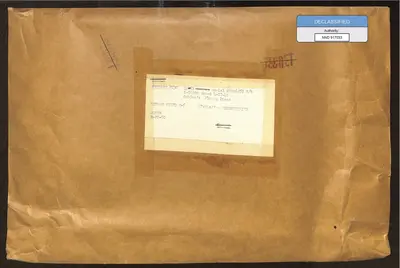
Overview
In 1948, near Breton Ashley, Ohio, the U.S. Army Air Forces recorded an unidentified-object incident that became Incident #112 in the “Check-List - Unidentified Flying Objects” series archived in Box 7 of file 38_143685. The records were released by the Department of War on May 8, 2026, as part of the Presidential Unsealing and Reporting System for UAP Encounters (PURSUE). This case emerged during a period of intense atmospheric scrutiny in the United States, occurring amidst the first significant wave of “flying saucer” reports that followed the Kenneth Arnold sighting of June 1947 and the Roswell incident of July 1947.
Historical Context
The late 1940s represented a transformative era for both aviation technology and aerial surveillance. Following the conclusion of World War II, the rapid development of jet propulsion and rocket-assisted flight introduced new silhouettes to the American sky, often leaving civilian observers unable to identify rapidly moving objects. During this period, the United States was also engaged in clandestine atmospheric monitoring, most notably through Project Mogul, which utilized high-altitude balloons to detect Soviet nuclear testing. The presence of such experimental hardware, combined with the natural occurrence of atmospheric optical effects and the misidentification of astronomical bodies, created a landscape of frequent, ambiguous aerial sightings.
The geography of the Ohio River Valley, characterized by its varied topography and significant airspace usage, placed it within the broader theater of post-war aerial observations. At the time, the U.S. military and various intelligence agencies were beginning to formalize the collection of such reports, moving away from ad hoc observations toward the structured “Check-List” system seen in the archives of the U.S. Army Air Forces. These early reporting mechanisms were foundational to the development of modern anomaly tracking, even as the official classification of such objects remained largely unrefined.
Incident Details
Incident #112 of the U.S. Army Air Forces “Check-List - Unidentified Flying Objects” series, archived in Box 7 of file 38_143685 and released by the Department of War on May 8, 2026, under the PURSUE program, contains a brief summary of the event. The documentation records that an unspecified observer reported a sighting near Breton Ashley, Ohio. The report is categorized as a visual sighting, which could have been conducted by either ground-based or air-based observers. Due to the brevity of the original military summary, specific details regarding the trajectory, luminosity, or physical characteristics of the object were not elaborated upon in the primary checklist entry.
Analysis and Status
The status of this case remains officially unresolved. All records released under the PURSUE program are designated as unresolved by the All-domain Anomaly Resolution Office. The federal government has maintained a neutral stance regarding the nature of the 1947-era incidents, stating that it has not concluded these sightings were anomalous, nor has it concluded they were conventional. The possibility of either classification remains open within the official record.
When evaluating the 1948 Breton Ashley sighting, researchers often consider the same set of conventional candidates applied to the broader 1947 saucer wave. These include the high-altitude balloon flights of Project Mogul, the testing of experimental jet and rocket aircraft, various atmospheric optical phenomena, and the misidentification of astronomical objects viewed at unusual angles. Without further corroborating data from the original observer, the incident remains a documented but unclassified entry within the post-war aerial phenomenon archives.