Captain Boyd, District UAP Encounter, 1948 — USAAF Box 7 #138
An archival record from 1948 documents an unidentified object sighting near Captain Boyd, part of the early U.S. Army Air Forces UFO reporting series.
Historical Context of the 1948 Wave
The year 1948 represented a pivotal moment in the history of aerial anomaly reporting in the United States. Following the high-profile Kenneth Arnold sighting in June 1947 and the subsequent events surrounding the Roswell incident in July 1947, the American public and military intelligence entered a period of heightened vigilance regarding unidentified aerial phenomena. This era, often referred to by researchers as the first “flying saucer” wave, was characterized by a sudden influx of reports involving metallic, disc-shaped objects traversing the upper atmosphere. During this period, the distinction between conventional aeronautical testing and truly anomalous phenomena was frequently blurred by the rapid advancement of post-war aviation technology.
The U.S. Army Air Forces (USAAF) maintained systematic records during this period to track such occurrences. These logs were part of a broader effort to monitor the skies for potential Soviet incursions or unidentified technological threats during the early stages of the Cold War. The administrative framework for these reports was often rudimentary, consisting of standardized checklists designed to capture the essential parameters of a sighting, such as location, time, and perceived movement of the object.
Incident Analysis: Case #138
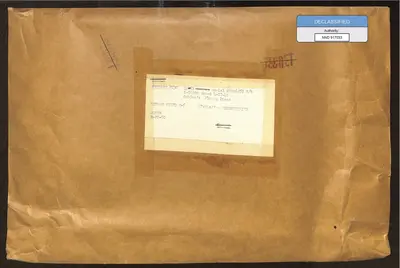
The specific encounter documented in Case #138 occurred near Captain Boyd, District, in 1948. This entry is preserved within the “Check-List - Unidentified Flying Objects” series, specifically located in Box 7 of file 38_143685. The documentation for this particular event is notably sparse, as the summary records indicate only that an unspecified observer reported a sighting in the vicinity of Captain Boyd. The nature of the observation was a visual sighting, which could have originated from either ground-based or air-based observers.
The details of this case remained obscured from public view for decades until the Department of War released the records on May 8, 2026. This release was executed under the mandates of the Presidential Unsealing and Reporting System for UAP Encounters (PURSUE). Because the original report lacks specific descriptions of the object’s trajectory, luminosity, or physical characteristics, the incident remains a foundational but enigmatic piece of the 1948 aerial anomaly archive.
Classification and Resolution Status
Within the framework of modern aerial anomaly research, the Captain Boyd incident is classified as a visual sighting. Such cases are categorized by the presence of a direct ocular observation of an object that does not immediately align with known flight patterns or known aircraft of the era. The lack of secondary sensor data, such as radar confirmation, is a common characteristic of many reports from the 1947–1949 period.
The current status of the incident is officially designated as unresolved by the All-domain Anomaly Resolution Office. Under the protocols of the PURSUE program, all released records are maintained in this state of ambiguity. The federal government has not issued a determination that the object was anomalous, nor has it concluded that the sighting was the result of a conventional phenomenon. Consequently, the possibility of the object being a known technological or natural occurrence remains open.
Potential conventional explanations for sightings during this specific window of time include the activities of Project Mogul, a series of high-altitude balloon flights designed to detect Soviet nuclear tests via acoustic sensors. Other candidates for such sightings include the testing of experimental jet and rocket propulsion systems, atmospheric optical phenomena such as sun dogs or bolides, and the misidentification of astronomical bodies or satellites at unusual angles of observation. Without further corroborating data, the Captain Boyd sighting remains an unverified component of the 1948 aerial phenomenon wave.