The Kent Triangle UFO Sightings
A decade of triangular craft sightings over the Garden of England.
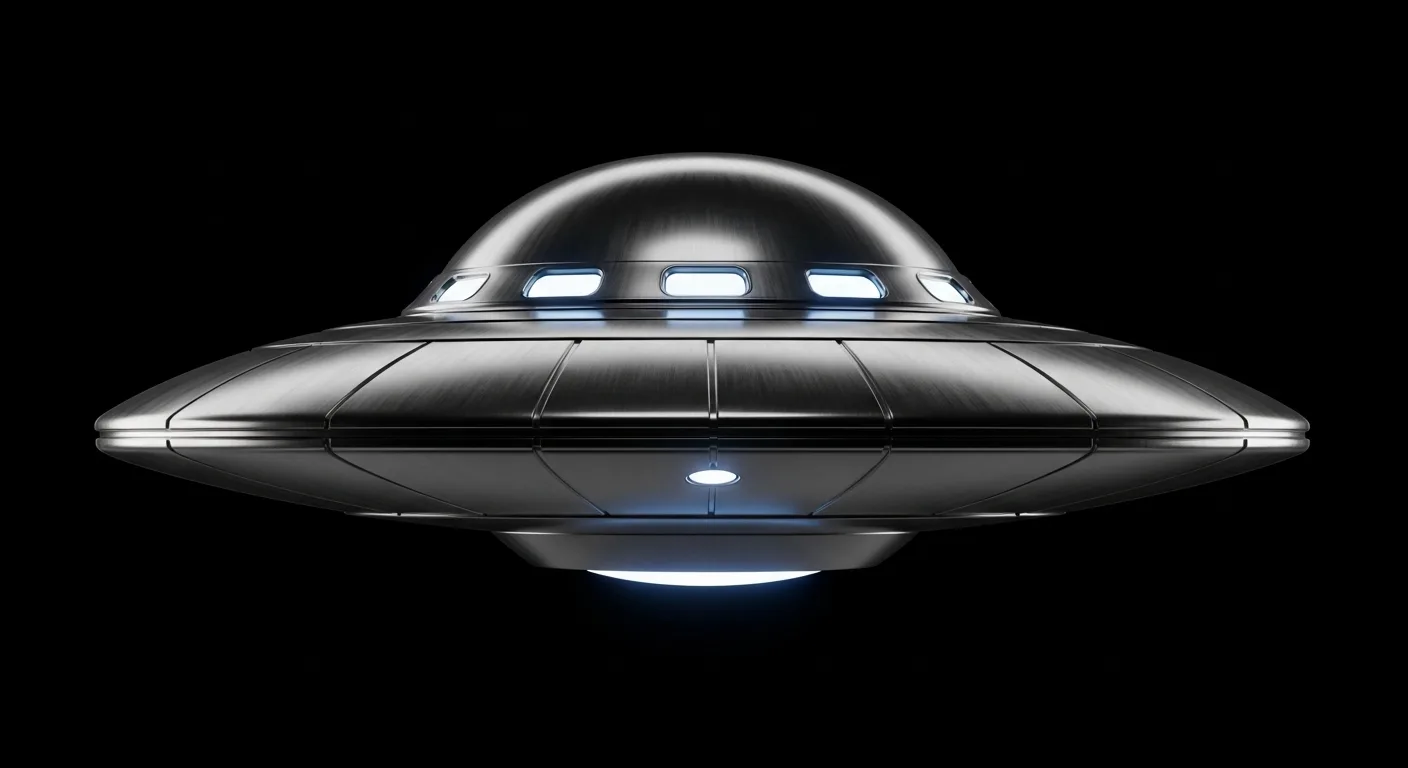
Throughout the final decade of the twentieth century, the county of Kent in southeastern England experienced a sustained wave of UFO sightings that remains one of the most significant concentrations of aerial phenomena ever documented in the United Kingdom. Hundreds of witnesses across the county—from the chalk cliffs of the coastline to the orchards and hop gardens of the interior—reported seeing large, dark, triangular craft moving silently through the skies. The objects, which bore a striking resemblance to the craft reported during the Belgian UFO wave of 1989-1990, were seen by police officers, pilots, motorists, and ordinary residents, many of whom had no prior interest in or knowledge of the UFO phenomenon. The Kent triangle sightings unfolded against a backdrop of dramatic change in the county’s landscape and infrastructure, most notably the construction and opening of the Channel Tunnel, and they generated hundreds of reports to police, the Ministry of Defence, and civilian research organizations. Despite this wealth of testimony, no satisfactory explanation has ever been offered for what flew over the Garden of England during those remarkable years.
Kent: A County Under Watch
To appreciate why Kent became such a focus of UFO activity in the 1990s, one must understand the unique character of this corner of England. Kent occupies the southeastern tip of the island of Great Britain, its white cliffs facing continental Europe across the narrowest stretch of the English Channel. This geographic position has made it a gateway between Britain and the continent for thousands of years—the point where invaders landed, where trade flowed, and where the island’s connection to the wider world was most keenly felt.
In the modern era, Kent’s strategic importance was reinforced by its role in the defense of Britain. The county was heavily fortified during both world wars, and its airspace was among the most closely monitored in the country. Radar stations, military airfields, and the infrastructure of the Cold War defense network were woven into the landscape. By the 1990s, many of these installations had been decommissioned, but the culture of sky-watching—of paying attention to what moved through the air above—remained part of Kent’s character.
The decade also brought unprecedented change to the county. The Channel Tunnel, the most ambitious infrastructure project in British history, was under construction throughout the early 1990s and opened in 1994. The project transformed the landscape of eastern Kent, bringing thousands of workers, enormous machinery, and a constant flow of traffic to a previously quiet corner of the county. The M20 motorway, Kent’s principal east-west route and the main road to the Channel Tunnel terminal at Folkestone, became one of the busiest highways in Britain.
Some researchers have speculated that the UFO activity was connected to the Channel Tunnel project—that whatever intelligence was behind the triangular craft was interested in this major engineering undertaking, or that the massive ground disturbance involved in boring the tunnel somehow triggered anomalous phenomena. Others have dismissed this connection as coincidental, noting that triangle sightings occurred across the entire county, not just in the vicinity of the tunnel works. The correlation remains tantalizing but unproven.
The First Sightings
The Kent triangle wave appears to have begun in the early months of 1990, when scattered reports of unusual aerial objects began reaching local police stations and the Ministry of Defence. The initial sightings were treated as isolated oddities—curious but unremarkable reports from individuals who had seen something they could not explain. It was only as the reports accumulated that a pattern began to emerge.
The early witnesses described seeing a large, dark object in the sky, usually at night, that was roughly triangular or boomerang-shaped. The object was distinguished from conventional aircraft by several characteristics: it was much larger than any known plane, it moved far more slowly than its apparent size should have allowed, and it produced no discernible engine noise. Some witnesses reported that the object was completely silent; others described a faint, low-frequency hum that was felt as much as heard—a vibration in the chest rather than a sound in the ears.
The craft typically displayed lights at each of its three corners, often described as white or amber in color, with a brighter light—sometimes red, sometimes pulsing—at the center or rear of the triangular shape. These lights distinguished the object from natural phenomena and gave witnesses a sense of the craft’s enormous size, which was consistently estimated at between one hundred and three hundred feet across. Some witnesses described the object as solid and opaque, blocking out the stars as it passed overhead; others reported that it seemed partially transparent, as if it existed at the boundary between materiality and something else.
The M20 Corridor
As the decade progressed, a concentration of sightings emerged along the M20 motorway, the principal route connecting Maidstone with the Channel Tunnel terminal at Folkestone. This corridor, which runs through the heart of Kent, became the most active zone for triangle sightings and produced some of the most dramatic accounts of the entire wave.
Motorists on the M20 reported seeing triangular objects hovering above or alongside the road, sometimes pacing their vehicles for several miles before accelerating away at extraordinary speed. The size of the objects was particularly apparent from the motorway, where the broad, flat landscape provided clear sightlines and where the highway itself offered a reference point for estimating dimensions. Drivers who had initially assumed they were seeing a conventional aircraft realized, as they drew closer, that the object was far too large and far too slow to be any known type of plane.
Several witnesses reported electromagnetic effects during close encounters on the M20. Car radios would fill with static or switch off entirely as the object approached, returning to normal function after it departed. Dashboard warning lights flickered on and off without apparent cause. In a handful of cases, drivers reported that their engines faltered or cut out completely during the closest approaches, restarting without difficulty once the object had moved away.
One particularly detailed account came from a lorry driver who was traveling westbound on the M20 near Ashford in the early hours of a winter morning in 1993. He described a triangular object descending from the north and positioning itself directly above the motorway, hovering at what he estimated to be five hundred feet. The object was so large that it seemed to fill his entire field of vision through the windscreen. He pulled onto the hard shoulder and watched as the craft remained stationary for approximately two minutes before tilting slightly and accelerating away toward the south at a speed he described as “impossible—from standing still to gone in about two seconds.”
The Coastal Encounters
Kent’s long coastline, stretching from the Thames Estuary in the north to the Channel coast in the south and east, produced its own concentration of triangle sightings. Fishermen, coastguard personnel, and residents of coastal towns reported seeing the objects over the sea, sometimes hovering above the water and sometimes moving along the coast at low altitude.
The coastal sightings added a new dimension to the phenomenon. Several witnesses reported seeing the triangular craft emerge from or descend toward the sea surface, as if the objects had an underwater capability or were interested in something beneath the waves. These reports echoed accounts from other parts of the world where triangular UFOs have been associated with bodies of water, though no definitive connection has been established.
Cross-Channel ferry passengers also contributed sightings. On several occasions, passengers and crew aboard ferries traveling between Dover and Calais reported seeing unusual lights or dark shapes in the sky over the Channel. Given the heavy traffic and constant observation of this narrow waterway, these reports carried particular weight—the Channel is one of the most closely watched stretches of water in the world, monitored by radar, coastguard, and the crews of hundreds of vessels.
The proximity of Kent to continental Europe raised the question of whether the objects seen over the county were the same craft reported in Belgium during the wave of 1989-1990. The Belgian triangle sightings, which involved similar descriptions of large, slow-moving, triangular objects with lights at each corner, had been investigated by the Belgian military and documented in detail. The Belgian wave and the Kent wave were separated by only a narrow stretch of water, and the characteristics of the objects described were remarkably similar. Whether this indicated the same craft operating over a wider area, similar but distinct phenomena, or a pattern of copycat sightings is impossible to determine.
The Witnesses
The credibility of the Kent triangle sightings rests substantially on the quality of the witnesses involved. While any long-running wave of sightings inevitably attracts attention-seekers and produces reports of varying reliability, the Kent wave included numerous witnesses whose backgrounds and circumstances lent significant weight to their testimony.
Police officers were among the most important witnesses. On multiple occasions, officers on patrol reported seeing triangular objects in the Kent sky and filed official reports. These witnesses were trained observers, accustomed to providing accurate descriptions of what they saw, and they had no professional incentive to fabricate or exaggerate UFO reports—quite the opposite, in fact, since such reports could subject them to ridicule from colleagues.
Pilots, both military and civilian, also contributed sightings. Their training in aircraft identification and their familiarity with everything that normally flies in British airspace gave their testimony particular authority. When a pilot reported seeing something that did not match any known aircraft type, the report carried weight that a civilian sighting might not.
The sheer number and geographic spread of the witnesses was itself significant. Five hundred people across a county, over a period of ten years, independently described essentially the same object. Many of these witnesses had no knowledge of other sightings and no interest in UFOs. They simply saw something extraordinary in the sky and reported it—often reluctantly, aware of the stigma attached to UFO claims.
The Ministry of Defence Response
The MOD received a substantial number of reports relating to the Kent triangle sightings, and its response—or lack thereof—became a source of frustration for researchers and witnesses alike. The Ministry’s standard position was that it investigated reports of unidentified aerial phenomena only to determine whether they represented a threat to national defense, and that the objects reported over Kent did not appear to meet this threshold.
This position struck many observers as inadequate, given the volume and quality of the reports. If hundreds of witnesses were accurately describing a large, unknown craft operating in British airspace, the implications for national security were obvious—an object of unknown origin was penetrating one of the most sensitive airspaces in Europe without challenge or identification. The MOD’s apparent lack of concern was difficult to reconcile with its responsibility for defending British airspace.
Researchers who obtained MOD files through Freedom of Information requests found that the Ministry had indeed received and logged numerous reports from Kent but had conducted no systematic investigation. Individual reports were filed and acknowledged, but no attempt was made to correlate sightings, identify patterns, or determine the nature of the objects being reported. Whether this reflected genuine disinterest, a lack of resources, or a deliberate policy of non-engagement remains a matter of speculation.
Some researchers noted that the MOD’s response to the Kent sightings was consistent with its handling of the Belgian triangle wave, which had generated extensive military interest in Belgium but virtually no official response from the British government. This disparity suggested either that the British authorities knew what the objects were and did not consider them a threat, or that they did not know and chose not to investigate—either option raising uncomfortable questions about the government’s approach to unexplained aerial phenomena.
Theories and Explanations
The Kent triangle sightings have generated numerous theories, ranging from the mundane to the extraordinary.
The most common conventional explanation is that the objects were secret military aircraft, possibly an advanced stealth platform being tested over friendly territory. The timing of the sightings coincided with the development of several classified aerospace projects, and the triangular shape is consistent with stealth aircraft design principles. The proximity of Kent to several military installations and testing ranges lends some plausibility to this theory.
However, the military aircraft hypothesis has significant weaknesses. The objects were described as far larger than any known aircraft, moved at speeds ranging from a near hover to extraordinary acceleration, produced no significant noise, and displayed flight characteristics—including the ability to remain stationary for extended periods—that are beyond any known aerospace technology. If the triangles were military aircraft, they represented a technological leap so dramatic as to be almost as mysterious as the extraterrestrial hypothesis.
Atmospheric and optical explanations have also been proposed. Temperature inversions, unusual cloud formations, and the refraction of distant lights can create aerial phenomena that might be mistaken for structured craft. However, these explanations struggle to account for the consistency of the descriptions, the close-range sightings, and the reported electromagnetic effects.
The extraterrestrial hypothesis—that the objects were spacecraft of non-human origin—remains popular among researchers and witnesses. The craft’s apparent technological capabilities, its behavior patterns, and its similarity to objects reported worldwide are consistent with this interpretation, though it remains unprovable with the available evidence.
A Decade of Mystery
The Kent triangle wave subsided gradually after the turn of the millennium, though sporadic sightings of similar objects have continued into the twenty-first century. The decade of intense activity left behind a rich body of testimony that has never been adequately explained by any proposed theory, conventional or otherwise.
The sightings transformed the perception of Kent among UFO researchers, establishing the county as one of Britain’s most significant UFO hotspots. They also contributed to the broader understanding of the triangle phenomenon, which has emerged as one of the most consistently reported types of UFO sighting worldwide. The triangular craft seen over Kent—large, dark, slow-moving, virtually silent, equipped with distinctive lighting, and capable of sudden acceleration—matches descriptions from Belgium, the Hudson Valley in New York, and dozens of other locations around the globe.
Whatever flew over the Garden of England during those remarkable years, it left an impression on the hundreds of people who saw it that has not faded with time. The witnesses continue to describe their experiences with the same mixture of wonder and bewilderment that characterized their original reports. They saw something that should not have been there, something that defied identification and explanation, and decades later, they still do not know what it was.
The Kent triangle sightings remind us that the sky above us, however familiar it may seem, can still produce mysteries that resist all our efforts at understanding. For ten years, something extraordinary moved through the airspace of one of England’s oldest and most settled counties, visible to hundreds of witnesses but invisible to official inquiry. It may have been secret technology, atmospheric illusion, or something genuinely unknown. Whatever it was, it chose the Garden of England as its stage, and the performance has never been explained.
Sources
- CIA UFO/UAP Reading Room — Declassified CIA documents on UAP
- UK National Archives — UFO Files — MoD UFO investigation records
- British Newspaper Archive — UK press archive