The Coyne Helicopter Incident
A military helicopter was pulled upward by a UFO in an encounter witnessed by crew and ground observers.
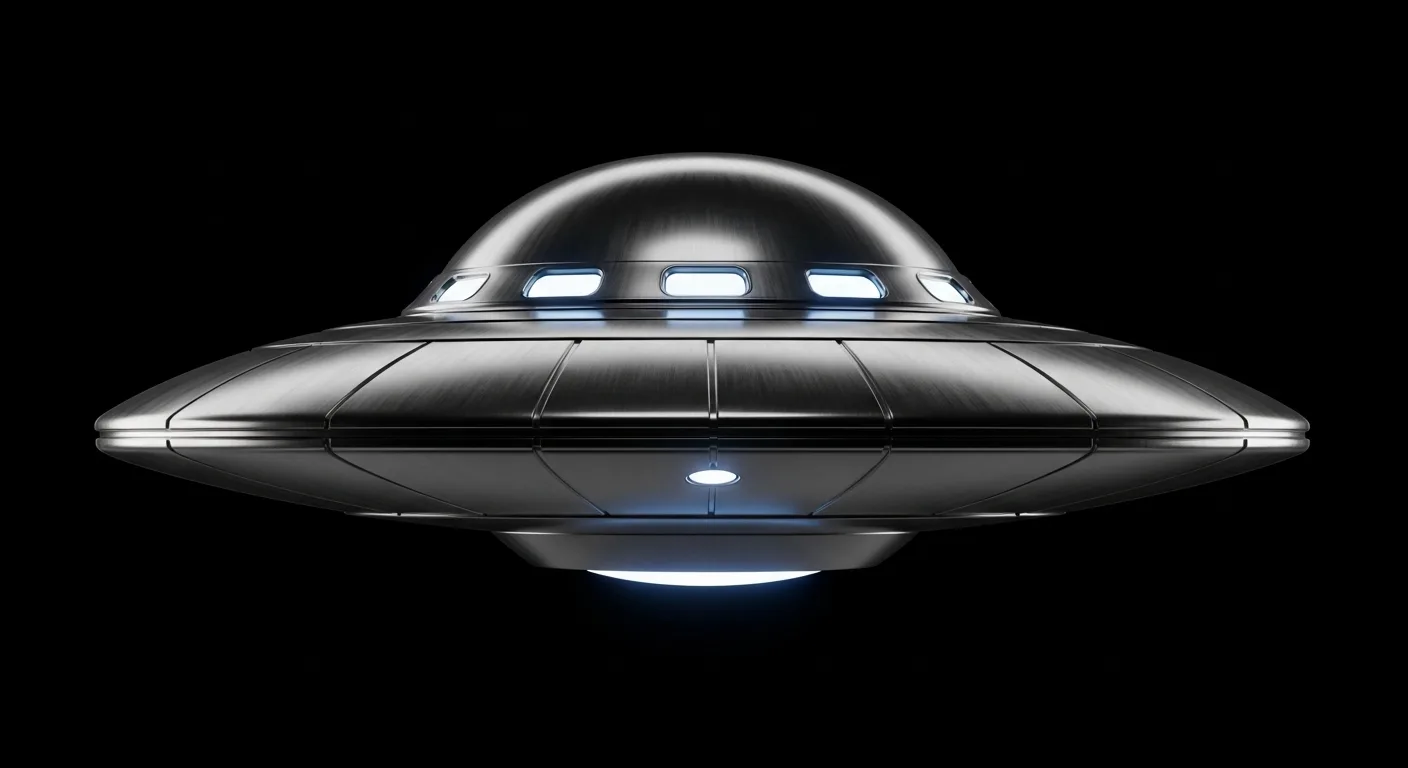
On the night of October 18, 1973, four members of the United States Army Reserve were flying a routine training mission over the rural farmland of north-central Ohio when they encountered something that defied every principle of aeronautics they had ever been taught. Their UH-1H Huey helicopter was approached at extraordinary speed by a luminous object, bathed in a green light of unearthly intensity, and then physically lifted nearly two thousand feet into the sky — all while the pilot held the controls in a full descent position. The encounter lasted only minutes, but it would reverberate through the annals of UFO research for decades, becoming one of the most credible and thoroughly investigated aerial encounters ever documented. What made the Coyne Helicopter Incident so compelling was not merely the strangeness of the experience but the unimpeachable character of its witnesses: trained military aviators with no history of sensationalism, no appetite for publicity, and nothing to gain from fabricating a story that would subject them to ridicule and scrutiny for the rest of their careers.
A Routine Night Over Ohio
The autumn of 1973 was an extraordinary period in American UFO history. A wave of sightings had been sweeping across the southern and midwestern United States since early October, with reports flooding in from Mississippi, Alabama, Georgia, and Ohio. Newspapers carried daily accounts of strange lights in the sky, and local police departments were overwhelmed with calls from frightened citizens. Against this backdrop of heightened anxiety and public fascination, Captain Lawrence J. Coyne and his three-man crew lifted off from Port Columbus International Airport in Columbus, Ohio, at approximately 10:30 PM, bound for their home base at Cleveland Hopkins Airport.
Captain Coyne was a seasoned aviator with nineteen years of military flying experience. At thirty-six years old, he was a careful, methodical pilot — not the sort of man given to flights of fancy. His crew that night consisted of First Lieutenant Arrigo Jezzi, the co-pilot, who sat in the right seat; Sergeant John Healey, the flight medic, who occupied the left rear seat; and Sergeant Robert Yanacsek, the crew chief, stationed at the right rear. All four men were experienced reservists who had logged hundreds of hours in the Huey, a workhorse helicopter that had proven its reliability across countless military operations from Vietnam to domestic missions.
The flight was proceeding without incident. The helicopter cruised at an altitude of approximately 2,500 feet above sea level, traveling at a ground speed of roughly 90 knots on a heading just east of north. Below them, the darkened landscape of Richland County unspooled in patches of farmland and scattered rural communities. The night sky was clear, with stars visible overhead and a thin overcast layer well above their altitude. It was, by every measure, an unremarkable flight — the kind of routine transit that military aircrews complete thousands of times each year without encountering anything more unusual than turbulence.
At approximately 11:00 PM, as the helicopter passed near the city of Mansfield, Sergeant Yanacsek noticed a single red light on the eastern horizon. It appeared to be pacing them at roughly their own altitude, and at first he assumed it was distant traffic — a commercial airliner or perhaps a military jet on a training run from one of Ohio’s several air bases. He watched the light for perhaps a minute before its behavior began to concern him. It was not following the predictable, steady course of conventional aircraft. Instead, it seemed to be converging on their position with increasing speed.
Collision Course
Yanacsek alerted Captain Coyne to the light. Coyne looked out and confirmed what his crew chief was seeing — a single, intensely bright red light approaching from the east-southeast at a speed that immediately alarmed him. The light was not merely closing the distance; it was doing so at a rate that Coyne would later estimate at roughly 600 knots, far faster than any helicopter and consistent with a high-performance military jet. His first thought was that they had somehow strayed into the path of a fighter aircraft from one of the nearby bases, and that a catastrophic midair collision was seconds away.
Coyne’s training took over. He reached for the radio and attempted to contact Mansfield approach control to determine whether any military traffic was operating in the area. He received no response. He tried again on the emergency frequency. Again, nothing — the radio seemed to be malfunctioning, receiving neither replies nor the usual background chatter that populated the airwaves. This communications failure would later become one of the more perplexing aspects of the incident, as the radio had been functioning normally moments before and would resume normal operation afterward.
With the red light still boring in on their position and no radio contact available, Coyne made the only decision a prudent pilot could make: he pushed the collective pitch control — the lever that governs a helicopter’s vertical movement — into a full descent and nosed the aircraft downward in an emergency dive. The Huey dropped rapidly, its descent rate reaching approximately 2,000 feet per minute as Coyne attempted to get below whatever was hurtling toward them. The altimeter unwound through 2,000 feet, then 1,800, as the farmland below rushed up to meet them in the darkness.
What happened next defied everything these four experienced aviators understood about the physics of flight.
The Object
The red light did not streak past them as a jet would have. Instead, it decelerated with impossible abruptness and came to a dead stop directly ahead of and slightly above the helicopter. The four men found themselves staring at an object that none of them could reconcile with any known aircraft. It hung in the air with perfect stillness, as if the laws of momentum simply did not apply to it.
Captain Coyne would later describe the object as a cigar-shaped or slightly curved structure, roughly sixty feet long, with a grey metallic appearance that reflected the ambient light of the sky. The surface appeared smooth and featureless — no wings, no tail assembly, no engine nacelles, no markings, nothing that would identify it as a product of any known aerospace program. At the leading edge, a small red light glowed steadily, the same light that had initially drawn Yanacsek’s attention from miles away. At the trailing edge, a white light was visible. But the most striking feature was a dome or raised section on the upper surface of the craft, a subtle protrusion that gave the object an asymmetric profile unlike any conventional aircraft design.
The helicopter was still in its emergency descent when the object arrived overhead, and for a few breathless seconds the crew could do nothing but stare. The object seemed to regard them — if an inanimate craft could be said to regard anything — hovering with a steadiness that no helicopter pilot could achieve in a thousand years of practice. There was no sound from it, no exhaust, no visible propulsion system of any kind. It simply hung there, as immovable as a mountain, while the men below grappled with the impossibility of what they were witnessing.
Then the green light appeared.
The Green Light and the Impossible Ascent
From the underside of the object, a cone-shaped beam of brilliant green light projected downward, enveloping the helicopter entirely. The interior of the cockpit was flooded with green illumination so intense that it penetrated every shadow and washed out the instrument panel lights. Coyne, Jezzi, Healey, and Yanacsek were bathed in it, their flight suits and skin taking on an eerie emerald cast. Sergeant Healey, seated in the rear, would later recall that the green light seemed to swivel or sweep, as if the craft were scanning them — though whether this was an objective observation or a subjective impression born of shock, he could not say with certainty.
It was during this green illumination that the most extraordinary aspect of the encounter occurred. Coyne glanced at his altimeter and was stunned to see that the helicopter was no longer descending. Despite the fact that he still held the collective in the full-down position — commanding the aircraft to descend — the Huey was climbing. And not gently. The vertical speed indicator showed a rate of climb of approximately 1,000 feet per minute, an ascent that should have been physically impossible given the position of the flight controls.
Coyne’s eyes went from the altimeter to the collective and back again. The collective was bottomed out, exactly where he had placed it during the emergency dive. He had not moved it. Lieutenant Jezzi confirmed from the right seat that no inputs had been made to the flight controls that would explain an ascent. Yet the helicopter was rising rapidly, the altimeter spinning upward through 2,500 feet, then 3,000, then 3,500 feet, as if some invisible hand had seized the aircraft and was lifting it bodily into the sky.
The sensation, Coyne would later report, was unlike anything in his nineteen years of flying. The helicopter did not feel as though its rotor system was generating additional lift. It felt as though the entire aircraft was being drawn upward by an external force, the way a magnet pulls a paperclip off a table. There was no buffeting, no unusual vibration, no change in engine sound — just a smooth, steady, impossible ascent that continued for nearly two thousand feet against the express commands of the pilot.
For those interminable seconds, the four men in the helicopter were passengers, not pilots. Their machine — a craft they understood intimately, whose every behavior they could predict and control — had been commandeered by something they could neither understand nor resist. The feeling of helplessness, of being subject to a technology so far beyond their comprehension that it might as well have been magic, would stay with each of them for the rest of their lives.
Then, as abruptly as it had appeared, the object accelerated away toward the northwest, its white tail light receding into the distance at tremendous speed before vanishing entirely. The green light extinguished. The helicopter’s controls returned to normal, responding to Coyne’s inputs as if nothing had happened. He immediately lowered the collective further and brought the aircraft back down to a safe cruising altitude. The radio crackled back to life, normal traffic filling the headsets as though the silence had never occurred.
Witnesses on the Ground
The encounter might have remained an extraordinary but ultimately unverifiable account from four military aviators had it not been for the Jeanne family, who were driving along a rural road near Charles Mill Reservoir at the time of the incident. From the ground, they observed the entire sequence of events from a perspective that both corroborated and enriched the crew’s account.
The family — a mother and four children returning from a visit to relatives — first noticed the helicopter’s navigation lights and the red light of the approaching object. They watched as the two sets of lights converged, and then witnessed something that made the mother pull the car to the side of the road in alarm. A brilliant green light, vivid and unlike anything they had ever seen, seemed to cascade downward from the unknown object and envelop the helicopter entirely. The green light was so intense that it illuminated the ground around their vehicle, casting the trees and road surface in an otherworldly emerald glow.
From their vantage point below, the family watched the helicopter begin to rise — not gradually, as a helicopter normally climbs, but with a strange, steady quality that suggested it was being pulled rather than flying. The object and the helicopter appeared to move in unison for a brief period before the object broke away and accelerated out of sight. The family was deeply shaken by the experience, and the mother would later provide testimony to investigators that aligned precisely with the crew’s account in every significant detail.
The ground witnesses were crucial because they eliminated several potential explanations. The family had no connection to the helicopter crew, no prior knowledge of the flight, and no reason to fabricate a story that matched the aviators’ account. Their observation of the green light illuminating the ground was a physical effect that could not be explained by misidentification or hallucination. Whatever had happened in the sky over Mansfield that night, it had been real enough to cast light on the earth below.
The Investigation
The Coyne Helicopter Incident came to the attention of UFO researchers almost immediately, and it quickly became one of the most intensely studied cases of the 1970s. Captain Coyne, to his credit, did not seek to publicize the encounter; rather, he filed a standard report through military channels, as regulations required for any unusual occurrence during a flight. It was through these official channels that civilian researchers learned of the incident and began their own inquiries.
The case was investigated by multiple organizations, including the Center for UFO Studies founded by Dr. J. Allen Hynek, a former scientific consultant to the United States Air Force’s Project Blue Book. Hynek, who had spent decades studying UFO reports and had evolved from a committed skeptic to a cautious advocate for serious investigation, regarded the Coyne incident as one of the most significant cases he had ever examined. The combination of multiple trained military witnesses, corroborating ground observers, physical effects on the aircraft, and electromagnetic interference with the radio made it, in Hynek’s assessment, an exceptionally strong case.
Investigators interviewed each crew member separately and found their accounts to be remarkably consistent in all important details. Minor discrepancies — the sort that naturally arise when different people recall a brief, intense experience — actually strengthened the credibility of the testimony, since perfectly identical accounts would have suggested rehearsal or collusion. The crew members described the same object, the same sequence of events, the same green light, and the same impossible ascent, each from their own vantage point within the helicopter.
The physical evidence, while circumstantial, was compelling. The helicopter’s magnetic compass was found to be malfunctioning after the flight, its readings offset by several degrees from where they should have been. While compass deviations can have mundane explanations, the timing — immediately following an encounter with an object that had apparently exerted some form of electromagnetic influence on the radio — was suggestive. The airframe itself showed no structural damage, but the fact that it had been subjected to forces that contradicted the pilot’s control inputs was, in itself, a form of physical evidence.
The Crew’s Credibility
What elevated the Coyne incident above the countless UFO reports that accumulate in researcher files every year was the character and credibility of the primary witnesses. Captain Coyne was not a UFO enthusiast or a publicity seeker. He was a career military officer with a spotless record, a man whose professional reputation depended on sound judgment and clear-headed reporting. Coming forward with a UFO report was, if anything, a liability — the sort of thing that could invite mockery from colleagues and skepticism from superiors. Coyne did so because military regulations required it and because he believed that what had happened was significant enough to warrant official attention.
The same was true of his crew. Lieutenant Jezzi, Sergeant Healey, and Sergeant Yanacsek were all experienced military personnel with no history of making unusual claims. They submitted their accounts knowing full well that they would be scrutinized, questioned, and potentially disbelieved. None of them profited from the publicity that eventually surrounded the case, and several expressed discomfort with the attention it brought them.
Captain Coyne was subsequently invited to present his account to the United Nations Special Political Committee in 1978 as part of a discussion on the UFO phenomenon. His testimony there was measured, factual, and devoid of speculation — he described what he and his crew had experienced without attempting to explain what the object was or where it had come from. This restraint lent his account additional credibility, distinguishing it from the breathless, theory-laden narratives that often accompanied UFO reports.
Theories and Explanations
In the decades since the encounter, numerous attempts have been made to explain what happened over Mansfield that October night. Skeptics have proposed that the crew misidentified a meteor or a bright fireball, noting that the Orionid meteor shower was active during this period. However, this explanation fails to account for the object’s deceleration and hovering, its structured metallic appearance, the green light, the electromagnetic effects on the radio, or the physical lifting of the helicopter. Meteors do not stop, hover, project beams of light, or exert force on nearby aircraft.
Others have suggested that the crew experienced some form of collective spatial disorientation — that in the darkness and confusion of an emergency maneuver, Coyne may have inadvertently pulled the collective up while believing he was pushing it down, causing the climb he attributed to an external force. This hypothesis was carefully considered and rejected by investigators who noted that Coyne was an experienced instrument pilot fully capable of reading his flight controls by touch, that Lieutenant Jezzi independently confirmed the collective position, and that the rate and character of the climb were inconsistent with normal helicopter performance.
The possibility of a classified military aircraft was also explored. The early 1970s saw the development of several experimental aerospace programs, and it is conceivable that a secret prototype might have been operating in Ohio airspace. However, no military aircraft known to exist — then or now — could match the described capabilities of the object: instantaneous deceleration from high speed, silent hovering, and the ability to physically lift another aircraft against its controls. If such technology existed within the United States military in 1973, it has remained secret for over half a century, a proposition that strains credulity.
The case remains officially unexplained. No satisfactory conventional explanation has been offered that accounts for all aspects of the encounter, and the Coyne Helicopter Incident continues to be cited in serious UFO literature as one of the strongest cases on record — a close encounter witnessed by trained military observers and corroborated by independent ground witnesses, involving physical effects on an aircraft that defy conventional aerodynamic explanation.
A Legacy of Questions
More than fifty years after Captain Coyne and his crew encountered the unknown over the farmlands of north-central Ohio, the incident retains its power to provoke wonder and unease in equal measure. It belongs to a small category of UFO cases that resist easy dismissal — cases where the witnesses are credible, the details are consistent, the physical effects are documented, and no conventional explanation fits the evidence. Whatever hovered above that Huey helicopter on the night of October 18, 1973, it demonstrated capabilities that remain beyond the reach of any known human technology.
The crew members carried the weight of their experience for the rest of their lives. They did not become UFO evangelists or conspiracy theorists. They simply told what happened, as clearly and honestly as they could, and left it to others to make of it what they would. Their restraint and professionalism in the face of an experience that must have shaken their understanding of the world stands as a testament to their character — and makes their testimony all the more difficult to dismiss.
The skies over Mansfield are quiet now, the farmland below unchanged from the night when a military helicopter was seized by forces unknown and lifted into the darkness against its pilot’s will. The object, whatever it was, departed as mysteriously as it arrived, leaving behind four shaken men, a family of terrified witnesses, a malfunctioning compass, and questions that remain unanswered to this day. In the long and contentious history of UFO encounters, few cases speak as clearly or as credibly as the Coyne Helicopter Incident — a reminder that the unknown is not merely a matter of blurred photographs and distant lights, but sometimes arrives with undeniable force, close enough to touch, impossible to ignore, and utterly beyond explanation.
Sources
- CIA UFO/UAP Reading Room — Declassified CIA documents on UAP