1973 UFO Wave
October 1973 saw one of the largest UFO waves in American history. Reports flooded in from across the country - the Pascagoula abduction, Ohio helicopter incident, multiple police sightings, and hundreds of other encounters. Even Governor Jimmy Carter had reported a sighting years earlier.
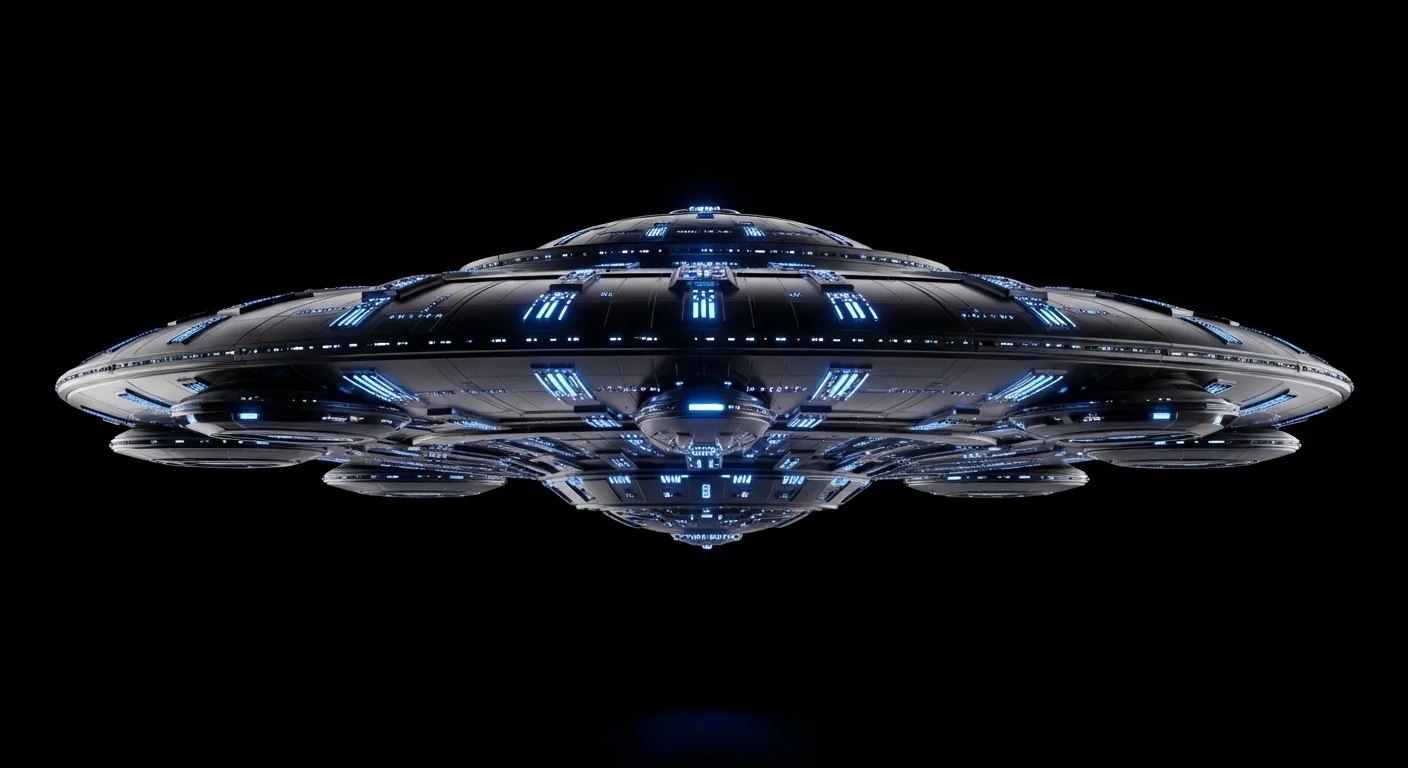
The autumn of 1973 was unlike any other in the history of American ufology. Beginning in late September and reaching a staggering crescendo throughout October, an unprecedented wave of UFO sightings swept across the United States with such ferocity and volume that it overwhelmed law enforcement switchboards, dominated evening newscasts, and forced even the most skeptical observers to acknowledge that something genuinely unusual was occurring in the nation’s skies. By the time the wave subsided in early November, thousands of reports had been filed from virtually every state in the union, including encounters involving police officers, military pilots, elected officials, and ordinary citizens whose lives were permanently altered by what they witnessed. The 1973 UFO wave remains one of the most concentrated and well-documented periods of anomalous aerial activity in recorded history, and its implications continue to resonate with researchers more than five decades later.
A Nation Already on Edge
To understand why the 1973 wave struck with such psychological force, one must consider the state of the nation at the time. America in the autumn of 1973 was a country battered by crisis. The Watergate scandal was reaching its most dramatic phase, with the Saturday Night Massacre occurring on October 20—right in the middle of the UFO wave’s peak. The Vietnam War, though winding down, continued to haunt the national conscience. The Arab oil embargo, announced on October 17, was about to plunge the country into an energy crisis that would reshape daily life for millions. Against this backdrop of institutional distrust and societal anxiety, the skies themselves seemed to join the chaos.
The wave did not appear from nowhere. UFO sightings had been increasing gradually throughout 1973, with notable clusters reported in the southeastern states during the spring and summer months. Researchers at organizations like the Center for UFO Studies, founded that same year by astronomer J. Allen Hynek, had noted the uptick with growing interest. But nothing in the preliminary data prepared anyone for the sheer scale of what October would bring. When the wave hit its full stride, it was as if a dam had burst, releasing a torrent of reports that defied easy categorization or dismissal.
The Pascagoula Abduction
The event that ignited national attention and transformed the 1973 wave from a regional curiosity into a coast-to-coast phenomenon occurred on the evening of October 11 along the banks of the Pascagoula River in Mississippi. Charles Hickson, a forty-two-year-old foreman at a local shipyard, and Calvin Parker, his nineteen-year-old coworker, had gone fishing after their shift. What happened next would become one of the most famous and hotly debated close encounter cases in UFO history.
According to both men, an elongated, oval-shaped craft descended from the sky and hovered just above the ground near their fishing spot. The object emitted a bluish haze and a buzzing sound. Before either man could react, three beings emerged from the craft—creatures unlike anything in their experience. The entities were approximately five feet tall, with pale, wrinkled skin, no discernible eyes, and claw-like appendages where hands should have been. Their legs appeared fused together, and they moved with a peculiar gliding motion rather than walking.
The beings seized both men and floated them into the craft. Hickson later described being subjected to some form of examination by a device resembling an enormous eye that moved freely around his suspended body. Parker, overwhelmed by terror, fainted and recalled little of what occurred inside the vessel. After what the men estimated was approximately twenty minutes, they were returned to the riverbank, and the craft departed.
Hickson and Parker drove immediately to the Jackson County Sheriff’s Department, where they reported their experience to Captain Glen Ryder. The deputies who took the initial report noted that both men appeared genuinely terrified—Parker was weeping uncontrollably, and Hickson’s hands were shaking so badly he could barely hold a cigarette. In a decision that would prove crucial to the case’s credibility, Sheriff Fred Diamond left the two men alone in an interrogation room with a hidden tape recorder running, expecting them to break character once they believed themselves unobserved. Instead, the tape captured the men continuing to express raw fear and confusion, with Parker praying aloud and Hickson repeating that he could not believe what had happened to them. Neither man recanted or showed any sign of fabrication.
The Pascagoula case exploded across national media within days. Hickson appeared on television programs and submitted to polygraph examinations, which he passed. Parker, more private by nature and deeply traumatized by the experience, initially avoided the spotlight, though he would eventually share his account more fully in later years. The case attracted the attention of J. Allen Hynek himself, who traveled to Mississippi to interview the witnesses and concluded that they were sincere in their accounts, whatever the ultimate explanation might be.
The Coyne Helicopter Incident
If Pascagoula provided the wave’s most sensational abduction account, the event that occurred one week later near Mansfield, Ohio, delivered what many researchers consider its most credible single sighting. On the night of October 18, 1973, an Army Reserve helicopter piloted by Captain Lawrence Coyne was returning to its base in Cleveland when the crew encountered an object that defied every conventional explanation available to experienced military aviators.
The helicopter was cruising at approximately 2,500 feet when Sergeant Robert Yanacsek, seated in the right rear, noticed a red light on the eastern horizon. Initially dismissing it as a distant aircraft or tower beacon, Yanacsek watched the light for about a minute before realizing it was rapidly approaching their position on what appeared to be a collision course. He alerted Captain Coyne, who took the controls and immediately initiated a descent, pushing the collective down to drop the helicopter toward the ground and avoid what he believed was an imminent midair collision.
Despite the descent, the object closed on the helicopter with extraordinary speed. Within seconds, a large, cigar-shaped or gray metallic craft filled the windscreen, hovering or moving slowly directly above them. The object was estimated at approximately sixty feet in length, with a bright red light at its bow, a white light at its tail, and a distinctive green beam or light emanating from its underside. This green light swept over the helicopter, flooding the cockpit with an eerie emerald illumination.
What happened next was perhaps the most inexplicable aspect of the encounter. Despite Captain Coyne holding the collective in a full-down position—which should have maintained or accelerated the helicopter’s descent—the aircraft began climbing. The altimeter showed the helicopter rising from approximately 1,700 feet to nearly 3,800 feet, seemingly pulled upward by some force associated with the object above them. The crew watched in astonishment as their instruments confirmed what their senses told them: they were ascending against the pilot’s control inputs.
After several seconds, the object accelerated away toward the northwest at tremendous speed, and the helicopter’s controls returned to normal. Coyne and his crew—which also included co-pilot Lieutenant Arrigo Jezzi and crew chief Sergeant John Healey—filed official reports through military channels. Ground witnesses near Mansfield independently confirmed seeing both the helicopter and the unidentified object, as well as the green light that bathed the area. The case was investigated by multiple organizations and has never been satisfactorily explained by conventional means.
The Deluge of October
The Pascagoula and Coyne incidents were merely the most prominent events in what amounted to a nationwide bombardment of sightings. Throughout October 1973, reports poured in from every corner of the country at a rate that overwhelmed the capacity of researchers to investigate them. On some nights, dozens of independent sightings were reported within hours of each other across multiple states, creating a pattern that suggested either a genuine phenomenon of staggering scope or a mass psychological event without modern precedent.
In Falkville, Alabama, on October 17, Police Chief Jeff Greenhaw responded to a call about a UFO landing in an open field. Upon arriving, Greenhaw encountered a figure in what appeared to be a metallic suit standing near the road. He took four Polaroid photographs of the entity before it fled with an unusual, bounding gait that Greenhaw’s patrol car could not match, even at high speed over unpaved roads. The photographs, though blurry, show a humanoid figure wrapped in what appears to be reflective material. Greenhaw’s life was subsequently devastated—he lost his job, his wife left him, and his home was destroyed by fire under suspicious circumstances, all of which he attributed to the repercussions of his report.
In Connersville, Indiana, dozens of residents reported a large, luminous object hovering over the town on multiple nights in mid-October. Police dispatchers logged so many calls that officers were pulled from other duties to respond to UFO reports. Similar scenes played out in communities across Ohio, Pennsylvania, Georgia, Tennessee, and Missouri. Rural areas seemed particularly affected, with farmers and residents of small towns reporting objects hovering over fields, livestock behaving erratically, and strange lights performing maneuvers that no known aircraft could replicate.
The southern states bore an especially heavy concentration of reports. Mississippi, Alabama, Georgia, and the Carolinas recorded hundreds of sightings during October alone. Witnesses described objects of bewildering variety—luminous spheres, triangular formations, cigar-shaped craft, classic disc configurations, and amorphous lights that changed shape and color as they moved. Some objects were reported at tremendous altitude, while others were described at treetop level or hovering just above the ground. The sheer diversity of descriptions posed a challenge for researchers attempting to identify a single phenomenon behind the wave.
Law Enforcement on the Front Lines
One of the most striking aspects of the 1973 wave was the extraordinary number of sightings reported by law enforcement officers. Police and sheriff’s deputies across the country found themselves in the unusual position of being both responders to and witnesses of the phenomena they were called to investigate. Their reports carry particular weight because these were trained observers, accustomed to providing accurate descriptions under stressful conditions, and acutely aware that filing a UFO report could jeopardize their professional credibility.
In several well-documented cases, officers pursued or were pursued by unidentified objects during routine patrol duties. Radio dispatches recorded in real time captured the bewilderment and, in some cases, the fear in officers’ voices as they described what they were seeing. These recordings provide some of the most compelling contemporaneous evidence from the wave, as they were created without any opportunity for embellishment or retrospective revision.
The volume of law enforcement sightings created an uncomfortable situation for police administrators. Dismissing the reports meant questioning the competence and honesty of their own officers. Accepting them meant acknowledging that something genuinely unexplained was occurring. Most departments chose a middle path, filing the reports without comment and avoiding public statements. A few sheriffs and police chiefs went further, publicly stating that they believed their officers had seen something real and that the sightings deserved serious investigation.
Governors and High-Profile Witnesses
The 1973 wave was notable for the prominence of several of its witnesses. Most famously, Jimmy Carter—then the Governor of Georgia and a future President of the United States—had reported his own UFO sighting from 1969, when he and several other witnesses observed a luminous object in the sky near Leary, Georgia. Carter described the object as changing color from white to blue to red and back again, and estimated its angular size as comparable to the moon. Though his sighting predated the 1973 wave by four years, the renewed public interest in UFOs brought his account back into the spotlight, and Carter would later pledge during his 1976 presidential campaign to release all government UFO files if elected.
Governor John Gilligan of Ohio added another high-profile voice to the chorus. Gilligan and his wife reported observing an amber-colored object while driving near Ann Arbor, Michigan, on October 15, 1973. The governor described the object as a vertical shaft of light that hovered without apparent means of propulsion before moving away. Gilligan was forthcoming about his sighting, telling reporters that he had seen what he had seen and had no intention of denying it regardless of any political consequences.
These accounts from elected officials served to legitimize public discussion of the wave. When governors were willing to state publicly that they had witnessed unexplained aerial phenomena, ordinary citizens felt emboldened to come forward with their own accounts. This dynamic may have contributed to the wave’s escalation, as reduced stigma around reporting led to a surge in filed sightings that might otherwise have gone undocumented.
Media Frenzy and Public Response
The national media’s response to the 1973 wave was swift and extensive. All three major television networks—ABC, CBS, and NBC—ran stories on the sightings, with the Pascagoula case receiving the most concentrated coverage. Major newspapers from the New York Times to small-town weeklies devoted column inches to local and national sightings. Wire services distributed reports across the country, creating a feedback loop in which coverage of sightings in one region prompted witnesses in other areas to come forward with their own accounts.
Magazine coverage followed closely behind the daily news cycle. Publications ranging from serious news magazines to sensationalist tabloids featured the wave prominently, each framing the phenomenon according to its editorial disposition. The coverage was not uniformly credulous—many outlets adopted a skeptical tone, quoting Air Force spokespeople who attributed sightings to misidentified aircraft, weather balloons, or astronomical objects. But even skeptical coverage kept the topic in the public consciousness and contributed to the atmosphere of heightened awareness that characterized the autumn of 1973.
The public response was a complex mixture of fascination, anxiety, and humor. UFO-themed merchandise appeared in stores. Comedians incorporated flying saucer jokes into their routines. But beneath the surface levity, many Americans were genuinely unsettled. In some communities, residents reported feeling watched or unsafe outdoors at night. A few schools received calls from parents concerned about children’s safety in light of the sightings. The wave touched a nerve that ran deeper than mere curiosity—it raised fundamental questions about human vulnerability and the possibility that the skies above were not as empty as most people had assumed.
Scientific and Official Response
The scientific community’s response to the 1973 wave was largely dismissive, though notable exceptions existed. The most significant was J. Allen Hynek, the Northwestern University astronomer who had served as the Air Force’s scientific consultant on Project Blue Book before becoming its most prominent critic. Hynek founded the Center for UFO Studies in 1973, and the wave provided an immediate and overwhelming caseload for his fledgling organization. Hynek advocated for serious scientific study of the best cases, arguing that the phenomenon—whatever its ultimate nature—deserved investigation rather than ridicule.
The United States Air Force, which had officially terminated Project Blue Book in 1969 and declared that UFOs posed no threat to national security, maintained its position of disengagement. Air Force spokespeople declined to investigate individual cases and referred inquiries to civilian organizations. This official indifference frustrated many witnesses, particularly military personnel like Captain Coyne, who felt that their reports deserved formal attention from defense authorities.
Other researchers attempted to find patterns in the wave’s geography and timing. Some noted that sightings seemed to cluster near military installations, nuclear facilities, and major waterways. Others observed that activity appeared to intensify during certain lunar phases or weather conditions. These correlations were suggestive but inconclusive, and no single theory satisfactorily explained the wave’s scope, duration, or abrupt onset and cessation.
The Wave Subsides
As suddenly as it had begun, the 1973 wave diminished in November and had largely subsided by December. The decline in sightings was nearly as mysterious as their onset. Some researchers attributed the drop-off to changing weather patterns, noting that colder temperatures and earlier sunsets reduced the number of people outdoors at night to observe the skies. Others suggested that media fatigue played a role, as editors grew weary of UFO stories and reduced their coverage, which in turn may have discouraged potential witnesses from filing reports.
Skeptics argued that the wave’s decline supported a sociocultural explanation—that the phenomenon had been driven by media attention and social contagion rather than any objective external stimulus. Once the novelty faded and public interest moved on to other concerns, the sightings naturally dried up. Proponents countered that the wave’s abrupt beginning and end more closely resembled a discrete event than a gradual social phenomenon, and that the quality and consistency of many individual reports argued against mass delusion.
A Legacy That Endures
The 1973 UFO wave left an indelible mark on both ufology and American culture. It demonstrated that UFO sightings were not confined to isolated individuals or fringe communities but could occur on a mass scale involving credible witnesses from all walks of life. The Pascagoula and Coyne cases, in particular, have withstood decades of scrutiny and remain among the most frequently cited encounters in the literature. Neither case has been convincingly debunked, and both continue to challenge skeptics and believers alike.
The wave also accelerated institutional changes in UFO research. Hynek’s Center for UFO Studies gained membership and credibility on the strength of its 1973 investigations. The Mutual UFO Network, founded in 1969, expanded its investigator network in response to the wave’s demands. These organizations established protocols for witness interviews, evidence collection, and case classification that remain in use today.
Perhaps most significantly, the 1973 wave contributed to a gradual shift in public attitudes toward UFO sightings. The willingness of police officers, military personnel, and elected officials to report their experiences publicly helped erode the stigma that had long surrounded the topic. While ridicule remained a potent deterrent for many potential witnesses, the 1973 wave demonstrated that credible people could describe incredible things and retain their reputations—a precedent that would prove important in the decades-long journey toward the official acknowledgment of unidentified aerial phenomena that began in earnest in the 2010s.
The autumn of 1973 remains a watershed moment in the history of anomalous aerial phenomena. For a few extraordinary weeks, something moved through American skies that defied easy explanation, leaving behind a trail of bewildered witnesses, unanswered questions, and a body of evidence that researchers continue to examine more than half a century later. Whether the wave represented visitation, misperception, mass psychology, or something entirely beyond current understanding, its impact on those who lived through it was undeniably real. The skies of October 1973 held something strange, and the nation looked up and wondered.
Sources
- CIA UFO/UAP Reading Room — Declassified CIA documents on UAP