Coyne Helicopter Incident
An Army Reserve helicopter piloted by Captain Lawrence Coyne encountered a grey metallic object that stopped their descent and pulled them upward from 1,700 to 3,500 feet—with the collective still down. Ground witnesses corroborated the sighting. One of the most credible military encounters.
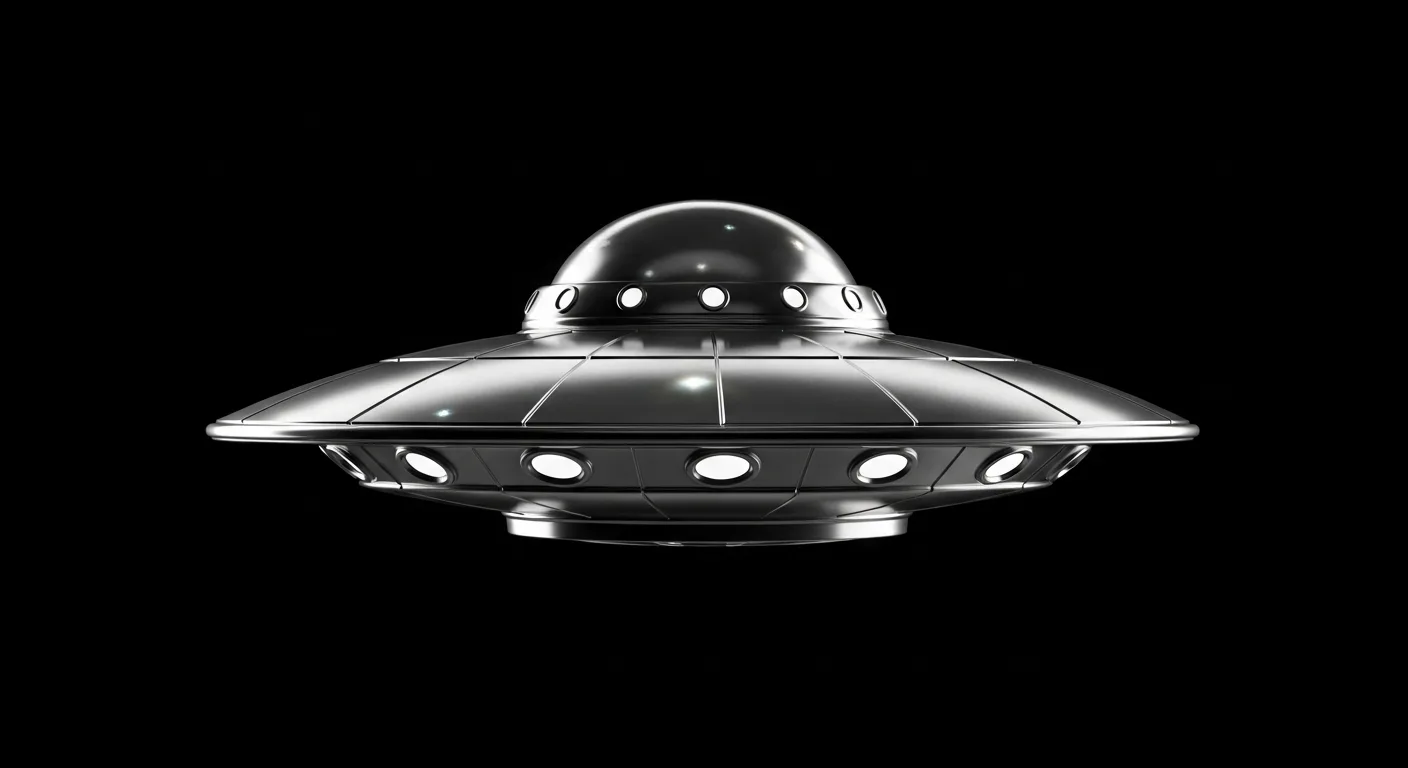
On the night of October 18, 1973, an Army Reserve helicopter carrying four experienced military crewmen was flying over the farmland south of Mansfield, Ohio, when something appeared in the sky that none of them could explain. What began as a routine return flight from Columbus became one of the most thoroughly documented and credible UFO encounters in American military history. The crew’s helicopter was approached by an unidentified object at high speed, bathed in a green light, and then physically lifted nearly two thousand feet into the air while the pilot held the controls in a descent position. Ground witnesses independently corroborated what happened in the sky above them. No conventional explanation has ever accounted for the events of that night, and the case remains one of the strongest pieces of evidence that something genuinely anomalous operates in our skies.
The Crew and the Flight
Captain Lawrence J. Coyne was a nineteen-year veteran of the Army Reserve with over three thousand hours of flight time. At forty-two years old, he was an experienced and levelheaded pilot, not the sort of man given to flights of fancy or exaggeration. On the evening of October 18, he was commanding a Bell UH-1H Huey helicopter on a routine return flight from Columbus, Ohio, to their home base at Cleveland Hopkins Airport. The Huey, designated tail number 68-15444, belonged to the 316th Medical Detachment of the Army Reserve.
Coyne was not alone in the aircraft. Seated beside him in the right front seat was First Lieutenant Arrigo Jezzi, who served as the copilot. In the rear cabin were Staff Sergeant Robert Yanacsek, the crew chief, and Specialist Fifth Class John Healey, who served as the flight medic. All four men were seasoned military personnel with no history of making extraordinary claims or seeking attention. Their collective credibility would become one of the case’s most significant features.
The flight had been entirely unremarkable. They had departed Columbus at approximately 10:30 PM and were cruising at an altitude of roughly 2,500 feet above sea level, flying at an airspeed of about ninety knots. The night was clear with stars visible, a mild overcast layer sitting well above their altitude, and visibility was excellent. They were navigating by reference to ground landmarks and the lights of small towns below, following a northeasterly heading that would take them over Mansfield and on toward Cleveland. The terrain beneath them was rolling Ohio farmland, sparsely populated and dark.
At approximately 11:00 PM, the helicopter was south of Mansfield, passing near the small community of Charles Mill Lake. The crew had no reason to expect anything unusual. The radio was quiet, the instruments were normal, and the Huey was performing exactly as expected. Sergeant Yanacsek, seated in the left rear of the cabin, was looking out at the night sky when he noticed a red light on the eastern horizon.
The Red Light
Yanacsek observed the light for perhaps ten to fifteen seconds, initially assuming it was a beacon on a distant radio tower or possibly the navigation light of another aircraft. Red lights in the sky are common enough, and there was no immediate reason for concern. But as he continued to watch, he realized that the light was moving. More precisely, it was moving toward them, and it was moving fast.
He alerted Captain Coyne, pointing out the light on the left side of the aircraft. Coyne looked and saw it immediately. The red light was now clearly in motion, tracking on what appeared to be a westerly heading, and it was closing the distance between them with startling speed. Coyne’s first thought was that it might be a fixed-wing aircraft from Mansfield Lahm Airport, which lay to the north, or possibly an F-100 fighter from the Ohio Air National Guard unit based there. But the light was not behaving like any conventional aircraft he had ever seen. It was moving too fast, and its trajectory suggested it was on a direct collision course with the helicopter.
Coyne immediately attempted to make radio contact. He reached for his UHF radio and tried to raise Mansfield approach control to inquire about traffic in the area. The radio, which had been working perfectly moments before, failed to function. He could neither transmit nor receive. He tried the VHF radio as well, with the same result. Both radios had gone dead simultaneously, a failure that Coyne had never experienced before in his years of flying. The timing was deeply unsettling.
With radio contact impossible and the red light still bearing down on them, Coyne made the only defensive maneuver available to him. He pushed the collective pitch control down and put the helicopter into an emergency descent, dropping the nose to increase their rate of descent. His intention was to get below the path of the oncoming object and avoid a midair collision. The helicopter began descending rapidly, its altitude dropping from 2,500 feet toward 1,700 feet at a rate of approximately five hundred feet per minute. Coyne was aiming for a descent that would put them safely below whatever was approaching.
The red light did not deviate from its course. It continued to close on their position at what the crew later estimated to be a speed of more than six hundred knots, far faster than any helicopter and considerably faster than most conventional aircraft at that altitude. The crew braced for impact. In those final seconds, as the light rushed toward them with terrifying speed, Coyne and his men genuinely believed they were about to die.
The Object
Then, impossibly, the object stopped. It did not decelerate gradually in the manner of any known aircraft. It went from an estimated six hundred knots to a dead halt, positioning itself directly above and slightly ahead of the helicopter. The crew, who had been tensed for a collision, found themselves staring upward at something that defied every piece of aeronautical knowledge they possessed.
The object was enormous. The crew estimated it to be approximately sixty feet in length, though some later accounts suggest it may have been larger. Its shape was roughly cylindrical or cigar-shaped, with a domed or slightly raised section on top. The surface appeared to be a dull grey metallic material, with no visible seams, rivets, wings, rotors, engine nacelles, or any other conventional aeronautical features. There were no markings of any kind, no registration numbers, no military insignia, nothing that could identify it as a product of any known manufacturer or nation.
The object had a distinct lighting configuration. At its leading edge, or what the crew took to be its front, was the red light that Yanacsek had first spotted. At the trailing end was a white light. But the most striking feature was a green light, or more accurately a green beam, that emanated from the lower surface of the object. As the craft hovered above the helicopter, this green light swung downward and swept over the Huey, flooding the cockpit with an eerie green luminescence.
Captain Coyne later described the experience of the green light in vivid terms. The entire cockpit was bathed in green, as if they were inside a green-tinted bottle. The light was not blinding but was intensely vivid, coloring every surface, every instrument, every face a deep emerald. The effect was profoundly disorienting. Lieutenant Jezzi, in the right seat, confirmed the experience, noting that the light seemed to come from directly above and was not a simple reflection but rather a directed beam that enveloped the aircraft.
The object made no sound that the crew could detect above the noise of their own rotor system. A Huey in flight is not a quiet machine, so subtle sounds would have been masked. But the crew noted the absence of any jet engine roar, rocket exhaust, or sonic disturbance that might be expected from an object that had just executed a deceleration from six hundred knots to zero. Whatever powered this craft, it operated on principles unknown to the four military aviators staring up at it.
The Impossible Ascent
What happened next was, by any measure, the most extraordinary aspect of the encounter and the detail that elevates the Coyne incident from a mere sighting to a case of physical interaction between a UFO and a manned aircraft.
Captain Coyne had put the helicopter into a descent to avoid the oncoming object. The collective pitch control, which governs the angle of the rotor blades and thus the helicopter’s lift, was still in the full down position. The altimeter should have been showing a continued descent, or at best a level altitude if Coyne had arrested the descent. Instead, when Coyne glanced at his instruments, he received the shock of his life.
The altimeter was climbing. The helicopter, with the collective still pressed down, was ascending. Not gently, not slowly, but at a rate of approximately one thousand feet per minute. The aircraft rose from its low point of roughly 1,700 feet to 3,500 feet in what seemed like a matter of moments. The vertical speed indicator confirmed what the altimeter was showing. The helicopter was being pulled upward against the will of the pilot and against the laws of aerodynamics as he understood them.
Coyne pulled the collective further down, trying to arrest the climb. The helicopter continued to rise. He checked that he had not inadvertently moved the control. He had not. The collective was fully down, a position that should have resulted in a descent or at minimum a rapid loss of altitude. Yet the Huey climbed as if some invisible hand had reached down and was lifting it bodily into the sky.
The crew experienced no unusual gravitational forces during the ascent. There was no sensation of being pushed upward, no feeling of acceleration, no g-forces beyond what would normally be felt in level flight. The instruments confirmed the climb, the altimeter and VSI were in agreement, but the physical sensation was as if nothing unusual were happening at all. This absence of felt acceleration was, in some ways, more disturbing than the climb itself. It suggested that whatever was lifting them was not simply applying force to the airframe but was somehow altering the local conditions of flight in a way that transcended normal physics.
The ascent continued until the helicopter reached approximately 3,500 feet. Then, as suddenly as it had begun, the effect ceased. The object, which had been hovering above them during the entire episode, departed. It accelerated away toward the northwest, toward Lake Erie, its green light diminishing as it covered distance at a speed that defied estimation. Within seconds, it was gone, leaving only a white light visible on the western horizon before it disappeared entirely.
Coyne regained control of the helicopter. The collective responded normally, the instruments returned to expected readings, and the radios, which had been dead throughout the encounter, began functioning again without any action from the crew. They had not changed frequencies, had not cycled the radios off and on, had not performed any troubleshooting. The radios simply resumed working as if they had never failed.
The crew flew the remaining distance to Cleveland in near silence, each man processing what had just happened. Upon landing, they compared their observations and found that their accounts were in close agreement on every significant detail: the approach of the red light, the cigar-shaped metallic object, the green beam, the impossible ascent, the departure toward the northwest. There was no significant discrepancy in their testimonies.
The Ground Witnesses
What transforms the Coyne incident from a remarkable pilot report into one of the most compelling UFO cases on record is the existence of independent ground witnesses who observed the encounter from below. Their testimony corroborates the crew’s account in ways that are difficult to dismiss.
A family of five was driving near the encounter site at the time of the incident. Jeanne Elias, along with her four children, was traveling on a road south of Mansfield when they noticed unusual lights in the sky. They observed what appeared to be a helicopter and, near it, a much larger object. The family reported seeing a bright green light that was intense enough to illuminate the ground around their car, casting the landscape in the same eerie green hue that the crew described flooding their cockpit.
The ground witnesses described seeing the helicopter appear to be drawn upward, corroborating the crew’s account of the impossible ascent. From their vantage point below, they could see both the helicopter’s conventional lighting and the larger object’s lights, and they watched as the two moved together in a way that seemed controlled by the larger craft. The green light was particularly memorable to the ground witnesses, who described it as unlike anything they had ever seen, a vivid, almost liquid green that seemed to pour down from the sky.
The Elias family’s account was obtained independently of the crew’s report. They had not spoken with Coyne or any of his crew members before providing their testimony, and their descriptions of the object, the green light, and the apparent interaction between the two aircraft matched the crew’s account with striking precision. The probability of two independent groups of witnesses fabricating identical details about a shared hallucination is extraordinarily low, and investigators have consistently cited the ground witness testimony as one of the case’s strongest elements.
Additional witnesses in the Mansfield area reported seeing unusual lights in the sky that evening, though none provided testimony as detailed as the Elias family’s account. The cumulative weight of multiple independent observations, all consistent with each other and with the crew’s report, creates a body of evidence that is difficult to explain through conventional means.
The Investigation
Captain Coyne did not attempt to conceal what had happened. Within days of the incident, he filed an official report through military channels and contacted the Federal Aviation Administration. The encounter was documented in Army records and was reported to the FAA’s nearest facility. Coyne also submitted a report to the National Transportation Safety Board, treating the event with the same seriousness he would have given to any airborne safety incident.
The case quickly attracted the attention of UFO researchers. Jennie Zeidman, a researcher who had previously worked with Dr. J. Allen Hynek at Northwestern University’s Center for UFO Studies, conducted an exhaustive investigation of the incident. Zeidman interviewed all four crew members extensively, both individually and collectively, and found their accounts to be consistent, detailed, and free of the embellishments or contradictions that typically characterize fabricated stories. She also located and interviewed the ground witnesses, establishing the independent corroboration that gives the case much of its evidential weight.
Zeidman’s investigation was meticulous. She examined the helicopter’s maintenance records and found no anomalies that might explain the radio failure or the uncommanded ascent. She reviewed weather data for the night of October 18 and confirmed the crew’s description of clear conditions. She checked military and civilian air traffic records and found no aircraft in the area that could account for the object the crew described. She investigated the possibility that the crew had encountered a meteor, a weather balloon, or some other conventional phenomenon, and found none of these explanations satisfactory.
The case was presented to the United Nations in 1978, when Coyne was invited to testify before a special committee examining the UFO phenomenon. His testimony was measured, factual, and devoid of speculation. He described what he and his crew had experienced without venturing opinions about the nature of the object. His military bearing and obvious credibility made a strong impression on the committee members, and the case was entered into the UN’s records as one of the most significant UFO encounters reported by military personnel.
Dr. Hynek himself classified the Coyne incident as a “close encounter of the second kind,” meaning a UFO sighting that involved physical effects on the environment or on equipment. The simultaneous failure of both radios, the uncommanded ascent of the helicopter, and the green light that bathed the cockpit all qualified as physical effects that went beyond a mere visual observation. Hynek considered the case to be among the strongest in his extensive files, noting the credibility of the witnesses, the consistency of their testimony, and the independent ground corroboration.
The Army conducted no formal investigation of its own beyond accepting Coyne’s report. No disciplinary action was taken against any of the crew members, and no attempt was made to discredit their account. The official military position was simply one of silence, neither confirming nor denying that anything extraordinary had occurred. The case was never classified, and all documents related to it remain publicly available.
Why It Matters
The Coyne helicopter incident occupies a singular position in UFO research because it satisfies virtually every criterion that skeptics demand of a credible case. The witnesses were trained military observers with no motive to fabricate. Their accounts were consistent with each other and were provided promptly after the event. Independent ground witnesses corroborated the key details. Physical effects on the aircraft were documented. The crew’s professional reputations were placed at risk by their testimony, giving them every reason to remain silent and none to invent a story. And despite decades of analysis, no conventional explanation has been proposed that adequately accounts for all aspects of the encounter.
The physical interaction between the object and the helicopter is particularly significant. Many UFO sightings consist solely of lights in the sky, which can be explained by any number of conventional phenomena. The Coyne case involves something far more concrete: an aircraft was physically moved through the air against the will of its pilot and against the mechanical inputs of its controls. This is not a matter of interpretation or perception. The altimeter readings, the vertical speed indicator, and the position of the collective pitch control all tell the same story. Something lifted that helicopter, and it was not the helicopter’s own rotor system.
The radio failures add another dimension to the case. Simultaneous failure of both UHF and VHF radio systems is an extremely unusual occurrence in a well-maintained military helicopter. That both systems failed at the moment of closest approach to the object and resumed functioning after its departure suggests an electromagnetic effect emanating from the craft, a phenomenon reported in numerous other UFO cases but rarely with such clear documentation.
The case also benefits from the era in which it occurred. October 1973 was one of the most active periods for UFO sightings in American history, with hundreds of reports filed across the eastern United States during that month alone. While skeptics might argue that a climate of heightened attention to the sky could produce false reports, the Coyne incident stands apart from the mass sighting wave by virtue of its military witnesses, its physical evidence, and its independent corroboration.
Captain Coyne continued to serve in the Army Reserve after the incident and retired with an honorable record. He never sought to profit from his experience, never wrote a book or embarked on a lecture circuit, and never embellished his account beyond the plain facts he reported on the night of the encounter. His crewmates maintained the same disciplined approach to the subject, speaking about it when asked but never seeking publicity. Their restraint has only enhanced their credibility in the eyes of researchers.
More than five decades after that autumn night over Mansfield, the Coyne helicopter incident remains unexplained. No aircraft, drone, natural phenomenon, or atmospheric condition has been identified that can account for a sixty-foot metallic object that decelerates from six hundred knots to a dead stop, projects a green beam of light, lifts a helicopter two thousand feet against its pilot’s inputs, and then accelerates away at impossible speed. The case stands as a challenge to anyone who maintains that all UFO sightings can be reduced to misidentification, hallucination, or fraud. Whatever Captain Coyne and his crew encountered over Ohio in 1973, it was something real, something physical, and something that remains beyond our ability to explain.
Sources
- CIA UFO/UAP Reading Room — Declassified CIA documents on UAP