The Coyne Helicopter UFO Incident
An Army helicopter crew encountered a UFO that pulled their aircraft upward.
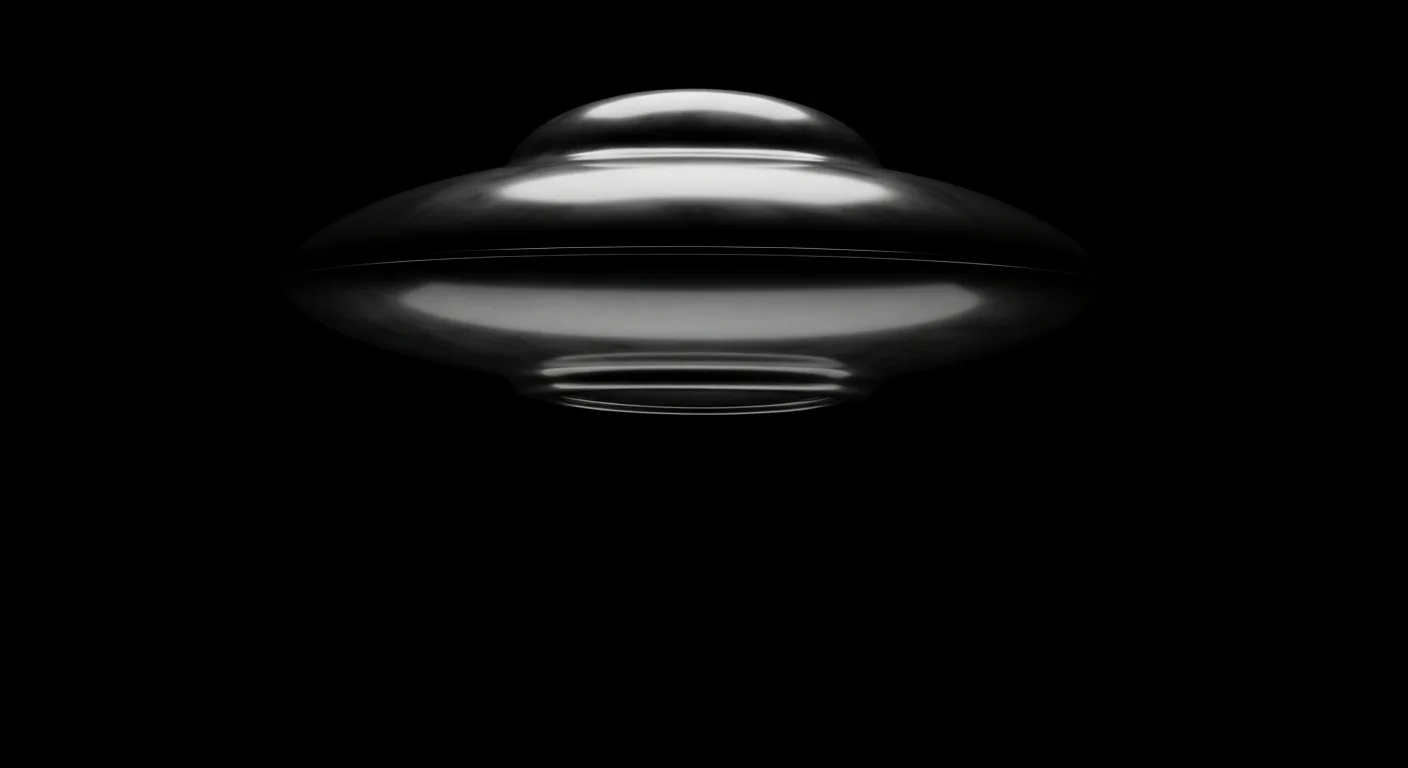
On the night of October 18, 1973, four members of the United States Army Reserve were flying a routine training mission over the farmlands of north-central Ohio when they encountered something that would defy every explanation offered in the half-century since. Captain Lawrence J. Coyne, an experienced pilot with nineteen years of military service, was at the controls of a Bell UH-1H Huey helicopter when his crew spotted a light on the eastern horizon that appeared to be closing on their position at extraordinary speed. What followed over the next five minutes would become one of the most thoroughly documented and compelling UFO encounters in history---a case involving trained military observers, multiple ground witnesses, physical effects on the aircraft, and an event so bizarre that even the most determined skeptics have struggled to offer a satisfactory explanation.
The Coyne incident did not occur in isolation. It took place during the great UFO wave of October 1973, a period of intense sighting activity across the eastern and midwestern United States that generated hundreds of reports from credible witnesses. But even among the remarkable cases of that extraordinary month, the events over Mansfield stand apart. This was not a distant light in the sky or a fleeting glimpse of something unusual. This was a close-range encounter between a military aircraft and a structured, metallic object that demonstrated capabilities far beyond any known technology---and that appeared to exert physical control over the helicopter itself.
The Crew and the Mission
The four men aboard Army helicopter 68-15444 that evening were experienced military personnel, not the sort of witnesses easily dismissed as excitable or unreliable. Captain Lawrence Coyne, aged thirty-six, served as aircraft commander. He had logged over three thousand hours of flight time and held both civilian and military pilot ratings. His co-pilot was First Lieutenant Arrigo Jezzi, a chemical engineer in his civilian career who brought an analytical mind to everything he observed. In the back of the helicopter sat Sergeant John Healey, the crew chief, and Specialist Five Robert Yanacsek, who served as the flight medic.
The four men had flown together from their home base at Cleveland Hopkins Airport to Columbus for routine physical examinations and were returning north at approximately ten-thirty in the evening. The flight plan called for a straightforward trip following a heading that would take them over the rural landscape between Columbus and Cleveland, passing near Mansfield. The weather was clear, with scattered clouds and visibility of better than fifteen miles. A gentle wind blew from the west. It was, by all measures, an unremarkable night for flying---until Sergeant Healey noticed a red light on the eastern horizon.
The Light on the Horizon
At approximately eleven o’clock, with the helicopter cruising at an altitude of twenty-five hundred feet and an airspeed of roughly ninety knots, Healey spotted a single steady red light off the left side of the aircraft. He initially assumed it was a beacon on a radio tower or perhaps the port-side navigation light of a distant aircraft. Red lights in the sky were common enough, and there was no immediate reason for concern. He mentioned it to Coyne but did not press the matter.
Yanacsek, sitting on the right rear of the cabin, also picked up the light and began watching it with growing interest. Over the next sixty seconds or so, it became clear that the light was not stationary. It was moving---and it was moving toward them. More troubling still, it appeared to be moving at a speed far greater than any conventional aircraft. Yanacsek called out to Coyne with urgency in his voice, warning that the light seemed to be on a collision course with their helicopter.
Coyne looked to the east and immediately saw what his crewmen were describing. The red light was now clearly closing the distance between them at a rate he later estimated at roughly six hundred knots---far faster than any helicopter and faster than most fixed-wing aircraft operating at that altitude. His first thought was that it might be an F-100 jet fighter from Mansfield Lahm Airport, though the closure rate seemed excessive even for a military jet. His second thought was that whatever it was, it was heading directly for them.
Coyne’s training took over. He reached for the radio and attempted to contact Mansfield approach control on the appropriate frequency to inquire about traffic in the area. He received no response. He tried a second frequency. Again, nothing. The radio, which had been functioning normally throughout the flight, was suddenly dead. There was no static, no squelch---simply silence. With no time to troubleshoot the communications failure, Coyne made the only decision available to him. He pushed the collective pitch control down and put the helicopter into a powered descent, dropping at a rate of approximately five hundred feet per minute, aiming to pass safely beneath whatever was bearing down on them.
The Object
The helicopter descended through two thousand feet, then through nineteen hundred. The red light continued to close. Coyne pushed the collective further, increasing the rate of descent. The altimeter unwound through eighteen hundred feet, then seventeen hundred. The crew braced for what they feared might be a collision.
Then the object stopped.
In an instant, the light that had been hurtling toward them at hundreds of knots decelerated to a dead hover directly in front of and slightly above the helicopter. The crew found themselves staring at a large, dark gray metallic structure that filled the forward windscreen. The object was enormous---Coyne and his crew estimated it at approximately sixty feet in length, roughly the size of a large cargo aircraft. Its shape was that of a streamlined cigar or elongated dome, with no visible wings, tail surfaces, rotors, exhaust ports, or any other recognizable means of propulsion. A small dome or raised section sat atop the forward portion of the craft.
The crew had only seconds to absorb what they were seeing before a new development seized their attention. A light emerged from the underside of the object---not the red light they had been tracking, but a brilliant green beam that swept from the aft section of the craft forward, pivoting like a searchlight. The green beam swung directly over the helicopter, flooding the cockpit and cabin with an intense emerald illumination. Coyne later described the light as so vivid that it turned the entire interior of the helicopter green, washing out the red glow of the instrument panel and casting everything in a surreal monochromatic hue.
Lieutenant Jezzi, watching from the co-pilot’s seat, observed the object in profile as the green light swept over them. He noted that the craft had a clearly defined shape with smooth, unbroken surfaces and no visible seams, rivets, or panel lines of the sort found on any manufactured aircraft. The leading edge appeared somewhat rounded, tapering to a more defined trailing edge. The red light they had initially observed was positioned at the bow of the craft, while a white light shone from the stern. The green beam appeared to emanate from a distinct source on the ventral surface.
Sergeant Healey, looking up through the overhead greenhouse windows of the Huey, found himself staring directly at the underside of the object from perhaps three hundred feet away. The craft’s surface was smooth and appeared to be made of a dark metallic material that reflected the ambient light with a subdued, non-specular quality. There were no markings, no insignia, no identification numbers of any kind. It was, in every sense, unidentifiable.
The Impossible Ascent
What happened next remains the most extraordinary and inexplicable aspect of the entire encounter. As the green light bathed the helicopter, Coyne glanced down at his instruments and received a shock that he would describe for the rest of his life as utterly beyond his comprehension.
The altimeter was climbing. Not just climbing---it was climbing rapidly, showing the helicopter ascending at a rate of one thousand feet per minute. The helicopter was rising from its low point of approximately seventeen hundred feet and climbing fast, passing through two thousand feet, then twenty-five hundred, then three thousand. Coyne looked at the collective pitch control---the lever that governs a helicopter’s vertical movement. It was still in the full-down position, exactly where he had placed it to execute his emergency descent. With the collective in that position, the helicopter should have been descending. Instead, it was climbing at a rate double what it had been descending moments earlier.
Coyne pulled the collective further down, to its mechanical stop. The helicopter continued to climb. It passed through thirty-five hundred feet. The aircraft was ascending against the direct input of its pilot, against the laws of aerodynamics as every aviator understood them. Something was pulling the helicopter upward, and the four men inside had no control over it whatsoever.
The ascent continued until the altimeter read approximately thirty-eight hundred feet---a net climb of over two thousand feet from the lowest point of Coyne’s evasive dive, all of it occurring with the flight controls set for descent. Then, as suddenly as it had begun, the upward force released. The object’s green light extinguished, and the craft accelerated away to the west at tremendous speed, its white stern light shrinking to a point and then vanishing over the horizon in a matter of seconds. As it departed, the helicopter’s controls returned to normal. Coyne regained command of the aircraft and gently brought it back to its assigned altitude.
The entire encounter, from the moment the red light was first spotted to the object’s departure, had lasted approximately five minutes. The radio, which had been completely unresponsive throughout the event, began functioning normally again without any action by the crew.
The Ground Witnesses
If the testimony of four trained military observers were not sufficient, the Coyne encounter was independently corroborated by witnesses on the ground. A family of five---a mother and four children---was driving south on a road near Mansfield when they observed the helicopter and the unknown object from below.
The ground witnesses, who came forward independently and had no contact with the helicopter crew before making their report, described seeing the helicopter’s lights and hearing its engine. They then observed a second object, larger than the helicopter, maneuvering near it. Most strikingly, they described the green light that illuminated both the helicopter and the surrounding area. The mother reported that the green light was so intense that it lit up the ground beneath the aircraft and the interior of her car. Her children were frightened by the display.
The ground witnesses’ account aligned precisely with the crew’s testimony in terms of timing, location, the appearance of the green light, and the relative positions and movements of the helicopter and the object. This independent corroboration from a completely separate vantage point effectively eliminated the possibility that the crew had experienced a shared hallucination or misidentified a conventional aircraft.
Investigations and Explanations
The Coyne incident attracted immediate attention from both military and civilian investigators. Captain Coyne filed an official report through Army channels, and the case was subsequently investigated by several organizations, including a detailed examination by researchers affiliated with the Center for UFO Studies, founded by astronomer J. Allen Hynek.
The investigators methodically attempted to identify the object as a conventional aircraft, a meteor, or some other known phenomenon. Each explanation was found wanting. No military or civilian aircraft were logged as operating in the area at the time of the encounter. The object’s ability to decelerate from high speed to a dead stop, hover motionless, and then accelerate away at enormous velocity ruled out any known fixed-wing aircraft or helicopter. The absence of engine noise, rotor wash, or jet exhaust eliminated conventional propulsion systems.
The meteor hypothesis was equally untenable. While a bright meteor might explain the initial red light approaching at high speed, meteors do not stop, hover, project searchlight beams, or exert physical force on nearby aircraft. The structured, metallic appearance of the object as described by four witnesses at close range bore no resemblance to any natural astronomical phenomenon.
The physical effect on the helicopter---the uncontrolled ascent with the collective in the full-down position---posed the greatest challenge to conventional explanations. Aerodynamic experts consulted during the investigation confirmed that no known atmospheric phenomenon, such as an updraft or wind shear, could have produced the sustained thousand-foot-per-minute climb described by Coyne while the collective was set for descent. The climb was not a momentary bump or turbulence event; it was a steady, sustained ascent of over two thousand feet lasting more than a minute. Something had physically seized the helicopter and drawn it upward.
The failure and subsequent restoration of the radio also defied easy explanation. The radio was checked after landing and found to be in perfect working order. No mechanical fault was discovered that could account for its complete failure during the encounter and its spontaneous recovery afterward. Some investigators speculated that the object might have been emitting electromagnetic radiation that interfered with the radio’s operation, though no definitive conclusion was reached.
The magnetic compass, too, had behaved anomalously during the encounter. Healey reported that the compass needle spun erratically while the object was in proximity, another detail consistent with some form of intense electromagnetic field surrounding the craft.
Legacy of the Encounter
Captain Coyne and his crew submitted to extensive interviews and never deviated from their account in any significant detail. Coyne, who had no prior interest in UFOs and had never reported anything unusual during his long flying career, was clearly shaken by the experience. He spoke publicly about the incident on several occasions, always with the measured precision of a military officer presenting a factual report. He did not speculate about the origin or nature of the object, stating only that he and his crew had encountered something they could not identify and that had demonstrated capabilities beyond any known technology.
The case was presented to the United Nations in 1978 as part of a petition by the country of Grenada to establish a UN agency for investigating UFO reports. It was cited as one of the strongest cases on record, owing to the caliber of the witnesses, the independent ground corroboration, the physical effects on the aircraft, and the failure of all conventional explanations to account for what had occurred.
In the decades since, the Coyne helicopter incident has maintained its status as one of the landmark cases in UFO research. It appears in virtually every serious study of the phenomenon and is regularly cited by researchers as an example of a case that cannot be dismissed through the usual channels of misidentification or witness unreliability. The witnesses were trained military professionals flying a military aircraft. They observed the object at close range for an extended period under clear conditions. Their account was corroborated by independent ground observers. Physical effects were recorded on the aircraft’s instruments. And no satisfactory conventional explanation has ever been offered.
An Enduring Mystery
The skies over Mansfield, Ohio, are quiet now. The farmland where the encounter took place looks much as it did in 1973, and the flight path that Army helicopter 68-15444 followed that October night carries the same routine traffic it always has. Nothing about the landscape suggests that it was the site of one of the most compelling UFO encounters in recorded history.
Yet the questions raised that night remain unanswered. What was the object that the crew encountered? How did it achieve the extraordinary flight characteristics they observed---the instant deceleration from high speed, the motionless hover, the rapid departure? What technology could project a beam of green light with the characteristics described? And most troubling of all, what force could seize a four-thousand-pound military helicopter and draw it upward against the direct input of its controls?
Captain Coyne, who passed away in 2019, never received answers to these questions. Nor did the investigation ever produce a satisfactory explanation. The Coyne helicopter incident remains what it has always been---a case supported by credible witnesses, physical evidence, and independent corroboration, yet utterly resistant to conventional explanation. It stands as a reminder that the skies above us may hold phenomena that our science has not yet learned to describe, and that even trained observers in military aircraft can find themselves confronted by something that belongs to no known category of human experience.
Sources
- CIA UFO/UAP Reading Room — Declassified CIA documents on UAP