Paterson, New Jersey UFO Sighting (July 31, 1952) — FBI Files
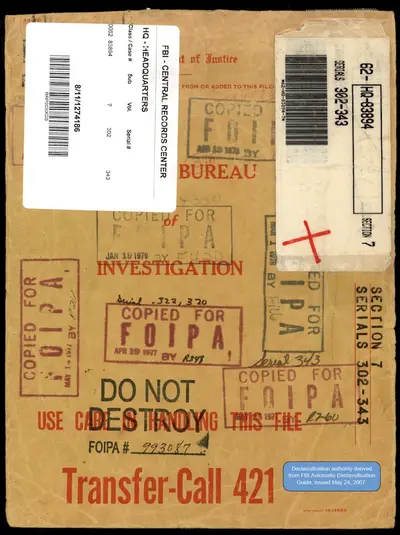
FBI records document a 1952 incident in Paterson, New Jersey, involving a photographic record of an unidentified aerial object by a civilian photographer.
Historical Context of the 1952 Wave
The summer of 1952 represented a period of intense aerial anxiety within the United States, characterized by a surge in reports of unidentified flying objects. This era followed the transformative summer of 1947, which saw the Kenneth Arnold sighting and the Roswell incident, events that fundamentally altered the public’s perception of the upper atmosphere. During this time, the concept of the “flying saucer” had entered the national lexicon, fueled by a combination of Cold War tensions and the rapid advancement of aerospace technology. The geopolitical climate of the early 1950s meant that any unidentified movement in the skies was viewed through a lens of potential national security threats, leading to heightened scrutiny of the airspace surrounding industrial and strategic centers.
Paterson, New Jersey, situated within the densely populated and industrially significant Northeast Corridor, provided a backdrop of high-stakes observation. The proximity of such urban centers to vital infrastructure meant that sightings in the region were often subject to immediate federal interest. During this period, the phenomenon of unidentified aerial objects was frequently analyzed through the framework of atmospheric science and military intelligence, as the distinction between secret Soviet technology and domestic experimental craft remained dangerously opaque to the public and government officials alike.
The Paterson Incident and Investigation
On July 31, 1952, an incident occurred in Paterson involving an unidentified aerial object that was documented through both eyewitness testimony and photographic evidence. According to records later released to the public on May 8, 2026, as part of the Presidential Unsealing and Reporting System for UAP Encounters (PURSUE), a civilian photographer named George Stock allegedly captured an image of the object. The event was also witnessed by John Riley. The presence of photographic evidence categorized this specific case as an encounter involving visual documentation, a factor that significantly increased the investigative priority of the report.
The investigation into the Paterson sighting was not conducted solely by local law enforcement but involved the United States Air Force and the Federal Bureau of Investigation. Following the report, the Air Force requested that the FBI perform a formal background check on both Stock and Riley. The primary objective of this inquiry was to assess the reliability of the witnesses and to determine if any history of deception or criminal intent could compromise the validity of the sighting. The FBI’s investigation, which utilized established protocols for the protection of vital installations, ultimately found no criminal records or histories of fraud for either individual. While the released documents do not specify a total number of witnesses beyond Stock and Riley, the official nature of the background checks underscores the seriousness with which the government approached the veracity of the claims.
Administrative Processing and Classification
The administrative handling of the Paterson case reflects the broader bureaucratic response to UAP phenomena during the mid-twentieth century. The FBI’s various field offices, including those in Knoxville, Albuquerque, and Los Angeles, operated under standing protocols that required the routing of UFO-related reports to headquarters. This centralized system ensured that sightings near sensitive installations were monitored by federal authorities. The Paterson report was processed through these standard channels, treating the unidentified object as a matter of potential interest to national security.
Under the current oversight of the All-domain Anomaly Resolution Office (AARO), all records released through the PURSUE program are designated as unresolved by default. The federal government maintains a position of neutrality regarding the Paterson incident, having reached no definitive conclusion as to whether the object was anomalous or conventional. In the context of the 1950s, conventional explanations for such sightings often included experimental aircraft, weather balloons—specifically those associated with the Project Mogul series—or atmospheric optical phenomena like lenticular clouds and sundogs. Additionally, astronomical objects such as Venus, the Moon, or meteors near the horizon were frequently considered as potential sources for reported aerial phenomena. The Paterson case remains part of this ongoing historical ambiguity.