Paris, France UFO Sighting (Oct. 7, 1952) — FBI Files
Two Air France pilots reported observing a disc-shaped flying saucer over Southern France on October 7, 1952, according to declassified FBI records.
Background
On October 7, 1952, in Paris, France, U.S. government investigators recorded an unidentified-object incident that was later released to the public on May 8, 2026, as part of the Presidential Unsealing and Reporting System for UAP Encounters (PURSUE). This specific report emerged during a period of intense global interest in unidentified aerial phenomena. The incident is part of the first wave of “flying saucer” reports that swept the United States and much of the Western world following the Kenneth Arnold sighting of June 1947 and the Roswell incident of July 1947. During this era, the concept of a disc-shaped craft became a staple of popular culture and military concern, as the dawn of the Cold War heightened anxieties regarding airspace sovereignty and technological superiority.
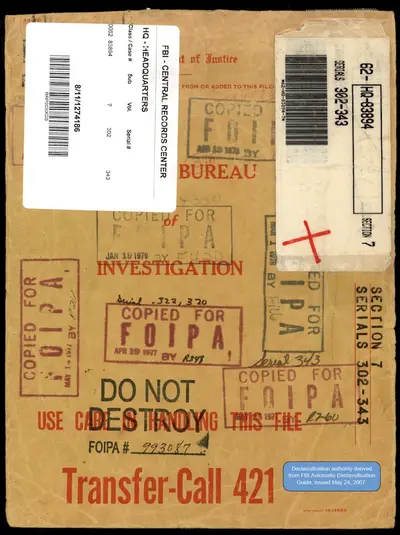
The administrative handling of this case reflects the bureaucratic landscape of the mid-twentieth century. The case was filed with the Federal Bureau of Investigation, whose Knoxville, Albuquerque, Los Angeles, and other field offices routed UFO reports to headquarters under the Bureau’s standing protocols for the protection of vital installations. This systematic approach ensured that any aerial anomaly that could potentially threaten sensitive infrastructure or military assets was centralized for review by federal authorities. Such protocols were common during the early 1950s, as the United States and its allies sought to monitor any deviations in the skies that might indicate the presence of advanced foreign surveillance technology.
The Incident
The primary documentation regarding this event is derived from the eyewitness accounts of two Air France pilots. These professionals, trained in high-altitude navigation and atmospheric observation, reported sighting a flying saucer over Southern France. While the pilots were operating within French airspace, the involvement of the FBI suggests that the information was processed through channels connected to American interests or that the report was captured by U.S. intelligence monitoring the European theater.
The released document does not specify the exact number of witnesses beyond the two pilots. The specific details regarding the altitude, speed, or duration of the sighting are absent from the available summary, leaving the precise nature of the encounter largely undocumented. However, the description provided by the witnesses remains consistent with the prevailing terminology of the time, as they characterized the object as being disc- or saucer-shaped.
Classification and Analysis
The status of this case remains officially unresolved. All records released under the PURSUE program are designated as unresolved by the All-domain Anomaly Resolution Office (AARO) by default. The federal government has not concluded that the events were anomalous, nor has it concluded that they were conventional, and it has not ruled out either possibility. This lack of a definitive conclusion is a standard feature of many declassified files, where the evidence provided is insufficient to meet the evidentiary threshold for a formal determination.
When analyzing sightings from this specific period, researchers often consider several conventional candidates. During the late 1940s and early 1950s, the skies were increasingly populated by experimental aircraft and various types of weather balloons, most notably the Project Mogul series, which was designed to detect Soviet nuclear tests. Furthermore, atmospheric optical phenomena such as sundogs, lenticular clouds, and other transient atmospheric events can often mimic the appearance of solid objects. Astronomical objects, including the planet Venus, the Moon, or meteors appearing near the horizon, also frequently provided the basis for misidentified sightings. The 1952 Paris report exists within this broader context of atmospheric, technological, and astronomical possibilities that characterized the early era of modern UAP investigation.