Wilminton, Ohio UAP Encounter, 1947 — USAAF Box 7 #48
An archival record from the U.S. Army Air Forces details a 1947 unidentified object sighting near Wilmington, Ohio, released via the PURSUE program.
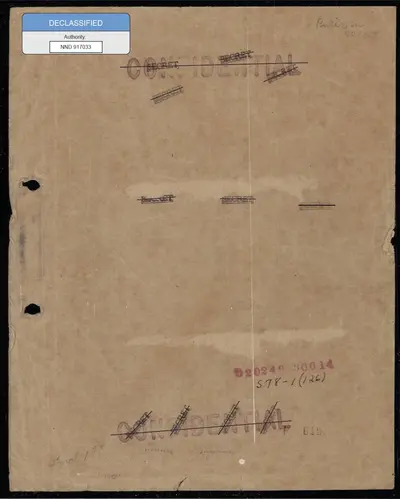
Incident Overview
In 1947, near Wilmington, Ohio, the U.S. Army Air Forces recorded an unidentified-object incident that became Incident #48 in the “Check-List - Unidentified Flying Objects” series archived in Box 7 of file 38_143685. The records were released by the Department of War on May 8, 2026, as part of the Presidential Unsealing and Reporting System for UAP Encounters (PURSUE). The summary records that an unspecified observer reported a sighting near Wilmington, Ohio. This specific case is classified as a visual sighting reported by ground or air observers.
Historical Context
The timing of the Wilmington encounter places it within a pivotal era of American aviation and atmospheric observation. The summer of 1947 is widely recognized by historians of the phenomenon as the beginning of the first major wave of “flying saucer” reports that swept the United States. This period was characterized by intense public and military interest following the Kenneth Arnold sighting in June 1947 and the widely discussed Roswell incident in July 1947. During this post-war period, the rapid advancement of aerospace technology, including the development of early jet engines and high-altitude reconnaissance capabilities, created a landscape where the distinction between conventional aircraft and anomalous objects was often blurred for observers.
Geographically, the Ohio River Valley and the surrounding Midwestern regions were subject to significant aerial activity during the late 1940s due to the density of military installations and the expansion of commercial aviation routes. The presence of unidentified objects in the airspace over Ohio during this time reflects a broader pattern of sightings reported across the American interior as the nation transitioned into the early Cold War era.
Investigation and Classification
The documentation for Incident #48 originates from the U.S. Army Air Forces “Check-List - Unidentified Flying Objects” series. The release of these specific files under the PURSUE program provides a rare glimpse into how the Department of War maintained internal logs of aerial anomalies during the mid-twentieth century. At the time of the reporting, the military’s approach to such sightings was often focused on identifying potential threats to national security or distinguishing unknown objects from the burgeoning fleet of experimental military hardware.
All records released under the PURSUE program are designated unresolved by the All-domain Anomaly Resolution Office. The federal government has not concluded these 1947-era incidents were anomalous, has not concluded they were conventional, and has not ruled out either possibility. The ambiguity of the Wilmington report mirrors the status of many contemporary cases from the same period, where the lack of corroborating radar data or secondary sensor logs often left investigators with only visual testimony.
Potential Explanations
When analyzing the 1947 “saucer wave,” researchers often consider various conventional candidates that could account for such sightings. During this period, Project Mogul balloon flights were active over the U.S. Southwest, utilizing high-altitude sensors that could potentially be misidentified by observers. Additionally, the emergence of experimental jet and rocket aircraft, alongside various atmospheric optical effects and astronomical objects misidentified at unusual angles, provided a range of plausible, non-anomalous explanations for the sudden influx of unidentified aerial reports. The Wilmington case remains part of this complex historical debate regarding the nature of mid-century aerial phenomena.