Rochester, New York UFO Sighting (August 1947) — FBI Files
Federal investigators documented a mid-1947 sighting in Rochester, New York, involving a saucer-shaped object observed over a residential backyard.
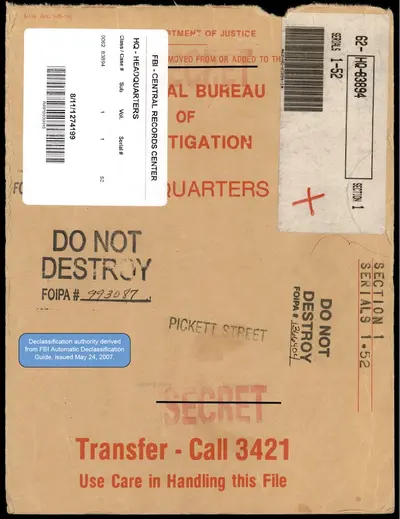
Background
In August 1947, in Rochester, New York, U.S. government investigators recorded an unidentified-object incident later released to the public on May 8, 2026, as part of the Presidential Unsealing and Reporting System for UAP Encounters (PURSUE). This specific sighting occurred during a period of intense public and governmental scrutiny regarding aerial phenomena. The incident is one of the first wave of “flying saucer” reports that swept the United States following the Kenneth Arnold sighting of June 1947 and the Roswell incident of July 1947. During this era, the term “flying saucer” had entered the common lexicon, fueled by a series of sightings that suggested the presence of technologically advanced craft operating within domestic airspace.
The geographic context of the sighting is significant, as Rochester was a major industrial and technological hub in Western New York during the mid-twentieth century. As a center for high-precision manufacturing and optics, the region was home to numerous sensitive installations and research facilities. Because of this, the Federal Bureau of Investigation maintained active monitoring of aerial anomalies that might threaten domestic security. The case was filed with the FBI, whose Knoxville, Albuquerque, Los Angeles, and other field offices routed UFO reports to headquarters under the Bureau’s standing protocols for the protection of vital installations. This administrative structure ensured that any reported object that could potentially interfere with or spy upon critical infrastructure was centralized for federal review.
What the document records
The released documentation provides a brief account of the encounter. A couple in Rochester, New York, reported seeing an object “about the size of an ordinary saucer” flying above their backyard. While the visual description of the object is specific regarding its shape and relative scale, the number of witnesses is not specified in the released document. The report focuses on the presence of the object within the immediate vicinity of a private residence, noting its flight path above the occupants’ property.
Type of case
The witnesses described the object as disc- or saucer-shaped. This description aligns with the prevailing nomenclature of the 1947 period, where many observers utilized the “saucer” descriptor to communicate the perceived geometry of unidentified craft. Such reports were common during the summer of 1947, as the phenomenon of unidentified aerial phenomena (UAP) transitioned from isolated incidents to a widespread national phenomenon.
Status
All records released under the PURSUE program are designated unresolved by the All-domain Anomaly Resolution Office (AARO) by default. The federal government has not concluded that the events were anomalous, has not concluded that they were conventional, and has not ruled out either possibility. The lack of a definitive classification is standard for historical files of this nature, as the evidentiary standards required for a conclusive determination are often impossible to meet decades after the event.
When analyzing sightings from this specific historical window, investigators often consider various conventional candidates. During the late 1940s, the United States was engaged in significant advancements in aerospace technology, including the development of experimental aircraft. Additionally, the period saw the deployment of the Project Mogul series of high-altitude balloons, which were designed to detect Soviet nuclear tests and were known to be mistaken for unidentified objects. Other atmospheric optical phenomena, such as sundogs and lenticular clouds, frequently produce shapes that mimic disc-like structures. Furthermore, astronomical objects including Venus, the Moon, and meteors near the horizon can appear as moving or stationary lights, potentially leading to misidentification by observers in the dark.