Gorman Dogfight
National Guard pilot George Gorman engaged in a 27-minute aerial dogfight with a mysterious light over Fargo. The object outmaneuvered his P-51 Mustang at every turn.
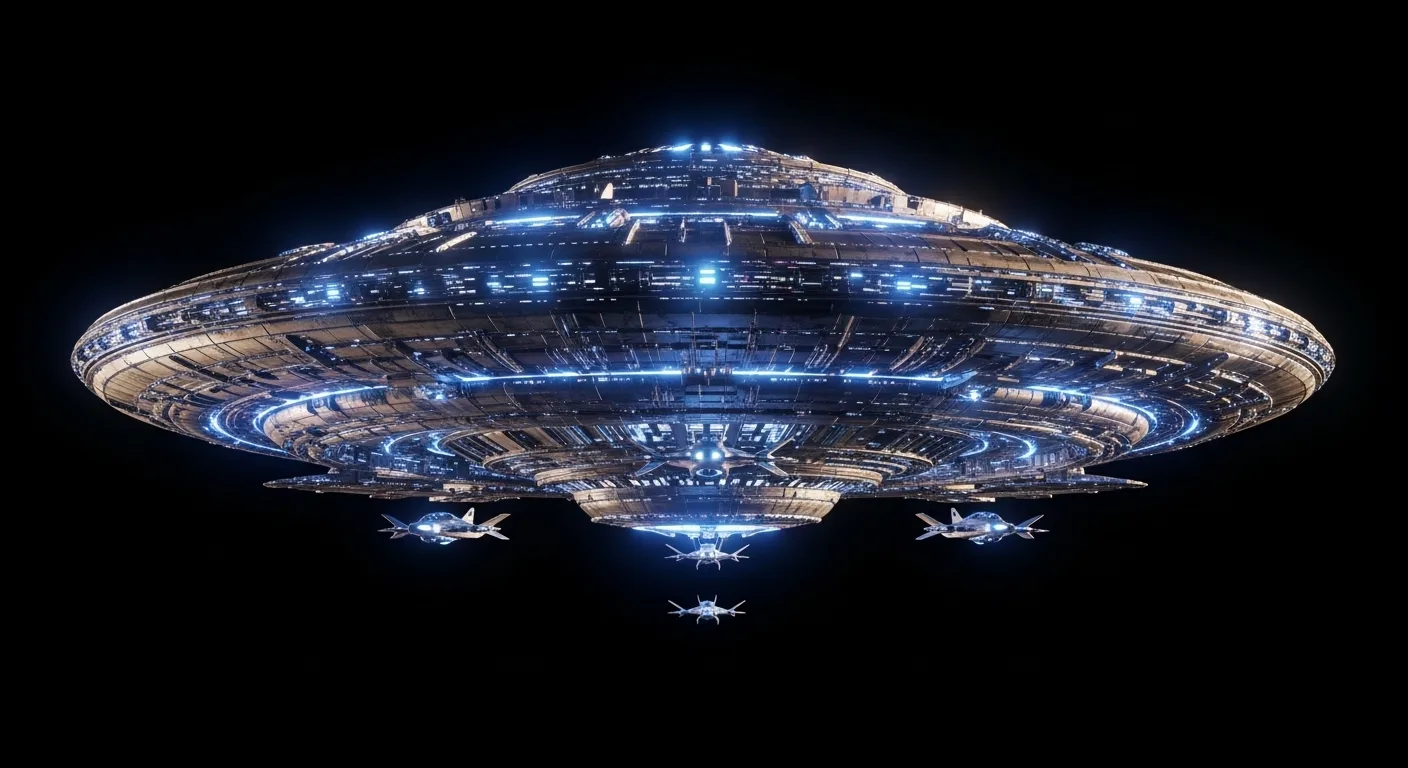
On the night of October 1, 1948, a twenty-five-year-old North Dakota Air National Guard pilot named George F. Gorman found himself locked in a twenty-seven-minute aerial pursuit with something he could neither identify nor outperform. Flying a P-51 Mustang—one of the finest fighter aircraft of its era—over the quiet city of Fargo, Gorman chased, was chased by, and repeatedly attempted to intercept a small, intensely bright ball of light that moved through the sky with a precision and agility that exceeded anything in his considerable experience. The object outclimbed him, outtmaneuvered him, and twice came directly at his aircraft in what appeared to be deliberate head-on passes. When the encounter finally ended, Gorman landed his Mustang in a state of genuine shock, having engaged in the most extraordinary flight of his career against an adversary that should not have existed. The Gorman Dogfight, as it came to be known, became one of the foundational cases in the history of UFO investigation and one of the first to demonstrate that unidentified aerial objects could outperform the most advanced military aircraft of the day.
The Pilot
George F. Gorman was not the kind of man given to hallucinations or exaggeration. A Second Lieutenant in the North Dakota Air National Guard, he was a World War II veteran who had served as a flight instructor during the war, accumulating hundreds of hours in the cockpit. He was intimately familiar with the P-51 Mustang, a legendary fighter that had helped win air superiority over Europe and the Pacific. Gorman knew what the aircraft could do, understood its performance envelope, and had the experience to assess aerial phenomena with the critical eye of a trained combat aviator.
On the evening of October 1, 1948, Gorman was returning to Fargo’s Hector Airport after a routine cross-country flight with his Air National Guard unit. The other pilots in his group had already landed, but Gorman decided to remain aloft and log some additional night-flying time. The sky was clear, the air was calm, and the lights of Fargo spread out below him in the early autumn darkness. It was the kind of flying that pilots love—the peace of being alone in the sky, the hum of the Merlin engine, the stars overhead. Nothing in the evening suggested that within minutes, Gorman would be fighting for his life against something he could not explain.
The Light Appears
At approximately 9:00 PM, Gorman contacted the Hector Airport control tower to check on other traffic in the area. The tower reported that the only other aircraft in the vicinity was a Piper Cub, a small civilian plane on a local flight. Gorman could see the Cub below him and to the west. Then he noticed something else.
A light was moving across the sky about five miles away, at roughly his altitude. It was not the Piper Cub—that aircraft was clearly visible in a different part of the sky. This was something else entirely: a small, round, intensely bright light, white and sharply defined, moving with a speed and purpose that immediately caught Gorman’s attention. He estimated its diameter at roughly six to eight inches, though judging size without knowing distance is notoriously difficult. What he could judge with certainty was its behavior, and the light was not behaving like any aircraft he had ever seen.
Gorman contacted the tower again, asking if they had any other traffic in the area. The tower operators confirmed that they could see the light from their position and that it did not correspond to any known aircraft. Gorman made the decision that would define the next half hour of his life: he would close on the object and attempt to identify it.
The Pursuit
What followed was a sustained aerial engagement that pushed both pilot and aircraft to their limits. Gorman turned toward the light and opened his throttle, climbing to intercept. The light responded as if aware of his approach, accelerating and beginning a series of maneuvers that Gorman—despite his training and his high-performance aircraft—could not match.
The object made sharp, seemingly instantaneous turns that would have imposed lethal G-forces on any human pilot. It climbed vertically at speeds that Gorman’s P-51, even at full military power, could not replicate. When Gorman attempted to cut off the object’s path by anticipating its turns, it changed direction again, always staying one step ahead, always demonstrating a level of maneuverability that appeared to mock the laws of aerodynamics.
“I had the distinct impression that the thing was controlled by thought or reason,” Gorman later reported. The object did not move randomly or erratically. Its maneuvers were precise, deliberate, and responsive to Gorman’s own movements. When he pursued, it evaded. When he attempted to disengage, it circled back. The encounter had the quality of a contest between two intelligent opponents, except that one of them was operating a machine that completely outclassed the other.
Gorman pushed his Mustang to its limits, reaching speeds in excess of 400 miles per hour and pulling turns that pressed him deep into his seat. At one point, he climbed steeply to 14,000 feet in an attempt to gain an altitude advantage over the object. The light climbed with him effortlessly, maintaining its distance as if tethered to his aircraft by an invisible line. When Gorman’s engine began to stall at the top of his climb, the light continued upward without any apparent difficulty, demonstrating a performance ceiling that exceeded that of one of the finest piston-engine fighters ever built.
The Head-On Passes
The most terrifying moments of the encounter came when the object reversed its role from quarry to aggressor. Twice during the twenty-seven-minute engagement, the light turned directly toward Gorman’s aircraft and accelerated on what appeared to be a deliberate collision course.
The first head-on pass came without warning. Gorman was pursuing the object through a turn when it suddenly reversed direction and came straight at him at high speed. The light grew rapidly larger in his windscreen as the closure rate climbed. Gorman, relying on the combat instincts drilled into him during his military training, shoved his stick forward and dove beneath the object as it passed over his canopy at terrifyingly close range.
The second pass was even more alarming. Again, the object turned and accelerated directly at Gorman’s aircraft, closing the distance with frightening speed. This time, Gorman held his course longer, perhaps out of stubbornness or perhaps out of the pilot’s reflex to stand his ground, before breaking away at the last possible moment. The object passed so close that Gorman was momentarily convinced a collision was inevitable.
These head-on approaches transformed the encounter from a simple chase into something far more disturbing. The object was not merely evading Gorman; it was engaging him, testing his nerve, demonstrating its superiority with an aggression that felt unmistakably intentional. Whether the passes were meant as warnings, provocations, or something else entirely, they left Gorman deeply shaken.
Corroborating Witnesses
Gorman was not the only person who observed the object that night. The crew in the Hector Airport control tower—Lloyd D. Jensen and H.E. Johnson—watched portions of the pursuit from the ground, observing both Gorman’s aircraft and the mysterious light as they maneuvered over the city. The tower operators confirmed the presence of the light and its unusual behavior, providing independent corroboration of Gorman’s account.
Dr. A.D. Cannon, an optometrist, and his passenger were flying in the Piper Cub that Gorman had identified earlier in the evening. They also observed the light from their aircraft, confirming its existence and its unconventional behavior. Dr. Cannon described a bright, round object that moved at speeds far exceeding anything the small Piper Cub could approach, lending additional credibility to Gorman’s description of the object’s extraordinary performance.
The presence of multiple independent witnesses—a trained military pilot, two control tower operators, and two civilians in a separate aircraft—elevated the Gorman case above the typical single-witness UFO report. The object was not a misperception experienced by one overwrought individual; it was a physical phenomenon observed by multiple people from multiple vantage points over an extended period.
The End of the Encounter
After approximately twenty-seven minutes of pursuit and evasion, the encounter ended as abruptly as it had begun. The object made a final vertical climb, ascending rapidly until it disappeared from Gorman’s view and from the tower operators’ sight. Gorman, his fuel diminishing and his nerves thoroughly rattled, returned to Hector Airport and landed his Mustang.
On the ground, Gorman was visibly affected by the experience. Fellow pilots and ground personnel noted his agitation, which was markedly out of character for the typically calm and composed veteran. In his debriefing, Gorman described the encounter in precise, technical language, using the vocabulary of a trained aviator to convey the object’s performance characteristics. He was clear about what he had seen and equally clear about what he could not explain. The object was not a conventional aircraft, not a balloon, not a meteor, and not any natural phenomenon with which he was familiar. It was something else—something that could outfly a P-51 Mustang with apparent ease.
Some accounts mention that a Geiger counter check was performed on Gorman’s aircraft after landing and that elevated radiation levels were detected, though this detail has been disputed and never conclusively confirmed. Whether or not the radiation readings were genuine, their inclusion in some versions of the story reflects the seriousness with which the Air Force initially treated the encounter.
Project Sign’s Investigation
The Gorman Dogfight attracted immediate attention from Project Sign, the Air Force’s first official UFO investigation program. Established in January 1948 in response to the growing wave of UFO reports following the Kenneth Arnold sighting and the Roswell incident of 1947, Project Sign was tasked with determining whether unidentified aerial phenomena posed a threat to national security.
The Gorman case was exactly the kind of report that Project Sign was designed to investigate. It involved a trained military pilot, multiple independent witnesses, an extended observation period, and an object that demonstrated performance characteristics exceeding those of known aircraft. The case was investigated thoroughly, with interviews conducted with all witnesses and technical analysis applied to the reported performance data.
The initial assessment by Project Sign investigators was that the case was genuinely unexplained. The object’s behavior could not be attributed to any known aircraft, natural phenomenon, or astronomical object. The investigators were particularly struck by the apparent intelligence behind the object’s maneuvers—its responsive evasion of Gorman’s pursuit, its deliberate head-on passes, and its coordinated movement relative to the P-51.
Some members of Project Sign, including several who worked directly on the Gorman case, came to believe that the evidence supported an extraterrestrial hypothesis. This conclusion was reflected in a classified “Estimate of the Situation” prepared by Project Sign personnel, which reportedly argued that UFOs were interplanetary in origin. The document was rejected by Air Force Chief of Staff General Hoyt Vandenberg, who considered the evidence insufficient, and is believed to have been subsequently destroyed.
The Official Explanation
As Project Sign gave way to its successor programs—Project Grudge and later Project Blue Book—the institutional attitude toward UFO reports shifted from open-minded investigation toward systematic debunking. The Gorman case, initially classified as unknown, was eventually attributed to a lighted weather balloon.
The balloon explanation has never satisfied those familiar with the details of the case. A weather balloon does not execute sharp turns, does not climb vertically at speeds exceeding those of a fighter aircraft, does not make deliberate head-on passes at a pursuing plane, and does not engage in twenty-seven minutes of responsive maneuvering. The performance characteristics described by Gorman, confirmed by tower operators and the Piper Cub occupants, are entirely inconsistent with any balloon, lighted or otherwise.
Critics of the balloon explanation have noted that the reclassification appears to have been motivated more by institutional convenience than by genuine analysis. By the time the explanation was issued, the Air Force had adopted a policy of reducing the number of “unknown” cases in its files, and previously unexplained reports were being retroactively assigned conventional explanations on sometimes questionable grounds. The Gorman case appears to have been a casualty of this policy shift.
The Significance of the Encounter
The Gorman Dogfight holds a unique place in UFO history for several reasons. It was among the first cases to demonstrate, with multiple-witness corroboration, that unidentified objects could outperform the most advanced military aircraft of their era. In 1948, the P-51 Mustang was still one of the premier fighter aircraft in the world, a machine that had proven itself in the skies over Europe and the Pacific. That something could not only evade a P-51 but actively engage one in apparent aerial combat was a deeply unsettling revelation.
The case also established patterns that would be repeated in countless subsequent pilot-UFO encounters: the initial curiosity giving way to pursuit, the object’s seemingly responsive behavior, the demonstration of performance capabilities far beyond those of the pursuing aircraft, and the abrupt departure that left the pilot with more questions than answers. These elements would appear again and again in military encounters from the 1952 Washington, D.C. incidents to the 2004 USS Nimitz encounter, forming a consistent pattern across decades and continents.
For George Gorman himself, the encounter remained a defining experience. He continued his service in the Air National Guard and maintained his account of the events throughout his life. He never sought publicity, never embellished his story, and never wavered from the precise, technical description he provided in his original debriefing. He had engaged something in the skies over Fargo that should not have been there, something that his training and his aircraft were not equipped to match, and he reported what happened with the straightforward honesty of a professional aviator.
The lights of Fargo spread out below him on that autumn night in 1948, and above those lights, something moved through the darkness with a purpose and a capability that remains unexplained. The twenty-seven-minute dogfight between George Gorman and the object over Hector Airport ended in the way such encounters always end—with the object departing on its own terms, leaving behind a pilot who knew what he had seen and a mystery that three-quarters of a century has failed to resolve.
Sources
- Gorman dogfight — Wikipedia
- Project Blue Book — National Archives — USAF UFO investigation files, 1947–1969
- CIA UFO/UAP Reading Room — Declassified CIA documents on UAP
- Chronicling America — Historic US newspapers (1690–1963)