Brooks AAF, Texas UFO Sighting, 1947 — FBI Files
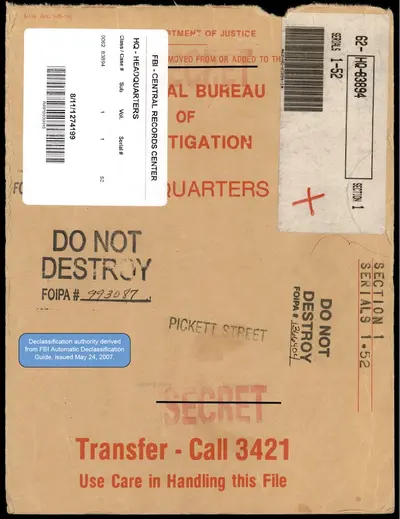
An FBI-documented report from 1947 details Captain Armstrong's sighting of unidentified objects flying at high altitude over Brooks AAF, Texas.
Background
The 1947 sighting at Brooks Army Air Field (AAF) in Texas represents a significant piece of declassified intelligence regarding mid-century aerial anomalies. The details of this incident were made available to the public on May 8, 2026, following the implementation of the Presidential Unsealing and Reporting System for UAP Encounters (PURSUE). This specific case emerged during a period of intense national preoccupation with unidentified aerial phenomena, a phenomenon often referred to as the first wave of “flying saucer” reports. This era was characterized by a sudden surge in sightings across the United States, largely catalyzed by the Kenneth Arnold sighting in June 1947 and the subsequent reports surrounding the Roswell incident in July 1947.
Brooks AAF, located in San Antonio, Texas, served as a vital component of the United States military infrastructure during the post-World War II era. As a significant installation, the base was subject to rigorous security protocols, making any unidentified aerial activity a matter of national interest. The documentation of this event was handled through established bureaucratic channels within the Federal Bureau of Investigation. During this period, the FBI’s various field offices, including those in Knoxville, Albuquerque, and Los Angeles, operated under standing protocols designed to protect vital military installations. When reports of unidentified objects intersected with the airspace of such bases, the field offices were instructed to route these reports directly to FBI headquarters for centralized monitoring and investigation.
The Incident at Brooks AAF
The primary record of the event consists of a report filed by Captain Armstrong. According to the documentation, the Captain observed a formation of unexplainable objects while engaged in flight. The report specifies the trajectory of these objects, noting that they were heading in a southerly direction and were positioned at a high altitude. While the Captain provided the initial observation, the investigative notes indicate that further information regarding the sighting could be obtained through his brother, who was stationed at Brooks AAF at the time of the report.
The released document does not provide a specific count of witnesses involved in the observation, focusing instead on the direct testimony of the officer in flight. The nature of the report is categorized as a visual sighting, which can be attributed to either ground-based observers or air-based observers. This type of documentation is common in the archival records of the era, where the primary evidence relies on the visual confirmation of military personnel performing routine duties.
Historical Context and Analysis
The investigation of such sightings in 1947 was often complicated by the lack of advanced radar technology and the emergence of new, classified aerospace programs. The All-domain Anomaly Resolution Office (AARO) has designated all records released under the PURSUE program as unresolved by default. This status reflects the official position of the federal government, which has not reached a definitive conclusion regarding whether the objects observed by Captain Armstrong were anomalous in nature or represented known, conventional technology. The government has neither confirmed the presence of non-human or extraterrestrial technology nor ruled out the possibility of conventional origins.
When analyzing sightings from the late 1940s, researchers often consider several conventional candidates. During this period, the United States was actively developing experimental aircraft and high-altitude reconnaissance technology. Furthermore, the deployment of the Project Mogul series of high-altitude balloons, designed to detect Soviet nuclear tests, created significant atmospheric clutter that could be mistaken for unidentified objects. Other natural explanations frequently cited in historical analyses of this era include atmospheric optical phenomena, such as sundogs or lenticular clouds, which can create the illusion of moving, structured objects. Additionally, bright astronomical bodies like Venus or the Moon, as well as meteors appearing near the horizon, were frequent contributors to the high volume of aerial reports documented during the post-war years.