Brooklyn, New York UFO Sighting (July 14, 1947) — FBI Files
FBI documents released in 2026 detail a July 194
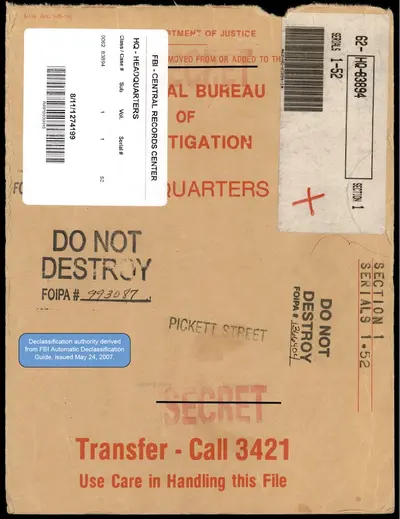
Background
On July 14, 1947, in Brooklyn, New York, U.S. government investigators recorded an unidentified-object incident later released to the public on May 8, 2026, as part of the Presidential Unsealing and Reporting System for UAP Encounters (PURSUE). This specific report emerged during a period of intense national preoccupation with aerial phenomena. The summer of 1947 is historically significant in the study of unidentified flying objects, as it marked the beginning of a massive surge in public and military interest. This surge was primarily catalyzed by the Kenneth Arnold sighting in June 1947 and the subsequent Roswell incident in July 1947. During this era, the term “flying saucer” had entered the common lexicon, and the United States was experiencing a wave of reports that spanned much of the country.
The Brooklyn sighting occurred within a broader geopolitical context of the early Cold War. As the United States and the Soviet Union entered a period of heightened tension, the monitoring of the national airspace became a matter of high priority. The Federal Bureau of Investigation maintained a structured protocol for handling such reports, particularly when they occurred near sensitive or vital installations. Consequently, various field offices, including those in Knoxville, Albuquerque, and Los Angeles, were tasked with routing UFO reports to the Bureau’s headquarters. This administrative process ensured that any aerial anomaly that could potentially represent a threat to national security or the integrity of military assets was centralized for federal review.
What the document records
The documentation pertaining to the July 14 incident reflects the broader atmosphere of the time, noting that numerous reports of flying saucers were circulating across the United States, with sightings reported in 27 states. The specific details within the Brooklyn report indicate a consistent pattern of observation among the various accounts being processed. The author of the report notes that these objects were described as sailing rather than fluttering like kites, suggesting a smooth, controlled, and aerodynamic motion. Furthermore, the document indicates that all observed objects appeared to travel in the same direction, moving from west to east across the sky.
Despite the formal nature of the investigation and the attempts by authorities to identify the source of these objects, no physical evidence was recovered from the Brooklyn area or surrounding regions. The released document does not specify the exact number of witnesses involved in this particular sighting, focusing instead on the descriptive characteristics of the objects and their flight paths. This lack of physical residue is a common feature in many mid-century aerial reports, where the phenomenon is limited to visual or radar-based observations without tangible debris or impact sites.
Type of case
The Brooklyn case is classified as a visual sighting reported by ground or air observers. This classification places it within a specific category of aerial anomalies where the primary data consists of eyewitness testimony regarding the appearance and movement of unidentified objects. Such cases often rely on the subjective interpretation of observers attempting to reconcile strange aerial movements with known aeronautical technology of the 1940s.
Status
All records released under the PURSUE program are designated unresolved by the All-domain Anomaly Resolution Office (AARO) by default. The federal government has not concluded that the events were anomalous, has not concluded that they were conventional, and has not ruled out either possibility. The ambiguity of the case reflects the difficulty in verifying mid-century sightings with modern forensic or technological capabilities.
When analyzing sightings from this period, researchers often consider several conventional candidates. These include the presence of experimental aircraft being tested in secret, or the use of weather balloons, specifically the Project Mogul series which utilized high-altitude balloons to detect Soviet nuclear tests in the late 1940s. Other possibilities include atmospheric optical phenomena, such as sundogs or lenticular clouds, which can create the illusion of solid, moving objects. Additionally, astronomical objects such as Venus, the Moon, or meteors appearing near the horizon are frequently cited as potential explanations for sightings of bright, moving lights.