O'Hare Airport UAP
On November 7, 2006, United Airlines employees at O'Hare Airport saw a dark grey metallic disc hovering over Gate C17. After several minutes, the UAP shot straight up through the clouds, leaving a perfect circular hole. Despite 12+ witnesses, the FAA refused to investigate.
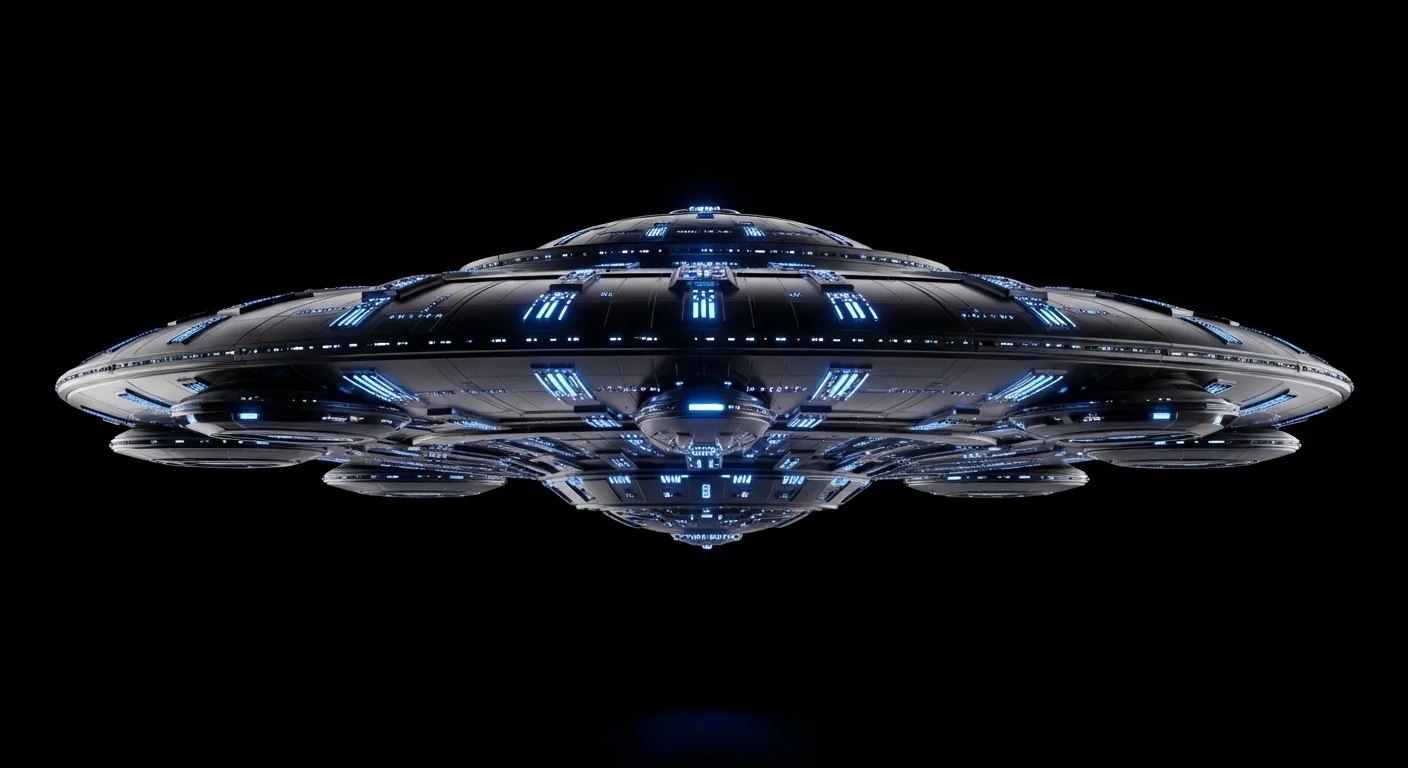
On the afternoon of November 7, 2006, one of the most remarkable UFO sightings in modern American history took place at one of the busiest airports in the world. At Chicago’s O’Hare International Airport, multiple United Airlines employees—pilots, mechanics, ramp workers, and supervisors—observed a dark grey, metallic disc hovering silently over Gate C17 of Concourse C. The object remained in position for several minutes before departing in the most dramatic fashion imaginable: it shot straight upward at tremendous velocity, punching a perfectly circular hole through the thick overcast cloud layer that remained visible for several minutes after the object had vanished. The sighting was witnessed by at least twelve aviation professionals, people whose daily work required them to observe and identify objects in the sky. Despite the extraordinary nature of the event, its location at a major international airport, and the caliber of its witnesses, the Federal Aviation Administration declined to investigate. The O’Hare Airport UAP incident stands as one of the most compelling and best-witnessed UFO cases of the twenty-first century, and as one of the most egregious examples of official indifference to a phenomenon that demands serious inquiry.
The Setting
O’Hare International Airport is among the busiest airports on Earth. Located on the northwest side of Chicago, Illinois, it handles tens of millions of passengers annually and serves as a major hub for United Airlines and American Airlines. Its runways, taxiways, and terminal buildings sprawl across thousands of acres, and its airspace is among the most tightly controlled in the world. Every aircraft that enters or departs O’Hare does so under the continuous surveillance of air traffic control radar, and unauthorized aerial intrusion into the airport’s airspace would normally trigger an immediate security response.
On November 7, 2006, the weather at O’Hare was overcast, with a solid cloud ceiling at approximately 1,900 feet. The clouds were thick and unbroken, the kind of heavy grey blanket that is common in Chicago during autumn and that reduces the sky to a featureless expanse of uniform grey. Visibility below the cloud deck was adequate, and flight operations were proceeding normally. There was nothing about the weather or the operational conditions at O’Hare that afternoon to suggest that anything unusual was about to occur.
Gate C17, where the sighting took place, is located in Concourse C, one of the terminal buildings used primarily by United Airlines. The gate area faces the tarmac, with a direct view of the apron where aircraft are parked, serviced, and boarded. It is a working area, populated by airline employees who spend their days in close proximity to aircraft and who are thoroughly familiar with the appearance and behavior of every type of object that normally appears in an airport environment. These are not people who would be easily confused by a balloon, a drone, or an unusual cloud formation. They know what belongs in the sky above an airport, and they know when something does not.
The Sighting
The incident began in the late afternoon, at approximately 4:15 PM Central Standard Time. A United Airlines ramp worker was on the tarmac near Gate C17 when he noticed something unusual in the sky directly above the gate. Looking up, he saw a dark object hovering at an altitude that he estimated at between 1,500 and 1,900 feet—just below the cloud ceiling. The object was clearly defined against the grey clouds behind it, its outline sharp and distinct.
The ramp worker alerted his colleagues, and within moments, a growing group of United Airlines employees was gathered on the tarmac and in the gate area, looking upward at the object. Their descriptions, collected independently in the days and weeks following the sighting, are remarkably consistent in their essential details.
The object was described as disc-shaped, roughly circular when viewed from below, and dark grey in color with a metallic appearance. Size estimates varied, as they inevitably do in such cases, with witnesses placing the diameter somewhere between six and twenty-four feet. The object appeared solid rather than luminous, and its surface had a quality that several witnesses described as “metallic” or “gunmetal grey.” It did not glow, flash, or emit any visible light. It was simply there—a solid, dark, disc-shaped object hanging motionless in the air above one of the world’s busiest airports.
The object was rotating slowly, or appeared to be, though some witnesses were uncertain whether the rotation was a feature of the object itself or an artifact of their viewing angle. It produced no sound whatsoever—no engine noise, no aerodynamic whistle, no vibration that could be felt on the ground. In an environment where the constant roar of jet engines provides a ubiquitous sonic backdrop, the object’s silence was conspicuous and unnerving.
Several witnesses attempted to photograph the object, but the overcast conditions, the object’s dark coloration against the grey clouds, and the limitations of the cell phone cameras available in 2006 made it difficult to capture a clear image. No definitive photograph of the object has been publicly released, though some witnesses reported taking pictures that showed a dark spot against the clouds. The absence of clear photographic evidence has been a point of contention in discussions of the case, though it is consistent with the technical limitations of the era and the challenging viewing conditions.
The Witnesses
The credibility of the O’Hare sighting rests largely on the quality of its witnesses. These were not casual bystanders glimpsing something unusual during a momentary glance at the sky. They were aviation professionals—people who work in and around aircraft for a living, who are trained to observe aerial phenomena, and who possess the specialized knowledge necessary to distinguish between normal and abnormal objects in an airport environment.
Among the witnesses were United Airlines pilots, both active and off-duty, who were in the gate area at the time of the sighting. Pilots undergo extensive training in aerial observation and are professionally required to identify and assess objects in the sky. Their confirmation that the object was something outside their experience carries particular weight, as they are among the most qualified aerial observers in any professional field.
Mechanics and maintenance workers, who spend their days inspecting aircraft and are intimately familiar with the appearance of every component of modern airliners, also witnessed the object. Their assessment that it was not any part of an aircraft, not a piece of debris, and not any known type of aerial vehicle is informed by hands-on professional expertise.
Ramp workers and ground crew, who operate on the tarmac in all weather conditions and routinely look upward to monitor aircraft movements, provided additional testimony. Their familiarity with the visual environment of the airport—the way aircraft look from below, the way clouds behave, the way lights and reflections can create illusions—makes their observations particularly valuable in ruling out mundane explanations.
Several witnesses reported the sighting to their supervisors immediately, following standard United Airlines procedures for reporting unusual events. At least one supervisor came outside to observe the object personally and confirmed the witnesses’ accounts. Reports were also made to the airline’s operations center and, through appropriate channels, to the Federal Aviation Administration.
The Departure
The object’s departure was the most dramatic and most difficult-to-explain element of the entire sighting. After hovering motionless for several minutes—estimates range from two to five minutes, though the elapsed time may have seemed longer to the witnesses—the object suddenly accelerated straight upward at a velocity that witnesses described as instantaneous or near-instantaneous.
The upward acceleration was violent enough to produce a visible effect on the cloud layer above. As the object shot through the clouds, it left behind a perfectly circular hole—a clear opening in the overcast that allowed witnesses on the ground to see blue sky above. The hole was sharply defined, with smooth edges that contrasted with the uniform grey of the surrounding clouds. It was, in the words of one witness, “as if someone had taken a cookie cutter to the clouds.”
The circular hole in the clouds persisted for several minutes after the object’s departure, gradually closing as the surrounding cloud layer filled the gap. Its existence was noted by multiple witnesses and constitutes perhaps the most significant piece of physical evidence in the case. Whatever passed through the clouds did so with sufficient energy to physically displace the cloud material, creating a void that was visible to the naked eye from the ground. This is inconsistent with any conventional aircraft, which might create temporary turbulence in a cloud layer but would not produce a clean, circular hole that persisted for minutes.
The physics of the cloud hole are worth considering. For an object to punch a visible hole through a cloud layer, it would need to either physically displace the water droplets that compose the cloud or generate sufficient energy to evaporate them. Either process would require the object to impart considerable force to the cloud material as it passed through—force consistent with an object of substantial size and mass moving at very high velocity. The fact that the hole was circular and cleanly defined suggests a symmetrical object producing a symmetrical disturbance, consistent with the disc shape described by the witnesses.
The FAA Response
The response of the Federal Aviation Administration to the O’Hare sighting was, to put it charitably, inadequate. Despite receiving reports from multiple credible witnesses at a major international airport—an event that, under any normal circumstances, would trigger a thorough security investigation—the FAA declined to investigate the incident.
The agency’s official position was that the object was a “weather phenomenon” and that, since it had not been detected on radar and had not posed a threat to air traffic safety, no investigation was warranted. This explanation was unsatisfying on multiple levels. First, the description provided by the witnesses—a solid, metallic, disc-shaped object—is not consistent with any known weather phenomenon. Second, the absence of radar detection, rather than disproving the object’s existence, might simply indicate that the object was below the radar’s effective coverage at that altitude, or that it possessed characteristics that made it difficult to detect by conventional radar. Third, the assertion that the object posed no safety threat was premature, given that no investigation had been conducted to determine what the object was or what it was capable of.
The FAA’s refusal to investigate was particularly troubling given the location of the sighting. An unidentified object hovering above a major international airport represents, by definition, a potential threat to aviation safety. Aircraft were departing and arriving at O’Hare throughout the sighting period, passing within relatively close proximity to the object’s reported position. Had the object moved or descended unexpectedly, the consequences could have been catastrophic. The FAA’s position that the event did not warrant investigation suggested either that the agency did not take its witnesses seriously or that it had reasons for avoiding an investigation that it chose not to share with the public.
The absence of publicly released radar data has been a persistent source of frustration for researchers investigating the case. O’Hare is equipped with some of the most sophisticated radar systems in the world, capable of detecting objects much smaller than the one described by witnesses. Whether these systems recorded anything anomalous at the time of the sighting has never been publicly disclosed. Freedom of Information Act requests for radar data from the relevant time period have produced no results, with the FAA stating that no data relevant to the incident was retained.
The Media Breakthrough
The O’Hare sighting might have remained an obscure incident, known only to the witnesses and a handful of UFO researchers, had it not been for the investigative journalism of the Chicago Tribune. Reporter Jon Hilkevitch learned of the incident through sources within the aviation industry and spent weeks interviewing witnesses, reviewing internal United Airlines communications, and pressing the FAA for an explanation.
Hilkevitch’s story, published on January 1, 2007—nearly two months after the sighting—was an immediate sensation. It was the most-read story in the history of the Chicago Tribune’s website, crashing the newspaper’s servers as millions of readers attempted to access it simultaneously. The story was picked up by wire services and broadcast networks, generating national and international media coverage that thrust the O’Hare sighting into the public consciousness.
The public response to the story revealed a deep-seated interest in the UFO phenomenon that the mainstream media had largely ignored. Readers flooded the Tribune with comments, many sharing their own sighting experiences. The intensity of public interest suggested that the cultural taboo around discussing UFOs was weaker than media gatekeepers had assumed, and that a significant portion of the public was hungry for serious journalism on the subject.
The media coverage also prompted additional witnesses to come forward. Several United Airlines employees who had been reluctant to report their observations, fearing professional repercussions, contacted Hilkevitch after the story was published to confirm the sighting and add their own details. The total number of witnesses is believed to exceed the twelve who were initially identified, though some have chosen to remain anonymous.
FOIA and the Information Vacuum
In the wake of the media coverage, researchers and journalists filed numerous Freedom of Information Act requests seeking any government records related to the O’Hare sighting. These requests targeted the FAA, the Transportation Security Administration, the Department of Homeland Security, and other agencies that might have been involved in responding to an unidentified object at a major airport.
The results were largely disappointing. The FAA released a recording of a phone call between a United Airlines supervisor and the FAA’s operations center in which the supervisor reported the sighting and requested information about any unusual radar contacts. The FAA controller on the call was notably dismissive, suggesting that the object might be a “rotating beacon” despite the supervisor’s insistence that the witnesses were experienced aviation professionals who knew the difference between a beacon and an unknown aerial object. The tone of the conversation reflected the institutional reluctance to take the report seriously.
Beyond this recording, official records pertaining to the sighting were scarce. No radar data was produced. No incident reports from airport security were released. No communications between the FAA and other agencies regarding the event were made available. The information vacuum surrounding the O’Hare sighting was, for researchers, almost as troubling as the sighting itself. Either the federal government took no interest in an unidentified object hovering above one of its busiest airports—an abdication of its safety mandate that would be difficult to justify—or it took an interest and chose not to share the results with the public.
Theories and Explanations
Various explanations have been proposed for the O’Hare sighting, ranging from the mundane to the extraordinary.
The FAA’s official explanation—a weather phenomenon—has been widely rejected as inadequate. No known weather phenomenon produces a solid, metallic, disc-shaped object that hovers motionlessly, rotates slowly, and then accelerates vertically through a cloud layer. Temperature inversions, lenticular clouds, and other atmospheric effects can produce unusual visual phenomena, but none matches the description provided by the O’Hare witnesses.
The suggestion that the object was a conventional aircraft or drone is equally problematic. No aircraft known to have been in service in 2006 was capable of silent hovering followed by instantaneous vertical acceleration. Drones of the era were small, noisy, and incapable of the performance characteristics described. Military aircraft capable of hovering, such as the Harrier jump jet, produce tremendous noise and are easily identifiable by aviation professionals.
The possibility that the sighting was a collective misperception or mass hallucination has been raised but is difficult to support. The witnesses were independent observers spread across multiple locations around Gate C17, and their accounts were collected separately rather than through group discussion. The consistency of their descriptions argues against both misperception and hallucination, neither of which would be expected to produce identical experiences across a dozen or more individuals.
The hole in the clouds, in particular, defies mundane explanation. It was a physical effect observed by multiple witnesses, visible for several minutes, and consistent with the passage of a solid object through the cloud layer at high velocity. No weather phenomenon, conventional aircraft, or psychological effect could produce such a result.
Significance
The O’Hare Airport UAP sighting of November 7, 2006, occupies a pivotal position in the modern history of the UFO phenomenon. It occurred at a major international airport, was witnessed by multiple aviation professionals, produced a physical effect on the environment, and was met with official indifference that bordered on dereliction of duty. It demonstrated, in stark terms, the disconnect between the reality of the UFO phenomenon and the willingness of official institutions to acknowledge that reality.
The case also illustrated the power of serious journalism to break through the wall of ridicule and institutional resistance that has surrounded the UFO topic for decades. Jon Hilkevitch’s reporting for the Chicago Tribune demonstrated that the UFO story could be told in a mainstream publication without sensationalism or condescension, and the overwhelming public response to his article showed that there was an audience for such reporting that the media had been failing to serve.
The O’Hare sighting predated the transformative revelations of 2017—the New York Times story about the Pentagon’s secret UFO program, the release of the Navy videos, and the establishment of official UAP investigation offices—by more than a decade. But it was part of the same continuum, one more data point in an accumulating body of evidence that something genuine and unexplained is operating in our skies. The aviation professionals who stood on the tarmac at O’Hare that November afternoon, watching a dark disc hover above their workplace before shooting through the clouds and leaving a hole in the sky, knew what they saw. The system that was supposed to investigate and explain such events failed them. But their testimony endures, and the hole in the clouds—that impossible, undeniable hole—remains one of the most haunting details in the entire history of the UFO phenomenon.
Sources
- CIA UFO/UAP Reading Room — Declassified CIA documents on UAP