O'Hare Airport UFO
United Airlines employees and pilots observed a dark grey metallic disc hovering over Gate C17. The object shot upward, punching a hole through the overcast clouds. FAA dismissed it as a 'weather phenomenon.'
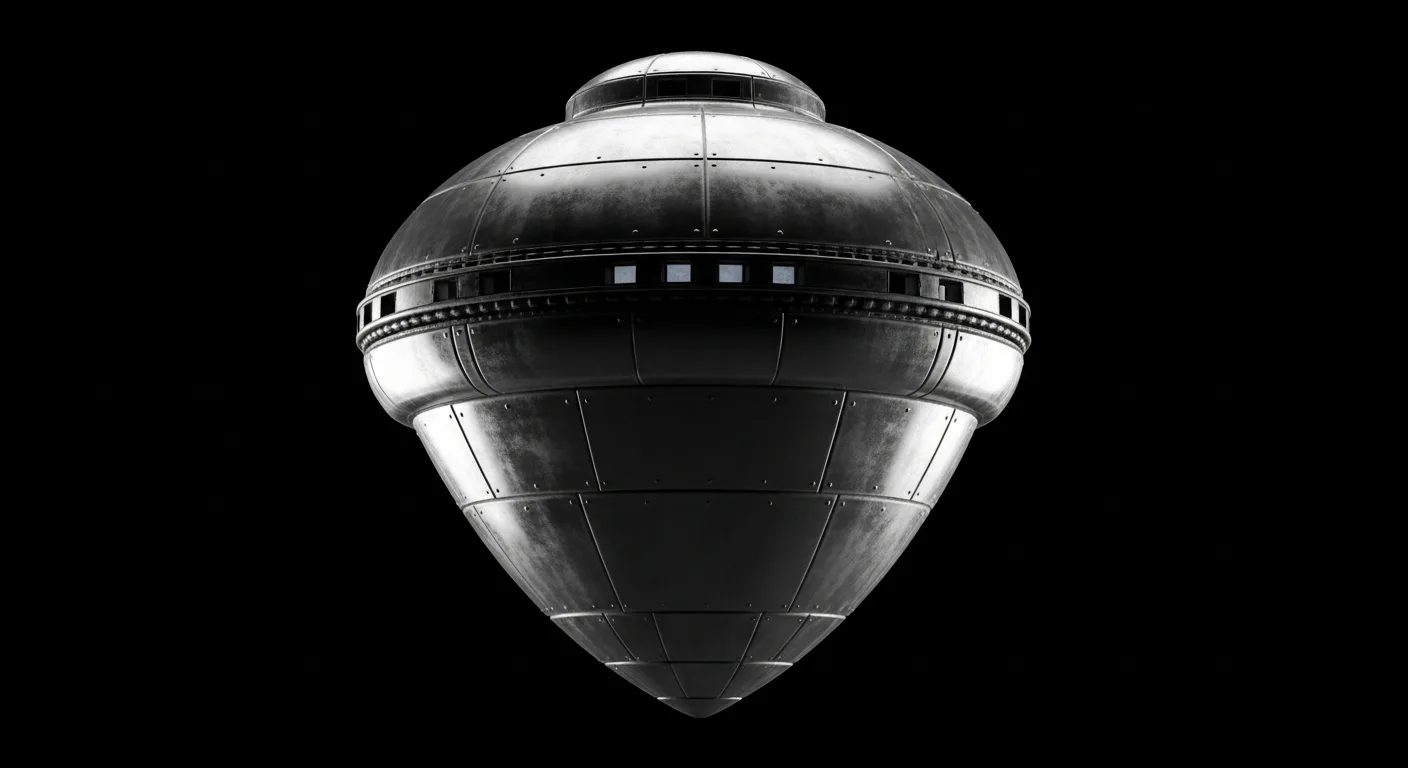
On the afternoon of November 7, 2006, one of the busiest airports in the United States became the setting for a UFO sighting that would highlight the profound disconnect between witness testimony and official response. United Airlines employees at O’Hare International Airport observed a dark metallic disc hovering below the cloud layer directly over Gate C17. When the object departed, it shot upward at tremendous speed, leaving behind a physical trace that multiple witnesses observed: a visible hole punched through the overcast sky. Despite the credibility of the witnesses and the physical evidence they described, the Federal Aviation Administration dismissed the incident as a “weather phenomenon” and declined to investigate.
The Setting
O’Hare International Airport serves as one of the primary aviation hubs of the United States, processing millions of passengers annually through its sprawling complex of terminals and gates. On November 7, 2006, the airport operated under typical late autumn conditions. An overcast sky hung at approximately 1,900 feet, creating a grey ceiling above the terminals. The afternoon rush was underway, with United Airlines personnel attending to their duties at and around Gate C17 in the international terminal complex.
The witnesses who would observe the UFO were not casual travelers or curious onlookers. They were aviation professionals, people who spent their working lives around aircraft and who knew intimately what belonged in the sky above their airport and what did not. Ramp workers, mechanics, pilots, and management personnel would all contribute to the witness pool before the incident concluded.
The Object Appears
The sighting began around 4:15 PM when a United Airlines ramp worker noticed something unusual in the sky above Gate C17. Looking up from his duties, he observed a dark grey disc hovering below the cloud layer, clearly visible against the overcast background. The object was metallic in appearance, with sharp, defined edges that distinguished it from any cloud formation or atmospheric effect. It displayed no lights, no markings, and no features that would identify it as a conventional aircraft.
The worker alerted his colleagues, and soon multiple employees had gathered to observe the anomalous object. Their descriptions aligned precisely despite coming from individuals stationed at different positions around the gate area. The disc hovered motionless, as if suspended by invisible forces, maintaining its position directly over the gate. Estimates of its size varied, with witnesses suggesting diameters ranging from six to twenty-four feet, but all agreed on the basic characteristics: a dark, metallic disc with no visible means of support.
Aviation Professionals Bear Witness
The quality of witnesses in the O’Hare case proved exceptional. Among those who observed the disc were United Airlines pilots, individuals whose training and experience in identifying aerial phenomena exceeded that of virtually any civilian population. These pilots confirmed what the ground crew was reporting: a structured, metallic object hovering in controlled airspace above a major international airport. Their professional assessments eliminated the possibility that the sighting resulted from misidentification of conventional aircraft, weather balloons, or other mundane phenomena.
Mechanics who serviced the aircraft at O’Hare daily also observed the object. These technical professionals possessed deep familiarity with every type of aircraft that transited the airport and could immediately distinguish the hovering disc from anything in their experience. Management personnel added their observations to the growing body of testimony. The consistent thread running through all accounts was absolute certainty that the object was unlike anything the witnesses had ever seen.
The Departure
After hovering above Gate C17 for several minutes, the object initiated a departure that would become the most dramatic aspect of the incident. Without warning, the disc shot straight upward at enormous velocity, accelerating through the overcast layer and disappearing into the sky above. The speed of departure struck witnesses as impossible, far exceeding the performance capabilities of any known aircraft.
But the most remarkable feature of the departure was what it left behind. Multiple witnesses observed that the disc’s high-speed ascent had punched a visible hole through the cloud layer. Where the object had passed, a clear circular opening appeared in the overcast, revealing blue sky above. Witnesses watched this hole persist for several minutes before atmospheric dynamics closed it. The physical evidence of the disc’s passage provided confirmation that something real had been present and that its departure had interacted with the environment in measurable ways.
The FAA Response
When the incident was reported through official channels, the Federal Aviation Administration’s response epitomized decades of official dismissal of UFO reports. The FAA characterized the sighting as a “weather phenomenon” and declined to conduct any investigation. This determination was reached despite multiple credible witnesses, despite the impossibility of weather phenomena hovering motionless over a specific gate for extended periods, and despite the physical evidence of a hole punched through clouds.
The FAA’s dismissal satisfied few who examined the case. Weather phenomena do not maintain position over specific airport gates. Weather phenomena do not possess sharp metallic edges. Weather phenomena do not accelerate upward at impossible speeds, leaving visible traces of their passage. The explanation offered bore no relationship to what the witnesses had observed and reported.
United Airlines’ Silence
Initially, United Airlines declined to comment on the incident, creating the impression that no reports had been filed through company channels. However, Freedom of Information Act requests later revealed that United employees had indeed reported the sighting through official company procedures. The airline’s public silence, contrasted with the documented internal reports, suggested a reluctance to engage publicly with a topic that might invite ridicule or controversy.
This corporate silence exemplified the professional risks that UFO witnesses faced. Aviation personnel understood that public association with UFO claims could damage careers and invite skepticism. Many chose to report internally while declining to speak publicly, a pattern that ensured valuable witness testimony remained hidden from public scrutiny.
Media Coverage and Public Interest
The O’Hare incident broke into public awareness through the work of Chicago Tribune transportation reporter Jon Hilkevitch. His coverage brought national attention to the case, revealing the disconnect between the credible witness testimony and the dismissive official response. The story generated substantial public interest, becoming one of the most discussed UFO cases of 2006 and demonstrating that public appetite for serious treatment of UFO reports remained strong.
The National Aviation Reporting Center on Anomalous Phenomena (NARCAP) conducted its own investigation of the O’Hare incident, concluding that the witnesses were credible and that the sighting represented a genuine anomaly worthy of serious study. NARCAP’s report documented the witness testimony in detail and highlighted the safety implications of unidentified objects appearing in controlled airspace above major airports.
Questions That Remain
The O’Hare incident raised questions that the official dismissal failed to address. What was the metallic disc that hovered over Gate C17? How did it maintain position without any visible means of propulsion? What technology could accelerate from stationary to extreme speed instantaneously? And perhaps most intriguingly, what force could punch a visible hole through a cloud layer?
These questions remain unanswered. The FAA’s “weather phenomenon” explanation addressed none of the specific characteristics that witnesses observed. The gap between what credible professionals reported and what authorities acknowledged highlighted a pattern that would persist until the Pentagon’s own disclosures began changing the conversation over a decade later.
A Case Study in Dismissal
The O’Hare incident stands as a case study in how official institutions handled credible UFO reports prior to the disclosure era. Aviation professionals, individuals whose entire careers depended on accurately identifying what occupied the airspace around them, provided consistent testimony about an anomalous object. Physical evidence in the form of a hole through the cloud layer corroborated their accounts. Yet official response consisted of dismissal without investigation, a “weather phenomenon” explanation that explained nothing, and institutional silence that left the mystery unresolved.
The case demonstrated that credible witnesses and compelling evidence were insufficient to overcome institutional reluctance to engage seriously with UFO reports. Only the Pentagon’s own acknowledgments, beginning in 2017, would begin to change this pattern. Until then, incidents like O’Hare remained officially unexplained while being officially ignored, a contradiction that satisfied no one seeking genuine answers.
Sources
- CIA UFO/UAP Reading Room — Declassified CIA documents on UAP